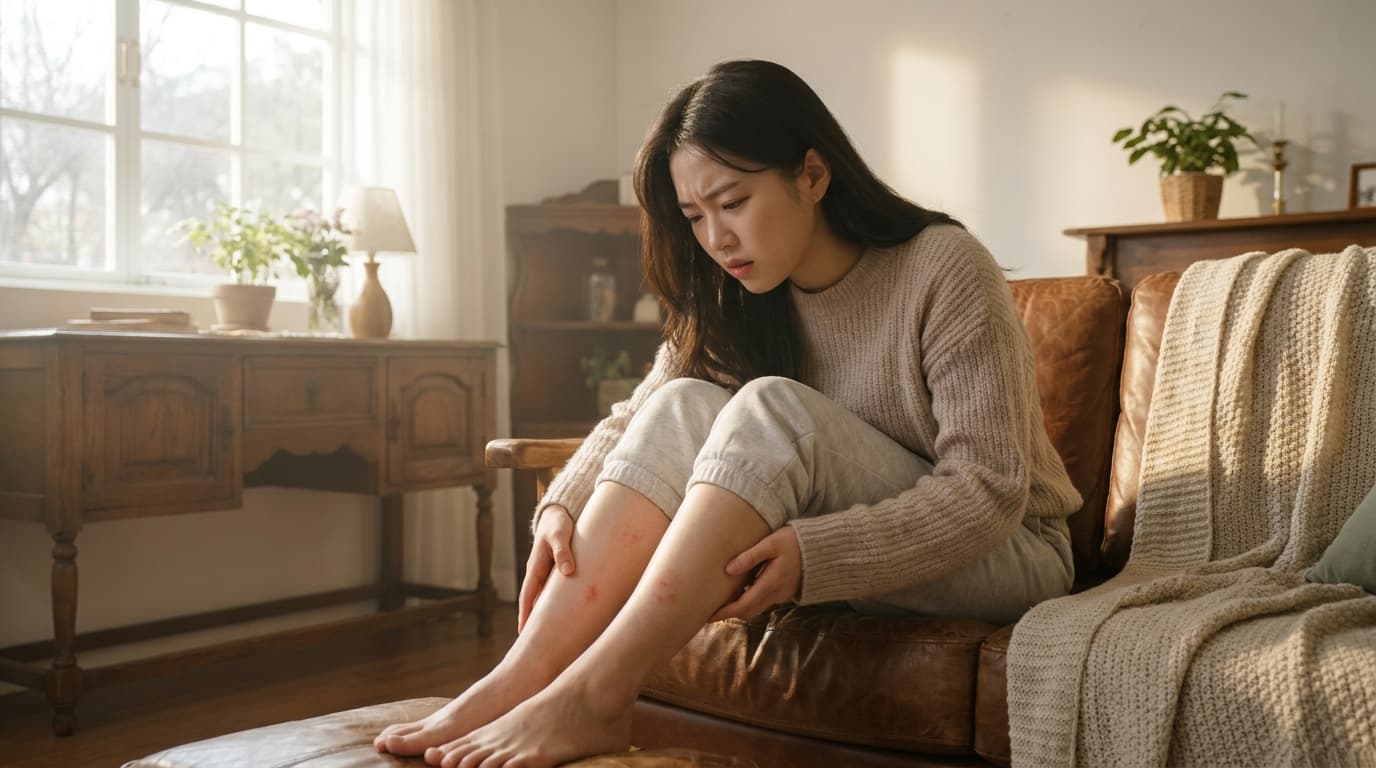
Red Spots on Legs: Could it be Purpura instead of a Bruise? Causes and Korean Medicine Treatments
건강상담실

Red Spots on Legs: Could it be Purpura instead of a Bruise? Causes and Korean Medicine Treatments

Hello. This is Dalimchae Korean Medicine Clinic. # Red Spots on Legs: Could it be Purpura instead of a Bruise? Causes and Korean Medicine Treatments Have you ever been surprised by sudden red spots on your legs? Many people initially dismiss them as simple bruises or skin troubles. However, if they don't disappear over time or if they spread and are accompanied by other symptoms like itching or pain, there's a high possibility it's not a simple bruise. In particular, these red spots on the legs could be 'purpura,' which occurs due to inflammation of the capillaries, so it's important to understand the exact cause and start appropriate treatment. In this article, we'll cover the main causes of red spots on the legs, the characteristics of purpura, and Dalimchae Clinic's Korean medicine treatment approach. 💡 **[Key Answer]** **3 most common causes of red spots on the legs:** ① **Purpura**: Hemorrhagic spots caused by inflammation of capillaries. ② **Pigmented Purpuric Dermatosis (PPD)**: Pigmentation caused by chronic changes in vascular permeability. ③ **Simple Bruises/Vasculitis**: Temporary bleeding due to external impact or vascular inflammation. Dalimchae Clinic treats the root cause of purpura by resolving immune imbalances and inflammation through **gut detox**. ## Red Spots on Legs, Why Do They Occur? Differences Between Bruises and Purpura When red spots appear on the legs, the first thing most people think of is probably a 'bruise.' A bruise is a phenomenon where capillaries under the skin are damaged due to external impact and blood leaks out. It's characterized by naturally disappearing over time while changing color from red to purple, green, and yellow. However, unlike bruises, 'purpura' occurs without external impact and is a red or purple spot that appears as capillaries themselves become inflamed and blood leaks out. Unlike bruises that temporarily disappear when pressed with a finger, purpura has non-blanching characteristics where the color does not fade or disappear. It's easy for it to appear on parts of the body heavily influenced by gravity, especially the legs, and its size can vary from small dot forms to wide patch forms. Purpura is also classified as a type of 'vasculitis,' an inflammatory disease that occurs in blood vessels. Purpura can be divided into several types. One of the most common forms, allergic purpura (Henoch-Schönlein purpura, HSP), is common in children but also occurs in adults and can be accompanied by joint pain, abdominal pain, and kidney involvement (proteinuria, hematuria) besides skin spots. Another type, pigmented purpuric dermatosis (PPD), is characterized by chronically appearing red spots on the legs leaving brown pigmentation. ## Purpura, What Causes It? In Korean medicine, purpura is not seen simply as a problem on the skin surface, but is diagnosed as an internal imbalance in our body, especially immune system disruption and gut health problems. Purpura often occurs after an upper respiratory tract infection (cold), at which time it's seen that the immune system reacts excessively and an autoimmune reaction can appear where it attacks its own blood vessels. Dalimchae Clinic interprets the root causes of purpura as follows: 1. **Immune Imbalance and Autonomic Nervous System Problems:** When the balance of the autonomic nervous system is broken due to stress, overwork, lack of sleep, etc., confusion also comes to the immune system. An excessively activated immune response can cause inflammation in the vascular walls, leading to purpura. 2. **Gut Barrier Damage and Toxin Influx:** When the intestinal mucosa is damaged due to instant foods, irregular eating habits, chronic inflammation, etc., toxins inside the intestines (harmful bacteria, microbial residues, etc.) easily flow into the blood. This is called 'leaky gut syndrome,' and these toxins circulate through the whole body and can be a major cause of inflammatory reactions in blood vessels. 3. **Blood Circulation Disorders and Blood Stasis:** In Korean medicine, a state where blood circulation is not smooth and waste products accumulate or blood stagnates is seen as 'blood stasis' (어혈). Blood stasis interferes with the normal function of capillaries and can aggravate red spots as bleeding easily occurs even with small impacts. ## Korean Medicine Purpura Treatment, Confirmed by Scientific Research Results In treating purpura, Korean medicine focuses on resolving fundamental causes beyond symptom relief. The effectiveness of Korean medicine treatment is being proven through various actual clinical studies. According to a systematic literature review study published in the journal *Complementary Therapies in Medicine* in 2015, which targeted a total of 1,112 pediatric Henoch-Schönlein purpura (HSP) patients who participated in 15 randomized controlled trials, auxiliary herbal medicine treatment significantly reduced the incidence of kidney damage (relative risk 0.47, 95% confidence interval 0.31-0.72) and was shown to shorten the purpura symptom disappearance time by an average of 3.60 days. Researchers concluded that these results suggest that herbal medicine treatment can be effective in reducing kidney complications and improving purpura symptoms in pediatric HSP patients. Also, in 5 cases of adult pigmented purpuric dermatosis (PPD) patients reported in the journal *Explore (NY)* in 2018, as a result of solely applying herbal medicine treatment called Gami-Samultang, systemic purpura symptoms that did not improve with existing steroid treatment disappeared in all patients, and they recorded a Visual Analog Scale (VAS) score of 0, showing high treatment satisfaction. This shows that adult purpura can also be effectively improved through Korean medicine treatment. Based on this data, Dalimchae Clinic Songdo Branch helps regain healthy skin and prevent recurrence of purpura by restoring immune balance and strengthening vascular health. ## Dalimchae Clinic's 'Gut Detox' Treatment, Uprooting Purpura Dalimchae Clinic focuses on 'gut detox' treatment to resolve immune imbalances and inflammation, the root causes of purpura. This is because about 70% of our body's immune cells exist in the gut, and gut health is directly linked to whole-body immunity. There are many cases where toxins accumulated in the gut wall travel through the blood, creating whole-body inflammation, which affects capillaries and appears as purpura symptoms like red spots on the legs. Dalimchae Clinic's gut detox treatment proceeds with the following principles: 1. **Toxin Discharge and Gut Environment Improvement:** By prescribing customized herbal medicine suitable for individual constitutions and symptoms, we discharge harmful toxins in the gut and promote the growth of beneficial bacteria to create a healthy gut environment. This helps the recovery of the gut wall and contributes to reducing unnecessary inflammatory reactions. 2. **Immune System Stabilization:** We utilize medicinal herbs helpful in calming the oversensitive immune system and inhibiting inflammatory reactions in blood vessels. Through this, we minimize damage to vascular walls and prevent the occurrence and aggravation of purpura. 3. **Blood Circulation Improvement and Blood Stasis Removal:** By concurrently performing treatments that release stagnated blood and smooth blood circulation, we help increase the recovery power of capillaries and assist in the rapid disappearance of purpura. Many people looking for a Songdo purpura clinic are experiencing the recovery of not only visible symptoms but also internal health through this fundamental gut detox treatment. Especially for those suffering from steroid side effects or recurrence, gut detox treatment can be a new hope. Also, in cases where other chronic skin diseases such as atopy or hives are being experienced together, gut detox treatment can be helpful in improving overall skin health. ## Am I Having Purpura? Self-Diagnosis Checklist If 3 or more of the following items apply, it's good to suspect purpura and receive a consultation from a clinic for accurate diagnosis and treatment. * ◻ Red or purple spots have appeared on legs or buttocks without special trauma. * ◻ The color doesn't disappear or fade well even when the spot is pressed with a finger. * ◻ Besides spots, symptoms like joint pain (especially knees, ankles), abdominal pain, or vomiting are accompanied. * ◻ Kidney symptoms are suspected, such as urine color being red or many bubbles forming. * ◻ Spots appeared after a severe cold or decrease in immunity recently. * ◻ Symptoms improved after taking steroids but recur when stopping the medication. * ◻ Red spots on legs are gradually moving up or the range is widening. * ◻ Having chronic stress and irregular lifestyle habits. **If 3 or more apply** → Purpura suspicion stage, need to review immune and gut health. **If 5 or more apply** → Immediate visit recommended for active diagnosis and treatment. --- **Q. How long does purpura treatment take?** A. Purpura treatment duration varies depending on the severity of the patient's symptoms, the cause of occurrence, and individual constitutions. Generally, it can take from several weeks to more than several months, and adults tend to show a more chronic course than children. Dalimchae Clinic Songdo Branch aims for fundamental recovery and preventing recurrence through meticulous diagnosis and steady treatment. **Q. Can purpura heal naturally?** A. Some pediatric allergic purpura cases improve naturally, but adult purpura has a low probability of natural recovery and a high possibility of kidney involvement or recurrence. Especially if symptoms are neglected, there's a risk of progressing to chronic kidney disease, so it's important to start active treatment early. **Q. I also have severe itching besides red spots on my legs, can it be treated together?** A. Yes, itching accompanied by purpura is deeply related to skin inflammatory reactions. Dalimchae Clinic's gut detox treatment improves systemic inflammation and immune imbalance, helping to relieve not only purpura but also accompanied itching symptoms. **Q. What tests are used for diagnosis at Songdo Purpura Clinic?** A. At Dalimchae Clinic Songdo Branch, besides Korean medicine diagnosis such as inquiry, pulse diagnosis, and abdominal diagnosis, we comprehensively grasp the patient's body condition through autonomic balance tests and body composition tests. Based on this, we in-depth analyze the cause of purpura and establish an individual customized treatment plan. --- Red spots on the legs might just be a symptom appearing on the skin, but it can be an important signal notifying of internal imbalances in the body. You no longer have to ignore the signals your body has been sending for a long time. If you approach in the right direction, the body responds faster than you think. Bring your symptoms exactly as they are. At Dalimchae Clinic, we will find the cause together. Where life blooms. For herbal medicine, it's Dalimchae Korean Medicine Clinic. Check your symptoms similar to mine through the AI consultation on the Dalimchae Clinic website first! This article is health information compiled by Dalimchae medical staff based on questions frequently received in the treatment room. Medical Supervision | Skin Disease Treatment Standards Dalimchae Clinic Songdo Branch Korean Medicine Doctor Oh Hyunmin (Purpura Column)

Branches

Brain & Autonomic Nervous System

Fertility & Postpartum

Skin

Digestive

Immunity