
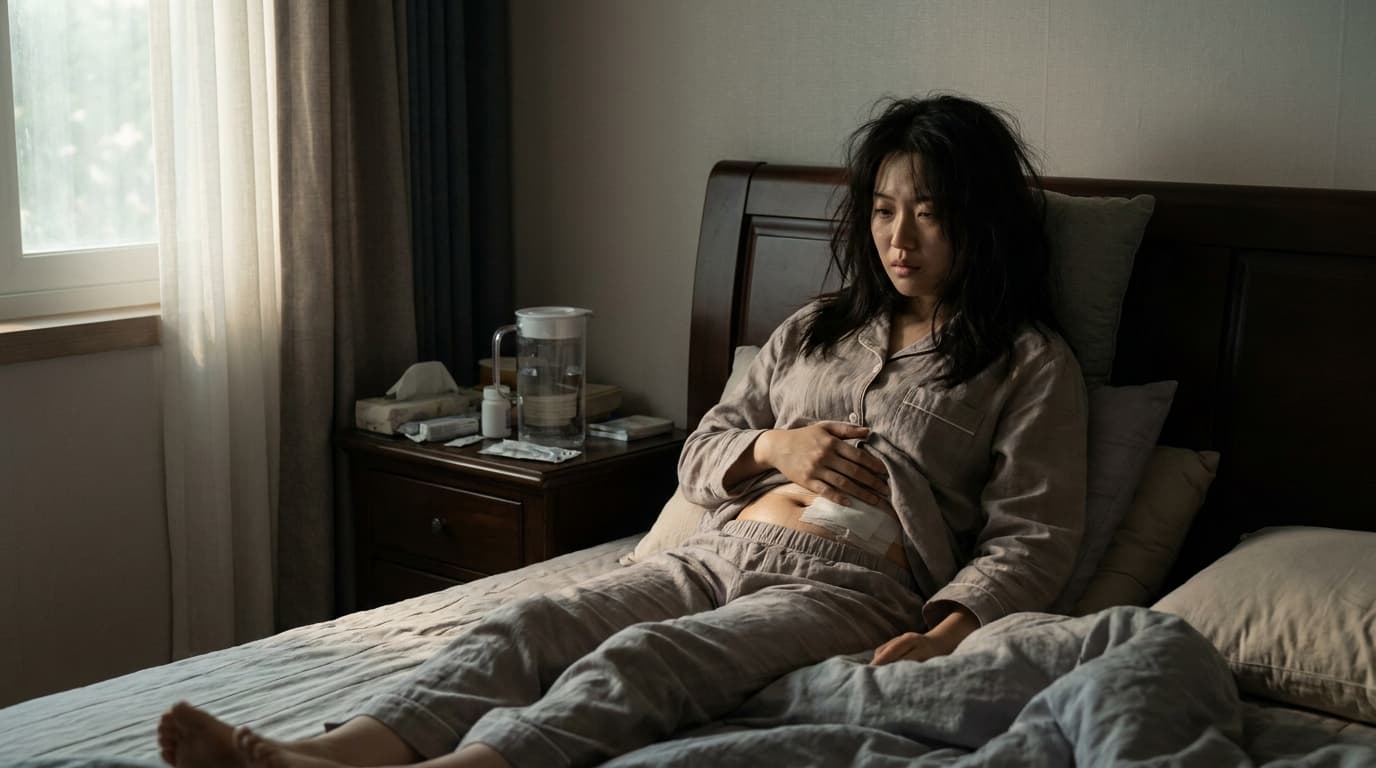
Recovery After C-Section Is Too Slow
Hello, this is Dalimchae Korean Medicine Clinic. # Recovery After C-Section Is Too Slow: A Body Harder Than Expected, Quickly Regaining Vitality Through Korean Medicine The process of carrying and bringing a new life into the world is wondrous in itself, but a C-section is a major surgery that requires a deeper period of recovery for the mother. Many mothers choose a C-section with the vague expectation that "it will be easier than natural childbirth," only to be dismayed by unexpected slow recovery, pain, discomfort, and inconvenience. In addition to surgical site pain, they suffer from extreme fatigue, swelling, indigestion, dizziness, and even postpartum wind, falling into anxiety wondering "what if I never return to normal like this?" When everyone else seems to recover quickly but your recovery feels unusually slow, Dalimchae Korean Medicine Clinic is here to think together and offer solutions for mothers spending lonely, difficult times. 💡 **[Key Answer]** **The 3 most common causes of slow recovery after a C-section:** ① Extreme loss of Qi and Blood and physical exhaustion due to surgery ② Delayed uterine recovery and systemic circulation disorder due to blood stasis (瘀血) ③ Postpartum wind and various aftereffects caused by rapid hormonal changes and decreased immunity Dalimchae Korean Medicine Clinic helps mothers recover decreased immunity and energy after surgery through constitutional improvement and removes blood stasis to help the mother's body recover on its own. ## Why is recovery unusually slow after a C-section? Because a C-section is an open surgery, the recovery process can be more complex and slower compared to natural childbirth. Beyond simple wound healing and pain relief, surgical Qi and Blood loss, the burden of general anesthesia, and subsequent hormonal imbalance and blood stasis act complexly to delay the mother's recovery. In particular, the uterus must contract vigorously after childbirth to return to its original size, and in this process, residual waste called lochia must be expelled. After surgery, the uterus's natural contraction and lochia excretion functions are prone to decrease, making blood stasis easy to accumulate, which hinders uterine recovery and adversely affects systemic circulation. ## Is postpartum wind worse after a C-section than natural childbirth? 'Postpartum wind' appears as various symptoms such as joint chilliness, systemic pain, excessive sweating, and cold sensations after childbirth, and mothers after a C-section may be more vulnerable to postpartum wind than those with natural childbirth. This is because the stress and Qi and Blood loss inflicted on the body during surgery are greater, and blood loss is heavier, leading to slower energy recovery. In Oriental medicine, it is viewed as occurring when cold energy enters the body while Qi and Blood are weak and pores are open after childbirth, and a C-section can further accelerate this state. In particular, rapid hormonal changes and parenting stress after childbirth break the balance of the autonomic nervous system, becoming factors that further worsen postpartum wind symptoms. In fact, a domestic study reported that herbal medicine treatment has a positive effect on postpartum recovery in C-section mothers. A 2018 study published in the *Journal of Korean Oriental Obstetrics and Gynecology* compared a group taking herbal medicine after childbirth with a non-taking group among a total of 104 C-section mothers. As a result of the study, the herbal medicine-taking group showed statistically significant improvements in postpartum discomfort indicators such as abdominal pain (p\<0.05), systemic weakness (p\<0.01), and loss of appetite (p\<0.05) compared to the non-taking group at 2 weeks post-delivery. The researchers concluded that herbal medicine treatment is effective in improving uterine recovery and general condition after a C-section, and especially helps promote postpartum recovery by aiding blood stasis removal and Qi and Blood supplementation. Another study confirmed the effect of a specific herbal prescription on uterine contraction and lochia excretion in mothers after a C-section. According to a study published in the *Journal of the Korea Institute of Oriental Medicine* in 2021, the mother group that took a specific herbal prescription within 3 days after a C-section showed a significantly increased uterine contraction speed and lochia excretion amount compared to the control group (p\<0.05). This suggests that oriental medical treatment can directly assist the recovery power of the uterus weakened by a C-section. Based on these data, Dalimchae Korean Medicine Clinic helps break the cycle of slow postpartum recovery by restoring weakened body functions after surgery through customized oriental medical treatments considering the individual symptoms and constitution of the mother. Songdo C-section Korean Medicine Clinic Dalimchae supports mothers' recovery based on such scientific evidence. ## How does Dalimchae Korean Medicine Clinic's constitutional improvement work on recovery after a C-section? At Dalimchae Korean Medicine Clinic, the core cause of slow recovery after a C-section is viewed as 'constitutional decline and Qi and Blood imbalance', and 'constitutional improvement' treatment is intensively implemented to improve this. The goal goes beyond simply alleviating surgical site pain to helping the mother's body, weakened by childbirth, recover on its own and return to a healthy state capable of handling subsequent parenting and daily life. **Constitutional improvement** is the process of raising the body's fundamental recovery power rather than forcibly suppressing symptoms, creating a healthy body where symptoms never turn on again. After a C-section, the mother's body easily breaks balance due to blood stasis and Qi and Blood consumption. Dalimchae Korean Medicine Clinic helps uterine recovery and smooths whole-body circulation by expelling blood stasis and supplementing deficient Qi and Blood through herbal prescriptions tailored to individual constitutions and current physical conditions. Through this, we help escape the cycle of slow recovery by preventing postpartum wind as well as restoring decreased immunity and fallen stamina. In particular, for those looking for a Songdo postpartum care Korean medicine clinic, we provide customized prescriptions considering post-surgery recovery as well as the stamina required for parenting thereafter. ## Shall we check how well your postpartum recovery is going after a C-section? Check how many of the following items apply to you. * Surgical site pain feels longer-lasting or worsening than expected. * Feel tired and lack energy all day, wanting to lie down. * Swelling does not subside easily, and hands and feet feel numb or cold. * Lochia does not decrease or has a cloudy color and strong odor. * Lack of appetite or poor digestion makes the stomach feel bloated. * Do not feel refreshed even after getting enough sleep, suffering from insomnia. * Feel pain or soreness in the lower abdomen when coughing or sneezing. * Joints feel chilly or aching, and pain is felt throughout the body. * Depressed and crying frequently without special reason. * Sweating profusely or experiencing frequent cold sweats. **Judgment Criteria:** * **3 or more items apply:** There is a possibility of problems with Qi and Blood recovery and blood stasis excretion after C-section. Consider improving slow recovery through oriental medical diagnosis and treatment. * **5 or more items apply:** Deep postpartum aftereffects such as postpartum wind may be progressing. Immediate professional medical examination to identify exact causes and starting Dalimchae Korean Medicine Clinic's oriental complex treatment is recommended. * **7 or more items apply:** A strong warning signal sent by the body. Please do not suffer alone anymore and visit Dalimchae Korean Medicine Clinic Songdo branch to receive an integrated postpartum recovery solution. --- **Q. When can I take herbal medicine after a C-section?** A. Usually, herbal medicine to aid lochia excretion and uterine recovery can be taken immediately after childbirth, and prescriptions may vary depending on individual recovery status and constitution. At Dalimchae Korean Medicine Clinic, we closely examine the mother's physical condition to guide the most appropriate timing and prescription. **Q. Is postpartum wind worse after a C-section than natural childbirth?** A. A C-section can be more vulnerable to postpartum wind because open surgery causes greater Qi and Blood consumption and worse blood stasis accumulation during recovery. Therefore, C-section mothers need even more meticulous postpartum care. **Q. My recovery is slow, what care can I do at home?** A. It is good to get enough rest, consume warm foods, and help blood circulation with light stretching. However, if symptoms are severe or persist, getting professional help is important. **Q. Songdo C-section Korean Medicine Clinic, where should I go?** A. If you are worried about slow recovery after a C-section in the Songdo area, Dalimchae Korean Medicine Clinic Songdo branch provides customized oriental medical treatment comprehensively considering individual constitution and post-surgery physical condition. Based on deep understanding of postpartum recovery, we help mothers regain their health. --- Slow recovery after a C-section is not a problem solved by enduring it. You no longer have to ignore the signals your body has sent for a long time. Approaching in the right direction makes the body react faster than you think. Bring the symptoms you are experiencing as they are. Dalimchae Korean Medicine Clinic will find the cause together. The place where life blooms. Herbal medicine is Dalimchae Korean Medicine Clinic. Check symptoms similar to yours first through Dalimchae Clinic website AI consultation! Medical supervision | Women's and Pregnancy Treatment Standard Dalimchae Korean Medicine Clinic Songdo branch Korean medicine doctor Oh Hyun-min (Postpartum Care Column)