
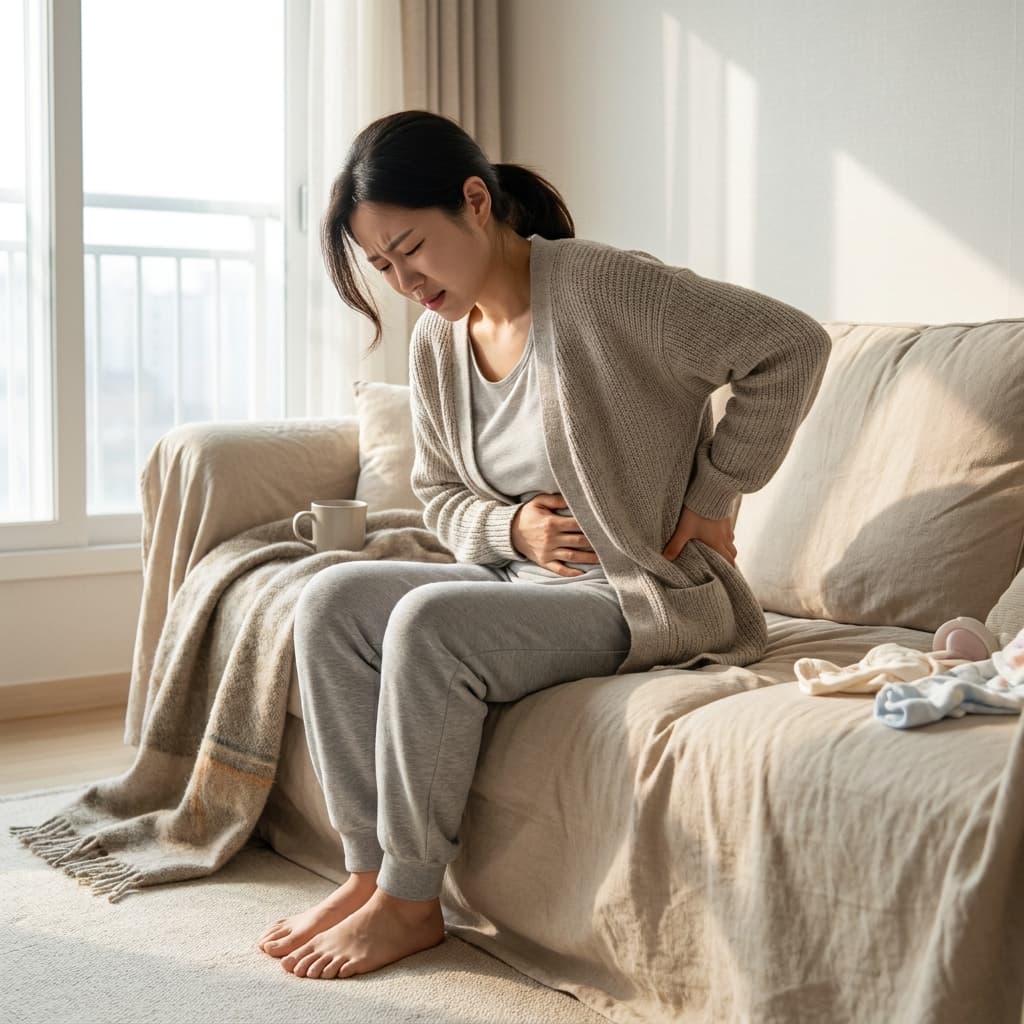
Postpartum Pelvic and Lower Back Pain: Listening to Your Body's Signals
Hello. This is Dalimchae Korean Medicine Clinic. # Postpartum Pelvic and Lower Back Pain: Listening to Your Body's Signals The process of carrying and bringing a beautiful new life into the world is more precious and noble than any great task. However, the joy of childbirth is often short-lived as many mothers suffer from postpartum pelvic and lower back pain. Feeling the stinging and throbbing in your back and pelvis while holding and breastfeeding your baby can lead to anxiety, making you wonder, "Can I overcome this?" The intensity of the pain that keeps you awake every night is too great to simply dismiss as 'something everyone goes through after childbirth.' It is time to stop suffering alone, listen to the clear signals your body is sending, and start the right treatment. 💡 **[Key Answer]** **The 3 most common causes of postpartum pelvic and lower back pain:** ① Ligament laxity due to excessive secretion of relaxin hormone / ② Misalignment of pelvic joints during the childbirth process / ③ Depletion of energy and stagnation of blood (stagnant blood) due to childbirth. Dalimchae Korean Medicine Clinic uses a **constitutional improvement** approach to create a fundamental environment where the mother's body can recover itself and become healthy again, rather than simply suppressing symptoms. ## Why does postpartum back pain occur? Postpartum pelvic and back pain is not just a remnant of labor pains. During pregnancy and childbirth, a woman's body undergoes tremendous changes. The biggest cause is a hormone called 'Relaxin.' Relaxin plays a role in widening the pelvis by relaxing the pelvic ligaments to aid childbirth. If this hormone is secreted excessively or fails to function properly after childbirth, the instability of the pelvic joints can increase, leading to pain. In addition, the immense pressure and physical stress on the pelvis and spine during childbirth are major causes of pelvic and back pain. Both natural and cesarean sections can affect the alignment of the pelvis, and a misaligned pelvis puts continuous strain on surrounding muscles and ligaments, causing chronic pain. In Korean medicine, this postpartum pain is viewed as 'Sanhupung' (postpartum wind syndrome), with the depletion of Qi and blood (氣血) and the stagnation of Eohyeol (瘀血, stagnant blood) during the childbirth process seen as important causes. After childbirth, energy levels drop sharply and blood circulation becomes sluggish, making it easy for stagnant blood to accumulate. This stagnant blood causes pain and slows recovery, leading not only to pelvic and back pain but also to pain in joints throughout the body, such as wrists and ankles. ## How can postpartum pain be improved with Korean medicine treatment? Korean medicine treatment for postpartum pain goes beyond simply calming the pain; it focuses on recovering the mother's entire body weakened by childbirth, strengthening the immune system, and considering future health. A systematic review and meta-analysis study by Kwon Eun-young's research team published in the journal Healthcare (Basel) in 2023 synthesized 9 randomized controlled trials (RCTs) involving 652 patients with puerperal wind syndrome. The study found that both herbal medicine alone and in combination significantly improved Visual Analogue Scale (VAS) scores for pain, total effective rate, Oswestry Disability Index (ODI) for back pain, and Quality of Life (QoL). Furthermore, few serious side effects were reported during the study, leading to the conclusion that herbal medicine treatment is effective and safe for improving pain and systemic symptoms related to Sanhupung. This study suggests that Korean medicine treatment can be an important alternative for managing postpartum pain. There are other interesting research results. A 2019 meta-analysis study from Nihon University in Japan compared the effects of 'Kyukichoketsuin,' a herbal medicine used for postpartum recovery, with 'Methylergometrine maleate,' a Western medicine, through 4 RCTs. The study found no statistically significant difference between the two treatments in the position of the uterine fundus, an important indicator of uterine recovery. This means that Kyukichoketsuin has similar effects to Western medicine in uterine recovery. In particular, when comparing patients complaining of severe postpartum pain, the Kyukichoketsuin group showed much better pain improvement. This study suggests that Korean medicine treatment has equivalent effects to Western medicine in uterine recovery and may show even better effects in relieving postpartum pain. Based on this data, Dalimchae Clinic focuses on solving the fundamental cause of postpartum pain and recovering the mother's overall health. ## Dalimchae Clinic's Constitutional Improvement: Creating a Body That Doesn't 'Turn On' Again Dalimchae Clinic does not view postpartum pain as just a temporary phenomenon. We aim to fundamentally improve the constitution so that the body weakened by childbirth does not fall ill again. **Constitutional improvement** means creating a healthy state where the body builds its own immunity and regains balance so that symptoms do not 'turn on' again, rather than just rushing to turn off symptoms. To this end, Dalimchae Clinic Songdo Branch closely examines each mother's constitution and childbirth process, and establishes a customized treatment plan considering the pattern of current pain and psychological state. 'Postpartum restorative medicine' to replenish Qi and blood and remove stagnant blood to help uterine recovery, 'Chuna therapy' to correct misaligned pelvis and spine to relieve pelvic and back pain, and 'acupuncture treatment' to promote Qi and blood circulation and reduce pain can be applied in combination. This constitutional improvement treatment helps not only with physical discomfort such as postpartum back pain or pelvic pain but also with psychological issues like postpartum depression, lethargy, and sleep disorders. This is because only when the mother's body is healthy can she enjoy child-rearing without getting exhausted. In particular, the chronic discomfort such as Sanhupung experienced by many mothers seeking a Songdo postpartum Korean medicine clinic is important to regain the body's balance through constitutional improvement. ## Postpartum Pelvic and Back Pain Self-Diagnosis Checklist If 3 or more items apply, consider active Korean medicine complex treatment for postpartum pelvic and back pain. If 5 or more, immediate visitation is recommended. * ( ) Stiffness and severe pain in the back or pelvis upon waking up in the morning. * ( ) A 'popping' sound or stinging sensation in the pelvis when sitting down, standing up, or changing posture. * ( ) Difficulty holding the baby or breastfeeding for a long time due to back or pelvic pain. * ( ) Pain in the pelvic area when walking or going up and down stairs. * ( ) Difficulty falling asleep when lying down at night due to discomfort in the back or pelvis. * ( ) Sharp decline in physical strength and easy fatigue after childbirth. * ( ) Feeling generally cold or coldness in specific areas. (Sanhupung symptoms) * ( ) Severe mood swings and frequent feelings of irritability or depression. (Postpartum depression) 3+ items → Postpartum pain suspected → Review Korean medicine complex treatment 5+ items → Immediate visitation recommended --- **Q. How long does postpartum pelvic pain last?** A. Pelvic ligaments relaxed by the influence of Relaxin hormone usually return to their place over 4-6 months. However, if this process is not smooth or management is lacking, pain can last for more than a year or develop into chronic pain. It is important to shorten the recovery period and prevent chronicity with active management. **Q. Is it okay to take herbal medicine while breastfeeding?** A. Yes, Dalimchae Clinic's postpartum restorative medicine is prescribed mainly with herbal ingredients that are safe for the baby and do not affect the quality of breast milk. Customized prescriptions are made considering individual constitution and health status under the diagnosis of an experienced Korean medicine doctor, so you can take it with confidence. **Q. Are Sanhupung and postpartum pelvic/back pain the same?** A. Sanhupung is a Korean medicine concept encompassing various physical and mental discomforts appearing after childbirth. Postpartum pelvic and back pain is one of the many symptoms of Sanhupung, often appearing alongside joint pain and coldness. Dalimchae Clinic's goal is to treat the whole body harmoniously from the perspective of Sanhupung to improve not only pain but also other accompanying symptoms. **Q. Can postpartum diet and body correction also be done at the clinic?** A. Yes, the body's recovery process after childbirth is closely related to body shape recovery. Dalimchae Clinic's postpartum care helps correct a misaligned pelvis and strengthen weakened abdominal and pelvic floor muscles to straighten the body shape. Only when the body is healthy can effective postpartum dieting without the yo-yo effect be possible. --- Postpartum pelvic and lower back pain is not a problem that can be solved by enduring. You no longer have to ignore the signals your body has been sending for a long time. If you approach in the right direction, the body responds faster than you think. Bring your symptoms exactly as they are. At Dalimchae Clinic, we will find the cause together. Where life blooms. For herbal medicine, it's Dalimchae Korean Medicine Clinic. Check your symptoms similar to mine through the AI consultation on the Dalimchae Clinic website first! This article is health information compiled by Dalimchae medical staff based on questions frequently received in the treatment room. Medical Supervision | Women/Pregnancy Treatment Standards Dalimchae Clinic Songdo Branch Korean Medicine Doctor Oh Hyunmin (Postpartum Care Column)