
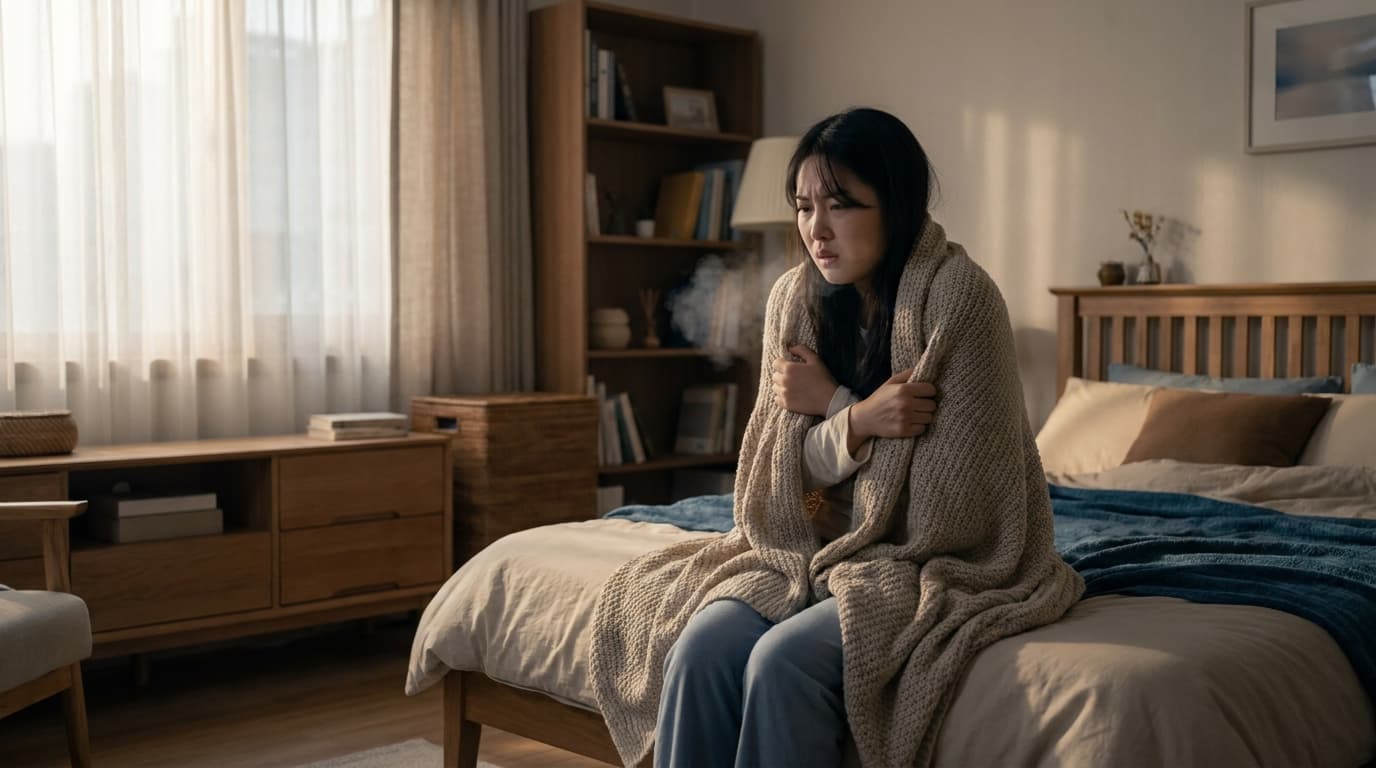
Postpartum Joint Chill, Shivering from Cold Wind: Time for Change in Postpartum Wind Syndrome
Postpartum Joint Chill, Shivering from Cold Wind: Time for Change in Postpartum Wind Syndrome Hello. This is Dalimchae Korean Medicine Clinic. # Shivering joint pain after childbirth, shivering to the bone from even a cold wind—postpartum wind syndrome, time for a change. The joy of meeting the baby is short-lived, and a mother's body undergoes massive changes through childbirth. Many mothers complain of symptoms like "my joints ache from the cold wind after childbirth," "my joints are sore and my wrists hurt." In particular, the feeling of chill going down to the bones when air conditioner wind or cold water touches your hands is a pain beyond mere fatigue. We call these various pains and chill symptoms that arrive after childbirth 'postpartum wind syndrome' (산후풍). Many mothers try to endure it thinking 'is this normal?' or 'it will get better with time,' but postpartum wind syndrome can lead to chronic pain if left unattended, requiring active management. 💡 **Key Answer** Top 3 most common causes of **postpartum bone joint chill**: ① Depletion of Qi and Blood & Blood Stasis / ② Joint relaxation and ligament weakening / ③ Decreased body temperature regulation and weakened immunity. Dalimchae Korean Medicine Clinic helps solve this fundamentally through constitutional improvement that builds the body's self-recovery power rather than merely suppressing symptoms. ## Why do bones and joints feel chilled and painful after childbirth? Postpartum bone joint chill and joint pain are common among Korean mothers. In fact, according to a study, 66.9% of mothers admitted for childbirth complained of joint pain. The causes of such postpartum joint pain are complex and can be explained in three main ways. First, **extreme depletion of Qi and Blood and blood stasis during childbirth**. Childbirth demands immense energy from a woman's body, damaging Qi and Blood in the process. Also, if blood stasis (waste products remaining in the uterus after childbirth) is not properly eliminated, it hinders systemic circulation, causing pain and chill. In Korean medicine, this Qi and Blood deficiency and blood stasis are viewed as major causes of postpartum wind syndrome. Second, **joint relaxation and ligament weakening**. During pregnancy, the hormone relaxin is secreted to relax pelvic joints and ligaments for delivery. When this relaxed state persists after childbirth, joints become unstable, and weakened ligaments feel pain from small impacts. Particularly, soreness and pain tend to concentrate on frequently used joints like wrists, knees, and lower back. Third, **decreased body temperature regulation and weakened immunity**. After childbirth, hormonal changes and weakened immunity reduce the body's defense system. At this time, external cold and dampness easily penetrate, hindering blood circulation around muscles and joints, leading to chilled bones and cold sensations. ## How can postpartum wind syndrome change with Korean medicine treatment? Dalimchae Korean Medicine Clinic Songdo branch provides personalized Korean medicine treatments for mothers suffering from postpartum joint chill and pain. Beyond simple symptom relief, we create an environment where the body can recover on its own through fundamental constitutional improvement. A 2020 review of randomized controlled trials on Korean traditional medicine treatment for postpartum pain in Korea confirmed the efficacy and safety of traditional medicine treatments for postpartum pain. This study analyzed 12 RCTs including acupoint therapy, herbal medicine, combination therapy, and Chuna therapy, reporting significant effects in all experimental groups compared to control groups with only mild side effects. This suggests various Korean medical treatments are effective in easing postpartum pain. Furthermore, a 2022 qualitative study by Dr. Joo-Hee Seo's research team at the National Medical Center published in the International Journal of Environmental Research and Public Health revealed that Korean medicine-based postpartum health care positively influenced postpartum wind syndrome symptom management. Participating mothers reported improvements such as lochia discharge, decreased pain and cold sensation, warmed body and reinforced energy, better appetite, and relaxed stomach. Notably, about 90% of postpartum wind syndrome symptoms improved after Korean medical intervention, emphasizing its usefulness. These research findings show that Korean medicine treatment can provide practical help to mothers visiting Songdo postpartum wind syndrome clinics. Dalimchae Korean Medicine Clinic Songdo branch helps restore weakened bodies healthily and regain vibrant daily lives through constitutional improvement treatments that boost the body's recovery power. ## Dalimchae Korean Medicine Clinic's Constitutional Improvement Treatment: Creating a Body That Doesn't Turn Off Again At Dalimchae Korean Medicine Clinic, we approach postpartum wind syndrome, including postpartum bone joint chill and generalized joint pain, with the fundamental treatment principle of **constitutional improvement**. Constitutional improvement is not just temporarily suppressing symptoms, but building the body's resistance to illness and enabling it to maintain a healthy state. It is like solving the fundamental cause so that a turned-off fire does not turn back on. After childbirth, Qi and Blood become weak and body temperature regulation unstable, making the body easily collapse from small stimuli. In this situation, Dalimchae Korean Medicine Clinic's constitutional improvement treatment proceeds in the following directions: * **Replenishing Qi & Blood and improving circulation:** Replenishes Qi and Blood consumed by childbirth and disperses stagnated blood to smooth whole-body blood circulation. This supplies sufficient nutrition to joints and muscles and promotes waste elimination to alleviate pain and chill. * **Strengthening joints and ligaments:** Boosts energy around weakened joints and strengthens ligaments to increase joint stability. This prevents progression to chronic joint pain. * **Balancing autonomic nervous system and immunity:** Restores the balance of the unstable autonomic nervous system after childbirth, normalizes body temperature regulation, and strengthens lowered immunity to protect the body from external coldness. These constitutional improvement treatments create greater synergistic effects by complexly applying Korean medical treatments such as herbal medicine, acupuncture, moxibustion, and pharmacopuncture tailored to individual constitutions and symptoms. ## FAQ: Frequently Asked Questions about Postpartum Wind Syndrome **Q. When is the best time to start treatment for postpartum wind syndrome?** A. It is most effective to start prevention and treatment right after childbirth during the postpartum care period (usually 6 weeks to 100 days). Since the body's recovery power is highest at this time, active management without missing this period is crucial. **Q. Can I receive Korean medicine postpartum wind syndrome treatment while breastfeeding?** A. Yes, Dalimchae Korean Medicine Clinic's postpartum treatments are prescribed to be safely received by breastfeeding mothers. We carefully select safe herbs for nursing mothers so as not to affect breast milk quality, and safely combine bee venom pharmacopuncture or moxibustion. **Q. Can postpartum wind syndrome symptoms get better naturally?** A. Some mild symptoms may improve over time, but many cases become chronic and remain as stubborn pain if left unattended. Especially when joints and ligaments remain loose and immunity is weakened after childbirth without proper care, symptoms easily worsen. **Q. Are other postpartum symptoms treated along with postpartum bone joint chill?** A. Since Dalimchae Korean Medicine Clinic's postpartum wind syndrome treatment aims for overall postpartum recovery, it helps improve not only bone joint chill but also postpartum edema, lochia discharge issues, energy depletion, indigestion, insomnia, and postpartum depression. Postpartum wind syndrome is not something to endure and solve. You no longer need to ignore the signals your body has been sending for a long time. When approached in the right direction, the body responds faster than you think. Bring the symptoms you are experiencing as they are. Dalimchae Korean Medicine Clinic will find the cause together. Where life blossoms. Herbal medicine is Dalimchae Korean Medicine Clinic. Check similar symptoms first through Dalimchae Korean Medicine Clinic's homepage AI consultation! Medical supervision | Dalimchae Korean Medicine Clinic Songdo branch Korean medicine doctor Oh Hyunmin (Postpartum Care Column) #PostpartumWind #JointChill #PostpartumCare #SongdoPostpartumClinic #ConstitutionalImprovement