
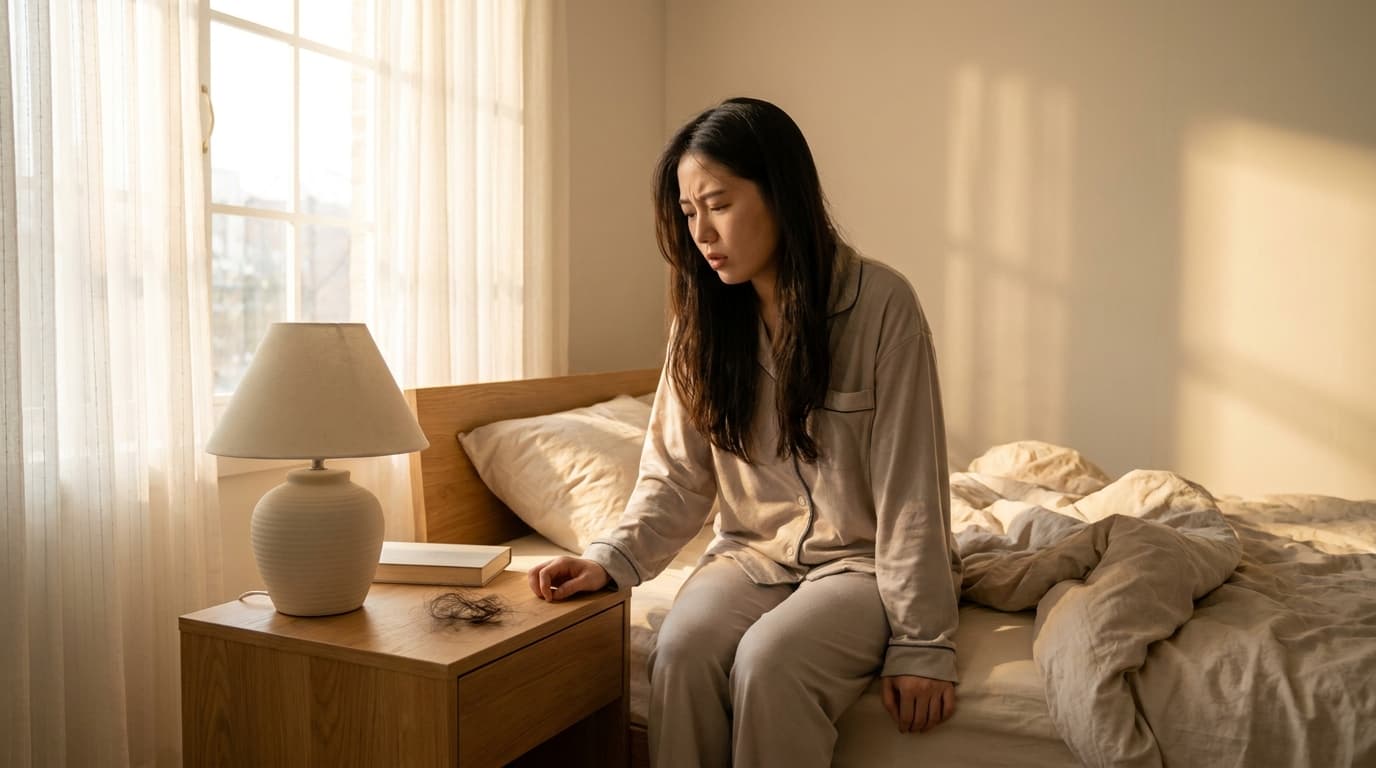
Postpartum hair loss, is it okay We must listen to the recovery signal
Hello, this is Dalimchae Korean Medicine Clinic. # Postpartum hair loss, is it okay? We must listen to the recovery signal. Are you embarrassed by a handful of fallen hair after childbirth? Seeing your pillow covered in hair in the morning makes your heart sink with the worry, 'Will this be permanent hair loss?' Having gone through the remarkable change of carrying and bringing a new life into the world, your body needs even more delicate care, yet the mother's health is often neglected. In particular, 'postpartum hair loss' is known as a natural phenomenon experienced by many mothers, but if the degree is severe or recovery is slow, it can be an important signal sent by your body. 💡 **[Key Answer]** 3 most common causes of 'postpartum hair loss': ① Rapid female hormone changes / ② Qi-blood damage and physical exhaustion due to childbirth / ③ Parenting stress and nutritional imbalance Dalimchae Korean Medicine Clinic helps restore a healthy hair cycle by boosting the body's recovery power after childbirth through **constitutional improvement**. ## Why do hair loss and hair fall happen so much after childbirth? During pregnancy, the level of the female hormone estrogen increases, prolonging the growth phase of hair and causing less hair loss than usual. Normally, about 50-100 hairs fall out a day, but during pregnancy, only 5-10 hairs may fall out. However, after childbirth, estrogen levels drop sharply, and the hairs that did not fall out transition into the telogen phase all at once, leading to massive hair shedding. This is called 'postpartum telogen effluvium'. In addition to simple hormonal changes, complex factors such as qi-blood depletion and decreased physical strength during childbirth, sleep deprivation due to parenting, psychological stress, and nutritional imbalance from irregular meals further intensify hair loss. ## Can postpartum hair loss heal naturally? Most 'postpartum hair loss' tends to peak between 3 and 6 months after childbirth and recover naturally within 1 year. However, not all mothers go through the same process. The speed and degree of recovery vary greatly depending on individual constitution, postpartum care status, breastfeeding status, and stress levels. In particular, if 'Songdo postpartum hair loss' persists along with other postpartum symptoms such as chronic fatigue, indigestion, and anxiety, it may mean that the body's fundamental recovery power has dropped, so it is advisable to get help from an expert. If postpartum hair loss persists for more than 6 months or is severe, caution is needed as it can lead to permanent hair loss. ## How does Korean medicine view the cause of postpartum hair loss? Korean medicine does not view postpartum hair loss simply as a hair problem. Childbirth has a profound impact on a woman's body, especially as a process that heavily depletes qi and blood. When qi and blood become deficient, hair cannot be properly nourished, leading to hair loss. In addition, parenting stress and fatigue weaken the functions of the liver and kidneys, becoming factors that worsen hair loss. Dalimchae Korean Medicine Clinic focuses on normalizing the hair growth environment by improving the mother's overall health condition, such as qi-blood deficiency and organ function decline. This is not simply suppressing symptoms, but promoting blood circulation and nutrient supply to the hair roots to induce hair growth. ## What are the actual research studies on postpartum hair loss treatment? The therapeutic effect on telogen effluvium, such as 'postpartum hair loss', has been confirmed through various studies. A study published in the international journal PMC in 2025 evaluated 106 premenopausal women aged 18-40 who took a drinkable nutraceutical for 6 months. The results showed statistically significant improvements in hair density and normalization of the hair growth cycle. The researchers reported that in the active group, hair density increased significantly compared to the placebo group: 17.53 ± 2.46 vs 9.56 ± 2.43 hairs/cm² at Day 90, and 27.31 ± 2.61 vs 18.23 ± 2.98 hairs/cm² at Day 180 (Day 90 P = 0.02, Day 180 P < 0.01). Furthermore, the anagen-to-catagen/telogen (A:C/T) ratio also significantly improved from 8.20:1 to 14.19:1 in the active group after 180 days (P < 0.001). The researchers concluded that such a multifaceted nutritional approach is effective in managing telogen effluvium. These studies suggest that hair loss is closely connected to overall systemic health rather than just a hair issue, which aligns with the fundamental enhancement of recovery power pursued by Dalimchae Korean Medicine Clinic's constitutional improvement treatment. Additionally, a 2004 study evaluated the effects of a specific dietary supplement (L-cystine, medicinal yeast, and pantothenic acid complex) in 30 healthy women with telogen effluvium over 6 months using a double-blind, placebo-controlled design. The results showed that the active treatment group experienced a statistically significant improvement and normalization of the mean anagen hair rate within 6 months (p = 0.003), whereas the placebo group showed no significant change (p = 0.85). The researchers analyzed that this dietary supplement promotes hair growth, specifically appearing to induce anagen. Similarly, activating the hair growth phase and inducing a healthy hair cycle is the core objective of the constitutional improvement treatment pursued by Dalimchae Korean Medicine Clinic as a 'Songdo Korean medicine clinic'. ## Dalimchae Korean Medicine Clinic's 'Constitutional Improvement' Treatment Principle Dalimchae Korean Medicine Clinic applies the principle of 'constitutional improvement' to treatment for 'postpartum hair loss'. This aims to go beyond simply stopping falling hair to create a healthy body where symptoms do not recur. After childbirth, various factors such as female hormone changes, qi-blood deficiency, parenting stress, and nutritional imbalance easily disrupt body balance. These imbalances can lead not only to hair loss but also to various postpartum symptoms such as postpartum wind disorders (sanhupung), chronic fatigue, and indigestion. Constitutional improvement treatment closely diagnoses each mother's constitution and current body condition, prescribing custom herbal medicine that replenishes qi-blood damaged by childbirth and strengthens the functions of internal organs. In addition, acupuncture and pharmacopuncture treatments are combined to improve scalp heat and reduced blood circulation that hinder hair growth, making the scalp environment healthy. Through this process, the body's overall immunity and recovery power increase, helping hair naturally regain a healthy growth cycle, which is the core 'postpartum hair loss' treatment goal of Dalimchae Korean Medicine Clinic. ## Are you also experiencing severe postpartum hair loss? Check with this checklist! If 3 or more of the following items apply to you, we recommend active management of postpartum hair loss and professional consultation at a 'Songdo women's Korean medicine clinic'. 1. Even after 3 to 6 months post-childbirth, the amount of falling hair does not decrease. 2. Every time I brush my hair or wash my head, a handful of hair falls out. 3. My scalp feels itchy or hot, and dandruff seems to have increased. 4. My hair has become thin and lacking strength, feeling dry and frizzy. 5. My crown or parting area looks visibly sparse and empty. 6. Aside from hair loss, I am experiencing other postpartum symptoms such as chronic fatigue, indigestion, and insomnia. 7. Parenting stress is severe, and I feel more sensitive and frequently anxious than usual. * **If 3 or more apply:** There is a high possibility that postpartum telogen effluvium has worsened. We recommend precise diagnosis and Korean medical treatment consultation at Dalimchae Korean Medicine Clinic. * **If 5 or more apply:** Hair and scalp health is in a red-alert state. We recommend starting constitutional improvement and hair loss treatment through immediate clinic visits. --- **Q. Can I take herbal medicine while breastfeeding?** A. Yes, Dalimchae Korean Medicine Clinic provides custom herbal medicine prescriptions for nursing mothers. We carefully select safe herbs that do not affect breastfeeding while helping replenish qi-blood and treat hair loss for the mother. **Q. How long does postpartum hair loss treatment take?** A. Although there are differences depending on individual constitution and the degree of hair loss, usually 3 to 6 months of steady treatment can lead to meaningful improvement. Steady management considering the hair growth cycle is important. **Q. Can postpartum hair loss heal naturally?** A. Most postpartum hair loss is temporary telogen effluvium, which often recovers naturally within 1 year after childbirth. However, if it persists for more than 6 months or hair loss is severe, it can lead to permanent hair loss, so it is advisable to get an expert diagnosis. **Q. Can postpartum hair loss and sanhupung be treated together?** A. Yes, Dalimchae Korean Medicine Clinic's constitutional improvement treatment focuses on comprehensively managing various postpartum symptoms such as sanhupung and chronic fatigue along with postpartum hair loss. Through systemic qi-blood circulation and organ function recovery, we help restore overall postpartum health. --- 'Postpartum hair loss' is not a problem that can be solved by enduring it. You no longer need to ignore the body's signals you have sent for a long time. If you approach it in the right direction, your body reacts faster than you think. Bring the symptoms you are experiencing as they are. Dalimchae Korean Medicine Clinic will find the cause together. Where life blooms. Herbal medicine is Dalimchae Korean Medicine Clinic. Check symptoms similar to yours first through the AI consultation on the Dalimchae Korean Medicine Clinic website! This article is health information organized together by Dalimchae medical staff based on questions actually received often in the consultation room. Medical Supervision | Dermatology Treatment Standard, Songdo Branch of Dalimchae Korean Medicine Clinic, Korean Medicine Doctor Oh Hyun-min (Hair Loss Column) #PostpartumHairLoss #PostpartumHairLossCare #HairLoss #WomensHairLoss #SongdoPostpartumHairLossClinic #ConstitutionalImprovement #BreastfeedingHairLoss #SongdoKoreanMedicineClinic Pregnancy & Postpartum - Fertility & Pregnancy Preparation