
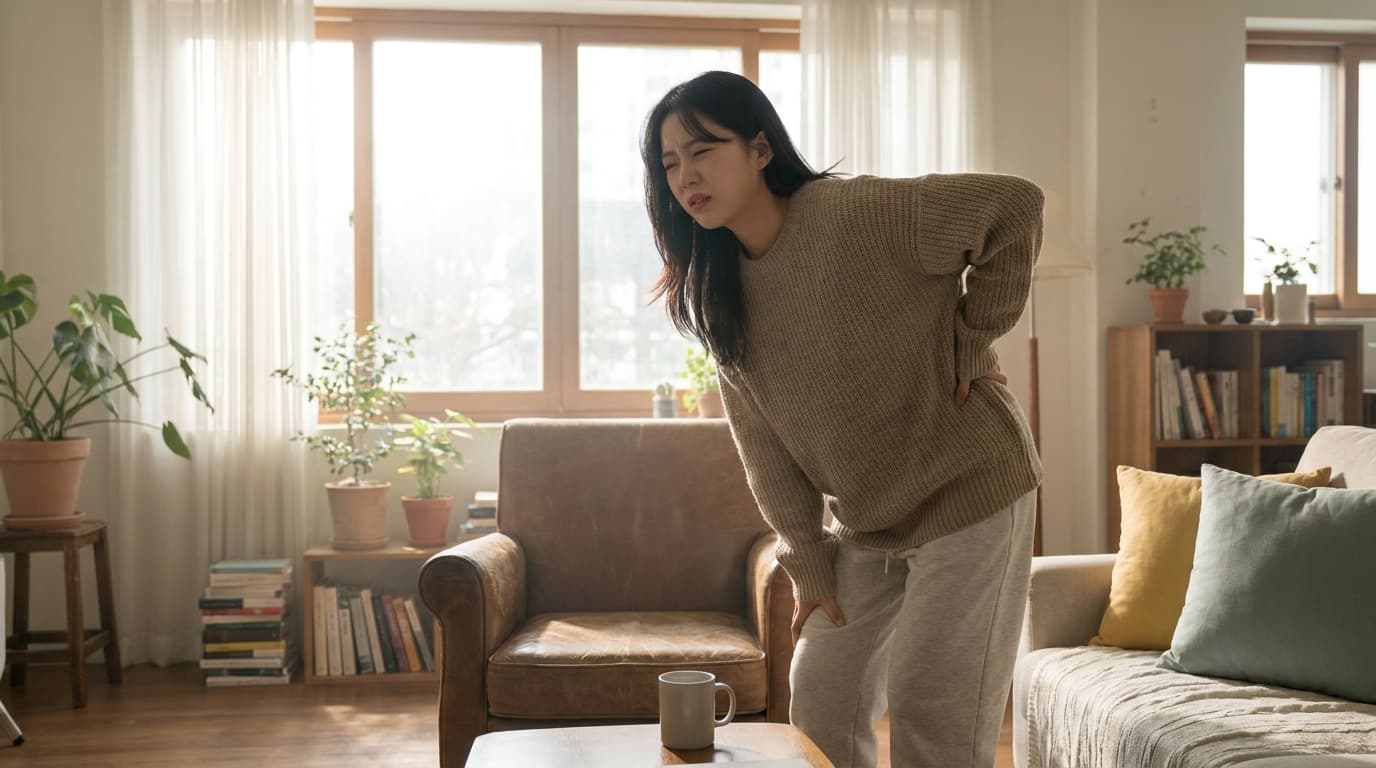
Pelvic Heavy Pulling Sensation Could It Be Ovarian Cyst or Uterine Fibroid
Hello, this is Dalimchae Korean Medicine Clinic. # Pelvic Heavy Pulling Sensation Could It Be Ovarian Cyst or Uterine Fibroid Suddenly or with surprising changes, do you feel a heavy pulling sensation on one side of your pelvis? Pricking or heavy pain and lower abdominal discomfort are common symptoms women experience at least once. However, when such pain persists, many worry whether it might be women's diseases like ovarian cysts or uterine fibroids. When pain worsens, it interferes with daily life, and particularly during menstruation, women may feel even more distress. When you feel anxious and hesitant to visit a hospital, you are likely curious about the true cause and solution for this pain. 💡 **[Core Answer]** The 3 most common causes of "Pelvic heavy pulling sensation on one side": ① Ovarian cyst / ② Uterine fibroid / ③ Pelvic inflammatory disease Dalimchae Korean Medicine Clinic restores fundamental bodily balance rather than merely suppressing symptoms through **constitutional improvement**, creating a healthy uterine environment without recurrence. ## Why Does Heavy Pulling Pain on One Side of the Pelvis Occur? Heavy pain felt on one side of the pelvis can appear due to various causes. The most common suspicion is female reproductive system diseases. In particular, ovarian cysts and uterine fibroids are often the main causes of lower abdominal or pelvic pain. Ovarian cysts are fluid-filled sacs in the ovaries that can cause severe pain when enlarging or twisting. Uterine fibroids are benign tumors in the muscle layer of the uterus causing menstrual cramps, heavy menstrual bleeding, lower abdominal pressure, and heavy pelvic pain depending on location and size. In addition, pelvic inflammatory disease, endometriosis, digestive issues, or musculoskeletal imbalance can cause pelvic pain. In particular, stress, overwork, and irregular lifestyle habits disrupt autonomic nervous system balance, hindering blood circulation and worsening inflammatory reactions, intensifying pelvic pain. Dalimchae Korean Medicine Clinic Incheon branch analyzes these complex causes in depth to propose fundamental solutions. ## Do Ovarian Cysts and Uterine Fibroids Differ in Symptoms? Both ovarian cysts and uterine fibroids can cause pelvic pain, but they have distinct characteristics. Ovarian cysts initially often show no special subjective symptoms. However, when cysts enlarge, rupture, or undergo torsion (twisting), they can cause sudden, severe lower abdominal pain, abdominal bloating, and indigestion. In contrast, uterine fibroids are benign tumors in the uterine muscle layer, frequently accompanied by heavy menstruation, menstrual cramps, frequent urination, constipation, pelvic pressure, and heavy pain. Symptoms vary in type and intensity depending on size and location, and fibroids can continue growing until menopause due to hormonal influence. ## Why Do I Feel Pain Even When Tests Show "Normal"? Many patients complain, "Test results are normal, but the pain continues." This is likely pain stemming from minute functional abnormalities not clearly revealed by modern medical tests, chronic inflammation, or overall bodily imbalance. In Korean medicine, causes of such pain are viewed as circulation disorders and waste accumulation such as 'Eohyeol' (stagnant blood) and 'Seubdam' (damp phlegm). In particular, the female pelvis is densely packed with vital reproductive organs like the uterus and ovaries with high blood flow, making circulation issues easy to occur. When Qi and blood circulation are blocked and immunity decreases, pain is easily felt even with minor stimuli. Incheon pelvic pain Korean medicine clinic focuses on restoring overall bodily balance from this microscopic perspective to solve root causes of pain. ## How Does Constitutional Improvement Treatment at Dalimchae Korean Medicine Clinic Differ? Dalimchae Korean Medicine Clinic conducts **constitutional improvement** treatment comprehensively improving bodily balance and circulation systems rather than viewing pelvic pain solely as a localized problem. A systematic review and meta-analysis published in *Frontiers in Pharmacology* in 2024 positively evaluated the role of herbal medicine treatment in long-term management after ovarian endometrioma surgery. Analyzing 1938 patients across 22 randomized controlled trials (RCTs), the herbal medicine group significantly lowered recurrence rates compared to control and western medicine groups (OR=0.25 vs control, OR=0.26 vs western medicine). Furthermore, it increased overall clinical effective rate (OR=4.23 vs control, OR=2.94 vs western medicine) and effectively decreased pain intensity (VAS score MD=-0.86 vs surgery-only group). Researchers concluded herbal medicine contributes to recurrence reduction, clinical efficacy enhancement, and side effect mitigation, serving as a viable option for long-term management of ovarian endometrioma post-surgery. Additionally, a randomized double-blind study reported by the Korean Medicine Convergence Research Information Center administered Giji-Bokryeong-hwan modified decoction for 16 weeks to 78 symptomatic uterine fibroid patients (premenopausal women aged 18-52). Results showed significant improvements in symptom severity, functional impact of pelvic pain, herbal syndrome scores, fibroid volume, and uterine status in both low-dose and standard-dose groups (p<0.01). No serious side effects were reported, confirming safety. ## What Problems Can Occur If Pelvic Pain Is Left Untreated? Pelvic pain is an important signal sent by our body. Leaving it untreated can lead to more serious health problems beyond mere discomfort. For instance, growing ovarian cysts or uterine fibroids can compress surrounding organs, causing urinary and bowel disorders, and in severe cases lead to decreased ovarian function or infertility. Chronic pelvic pain increases stress, significantly lowers quality of life, and negatively impacts mental health like depression and anxiety. ## Pelvic Pain Self-Checklist Check how many of the following apply to you: * Irregular menstrual cycles or sudden increase in menstrual flow. * Menstrual cramps have worsened and painkillers are less effective. * Heavy pulling pain on one side of pelvis or lower abdomen appears consistently. * Frequent urination or discomfort during bowel movements. * Unexplained lower abdominal bloating and fullness. * Pain during sexual intercourse. * High stress and nervous sensitivity. Diagnosis and Recommendation: * 3 or more items apply: Suspect pelvic disease and circulation abnormality. Consult Dalimchae Korean Medicine Clinic Incheon branch for detailed cause analysis and combination herbal treatment. * 5 or more items apply: Immediate visit and precision diagnosis recommended. ## FAQ Q. When should I visit the hospital for one-sided pelvic pain? A. If pain persists for days, worsens, appears regardless of menstrual cycle, or is accompanied by fever, chills, or abnormal bleeding, seek immediate medical care. Q. Can ovarian cysts be treated with traditional medicine? A. Yes, depending on type, size, and symptoms, traditional treatment can be an effective alternative. Herbal prescriptions remove damp phlegm and Eohyeol, strengthen ovarian function, and aid cyst reduction and recurrence prevention. Q. Can uterine fibroids and severe menstrual cramps be treated together? A. Yes, Dalimchae Korean Medicine Clinic treats uterine fibroids and severe menstrual cramps concurrently through herbal prescriptions improving uterine circulation and removing Eohyeol, acupuncture, and other modalities. Q. What lifestyle habits help prevent pelvic pain? A. Regular lifestyle, sufficient sleep, balanced diet, consistent stretching, and light exercise are important. Keeping the lower abdomen warm and reducing cold food intake helps pelvic health. Where life blooms. Herbal medicine is Dalimchae Korean Medicine Clinic. Check your similar symptoms first through Dalimchae Korean Medicine Clinic website AI consultation! Medical supervision: Jihong Min, Korean Medicine Doctor at Dalimchae Korean Medicine Clinic Incheon Branch (Ovarian Cyst Column)