
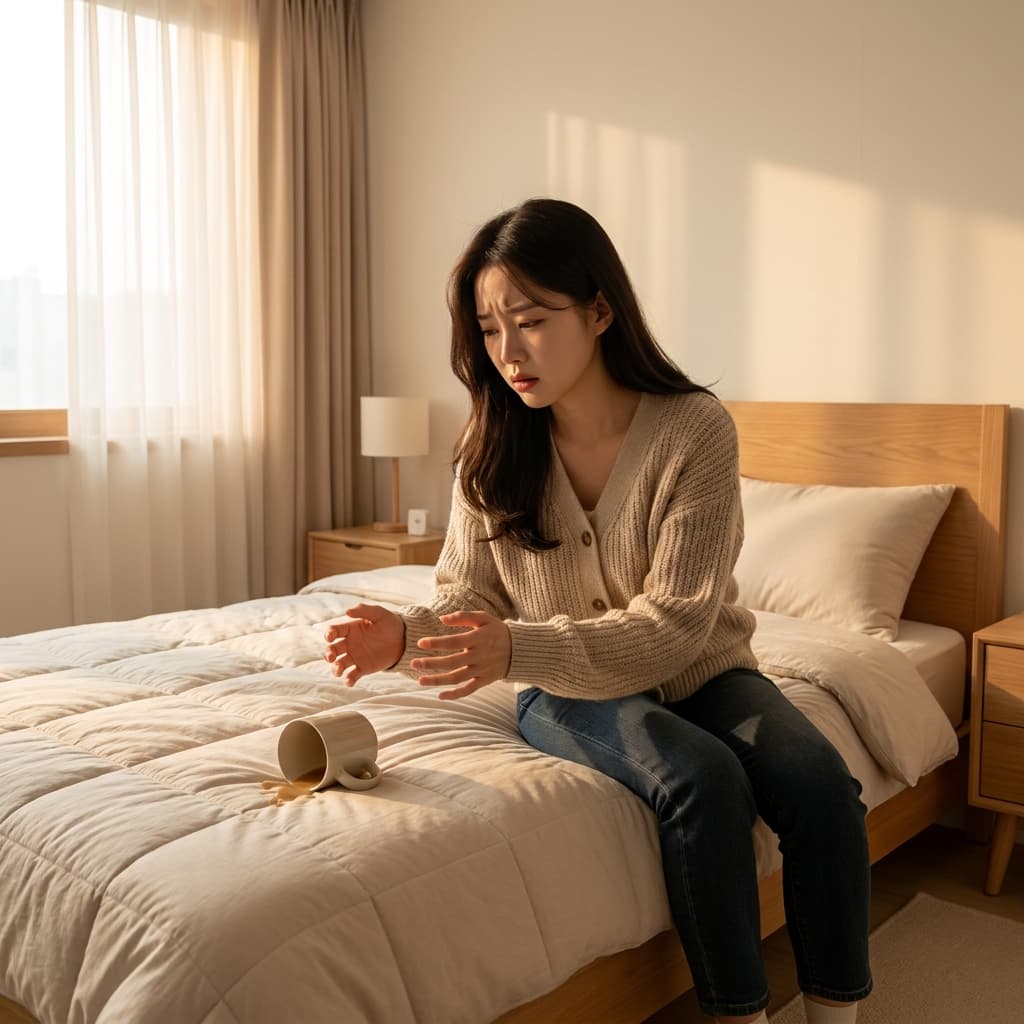
Parkinson's Disease, Drug Side Effects, and Anxiety: Can They Be Overcome with Korean Medicine?
Hello. This is Dalimchae Korean Medicine Clinic. # Parkinson's Disease, Drug Side Effects, and Anxiety: Can They Be Overcome with Korean Medicine? Have you been taking your medication steadily after being diagnosed with Parkinson's disease? At first, the symptoms improved significantly thanks to the effect of the medicine, but as time goes by, many people suffer from the medicine's decreasing effectiveness or unpredictable side effects. 'Can I get better than I am now while reducing my medicine?', 'Will combining Korean medicine treatment really help?' These concerns will be the common heart of many Parkinson's disease patients. Dalimchae Clinic thinks together to relieve these anxieties and curiosities and give new hope for Parkinson's disease treatment. 💡 **Key Answer** 3 most common difficulties patients experience during Parkinson's disease medication management: ① Decreased effectiveness and various side effects due to long-term medication ② Worsening of non-motor symptoms such as depression and sleep disorders in addition to motor symptoms like tremors and stiffness ③ Worsening of brain function decline and systemic autonomic nervous system imbalance Dalimchae Clinic helps reduce drug side effects, improve overall motor and non-motor symptoms of Parkinson's disease, and help patients improve their quality of life through **autonomic stabilization** treatment. ## Parkinson's disease medication, why do side effects occur and effectiveness decrease over time? Parkinson's disease is a degenerative brain disease that occurs as dopamine-secreting neurons in the brain are gradually lost. In the early stages, motor symptoms such as tremors, stiffness, slow movement, and postural instability mainly appear, but as the disease progresses, non-motor symptoms such as depression, anxiety, sleep disorders, and constipation are accompanied, greatly lowering the quality of life of patients. Modern medicine uses drugs (levodopa, etc.) that supplement deficient dopamine or stimulate dopamine receptors to control symptoms. When you first take the medicine, you may experience a 'honeymoon period' where symptoms improve as if by a lie. However, as the duration of medication increases, side effects such as 'wearing-off', where the duration of the drug effect becomes shorter, or 'dyskinesia', where the body moves regardless of will, are likely to appear. These side effects occur because drug responses become unstable as damage to dopamine neurons continues, and the brain loses its ability to regulate the drug. Eventually, patients suffer between the limits of drug effectiveness and side effects. ## Can Korean medicine treatment really help in improving Parkinson's disease symptoms and regulating medication? Parkinson's disease is a disease that is difficult to manage after treatment, but symptoms can be controlled and the progression of the disease can be slowed to improve quality of life through appropriate treatment and management. Recently, various clinical studies have shown that Korean medicine treatment has significant effects in improving symptoms of Parkinson's disease patients and can play a complementary role to existing drug treatments. A meta-analysis study published in 『Neural Regeneration Research』 in 2017 comprehensively analyzed the effectiveness of acupuncture treatment for Parkinson's disease patients. According to the results of this meta-analysis, which included 19 high-level studies out of a total of 25 randomized controlled trials (RCTs), acupuncture treatment showed significant improvement effects in the scores of stages 2, 3, and 4 and the total score of the Unified Parkinson's Disease Rating Scale (UPDRS), which is a motor symptom index of Parkinson's disease. In particular, the group that combined drug treatment and acupuncture treatment showed a greater effect than the group that received only drug treatment, and it was confirmed that acupuncture treatment alone was effective in relieving symptoms. The researchers concluded that acupuncture treatment can help relieve Parkinson's disease symptoms, delay symptom progression, reduce drug dosage, and reduce side effects. In addition, a study presented at the 2018 MDS Abstracts confirmed the effect of Korean medicine complex treatment on improving Postural Instability and Gait Difficulty (PIGD) in Parkinson's disease patients. This study analyzed PIGD scores among UPDRS scores after applying Korean medicine complex treatments such as acupuncture, bee venom pharmacopuncture, moxibustion, and herbal medicine treatment to 23 parkinsonism patients (including 16 idiopathic Parkinson's disease patients) admitted to the hospital from 2009 to 2017. As a result of treatment, the average PIGD score in the overall parkinsonism patient group decreased significantly from 8.35 before treatment to 4.52 after treatment (p \< 0.001), and especially in the idiopathic Parkinson's disease patient group, it was significantly improved from 9.13 to 4.63 (p \< 0.001). This suggests that Korean medicine treatment can contribute to reducing the risk of falls and improving gait ability in Parkinson's disease patients. These research results show that Korean medicine treatment is an effective alternative and complementary treatment method that can improve key symptoms of Parkinson's disease from various angles and complement the limits of drug treatment. Dalimchae Clinic Incheon Branch focuses on improving the quality of life of Parkinson's disease patients through customized Korean medicine treatment considering individual symptoms and constitution based on such scientific evidence. ## Dalimchae Clinic's Parkinson's disease treatment, by what principle does it stabilize autonomic nerves? Parkinson's disease involves not only damage to brain neurons but also deeply involves the autonomic nervous system that regulates our body's balance. Various non-motor symptoms experienced by Parkinson's disease patients, such as depression, anxiety, sleep disorders, indigestion, and constipation, as well as motor symptoms such as tremors, stiffness, and gait disorders, are closely related to autonomic imbalance. When the balance of autonomic nerves is broken, the brain cannot rest and is excessively excited or its function is lowered, which also negatively affects dopamine production and regulation. Dalimchae Clinic focuses on **autonomic stabilization** treatment to solve the fundamental problems of Parkinson's disease. This is not simply suppressing symptoms, but a treatment that restores the balance of the whole body and creates an environment where the brain itself can recover and maintain its function. Autonomic stabilization treatment helps improve Parkinson's disease symptoms through the following principles. * **Brain function activation and neuroprotection:** Herbal medicine and acupuncture treatment improve brain blood flow and reduce oxidative damage to neurons to activate brain function and contribute to the protection of dopamine neurons. This can inhibit the progression of Parkinson's disease and increase the effectiveness of drug treatment. * **Autonomic nervous system balance recovery:** It calms the excessively hyperactive sympathetic nervous system and activates the decreased parasympathetic nervous system to regain autonomic balance. Through this, it is effective in improving not only motor symptoms such as tremors, stiffness, and postural instability but also non-motor symptoms accompanied by Parkinson's disease such as insomnia, anxiety, depression, and indigestion. It is important to lower the heat of the nervous system and create an environment where the brain can rest—in Korean medicine, this is called Suseunghwagang (水昇火降). * **Systemic vitality and immunity strengthening:** Parkinson's disease patients often complain of chronic loss of vitality. Herbal medicine treatment uses medicinal herbs suitable for the individual's constitution and symptoms to supplement systemic vitality and strengthen immunity, helping to increase body resistance to disease and improve overall health conditions. Through this, it helps to recover the body exhausted by drug side effects and regain the vitality of daily life. These **autonomic stabilization** treatments demonstrate even more synergy when combined with modern medical drug treatment. Dalimchae Clinic Incheon Branch, a **Parkinson's disease clinic in Incheon**, closely analyzes the symptom stage and medication status of each patient to establish an optimal Korean medicine treatment plan. This will be a customized solution that minimizes drug side effects and maximizes symptom improvement effects for those looking for a **Parkinson's disease clinic in Songdo**. ## Parkinson's disease, what stage are my symptoms at? Self-diagnosis checklist Parkinson's disease is often difficult to diagnose early and symptoms progress slowly. Check which type your current symptoms correspond to through the checklist below, and receive a consultation from an expert early. **Parkinson's disease symptom self-check list** 1. Tremors appear in hands, feet, or jaw when at rest. 2. Arms, legs, or torso are stiff and do not move well. 3. Walking becomes slow, stride becomes narrow, and one walks with short, shuffling steps or the posture is stooped forward. 4. Facial expressions decrease (masked face), and the voice becomes small. 5. When writing, there is a tendency for the writing to become smaller (micrographia). 6. It is difficult to toss and turn when lying down, and delicate movements such as getting dressed or buttoning are difficult. 7. Postural instability makes it difficult to maintain balance, and there is a tendency to fall backward. 8. Suffering from gastrointestinal disorders such as chronic constipation and indigestion. 9. Sleep quality is poor, such as having difficulty falling asleep at night or waking up frequently. 10. Feeling depression or anxiety frequently without a special reason. **Judgment criteria:** * **If 3 or more apply:** Early Parkinson's disease or autonomic imbalance is suspected. It is necessary to review advanced tests and Korean medicine complex treatment. * **If 5 or more apply:** Since the progression of Parkinson's disease is suspected, immediate examination and treatment by a professional Korean medicine doctor is recommended. ## FAQ **Q. Is it okay to combine Korean medicine treatment while reducing Parkinson's disease medicine?** A. Yes, combining Parkinson's disease medication and Korean medicine treatment is possible and can rather help reduce drug side effects and increase symptom improvement effects. However, drug dosage adjustment must be carried out after consultation with the doctor in charge, and it is important to establish an optimal treatment plan through close communication with the Korean medicine doctor. **Q. Can Parkinson's disease be managed after treatment if I receive Korean medicine treatment?** A. Parkinson's disease is known as a degenerative disease that is still difficult to manage after treatment. However, Korean medicine treatment can significantly improve quality of life by slowing the progression of the disease and effectively improving motor symptoms such as tremors, stiffness, and gait disorders, and non-motor symptoms such as sleep disorders and depression. **Q. How long should I receive Korean medicine treatment for Parkinson's disease?** A. The duration of Korean medicine treatment for Parkinson's disease varies depending on the severity of the patient's symptoms, the progression of the disease, constitution, and treatment goals. Generally, due to the nature of chronic degenerative diseases, steady management is important, and in the beginning, intensive treatment is combined with treatment for maintenance management afterward. Dalimchae Clinic, an **Incheon autonomic nerve clinic**, guides you through the appropriate treatment period and method through individual customized consultations. **Q. Are insomnia and depression accompanied by Parkinson's disease also treated together with Korean medicine?** A. Yes, non-motor symptoms such as insomnia, depression, and anxiety frequently experienced by Parkinson's disease patients can also be improved together through Korean medicine treatment. Dalimchae Clinic's autonomic stabilization treatment corrects the balance of the brain and nervous system, which also has a positive effect on alleviating these neuropsychological symptoms. Parkinson's disease is not a problem that can be solved by enduring. You no longer have to ignore the signals your body has been sending for a long time. If you approach in the right direction, the body responds faster than you think. Bring your symptoms exactly as they are. At Dalimchae Clinic, we will find the cause together and help you regain a comfortable daily life without anxiety and worry. Where life blooms. For herbal medicine, it's Dalimchae Korean Medicine Clinic. Check your symptoms similar to mine through the AI consultation on the Dalimchae Clinic website first! This article is health information compiled by Dalimchae medical staff based on questions frequently received in the treatment room. Medical Supervision | Brain/Autonomic Nerve Treatment Standards Dalimchae Clinic Incheon Branch Korean Medicine Doctor Yang Yuchan (Parkinson's Disease Column)