
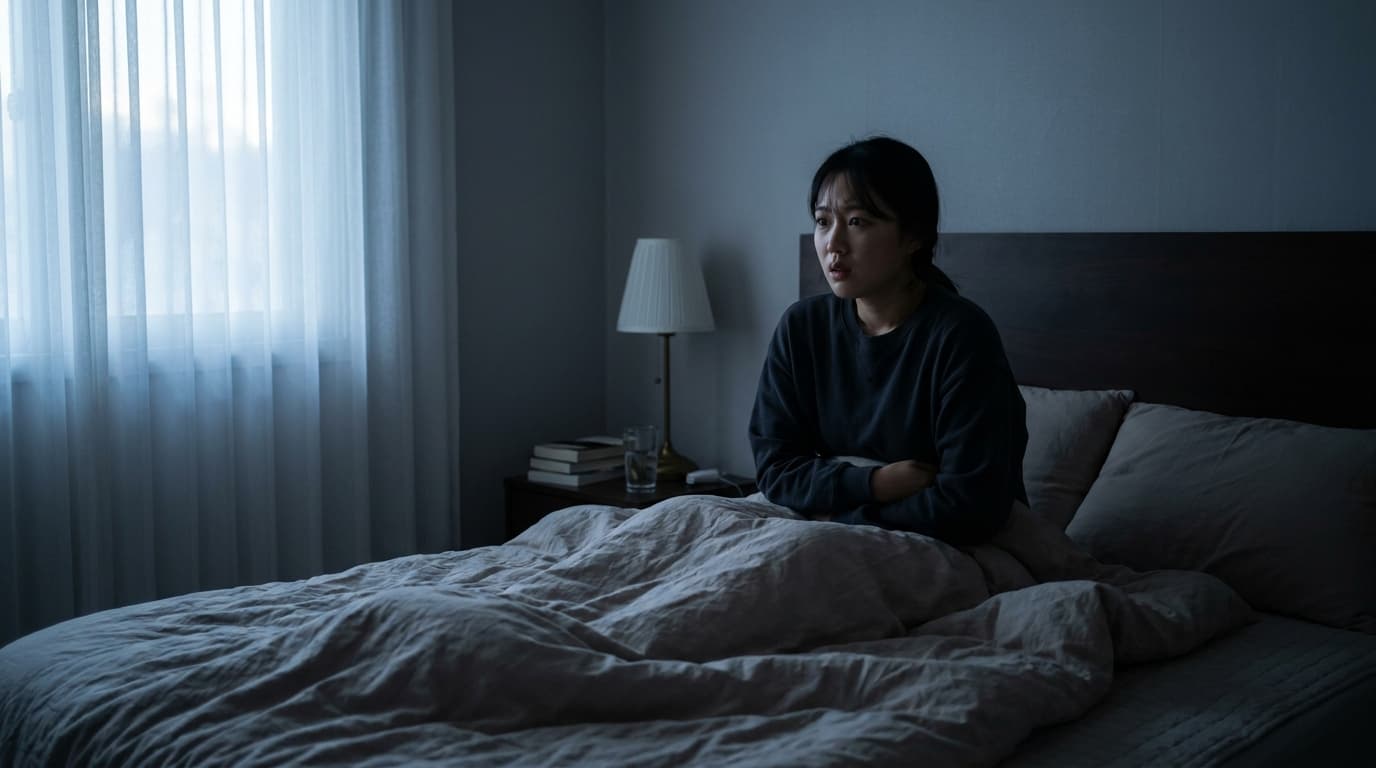
Nighttime Urination Urge Could It Be a Uterine Issue
Hello. This is Dalimchae Oriental Medicine Clinic. # Nighttime Urination Urge, Could It Be a Uterine Issue? Have you ever experienced waking up suddenly from a sound sleep due to a sudden urge to urinate? Many people visit hospitals complaining that "I feel the urge to urinate frequently at night." Especially women often worry and feel anxious, wondering if something has gone wrong with their uterine health. These nocturnal frequency and urinary urgency symptoms go beyond temporary inconvenience, severely impacting sleep quality and daily life. 💡 **Key Answer** 3 most common causes of frequent nighttime urination: ① Overactive bladder and weakened bladder function / ② Female hormonal changes and uterine environment issues / ③ Kidney and general physical stamina decline Dalimchae Oriental Clinic restores the fundamental balance of the body through **constitutional improvement** to help you regain a comfortable daily life without recurrence. ## Why Do You Feel the Urge to Urinate Frequently at Night? Is It Just Aging? Nocturia means waking up one or more times to urinate after falling asleep at night, while pollakiuria refers to urinating too frequently during the day. Many people dismiss nocturia or pollakiuria as a simple sign of aging or a temporary condition from drinking too much water. However, if these symptoms repeat, they can be important signals from your body. **Q. What is the most common cause of frequent nighttime urination?** A. The causes of nocturia are diverse. One of the most common causes is **overactive bladder**, where the bladder becomes overly sensitive, causing strong urges to urinate even when only a small amount is collected. Urinary tract infections or diabetes can also cause pollakiuria, and particularly in women, **female hormonal changes** or **uterine surrounding issues** can weaken bladder function, leading to nocturia or pollakiuria. Declining kidney function or weakened general physical strength with age are also important causes. **Q. When frequent nighttime urination occurs in women, could it really be a uterine issue?** A. Yes, it is very possible. In Korean medicine, the functions of the uterus and bladder are closely connected. Especially the lower abdomen in women is where vital organs like the uterus and bladder gather; poor blood circulation or coldness in this area can affect bladder function. Uterine conditions like uterine fibroids can compress the bladder and cause pollakiuria, and reduced female hormones after menopause can cause bladder mucosal atrophy and pelvic floor muscle weakness, degrading bladder function. Because health issues related to the uterus are closely linked to nocturia and pollakiuria symptoms, they should not be viewed merely as bladder problems but evaluated within the context of women's overall health. ## How Does Korean Medicine Treat Nocturia and Pollakiuria? Dalimchae Oriental Clinic does not view nocturia and pollakiuria simply as bladder problems, but treats them by finding the fundamental balance of the body. In particular, we focus on identifying and resolving causes such as **lower abdominal coldness**, **autonomic nervous system imbalance**, and **general physical stamina decline** that weaken bladder function. **Q. Is Korean medicine treatment effective for nocturia caused by overactive bladder?** A. The efficacy of Korean medicine treatment for improving overactive bladder symptoms has been verified through various clinical studies. In a study by Emmons and colleagues published in the `American Journal of Obstetrics and Gynecology` (2005) involving 74 women with overactive bladder who received acupuncture on bladder-related acupoints once a week for 4 weeks, the treatment group showed a 14% reduction in urination frequency compared to the control group (p\<0.013), a 30% reduction in urgency incontinence-related urination (p\<0.016), and a 13% increase in maximum bladder capacity (p\<0.01). Researchers concluded that acupuncture showed significant improvements in bladder capacity, urgency, frequency, and quality of life scores. Additionally, according to a report by `Yakup Shinmun` in 2013, Inae Oriental Clinic conducted Korean medicine treatment for over 30 days on 81 overactive bladder patients, showing a high treatment success rate of 92.6% and an average decrease of 3.80 urination episodes per 7 days. Particularly in a study including 75.3% refractory overactive bladder patients (those unresponsive to anticholinergics or unable to tolerate treatment due to side effects), it showed a 93.4% high success rate. Thus, Korean medicine treatment effectively strengthens bladder function fundamentally and lowers recurrence risk without the burden of western medication side effects. Dalimchae Oriental Clinic Incheon Branch promotes bladder function recovery and general health enhancement through customized herbal medicine, acupuncture, and moxibustion treatments tailored to each patient's symptoms and constitution. ### Dalimchae Oriental Clinic's Constitutional Improvement Principle: "Not Just Turning Off Symptoms, But Creating a Body Where They Don't Turn Back On" At Dalimchae Oriental Clinic, we provide **constitutional improvement** treatment that goes beyond temporarily suppressing symptoms for patients suffering from nocturia or pollakiuria, restoring fundamental body functions so symptoms do not reoccur. This is akin to fixing the engine itself rather than simply turning off a broken warning light so that the warning light never comes on again. In Korean medicine, excessive stress, irregular lifestyle habits, and weakened body conditions after childbirth cause organ functions to decline and the lower abdomen to become cold, making the bladder weak and sensitive. Especially for women, the health of the lower abdomen encompassing the uterus and bladder is extremely important. Dalimchae Oriental Clinic accurately diagnoses each individual's constitution and prescribes customized herbal medicine to nourish weakened kidney and bladder energy, remove lower abdominal coldness, and improve systemic circulation. Along with acupuncture and moxibustion on acupoints, this regulates excessive bladder contraction, strengthens pelvic floor muscle function, and promotes systemic Qi and blood circulation to help the body restore balance on its own. Accompanying symptoms such as anxiety or sleep disorders can also be improved during this process. ## Could I Have Nocturia or Pollakiuria? Self-Diagnosis Checklist Check the items below, and if any apply, we recommend visiting Dalimchae Oriental Clinic Incheon Branch for accurate diagnosis and consultation. * Waking up 2 or more times at night after falling asleep to urinate. * Going to the bathroom more frequently than every 2 hours during the day. * Difficulty holding urine when the urge strikes, sometimes leaking on the way to the bathroom. * Feeling a frequent urge even when urine volume is small. * Lower abdomen always feels cold or chilly. * Remaining sensation of incomplete emptying after urinating. * Suffering from chronic fatigue or stress. * Experiencing other gynecological conditions like headaches, dizziness, or menstrual cramps along with urinary issues. **Criteria:** * **3 or more items apply:** Suspect weakened bladder function and constitutional imbalance → Consider Korean medicine diagnosis and treatment. * **5 or more items apply:** Active treatment needed → Immediate hospital visit and precise diagnosis recommended. ## FAQ: Frequently Asked Questions About Nocturia and Pollakiuria **Q. Can nocturia and pollakiuria resolve naturally?** A. Mild symptoms may improve with lifestyle improvements alone, but most tend to become chronic. Because failing to resolve fundamental root causes increases recurrence likelihood, seeking expert help is important if symptoms persist. **Q. I lose sleep due to nighttime urination; are sleep problems treated together?** A. Yes, nocturia severely degrades sleep quality, inducing chronic fatigue and stress. Korean medicine treatment strengthens bladder function while restoring autonomic nervous system balance, helping improve sleep disorders so you can enjoy comfortable deep sleep away from sleepless nights. **Q. I live in Incheon; what should I consider when choosing an Incheon nocturia clinic?** A. When choosing an Incheon nocturia clinic, it is important to check whether they provide customized treatments tailored to individual constitutions and symptoms and practice medicine with professional understanding of women's conditions. Choosing a medical institution with a treatment philosophy focused on finding root causes and preventing recurrence rather than just symptom relief is recommended. **Q. How long do the effects last after Korean medicine treatment?** A. Because Korean medicine treatment improves root causes and enhances the body's resilience, effects can last long-term even after completing treatment. When steady lifestyle management is maintained, it greatly helps sustain healthy urination habits without recurrence. Urinating frequently at night is not a problem solved by enduring it. You no longer need to turn away from the body signals sent for a long time. When approached in the right direction, the body responds faster than you think. Bring your current symptoms as they are. Dalimchae Oriental Clinic will find the cause together. A place where life blooms. Herbal medicine is undoubtedly Dalimchae Oriental Clinic. Check your similar symptoms first through Dalimchae Clinic website AI consultation! This health information was compiled together by Dalimchae medical staff based on questions frequently received in the clinic room. Medical Supervision | Women's and Pregnancy Treatment Standard, Dalimchae Oriental Clinic Incheon Branch, Korean Medicine Doctor Yang Yuchan (Nocturia Column) #nocturia #pollakiuria #overactivebladder #constitutionalimprovement #incheonnocturiaclinic #bladderfunction #lowerabdominalcoldness #womenshealth #fertilitypreparation