
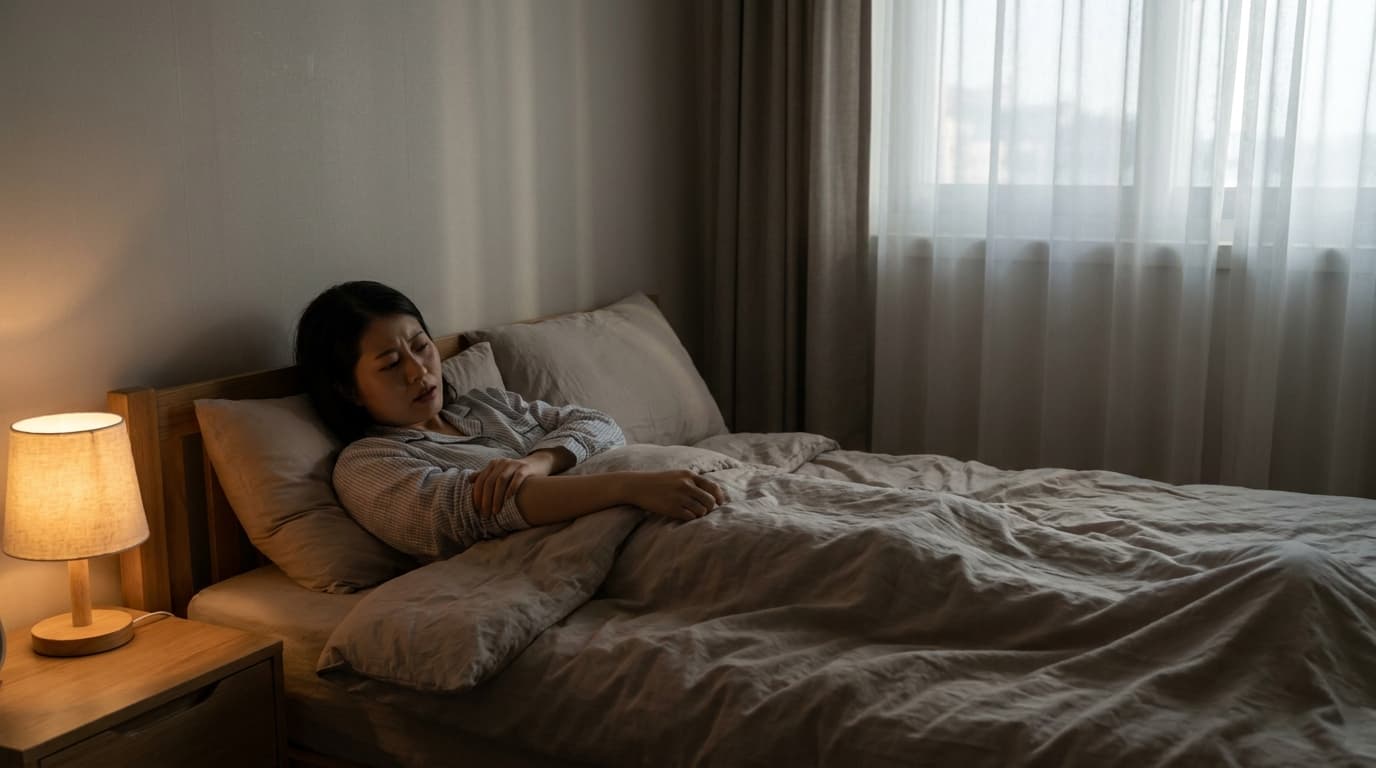
My Skin Itches So Much at Night - For Those Who Can't Sleep
Hello, this is Dalimchae Korean Medicine Clinic. # My Skin Itches So Much at Night - For Those Who Can't Sleep When night falls, many people suffer because their skin is exceptionally itchy, making it impossible to sleep. Scratching all over leads to sore and stinging wounds, and the next morning you face red skin in the mirror along with exhaustion. This symptom, which significantly degrades quality of life beyond simple itching, is one of the representative torments suffered by atopic dermatitis patients. Dalimchae Korean Medicine Clinic deeply understands the hearts of patients crying out, "My Skin Itches So Much at Night." Why does this relentless night itching occur, and how can it be resolved? 💡 **[Core Answer]** Top 3 most common causes of nighttime skin itching: ① Damaged skin barrier / ② Excessive immune reaction / ③ Intestinal environment imbalance. Dalimchae Korean Medicine Clinic helps fundamental recovery of skin and immune system through **intestinal detoxification**. ## Why Does Skin Itching Become Exceptionally Severe at Night? Multiple complex factors contribute to atopic dermatitis patients feeling worse itching at night. First, corticosteroid hormone secretion decreases at night, weakening the skin's anti-inflammatory effect. Meanwhile, secretion of itching-inducing substances like histamine increases. Second, body temperature rises during sleep, increasing skin moisture loss and worsening dryness, which can exacerbate itching. Third, daytime stress and fatigue affect the autonomic nervous system, tending to make skin sensations more sensitive at night. With these factors overlapping, the torment of patients crying out "Skin is too itchy at night" grows even greater. ## Atopic Dermatitis, Not Just a Skin Problem - Gut Health is Key! While many think of atopic dermatitis solely as a surface skin problem, in Korean medicine it is viewed as an internal problem, specifically a systemic disease deeply linked to gut health. Recently, the 'Gut-Skin Axis' theory, connecting gut and skin closely, has been actively discussed. Gut microbiome imbalance, or 'Dysbiosis', affects the immune system, inducing systemic inflammatory responses that manifest on the skin and worsen atopic dermatitis. A review paper by Asan Medical Center research team published in 2018 in Allergy Asthma Immunol Res. emphasized that imbalances in gut and skin microbiomes are linked to changes in immune response and the development of atopic dermatitis. The researchers concluded that regulating gut and skin microbiomes could be a new strategy for treating atopic dermatitis. These research results align with Dalimchae Korean Medicine Clinic's treatment philosophy of restoring fundamental immune balance in the body by recovering gut health, going beyond merely suppressing skin symptoms. ## Oriental Medicine Treatment Goes Beyond Symptom Improvement to Restore Gut Health In Korean medicine, improving gut health along with skin symptom relief is highly valued in treating atopic dermatitis. In particular, intestinal detoxification treatment focuses on removing waste and toxins accumulated on the intestinal wall and creating an environment where beneficial bacteria thrive, thereby restoring gut microbiome balance. Through this, the goal is to regulate oversensitive immune responses, reduce inflammation, and fundamentally improve skin symptoms. A randomized controlled clinical trial published in Frontiers in Pharmacology in 2024 evaluated the effects of Bojungikgi-tang on 26 patients suffering from atopic dermatitis and loss of appetite by a research team from the Korea Institute of Oriental Medicine and Daejeon University Daejeon Korean Medicine Hospital. In the group that took Bojungikgi-tang for 8 weeks, the SCORAD (SCORing of Atopic Dermatitis) score, an indicator of atopic dermatitis severity, and the DLQI (Dermatology Life Quality Index) score, an indicator of quality of life, improved significantly compared to before treatment, and these effects were maintained during the follow-up period. In particular, this study included an attempt to elucidate treatment mechanisms through gut microbiome analysis, demonstrating the positive impact of gut health improvement on atopic dermatitis treatment. At Dalimchae Korean Medicine Clinic Incheon Branch, science-based Oriental medicine treatment alleviates skin symptoms while restoring gut health, creating a healthy body where atopic dermatitis does not recur. ## Skin Itching Self-Diagnosis Checklist If 3 or more of the following items apply, suspect skin itching due to atopic dermatitis and seek professional help. * □ Itching worsens at night, making it difficult to fall asleep or waking up frequently. * □ Skin is dry and cracked, with frequent dead skin cells. * □ Eczema or red spots repeatedly appear in specific areas (elbow creases, knee creases, neck, etc.). * □ Scratching skin causes wounds, oozing, or scabs. * □ Have experienced skin conditions or allergic diseases since childhood. * □ Family members have a history of atopy, asthma, or allergic rhinitis. * □ Digestive issues like indigestion, constipation, or diarrhea occur frequently. **When 3+ apply:** Suspected skin inflammation and gut health imbalance - consult for compound Oriental medical treatment at Dalimchae Korean Medicine Clinic Incheon Branch. **When 5+ apply:** High possibility of active atopic dermatitis; immediate visit is recommended. ## Principles of Dalimchae's Intestinal Detoxification Treatment: 'Empty Toxins, Fill Immunity' Dalimchae Korean Medicine Clinic solves the root cause of atopic dermatitis through 'intestinal detoxification'. Intestinal detoxification is not simply emptying the bowels, but **breaking the vicious cycle where toxins accumulated on the intestinal wall travel through the blood to create systemic inflammation and affect the skin**. By restoring damaged intestinal mucosal barriers and increasing the ratio of beneficial bacteria in the gut, it normalizes the function of the gut, our body's immune command center. A healthy gut blocks toxin penetration and optimizes nutrient absorption, enhancing skin regeneration and boosting immunity. Through this process, overly activated immune responses stabilize and inflammation decreases, naturally improving distressing symptoms like "My skin is too itchy at night." Many people looking for Incheon atopy clinics are recovering healthy skin and comfortable nights through Dalimchae's intestinal detoxification treatment. ## Atopic Dermatitis Oriental Medicine Treatment, How Long Does It Take? Treatment duration for atopic dermatitis varies depending on symptom severity, duration of illness, age, and lifestyle habits. In a study conducted at Kyung Hee University Korean Medicine Hospital on 29 hospitalized patients with severe atopic dermatitis, Korean medicine treatment resulted in a statistically significant improvement, with average SCORAD scores decreasing by about 38.4% from 60.63 points before admission to 37.37 points upon discharge. This suggests that short-term intensive Oriental medicine treatment is effective for acute symptom relief. However, since atopic dermatitis is a chronic condition, steady management is necessary to prevent recurrence and strengthen the skin barrier and immune system. Dalimchae Korean Medicine Clinic Incheon Branch approaches step-by-step from symptom relief to fundamental constitutional improvement through personalized treatment plans. --- **Q. Can atopic dermatitis appear in adults as well?** A. Yes, atopic dermatitis mostly starts in infancy, but it often appears for the first time in adulthood or recurs after childhood. Adult atopy is chronic and appears over wide areas, tending to react sensitively to stress and environmental factors. **Q. Are there home remedies to help relieve nighttime itching?** A. It is important to shower with lukewarm water before bedtime to clean the skin and apply sufficient moisturizer. Maintaining a cool and appropriately humid bedroom environment and wearing comfortable cotton pajamas also helps. **Q. Does Oriental medicine treatment help reduce steroid usage?** A. According to domestic and international clinical studies, combining herbal medicine treatment can help reduce steroid usage alongside improving atopic symptoms. This means the efficiency of symptom management can be enhanced while reducing short- and long-term side effects of steroids. **Q. What other Oriental medicine treatments help treat atopy besides intestinal detoxification?** A. At Dalimchae Korean Medicine Clinic, acupuncture, moxibustion, and pharmacopuncture treatments are combined based on intestinal detoxification to calm skin inflammation and promote regeneration. In particular, research shows that acupuncture treatment is effective in lowering sympathetic nervous hyperactivation to improve itching. --- Skin is too itchy, the agony of scratching every night and being unable to sleep is not a problem solved by enduring. You no longer need to ignore the body's signals sent for a long time. Approached in the right direction, the body responds faster than you think. Bring your current symptoms as they are. Dalimchae Korean Medicine Clinic will find the causes together with you. Where life blossoms. Herbal medicine is Dalimchae Korean Medicine Clinic. Check your similar symptoms first through Dalimchae Korean Medicine Clinic's homepage AI consultation! This article is based on frequently asked questions in the treatment room, health information compiled together by Dalimchae medical staff. Medical Review | Skin Treatment Standard Dalimchae Korean Medicine Clinic Incheon Branch Korean Medicine Doctor Yang Yuchan (Atopy Column) #Atopy #SkinItching #NightItching #IntestinalDetox #IncheonAtopyClinic #IncheonKoreanClinic #Immunity #OrientalTreatment #AdultAtopy