
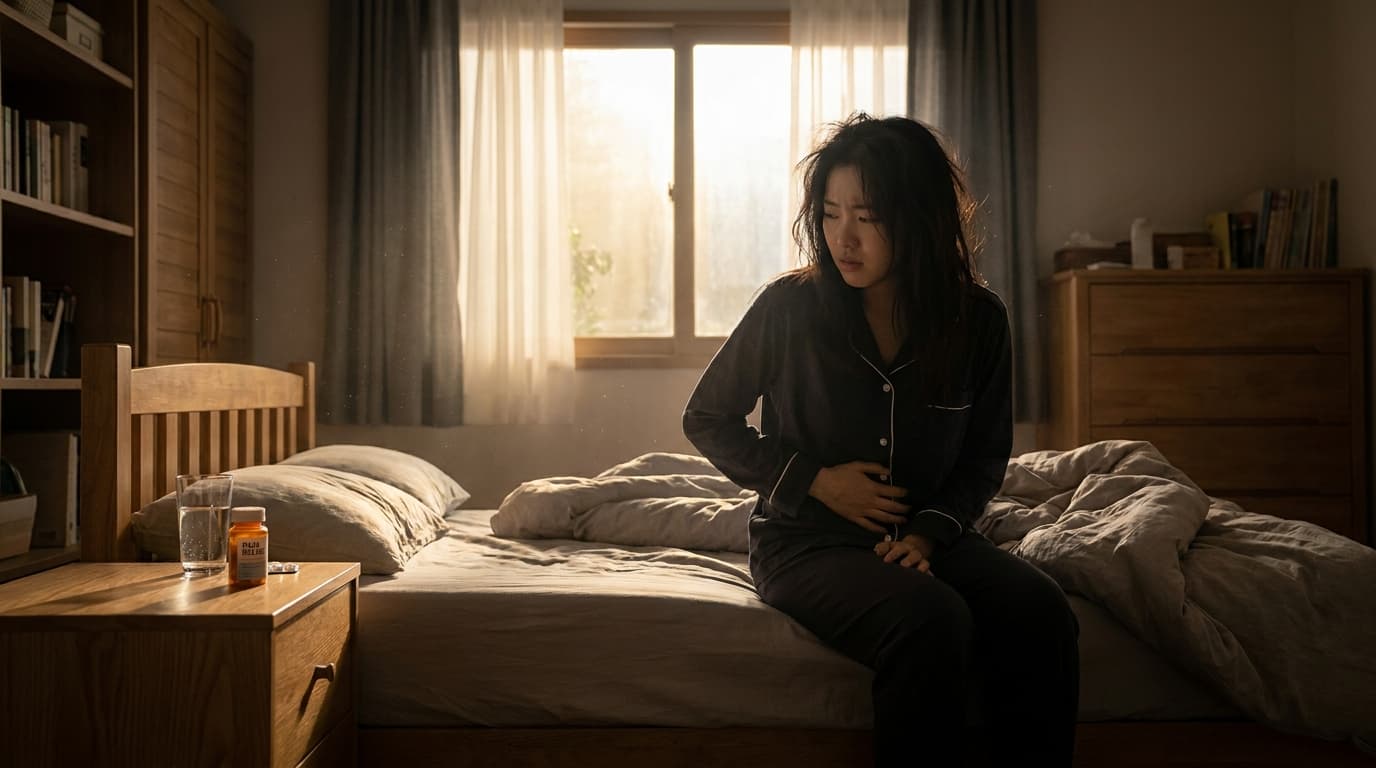
My Period Pain is Severe Even After Taking Pain Relievers Now for Fundamental Treatment Rather Than Turning It On and Off
Hello, this is Dalimchae Korean Medicine Clinic. # My Period Pain is Severe Even After Taking Pain Relievers Now for Fundamental Treatment Rather Than Turning It On and Off The monthly menstrual period is like an inevitable rite of passage for women. However, if you experience excruciating pain to the point of crying out, "My period pain is severe even after taking pain relievers," this is never a warning signal of the body that should be taken for granted. Temporarily forgetting the pain with painkillers does not solve the fundamental problem. Rather, as the frequency of reaching for medication increases, the intensity of the pain becomes stronger, and the quality of daily life gradually declines. 💡 **[Key Answer]** 3 most common causes of period pain even after taking painkillers: ① Blood circulation disorder in the uterus (blood stasis) / ② Endometriosis or adenomyosis / ③ Autonomic imbalance due to stress Dalimchae Korean Medicine Clinic solves the fundamental problem of the uterine environment causing pain through a **constitutional improvement** approach. ## Why Does Period Pain That Doesn't Respond to Painkillers Get Worse? Many women rely on painkillers when their period pain worsens. However, painkillers only temporarily suppress the inflammatory response that causes pain and do not eliminate the cause of the pain. The uterus in our body is like a sensitive engine. If the internal environment is unstable or waste accumulates, it continuously turns on warning lights, and this warning light is period pain. If there are structural problems such as 'blood stasis' due to poor blood circulation in the uterus, 'adenomyosis' where endometrial tissue infiltrates the uterine muscle layer, or 'endometriosis' where endometrial tissue spreads outside the uterus, the effect of painkillers is bound to diminish gradually. In this situation, indiscriminate use of painkillers can rather cause other discomforts such as gastrointestinal disorders. ## What Type of Period Pain Do I Have? Self-Checklist The causes and patterns of period pain vary greatly from person to person. Check out the checklist below to see which type of period pain is closest to yours. **[Period Pain Self-Diagnosis Checklist]** * My lower abdomen feels heavy and uncomfortable right before my period. * Period pain spreads to the lower back, pelvis, and legs. * Painkillers do not easily relieve the pain or wear off quickly. * Menstrual blood is clotted and dark red in color. * I sometimes feel discomfort or pain in my lower abdomen outside of my period. * My hands and feet are cold and my lower abdomen is always cold. * Period pain gets worse when stress or fatigue accumulates. * I have worried about irregular menstruation or infertility. * I often experience dizziness or chronic fatigue. * I have been diagnosed with endometriosis, adenomyosis, etc. in the past. **Judgment Results:** * **3 or less apply:** It is highly likely to be relatively mild primary period pain. It can be sufficiently improved with lifestyle habits improvement and Korean medicine management. * **4 to 6 apply:** It may be secondary period pain or chronic period pain due to blood stasis and coldness. Consider systematic treatment after precise diagnosis at a Songdo period pain Korean medicine clinic. * **7 or more apply:** Serious women's diseases such as adenomyosis or endometriosis are likely to be the cause. Immediate visit and professional Korean medicine complex treatment are recommended. ## Why is Korean Medicine Treatment Effective for Period Pain That Painkillers Cannot Solve? If painkillers focus on the 'result' of pain, Korean medicine treatment focuses on finding and solving the 'cause' that induces period pain. In particular, the Songdo branch of Dalimchae Korean Medicine Clinic provides 'constitutional improvement' treatment so that you can regain body balance, control pain yourself, and create a healthy uterine environment. This aims not simply to turn off symptoms, but to make a body where pain does not turn on again. A multi-center observational study published in the `Frontiers` journal in 2026 analyzed the effect of herbal medicine treatment on 135 patients with period pain. In this study, the herbal medicine intake group showed a significantly decreased menstrual pain intensity (NRS, Numeric Rating Scale) compared to the non-intake group (based on the 2nd visit, p = 0.029), and painkiller usage also significantly decreased (based on the 2nd visit, p = 0.001). The researchers concluded that individualized herbal medicine treatment can be a safe and effective option for relieving period pain. These results suggest that herbal medicine treatment, which goes beyond simply suppressing pain and improves the fundamental environment of the body, contributes to relieving period pain. In addition, a meta-analysis study published in the `MDPI` journal in 2025 evaluated the effect of herbal medicine treatment on symptom management after high-intensity focused ultrasound (HIFU) treatment in 1259 patients with adenomyosis. Analyzing 14 randomized controlled trials (RCTs), it was confirmed that in the herbal medicine combination treatment group, uterine volume (MD = -11.84, p \< 0.00001) and adenomyosis lesion volume (MD = -2.86, p \< 0.00001) significantly decreased, and menstrual pain also significantly improved (MD = -0.54, p \< 0.00001). The researchers concluded that herbal medicine can be an effective and safe adjuvant therapy for adenomyosis management. This shows that Korean medicine treatment can provide meaningful help even for extreme period pain caused by adenomyosis that is difficult to solve with painkillers. Based on these data, Dalimchae Korean Medicine Clinic helps you escape the pain of period pain and regain a healthy daily life by removing intrauterine blood stasis, restoring autonomic balance, and promoting uterine health. ## Dalimchae Korean Medicine Clinic's Constitutional Improvement Treatment: Pulling Out the Roots of Pain into a Healthy Uterus At Dalimchae Korean Medicine Clinic, we view period pain not simply as a problem of the uterus itself, but as stemming from systemic circulatory problems, autonomic imbalance, and constitutional weaknesses. In particular, **constitutional improvement** treatment focuses on helping the body recover and find balance on its own rather than temporarily suppressing symptoms. This is like lowering the temperature of an overheated engine and replacing a broken switch so that the warning light never turns on again. Herbal medicine prescriptions that improve uterine blood circulation, remove blood stasis, and warm the body to relieve coldness make the uterine environment healthy and reduce inflammatory reactions. In addition, acupuncture treatment, moxibustion treatment, and pharmacopuncture treatment tailored to each individual's constitution and symptoms are combined to balance the autonomic nervous system and raise the pain threshold. Such an approach protects women's health through fundamental constitutional improvement across overall women's diseases such as menstrual irregularity, infertility, and postpartum care. Those looking for a Songdo adenomyosis Korean medicine clinic can also find fundamental solutions through constitutional improvement. ## Dalimchae Korean Medicine Clinic's Specialness in Songdo Period Pain Treatment The Songdo branch of Dalimchae Korean Medicine Clinic does not simply look at period pain, but carefully understands the patient's overall health condition, lifestyle habits, and stress factors. Through various diagnostic methods such as pulse wave testing and autonomic testing, we objectively grasp the state of body imbalance and establish a 1:1 customized treatment plan based on this. Among Songdo Korean medicine clinics, Dalimchae Korean Medicine Clinic strives to provide the best treatment by sincerely empathizing with the pain suffered by patients based on deep understanding and rich clinical experience in women's diseases. **Q. It still hurts even after taking period pain relievers, is there a bigger problem?** A. Yes, if daily life is difficult beyond the level where painkillers do not work, it may be another disease causing secondary period pain, such as endometriosis, adenomyosis, or uterine fibroids. It is important to consult with an expert for accurate diagnosis. **Q. How long does period pain Korean medicine treatment take?** A. The treatment period varies depending on the cause of period pain, severity, and individual constitution. Usually, the goal is to consistently receive treatment for 3 months or more to improve the uterine environment and regain body balance. **Q. I have severe period pain, but if I have a pregnancy plan, will Korean medicine treatment help?** A. Yes, Korean medicine period pain treatment can have a positive effect on increasing the possibility of pregnancy by making the uterine environment healthy and improving blood circulation. In particular, treatments that remove blood stasis and strengthen uterine function also help improve infertility. **Q. Are there any period pain management methods I can do at home besides taking herbal medicine?** A. It is good to keep your lower abdomen and hands and feet warm, and do regular exercise such as light stretching or yoga. In addition, sufficient sleep and stress management are important, and reducing caffeine and cold food intake is helpful. Where life blooms. Herbal medicine is Dalimchae Korean Medicine Clinic. Check symptoms similar to yours first through the AI consultation on the Dalimchae Korean Medicine Clinic website! Medical Supervision | Women & Pregnancy Treatment Standards, Songdo Branch of Dalimchae Korean Medicine Clinic, Korean Medicine Doctor Oh Hyun-min