
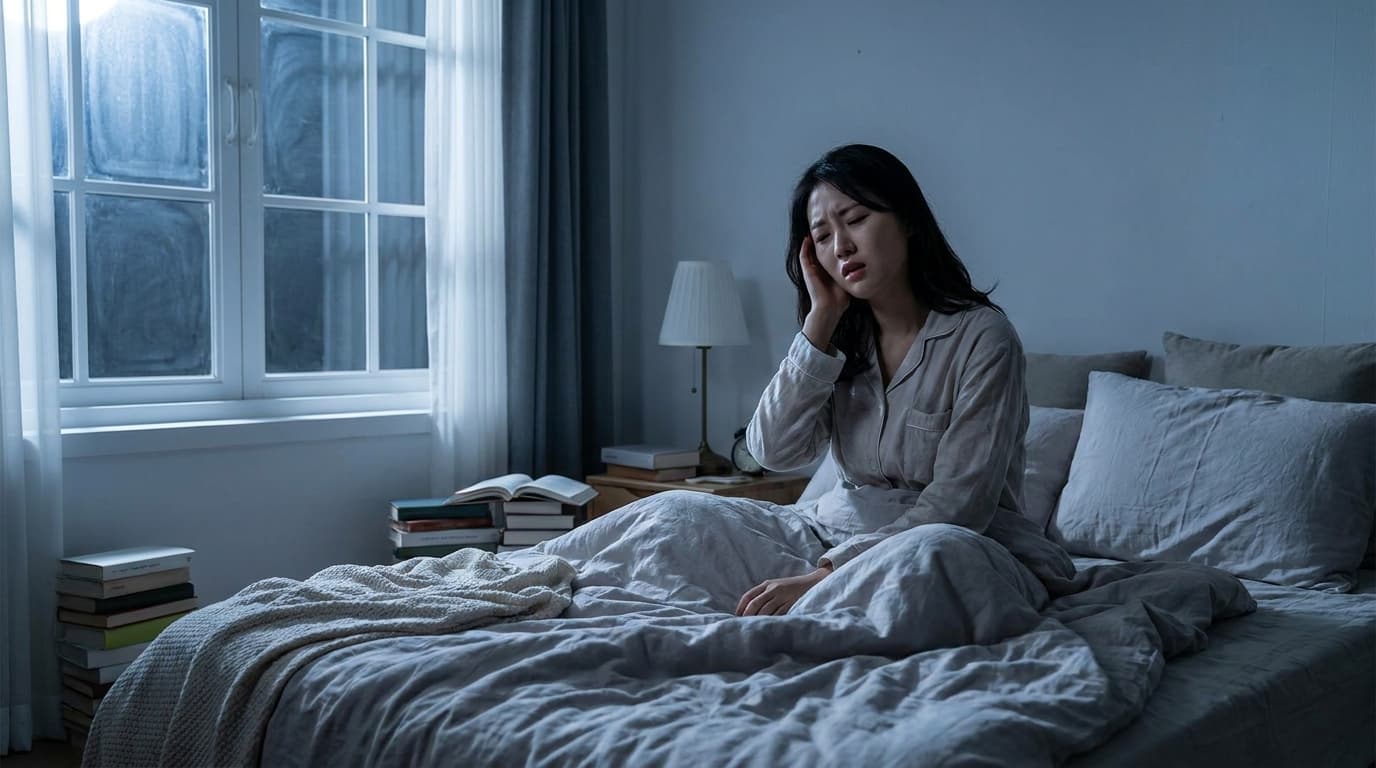
My Period Has Been Missing for Months? Polycystic Ovary Syndrome, Don't Ignore Your Body's Signals.
Hello, this is Dalimchae Korean Medicine Clinic. # My Period Has Been Missing for Months? Polycystic Ovary Syndrome, Don't Ignore Your Body's Signals. "My period has been missing for months." This statement carries a woman's anxiety and deep concern about her health. If your menstrual cycle, which used to be regular after menarche, suddenly becomes irregular or stops for months, you cannot help but worry if something serious has happened to your body. Especially for women planning pregnancy, this becomes an even more sensitive and important issue. Many visitors to the Songdo branch of Dalimchae Korean Medicine Clinic also come with concerns about menstrual irregularity and amenorrhea. Such symptoms may be a strong signal that the important hormonal balance in our body has broken, going beyond simply delayed menstruation. 💡 **[Key Answer]** 3 most common causes of "My period has been missing for months": ① **Polycystic Ovary Syndrome (PCOS)** / ② **Stress and Autonomic Imbalance** / ③ **Excessive Weight Change or Nutritional Imbalance** Dalimchae Korean Medicine Clinic helps you recover ovarian function and a healthy ovulation cycle through **constitutional improvement**. ## Why does menstruation stop for months? What is the real signal your body is sending? Amenorrhea, where menstruation is suspended for months, can occur due to various causes, but one of the most common causes for women of childbearing age is **Polycystic Ovary Syndrome (PCOS)**. PCOS is a complex endocrine disorder where multiple small cysts form on the ovaries, ovulation does not occur properly, leading to menstrual irregularity, amenorrhea, hirsutism and acne due to excessive androgen production, and even infertility in severe cases. It is not just a problem of the menstrual cycle, but an imbalance across our body's hormone regulation system and metabolic functions overall. Of course, excessive stress, rapid weight change, and irregular lifestyle habits can also affect the autonomic nervous system and disrupt the menstrual cycle. This is because the delicate hormone connection (HPO axis) leading from the pituitary gland-hypothalamus-ovary is vulnerable to stress. Like this, amenorrhea must be viewed from a broad perspective ranging from the brain and autonomic nervous system to systemic metabolism, rather than just an ovarian problem. ## How does Korean medicine view Polycystic Ovary Syndrome and amenorrhea? In Korean medicine, menstrual irregularities such as PCOS are not simply viewed as 'ovarian dysfunction', but interpreted as a state where the overall balance of the body is broken. In particular, 'Kidney deficiency (腎虛)' and 'Phlegm-dampness (濕痰)' are viewed as important causes. When kidney energy weakens, ovarian function declines and hormonal imbalance easily occurs, and when unnecessary waste product phlegm-dampness accumulates in the body, it creates an unfavorable environment around the ovaries and hinders blood circulation, making ovulation difficult. The Songdo branch of Dalimchae Korean Medicine Clinic focuses on treatments that help restore the fundamental balance of the body so that you can regain a healthy menstrual cycle on your own. We stabilize over-excited autonomic nerves, remove phlegm-dampness accumulated in the body to improve the ovarian environment, and promote smooth blood circulation to facilitate nutrient supply to the ovaries. ## How does Korean medicine treatment help ovulation rate and hormone balance in PCOS patients? Amenorrhea due to PCOS is known to be difficult to treat, but meaningful improvement effects can be expected through Korean medicine approaches. In particular, herbal medicine and acupuncture treatments have a positive impact on regulating hormonal imbalance and inducing healthy ovulation. According to a recently published meta-analysis study, acupuncture was confirmed to be an effective non-pharmacological treatment for improving ovulation rates in women with PCOS. Analyzing 43 randomized controlled trials (RCTs) with a total of 4,827 participants, acupuncture alone significantly increased the ovulation rate compared to sham acupuncture (relative risk [RR] 1.15) and medication (RR 1.11). In particular, **when herbal medicine and acupuncture were combined, the ovulation rate was 1.27 times higher than medication, evaluated as the most effective intervention** (95% CI: 1.12-1.43). The researchers emphasized that the effect of acupuncture can vary depending on precise treatment parameters (treatment time, number of acupoints, frequency, duration), highlighting the need for standardized protocols. In addition, in a study published in the Journal of Korean Obstetrics and Gynecology in 2021 or 2022, a joint research team including Inae Korean Medicine Clinic, Semyung University Chungju Korean Medicine Hospital, Wonkwang University College of Korean Medicine, Kyung Hee University Graduate School, and Korea Institute of Oriental Medicine **analyzed the effects of Korean medicine treatment on 8 PCOS patients with hyperandrogenism**. Unlike previous studies that mainly focused on changes in menstrual cycles, this study **proved a significant decrease in testosterone (male hormone) levels**, an objective indicator of hormonal imbalance. The researchers explained that these results show that Korean medicine treatment can effectively improve hormonal imbalance, one of the root causes of PCOS. These research results provide scientific evidence that Korean medicine treatment directly restores ovarian function and regains hormone balance for menstrual irregularities and amenorrhea caused by PCOS. Based on these data, the Songdo branch of Dalimchae Korean Medicine Clinic helps patients regain healthy menstrual cycles and further plan healthy pregnancies through customized Korean medicine treatments for ovarian and uterine health. ## Are you properly listening to your body's signals? PCOS Self-Diagnosis Checklist If your period has been missing for months or your cycle is irregular, check the items below. When multiple symptoms appear complexly, more precise diagnosis and treatment may be needed. **Menstrual Irregularity/Amenorrhea and PCOS Suspected Symptoms Checklist** * Have you had no period for over 6 months, or is your cycle irregular for over 35 days? * Do you have increased body hair (hirsutism) or thinning and falling hair? * Have you gained weight without reason, or is obesity (especially abdominal obesity) severe? * Is acne worsening, or are skin troubles frequent with excessive sebum secretion? * Are you struggling with infertility or having difficulty getting pregnant? * Have you ever been told in an ultrasound exam that multiple small cysts were observed in your ovaries? * Do you have family members treated for PCOS or menstrual irregularity? **Criteria:** * **If 3 or more apply:** Suspected PCOS and autonomic imbalance → Consider complex Korean medicine treatment * **If 5 or more apply:** Immediate precise diagnosis and clinic visit recommended ## Dalimchae Korean Medicine Clinic Songdo Branch Constitutional Improvement Treatment Principle: Creating a Body That 'Does Not Turn On Again' The Songdo branch of Dalimchae Korean Medicine Clinic focuses on **'constitutional improvement' treatment** that creates an environment where the body can maintain a healthy menstrual cycle on its own, rather than simply suppressing symptoms for amenorrhea issues like "My period has been missing for months." Constitutional improvement aims to create a body where symptoms do not turn on again, rather than just turning them off. This means closely analyzing individual constitution and body state to find and solve the root causes inhibiting ovarian function. Since our body is connected like an organic whole, ovarian problems also often appear interacting complexly with various causes such as stress, unbalanced dietary habits, and chronic inflammation. Dalimchae Korean Medicine Clinic comprehensively analyzes these complex causes to restore autonomic balance, improve blood circulation, and perform customized herbal medicine prescriptions and moxibustion treatments to strengthen kidney energy so that ovarian function does not decline. Through this, we restore broken hormone balance and optimize the body's environment so that healthy follicle growth and ovulation can occur. This contributes to solving infertility problems and enhancing overall women's health. Many people looking for Songdo PCOS Korean medicine clinics are experiencing healthy body changes at Dalimchae Korean Medicine Clinic. ## FAQ – Questions about Menstrual Irregularity and Polycystic Ovary Syndrome **Q. Can PCOS be managed after treatment?** A. PCOS is a chronic disease, and it is important to approach it with the concept of 'management' rather than 'management after treatment'. Through Korean medicine treatment, we help normalize the menstrual cycle, restore ovulation function, and improve accompanying symptoms (hirsutism, acne, etc.) to maintain a healthy life. **Q. My period has been missing for months, do I definitely need treatment? Can it heal naturally?** A. Amenorrhea where menstruation stops for 3 months or more can increase the risk of endometrial hyperplasia or endometrial cancer, and can lead to decreased bone mineral density. Except for cases caused by temporary stress, it is difficult to improve naturally, and if left unattended, symptoms can worsen or cause complications such as infertility, so active treatment is necessary. **Q. Is pregnancy possible if I have PCOS?** A. Yes, it is fully possible. PCOS is the most common cause of anovulatory infertility, but through appropriate Korean medicine treatment, you can restore ovulation function and balance hormones to prepare for a healthy pregnancy. Songdo infertility Korean medicine clinics also frequently handle infertility due to PCOS. **Q. How long does treatment take?** A. Treatment duration can vary depending on individual symptom severity, duration of illness, and constitution. Generally, consistent treatment for 3 to 6 months or more is required, and if improvement is seen in the middle, we adjust treatment intensity and strive to prevent recurrence. Missing your period for months is not just an inconvenience, but an important warning signal sent by your body. You no longer need to ignore the body's signals you have sent for a long time. If you approach it in the right direction, your body reacts faster than you think. Bring the symptoms you are experiencing as they are. The Songdo branch of Dalimchae Korean Medicine Clinic will find the cause together. Where life blooms. Herbal medicine is Dalimchae Korean Medicine Clinic. Check symptoms similar to yours first through the AI consultation on the Dalimchae Korean Medicine Clinic website! This article is health information organized together by Dalimchae medical staff based on questions actually received often in the consultation room. Medical Supervision | Women & Pregnancy Treatment Standard, Songdo Branch of Dalimchae Korean Medicine Clinic, Korean Medicine Doctor Oh Hyun-min (PCOS Column)