
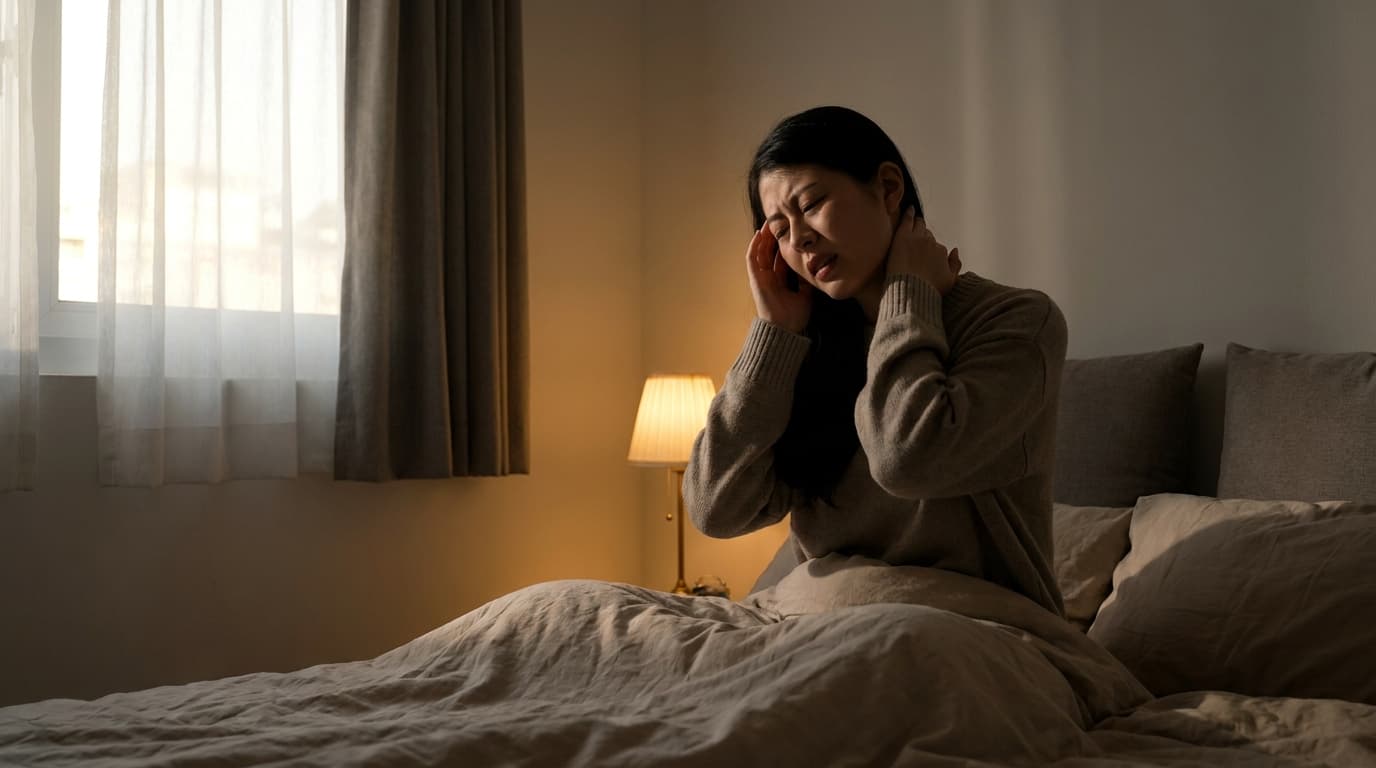
My neck hurts and my head hurts, it might not be a simple migraine
Hello. This is Dalimchae Oriental Medicine Clinic. # My Neck Hurts and My Head Hurts, It Might Not Be a Simple Migraine Headaches accompanied by a throbbing, aching pain are very common in modern people. Many people attribute this to stress or fatigue, or simply get by with painkillers. However, if you frequently experience stiffness and pain in your neck and shoulders along with headaches, the story is different. People sometimes visit the hospital out of vague anxiety that it might be a "brain issue," but often feel frustrated when tests show no special abnormalities. This is because it is likely a "cervicogenic headache," where pain originating from the neck is transmitted to the head, or a "tension-type headache" caused by excessive tension. These headaches are caused by a combination of tension in the muscles and nerves around the neck, and an imbalance in the autonomic nervous system sensitive to stress, making simple painkillers difficult to provide a fundamental solution. 💡 **[Key Answer]** Top 3 most common causes of "My neck hurts and my head hurts": ① Cervicogenic Headache / ② Tension-type Headache / ③ Nervous system overload due to autonomic imbalance Dalimchae Oriental Clinic solves the root of headaches by relieving tension around the cervical spine and creating an environment where the brain can rest through **autonomic nervous system stabilization** treatment. ## The Back of My Neck is Stiff and My Head Hurts Too, Could There Be a Problem with My Brain? The part that people experiencing headaches accompanied by neck pain worry about the most is the connection with "brain disease." Of course, if sudden severe headaches, changes in consciousness, vomiting, or paralysis symptoms accompany, you must immediately visit the emergency room to check for brain disease. However, if chronic neck and shoulder stiffness is accompanied by pain mainly in the front, side, or back of the head, it is much more often caused by abnormalities in the cervical spine (neck bone), surrounding muscles, and the nervous system rather than direct brain issues. Headaches originating from the neck and spreading to the head like this are called **cervicogenic headaches**, and brain imaging tests rarely find any special abnormalities. ## How Are Cervicogenic Headaches Different from General Headaches? Cervicogenic headaches are characterized by being triggered or worsened mainly by neck movements or specific postures. Pain is often concentrated on one side of the head, and pain or numbness radiating to the shoulder, arm, and hand may accompany. On the other hand, general tension-type headaches present as a tightening pain binding the whole head like a band, and migraines are characterized by pulsatile pain along with nausea and hypersensitivity to light or sound. Cervicogenic headaches are caused by cervical bone alignment abnormalities, disc problems, and tension in neck muscles such as the suboccipital muscles. These problems compress or irritate cervical nerves, distorting pain signals transmitted to the brain, which results in pain appearing in the head. ## How Does Korean Medicine Diagnose and Treat Headaches Originating from the Neck? At Dalimchae Oriental Medicine Clinic Incheon Branch, we focus not on simply covering up the symptoms of a sore neck and head with painkillers, but on clearly finding and solving the cause. In particular, we consider it important to break the vicious cycle where the **autonomic nervous system imbalance** overloaded by stress and poor posture induces chronic tension in muscles around the cervical spine, which in turn stimulates nerves. Through pulse wave tests and autonomic balance tests, we objectively understand the patient's current physical condition and autonomic activation level, and establish a customized treatment plan based on this. In a study published in 『Journal of Pain Research』 in 2022, 80 patients with chronic cervicogenic headaches received Korean medicine complex treatment (acupuncture, moxibustion, herbal medicine) for 8 weeks. As a result, headache intensity (VAS score) improved by about 57% from a pre-treatment average of 7.2 to 3.1 after treatment (p\<0.001), and headache frequency and functional disability index also significantly decreased. The researchers concluded that these results suggest Korean medicine treatment alleviated tension in muscles around the cervical spine, regulated nerve inflammatory responses, and ultimately contributed to restoring the balance of the autonomic nervous system. In addition, another clinical study published in the MDPI journal 『Healthcare』 in 2021 evaluated the efficacy and safety of pharmacopuncture therapy in 80 hospitalized patients with tension-type headaches accompanied by traffic accidents. Analyzing treatment progress for about 2 months, the group receiving pharmacopuncture treatment showed statistically significant improvements (p\<0.01) in headache intensity, neck pain, and functional disability index compared to the control group. In particular, it was emphasized that acupuncture treatment is effective in promoting relaxation of neck muscles around the neck and increasing pain thresholds to improve patients' quality of life. Based on these scientific data, Dalimchae Oriental Clinic Incheon Branch applies treatment principles that go beyond simply calming pain, helping the neck and head comfortably perform their functions by regaining autonomic balance. ## How Does Dalimchae Oriental Clinic's Autonomic Nervous System Stabilization Treatment Work? Dalimchae Oriental Clinic Incheon Branch focuses on regaining the **balance of the autonomic nervous system**, which is the fundamental root cause of headaches and neck pain. The autonomic nervous system is an important nervous system controlling all involuntary functions of our body. When the balance of the autonomic nervous system collapses due to stress, overwork, or lack of sleep, the sympathetic nervous system is excessively hyperactive, making neck and shoulder muscles easily tense, blood vessels contract, and the brain unable to rest. In Korean medicine, this is also explained as the discordance of 'Susunghwakang (水昇火降)'—rising heat in the head and cooling below, resulting in various symptoms like headaches. Dalimchae Oriental Clinic focuses on lowering the heat of the nervous system and creating an environment where the brain can rest. We prescribe customized herbal medicine tailored to individual constitutions and symptoms to regulate the unbalanced autonomic nervous system, improve blood circulation, and strengthen body immunity. In addition, we combine acupuncture, moxibustion, and cupping treatments to relax rigid muscles around the neck and shoulders and alleviate pain, enhancing treatment effectiveness. Through this process, we stabilize the excessively hyperactive sympathetic nervous system and strengthen parasympathetic functions, fostering the body's self-healing power. ## Neck and Shoulder Pain Accompanied Headaches: Autonomic Headache Self-Checklist Check if any of the following questions apply to you: * The back of the neck and shoulders are always stiff and sore. * When stressed, neck pain accompanies a headache. * Even after sleeping enough, I don't feel refreshed and fatigue is severe. * Eyes are frequently tired and blurry, and shoulder pain extends to the eyes. * Indigestion or bloating frequently occurs. * I often feel tightness in the chest or heart palpitations. * Hands and feet are cold or numb. * I experience dizziness or tinnitus (ringing in the ears) together. **Diagnosis Criteria:** * **3 or more items apply:** Cervicogenic/tension-type headaches due to autonomic imbalance are suspected. Consider herbal combination therapy at Dalimchae Oriental Medicine Clinic Incheon Branch. * **5 or more items apply:** Autonomic nervous system overload may be in a severe state. Immediate hospital visit is recommended for fundamental treatment. **Q. How do cervical disc headaches differ from general headaches?** A. Headaches caused by cervical discs are mainly associated with neck movements and worsen, and neurological symptoms such as arm or hand numbness may accompany. General headaches occur regardless of neck movement and mainly show pain patterns localized to the entire head or specific parts. **Q. How long does it take for headaches to improve after receiving autonomic treatment at the Incheon branch?** A. Treatment duration may vary depending on the cause of the headache and the patient's physical condition. Usually, treatment is continued steadily over weeks to months, aiming for symptom improvement along with autonomic balance recovery. **Q. Can headaches caused by autonomic problems be treated with Korean medicine?** A. Yes, it is fully possible. Korean medicine treatment has strengths in regulating the balance of the autonomic nervous system and enhancing the body's natural healing power. It helps resolve the root cause of headaches by relieving nervous system overload caused by stress and easing tension in muscles around the neck. **Q. Can other symptoms be treated along with neck/shoulder pain and headaches?** A. Autonomic imbalance can induce various symptoms besides headaches, such as insomnia, dizziness, indigestion, and anxiety. At the Incheon branch autonomic clinic, you can expect these related symptoms to improve together through autonomic stabilization. Headaches and sore necks are not problems solved by enduring them. You no longer need to turn away from the signals your body has sent for a long time. When approached in the right direction, your body responds faster than you think. Bring the symptoms you are experiencing as they are. Dalimchae Oriental Clinic will find the cause together. A place where life blooms. Herbal medicine is undoubtedly Dalimchae Oriental Clinic. Check your similar symptoms first through Dalimchae Clinic website AI consultation! Medical Supervision | Dalimchae Oriental Medicine Clinic Incheon Branch Korean Medicine Doctor Min Jihong (Headache Column) #Headache #CervicalDisc #CervicogenicHeadache #AutonomicNervousSystem #IncheonHeadacheClinic #TensionHeadache #DrMinJihong #NeckPain