
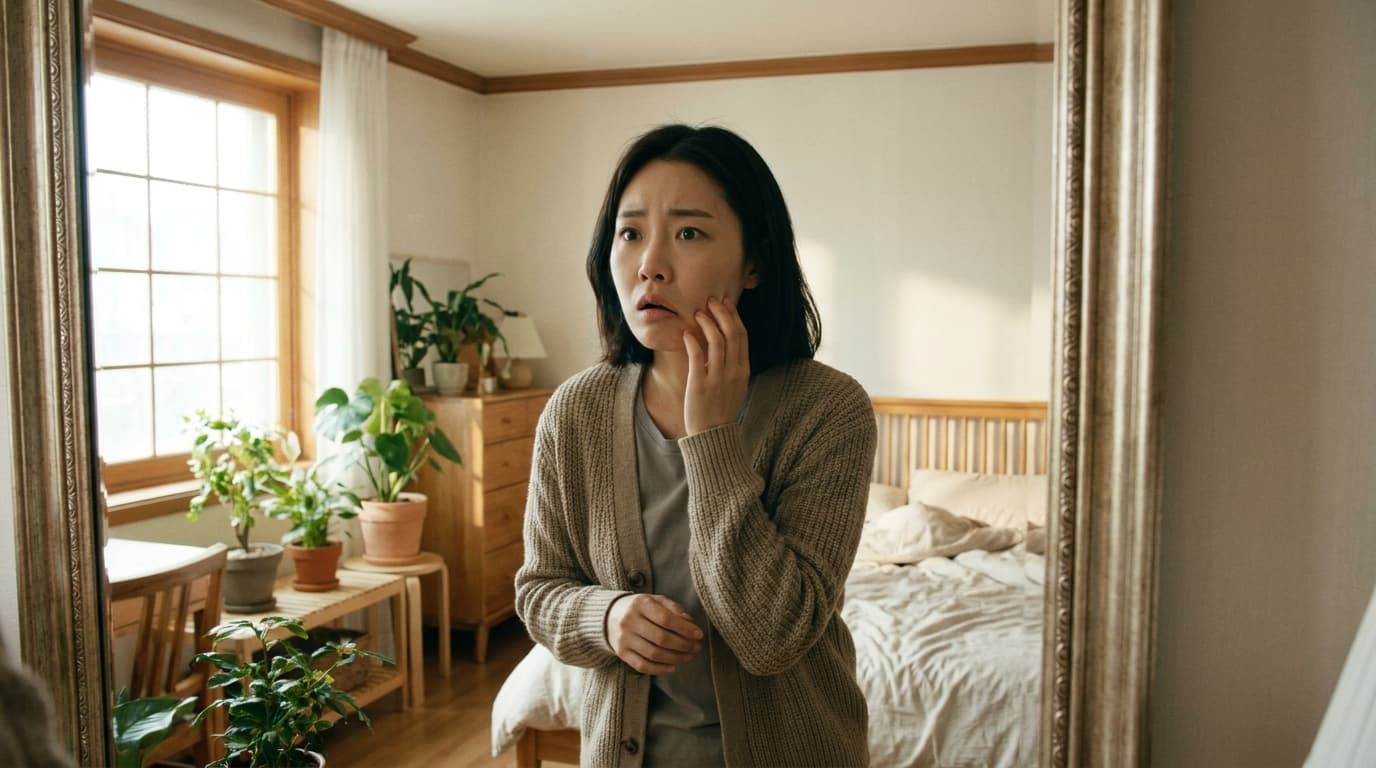
My Mouth is Crooked Do Not Miss Early Symptoms of Facial Palsy
Hello, this is Dalimchae Korean Medicine Clinic. # My Mouth is Crooked, Do Not Miss Early Symptoms of Facial Palsy! Have you ever looked in the mirror one morning and been startled to find one side of your face not listening to you, with drooping mouth corners or an unclosed eye? Many patients visit Dalimchae Korean Medicine Clinic Incheon branch saying, \"I looked in the mirror and my mouth is crooked.\" This is not simple fatigue or a temporary phenomenon, but an important early symptom of facial nerve palsy (Bell's palsy). Missing early symptoms can prolong recovery time or lead to sequelae, so if abnormal signs appear on your face, it is important to see a specialist immediately. 💡 **[Core Answer]** Top 3 most common causes of "My mouth is crooked when I look in the mirror": ① **Viral Infection:** When immunity drops, viruses dormant in the facial nerve activate and cause inflammation. ② **Stress & Autonomic Imbalance:** Excessive stress lowers immunity and causes autonomic nervous system disturbances, hindering nerve recovery. ③ **Blood Circulation Disorder:** Inadequate micro-blood circulation to the facial nerve can cause problems in nerve function. Dalimchae Korean Medicine Clinic helps restore facial nerve recovery through **autonomic stabilization** to restore the balance of the brain and autonomic nerves. ## Could it be Bell's Palsy? Why Facial Paralysis Occurs Facial paralysis is called 'Guanwasa (口眼喎斜)' in Korean medicine, characterized by paralysis of one side of the facial muscles causing the eyes and mouth to skew to one side. Such facial nerve palsy occurs when problems arise in the facial nerve, which is the 7th cranial nerve coming from the brain. Since the facial nerve is responsible for various functions such as facial expression muscles, taste, salivary glands, and tear glands, paralysis can cause multiple discomforts. Then why does sudden facial paralysis occur? The most common cause is viral infection. Taking advantage of lowered immunity, viruses dormant in the facial nerve activate and induce inflammation in the nerve. Excessive stress, accumulated fatigue, and irregular lifestyle habits lower immunity and break the balance of the autonomic nervous system, increasing the risk of facial nerve palsy. Disturbances in the autonomic nervous system hinder the recovery of the nerve itself and adversely affect micro-blood circulation to the facial nerve, intensifying paralysis. Especially in weather with large daily temperature ranges or chilly weather, blood vessels contract, intensifying circulatory disorders, so caution is required. ## Facial Paralysis: Treatment Timing is Crucial The recovery pattern of facial paralysis can vary greatly depending on the degree of initial nerve damage and the timing of treatment. As the saying goes, "golden time," receiving systematic and intensive treatment for facial paralysis right when symptoms appear can determine the state of your face for life. Delayed recovery can lead to various sequelae such as facial asymmetry, synkinesis (unwanted muscle movements like mouth corners moving when closing eyes), muscle stiffness, and pain. Therefore, if you feel symptoms like your mouth is crooked or your eyes are not closing well when looking in the mirror, it is wise to seek professional medical care without hesitation. If you are considering Incheon Bell's Palsy treatment, join Dalimchae Korean Medicine Clinic Incheon branch from the early stages. ## How Does Korean Medicine Approach Facial Paralysis Treatment? At Dalimchae Korean Medicine Clinic, we diagnose facial nerve paralysis not simply as muscle paralysis, but as a complex factor involving nervous system imbalance, systemic immune decline, and qi-blood circulation disorders. In particular, we view the imbalance of the autonomic nerves due to stress and overwork, preventing the brain from resting and reducing the recovery power of the facial nerve, as a major cause. Accordingly, Dalimchae Korean Medicine Clinic aims for a fundamental approach that maximizes the recovery power of the facial nerve and prevents recurrence through **autonomic stabilization** treatment. In Korean medicine, various treatments such as acupuncture, pharmacopuncture, moxibustion, cupping, and herbal medicine are utilized for facial paralysis treatment. These integrated Korean medical treatments help alleviate facial nerve inflammation, promote regeneration of damaged nerves, and restore the function of paralyzed facial muscles. In particular, acupuncture stimulates major meridian points on the face to aid qi-blood circulation, and pharmacopuncture directly injects refined herbal extracts to enhance anti-inflammatory and nerve regeneration effects. A 2026 study published by Professor Nam Sang-soo's research team at Gangnam Severance Hospital's Facial Paralysis Center reported the results of applying an integrated medical service model of Korean and Western medicine to 768 peripheral facial nerve paralysis patients over 5 years from 2020 to 2024. As a result, the complete recovery rate (House-Brackmann Grade 1) of patients who received integrated medical treatment was 83.3%, significantly exceeding the generally known post-treatment management rate of 60-70%. In addition, 98.2% of all patients improved to a level capable of daily life, and the recovery rate within 1 year recorded 95.2%, objectively proving the speed and effectiveness of integrated medicine. The researchers concluded that this integrated medical service model is effective and safe for treating facial nerve paralysis. Based on these data, Dalimchae Korean Medicine Clinic applies customized Korean medicine complex treatments tailored to the patient's condition from the acute stage to the sequelae stage for facial paralysis treatment, helping nerve regeneration and recovery. In particular, we focus on establishing customized treatment plans based on initial nerve damage rates to increase post-treatment management rates. Furthermore, in a column by Director Oh Min-ji introduced in Ilyo Seoul i in October 2025, the clinical efficacy of acupuncture and thread-embedding acupuncture in the facial paralysis sequelae stage was emphasized. In a randomized comparative study targeting patients who had passed 6 months or more since onset, 8주 of acupuncture treatment improved the naturalness and symmetry of facial expression movements, and patients themselves reported a reduction in discomfort when eating, speaking, and smiling. In particular, changes were observed where stiffness and synkinesis, complained of by many patients, were alleviated. Thread-embedding acupuncture treatment results showed that it is advantageous in maintaining changes made by acupuncture longer and advancing the recovery of delicate parts such as mouth symmetry and shape. Significant improvements in mouth movement and daily actions were confirmed in the group that added thread-embedding acupuncture along with standard acupuncture, and patients could feel changes from the early stage such as "facial lines in photos are less crooked." Such Korean medicine treatment aims to softly loosen hardened muscles and neural circuits to make expressions move 'separately' again, and hold that change for a long time to regain natural expression rhythms. Dalimchae Korean Medicine Clinic Incheon branch focuses on restoring damaged facial nerves through clinical Korean medicine treatment methods, regaining autonomic balance to strengthen systemic immunity, and minimizing sequelae such as facial asymmetry. When autonomic balance collapses, patients often complain of headaches, dizziness, or tinnitus along with facial paralysis. Our Dalimchae Korean Medicine Clinic helps rapid recovery of the facial nerve and overall health promotion by lowering the heat of the nervous system and creating an environment where the brain can rest — which is called Suseunghagang in Korean medicine. ## Facial Paralysis Initial Symptom Self-Checklist If 3 or more of the following questions apply to you, you should suspect facial paralysis and receive a medical examination from a professional medical institution like Dalimchae Korean Medicine Clinic Incheon branch. * When you look in the mirror, is one corner of your mouth drooping? * Does your mouth twist to one side when smiling or speaking? * Do your eyes not close completely, causing frequent tearing or dryness? * Does only one side fail to move even when trying to wrinkle your forehead? * Do water or drinks leak from the mouth corners when washing your face or drinking? * Do you feel pain behind your ears or in the temporomandibular joint area? * Has your sense of taste changed from usual? * Do you experience hyperacusis where small sounds ring in your ears? **If 3 or more apply:** It may be early or mild facial paralysis symptoms. It is important to consult a expert as soon as possible to establish an accurate diagnosis and treatment plan. **If 5 or more apply:** Facial paralysis may have progressed significantly. Immediate hospital visit and intensive treatment are required. --- ### **Q. How long does facial paralysis take?** A. The recovery period for facial paralysis varies depending on the patient's condition, cause of onset, timing, and method of treatment. Generally, the initial 2 weeks are most crucial, and with steady treatment, most improve within 3 months. However, if nerve damage is severe or treatment is delayed, it can take over 6 months and leave sequelae. ### **Q. Can facial paralysis be treated with Korean medicine?** A. Yes, facial paralysis is a condition that can be effectively treated with Korean medicine. Complex Korean medical treatments such as acupuncture, pharmacopuncture, moxibustion, cupping, and herbal medicine help recover damaged facial nerves, restore facial muscle function, and balance autonomic nerves to prevent recurrence. ### **Q. Can facial paralysis heal naturally?** A. While some mild cases of facial paralysis may improve naturally, this is very rare. Most facial paralysis cases left untreated without proper care have a high probability of leaving sequelae. Especially if initial treatment timing is missed, recovery slows down and leads to permanent facial asymmetry or synkinesis sequelae, so receiving professional medical care is most important. ### **Q. Facial paralysis and headaches are present together, can they be treated together?** A. Yes, they can be treated together. Facial paralysis and headaches are often closely related to imbalances in the autonomic nervous system. Dalimchae Korean Medicine Clinic aims for autonomic stabilization to help improve accompanying symptoms such as headaches and dizziness along with facial paralysis recovery. --- Facial paralysis is not a problem that can be solved by enduring. You no longer need to turn away from the signals your body has sent for a long time. When approached in the right direction, the body responds faster than you think. Bring the symptoms you are experiencing as they are. Dalimchae Korean Medicine Clinic will find the cause together. Where life blooms. Herbal medicine is Dalimchae Korean Medicine Clinic. Check similar symptoms first through Dalimchae Korean Medicine Clinic website AI consultation! This article is health information organized together by Dalimchae medical staff based on questions frequently received in the consultation room. Medical Supervision | Brain & Autonomic Nervous System Treatment Standard, Dalimchae Korean Medicine Clinic Incheon Branch, Korean Medicine Doctor Min Ji-hong (Facial Paralysis Column)