
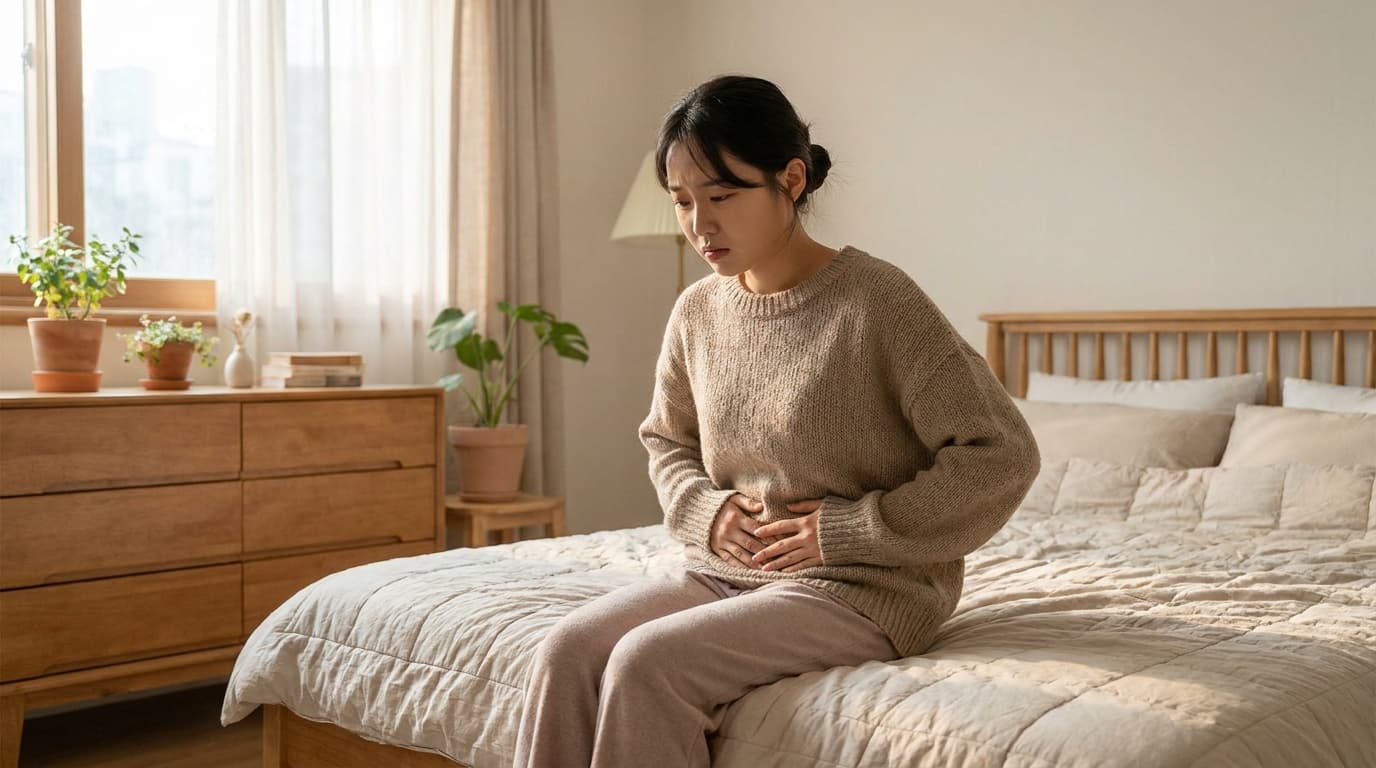
My Lower Abdomen Is Too Cold It Might Be a Uterine Issue Rather Than Simple Cold Sensitivity
Hello. This is Dalimchae Korean Medicine Clinic. # My Lower Abdomen Is Too Cold It Might Be a Uterine Issue Rather Than Simple Cold Sensitivity "My lower abdomen is too cold. I thought I was just more sensitive to the cold than others, but could my uterus be cold?" Many people visit Dalimchae Korean Medicine Clinic with concerns like this. While many women dismiss lower abdomen coldness as a common symptom, it can be an important warning signal from your body. In particular, the abdomen is closely related to a woman's uterus, and beyond simple cold sensations, it can lead to problems such as menstrual irregularities, menstrual cramps, and even infertility. It is important to understand the exact cause of why only the lower abdomen is unusually cold and resolve it, rather than just feeling cold. 💡 **[Core Answer]** Top 3 most common causes of **extremely cold lower abdomen**: ① **Decreased blood circulation in the uterus and pelvic cavity** / ② **Thermoregulation disorder due to autonomic imbalance** / ③ **Chronic digestive dysfunction and toxin accumulation** Dalimchae Korean Medicine Clinic helps your body naturally restore normal heat production and circulation functions through **constitutional improvement**. ## What symptoms occur when your lower abdomen is cold? Lower abdomen coldness can be accompanied by various physical symptoms beyond just a cold feeling in the belly. Typically, you may feel a chilling sensation in the abdomen, and a cold or heavy feeling extending to the hips or lower back. It also affects digestive functions, causing abdominal pain, sudden diarrhea, and indigestion. For women, it can be a warning sign increasing the risk of uterine and bladder-related diseases such as menstrual cramps, menstrual irregularities, leukorrhea, infertility, and uterine fibroids. In addition, peripheral blood circulation problems like cold hands and feet, fatigue, dizziness, cold sweat, and itching may accompany it. ## How do lower abdomen coldness and uterine coldness differ? Lower abdomen coldness refers to feeling cold across the entire abdomen, while uterine coldness specifically refers to a cold state of the uterus and its surrounding reproductive organs. These two are closely connected. Since the abdomen is close to the uterus, when abdominal coldness occurs, the uterus is also easily affected and becomes cold. In traditional Korean medicine, this state is called 'uterine deficiency cold (子宮虛寒)', and is considered one of the main causes preventing fertilized egg implantation due to a cold intrauterine environment. From a modern medical perspective, uterine coldness can be interpreted as poor blood flow in the endometrium, hormonal imbalance, and low basal body temperature. Uterine coldness occurs due to a complex combination of various causes such as autonomic nervous system regulation abnormalities, decreased immunity, and chronic stress. In addition, regular consumption of cold foods and irregular lifestyle habits can contribute to lowering the temperature of the lower abdomen. ## Can 'uterine coldness' affect pregnancy? Yes, uterine coldness can significantly affect pregnancy potential. When the uterus is cold, blood circulation in the endometrium decreases, creating an unsuitable environment for a fertilized egg to implant. In traditional Korean medicine, it is believed that when cold energy ('hansal') accumulates in the uterus, it causes blood to stagnate, forming 'blood stasis (uhyeol)', which can be the cause of menstrual abnormalities such as menstrual cramps or blood clots, as well as various uterine lesions. In fact, women with uterine coldness are at high risk of decreased ovarian function, ovulation disorders, and infertility. Implantation is the final and complex stage of pregnancy and relies heavily on the uterus's own function. Therefore, it is important to prepare an endometrium every month that maintains an appropriate thickness of nutrient-rich blood layers at regular intervals and properly secretes implantation-inducing substances. Many people visiting Songdo Infertility Korean Medicine Clinic visit for this issue. ### Research on Improving Pregnancy Rates Through Korean Medicine Treatment In a 2016 study published in the European Journal of Integrative Medicine by Cho Jaeguk et al. analyzing the results of a Korean female infertility support program, it was announced that traditional Korean medicine treatment had a positive effect on improving the overall physical condition of female infertility patients. The study suggested that pregnancy success rates could be increased by treating various lifestyle factors that can affect pregnancy, such as improving depleted physical conditions after repeated pregnancy failure or miscarriage, promoting blood circulation to the uterus, physical and psychological stability, and easing stress and muscle tension. These results show that Korean medicine contributes to creating a fundamental environment throughout the body for successful pregnancy, beyond simple symptom relief. Dalimchae Korean Medicine Clinic Songdo branch focuses on optimizing the uterine environment according to each patient's constitution and health condition based on these research results. In addition, there are studies on endometriosis accompanied by symptoms similar to uterine coldness. According to a 2022 systematic review and meta-analysis published in Front Surg. by Wu Y et al., when endometriosis patients were treated with a combination of dienogest and traditional Chinese/Korean medicine (herbal medicine), they showed a significantly higher treatment rate than dienogest alone or herbal medicine alone. This study shows that traditional Korean medicine treatment is effective in improving symptoms of uterus-related diseases, and can produce synergistic effects especially when combined with western medicine. This indirectly supports that traditional Korean medicine treatment can be effective for various symptoms such as menstrual cramps and pelvic pain caused by uterine coldness. ## Why doesn't lower abdomen coldness resolve even when keeping the body warm? Simply applying hot packs or eating warm food often fails to completely resolve lower abdomen coldness. This is because coldness stems not just from external coldness, but from imbalances inside our body. In particular, problems in the autonomic nervous system degrade thermoregulation ability, preventing the body from properly generating or circulating heat internally no matter how warm you keep yourself. When stress becomes severe, the sympathetic nervous system becomes overactivated, causing blood to rush to the brain or muscles while reducing blood flow to the abdomen. In addition, decreased digestive function and intestinal circulation disorders are important causes. People with a cold abdomen often have sluggish bowel function, which causes constipation and abdominal distension, and leads to a lack of beneficial intestinal bacteria, further worsening the intestinal environment. If these internal problems are not resolved, merely keeping the outside warm may only be a temporary measure. Therefore, Songdo Cold Lower Abdomen Korean Medicine Clinic focuses on finding and treating the root cause. ## How does Dalimchae Korean Medicine Clinic treat lower abdomen coldness? At Dalimchae Korean Medicine Clinic, we view lower abdomen coldness not merely as a symptom caused by a cold body, but as a result of the collapse of our body's fundamental balance. In particular, women's lower abdomen coldness is an important signal that can lead to menstrual cramps, menstrual irregularities, and even infertility. We apply the principle of 'constitutional improvement' with the goal of creating a body that does not turn off again, rather than just masking symptoms. Our body is a single organism, and lower abdomen coldness occurs due to complex causes such as autonomic imbalance, decreased bowel function, and stagnation of qi and blood circulation. At Dalimchae Korean Medicine Clinic, we identify the patient's constitution and specific causes of coldness through a precise diagnosis process. We accurately diagnose the current state of the body through pulse wave tests and autonomic tests, and establish a personalized treatment plan based on them. Dalimchae Korean Medicine Clinic's treatments for **constitutional improvement** are as follows: * **Individualized Herbal Medicine Prescription:** Expels stagnant coldness within the body, promotes qi and blood circulation to the uterus and pelvic cavity, and strengthens weakened digestive functions to foster the body's ability to produce and maintain heat on its own. In particular, medicinal herbs effective in improving uterine blood flow and regulating hormonal balance are selected and prescribed. Herbal medicine has a long history, with records of being used to treat coldness in medical books from 2,000 years ago, and its effectiveness is now proven by papers. * **Acupuncture and Moxibustion Treatment:** Acupuncture treatment is performed on acupoints around the lower abdomen and uterus to smooth qi and blood circulation, relieve pain, and balance the autonomic nervous system. Moxibustion treatment is combined to directly raise the temperature of the lower abdomen and help warm the uterus. Sanyinjiao and Guanyuan acupoints are known as effective acupoints for lower abdomen coldness and gynecological diseases. * **Lifestyle Correction and Coaching:** Provides guidance on overall lifestyle habits that worsen lower abdomen coldness, such as eating habits, lack of exercise, and stress management, helping patients maintain a healthy body on their own. In particular, we recommend consuming warming ingredients and abdominal stimulation exercises. Dalimchae Korean Medicine Clinic's uterine coldness treatment goes beyond simply easing symptoms, helping restore body immunity and find autonomic balance so patients can be reborn with a fundamentally healthy body. This constitutional improvement contributes to creating a healthy uterine environment important for pregnancy preparation as well as menstrual cramps, menstrual irregularities, and chronic coldness. As a Songdo autonomic nerve Korean medicine clinic, we consider this integrated approach important. ## Lower Abdomen Coldness & Uterine Coldness Self-Diagnosis Checklist Check how many of the following items apply to you: * ( ) My hands, feet, and lower abdomen always feel cold. * ( ) Menstrual cramps are severe and menstrual blood has many clots. * ( ) Menstrual cycles are irregular or menstrual volume is small. * ( ) Digestion is poor, I frequently have indigestion, or alternate between diarrhea and constipation. * ( ) My lower back often feels chilled and my lower abdomen feels heavy. * ( ) When stressed, my lower abdomen becomes colder and more uncomfortable. * ( ) I am preparing for pregnancy but it is not working well or I have experienced a miscarriage. * ( ) I am exceptionally vulnerable to cold and struggle more in air-conditioned environments. **Judgment Criteria:** * **3 or more items apply:** Suspected lower abdomen coldness and uterine coldness. It is recommended to consider Korean medicine diagnosis and complex treatment along with lifestyle improvements. * **5 or more items apply:** There is a high possibility of significant imbalance in the body's qi and blood circulation and autonomic nervous system. Immediate consultation with professional medical staff is recommended to find the root cause and start active treatment. **Q. Is lower abdomen coldness related to eating habits?** A. Yes, eating habits have a big impact on lower abdomen coldness. Frequently consuming cold foods or beverages can lower abdominal body temperature, and instant or greasy foods can degrade digestive function and worsen coldness. It is important to mainly consume warm and easily digestible foods. **Q. What lifestyle habits should be improved if I have uterine coldness?** A. Regular exercise helps promote blood circulation and raise body temperature. In addition, avoid clothes that compress the abdomen, and maintain autonomic balance through sufficient sleep and stress management. Keeping the lower abdomen warm in daily life is also important. **Q. I am preparing for pregnancy and worried about uterine coldness. Will oriental medicine treatment help?** A. Yes, oriental medicine treatment can help improve blood circulation in the uterus and make the endometrial environment healthy, creating favorable conditions for pregnancy. It is effective in regulating hormonal balance and stabilizing the autonomic nervous system to lay the foundation of the body for a healthy pregnancy. **Q. What kind of Korean medicine clinic should I look for to receive lower abdomen coldness treatment in Songdo?** A. Since lower abdomen coldness varies in individual constitution and causes, it is important to choose a clinic that provides precise diagnosis and personalized treatment. Dalimchae Korean Medicine Clinic Songdo branch helps fundamentally solve the problem through constitutional improvement based on deep understanding of women's diseases and coldness treatment. Lower abdomen coldness is not a problem solved by enduring. You no longer need to turn away from the signals your body has been sending for a long time. When approached in the right direction, the body responds faster than you think. Bring the symptoms you are experiencing as they are. Dalimchae Korean Medicine Clinic will find the cause together. Where life blossoms. Herbal medicine is Dalimchae Korean Medicine Clinic. Check your similar symptoms first through Dalimchae Korean Medicine Clinic website AI consultation! This article is health information compiled by Dalimchae medical staff based on questions frequently received in the clinic room. Medical Supervision | Women's & Pregnancy Treatment Standard: Dalimchae Korean Medicine Clinic Songdo branch Korean medicine doctor Oh Hyunmin (Coldness Column)