
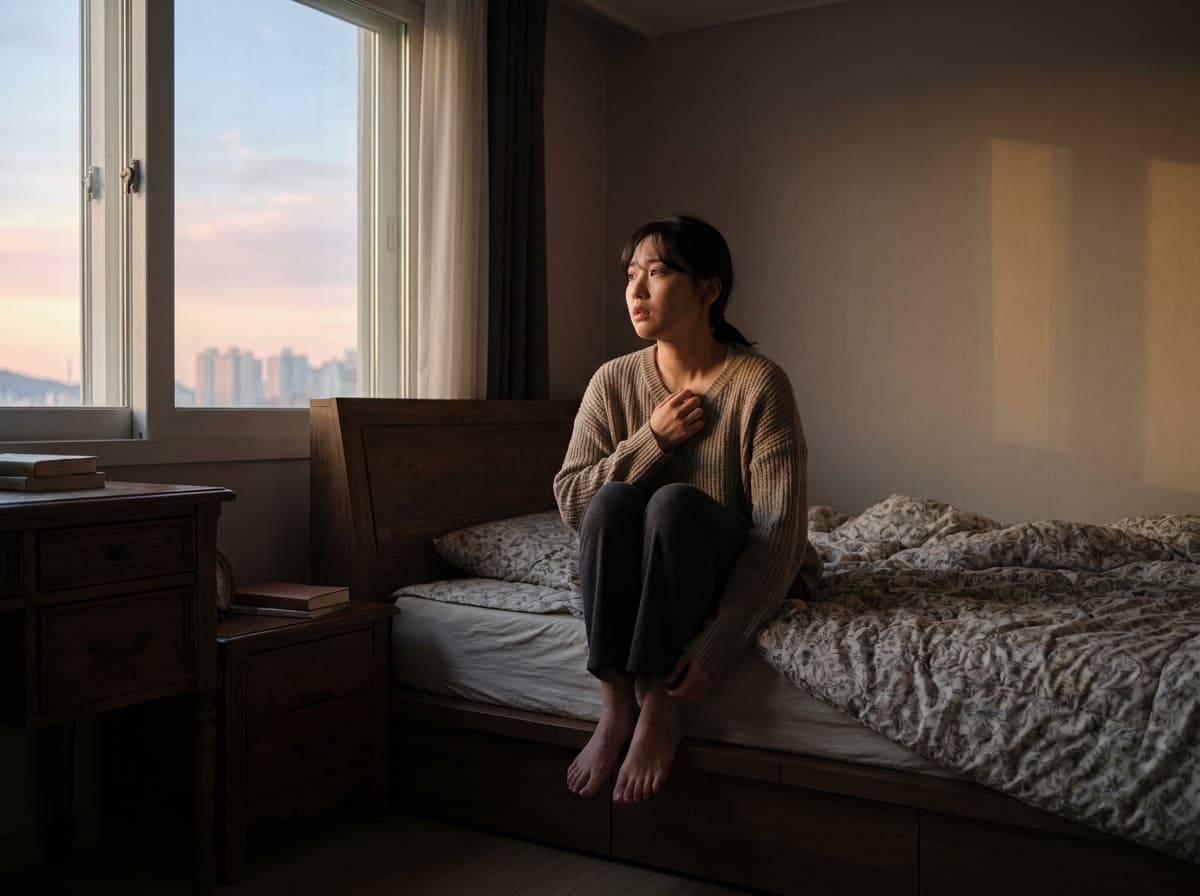
My Heart is Racing and I Feel Anxious: Is it Just Nervousness or Panic Disorder?
Hello. This is Dalimchae Korean Medicine Clinic. # My heart is racing and I feel anxious, is it just nervousness or panic disorder? Have you ever experienced a sudden racing heart, a feeling of being smothered, and an overwhelming sense of dread that you might die? Are you becoming afraid to even go out because such symptoms are recurring? Many people try to dismiss it as temporary tension or stress, but these signals could be important warnings from our body. In particular, heart palpitations and anxiety can appear for various reasons, but depending on the intensity and frequency, they could be serious problems like panic disorder, so careful observation and professional help are necessary. 💡 **[Key Answer]** **3 most common causes of "my heart is racing and I feel anxious":** ① Autonomic nervous system imbalance due to excessive stress / ② Instability of neurotransmitters in the brain / ③ Brain function overload due to chronic anxiety and fear Dalimchae Clinic creates an environment where the brain can rest and regulates the overactivated sympathetic nerves through **autonomic stabilization** treatment. ## Why do symptoms of heart palpitations and anxiety occur? Heart palpitations and anxiety can be natural reactions of the body, but when they develop to a pathological level, they can seriously interfere with daily life. Autonomic nervous system imbalance is often at the base of these symptoms. Our body's autonomic nervous system unconsciously regulates essential life functions such as heart rate, breathing, and digestion, and in threatening situations, it activates the sympathetic nerves to tense the body and respond to threats. However, when suffering from chronic stress or emotional pressure, the sympathetic nerves become excessively stimulated, causing symptoms like a racing heart and shortness of breath even in situations where there is no actual threat. This is like a car engine overheating and the warning light staying on. ## How can we distinguish between simple nervousness and panic disorder? Ordinary nervousness and panic disorder can be easily confused because symptoms start similarly. The important differences are 'intensity of the attack', 'repetition', and the presence of 'anticipatory anxiety'. Simple nervousness occurs temporarily in specific situations (presentations, exams, etc.), but panic disorder occurs suddenly and unexpectedly, accompanied by extreme physical symptoms such as heart-pounding palpitations, difficulty breathing, dizziness, and numbness in hands and feet. Also, once a panic attack occurs, 'anticipatory anxiety'—the fear that an attack will happen again—develops, leading to avoidance of specific places or situations, which significantly lowers the quality of life. These symptoms are even more difficult for patients because often no special abnormalities are found in tests. ## Why is it difficult to overcome panic disorder alone? Panic disorder is a disease that is hard to dismiss as simply being 'up to one's mindset'. This is because it occurs through a complex interplay of hypersensitivity in areas responsible for fear responses, such as the amygdala and hippocampus of the brain, and neurotransmitter imbalances. Patients easily fall into a sense of helplessness as physical symptoms they find hard to control, fear of death, and anxiety that they might go crazy are repeated. Also, these symptoms are highly likely to lead to difficulties in social life or other mental health problems such as depression and insomnia. Due to these complex factors, systematic help from a specialist is essential for panic disorder. ## How does autonomic imbalance affect heart palpitations and anxiety? The autonomic nervous system is an important system that regulates body functions such as heart rate, blood pressure, and digestion regardless of our will. Among these, the sympathetic nerves excite the body and prepare it for emergencies, while the parasympathetic nerves relax and rest the body. When the balance between these two nerves is broken, various physical and mental symptoms appear, with heart palpitations, anxiety, indigestion, sleep disorders, and dizziness being representative. In particular, if stress persists, the sympathetic nerves become excessively stimulated, breaking this balance, and the brain enters a state of continuously sending 'danger signals'. At Dalimchae Clinic, we focus on regaining this autonomic balance to create an environment where the brain can rest comfortably. A study titled "The Mental Health Outcomes and Cost Estimates of Korean Medicine for Anxiety Disorder Patients" published in 2024 comprehensively analyzed the effectiveness of Korean medicine treatment for anxiety disorder patients. This meta-analysis study, including a total of 20 randomized controlled trials (RCTs), revealed that acupuncture treatment is more effective than conventional treatments in reducing anxiety symptoms. In particular, acupuncture treatment showed a statistically significant effect in improving anxiety symptoms with a standard mean effect size of -0.41 (p \< 0.0001). Also, this study reported that when herbal medicine (Gamiso-yo-san) was administered to Korean patients with generalized anxiety disorder (GAD) for 8 weeks, it significantly improved the quality of life (QoL, WHOQOL-BREF score) by 12% compared to the placebo group (p = 0.021). This suggests that Korean medicine treatment can contribute not only to anxiety symptoms but also to the overall quality of life improvement of patients. Such data supports the value of Korean medicine treatment, which plays a core role in autonomic nervous system regulation. Based on these research results, Dalimchae Clinic stabilizes hypersensitive autonomic nerves through acupuncture treatment and herbal medicine prescriptions and helps the recovery of the body and mind exhausted by anxiety. As another case, "Korean Medicine and Psychotherapy for Acute Stress Disorder Following Traffic Accident: A Case Report" reported in December 2024 shows the results of applying integrated Korean medicine treatment to a patient suffering from acute stress disorder and panic-like symptoms after a traffic accident. This patient complained of symptoms such as palpitations, anxiety, insomnia, limb tremors, and hyperventilation, and underwent integrated Korean medicine psychotherapy such as Gi-un-eo-reun therapy, mental transference therapy, and emotional induction therapy along with herbal medicine, pharmacopuncture, acupuncture, and cupping. As a result of the treatment, the GAD-7 (General Anxiety Disorder-7) score significantly decreased from an initial 18 points to 6 points in 24 days, and stabilized to 2 points after 2 months. Also, in the EQ-5D-5L anxiety/depression area, symptoms were completely resolved within 2 months, showing a dramatic improvement. The researchers concluded that such integrated Korean medicine treatment can effectively manage acute stress disorder and panic-like symptoms. As such, at Dalimchae Clinic, we do not simply suppress symptoms but aim for fundamental treatment that corrects autonomic nervous system imbalance and restores psychological stability. Many people looking for a Songdo anxiety disorder clinic are frustrated by results that are 'normal' in tests, but Korean medicine delicately diagnoses and treats subtle changes in the body and the disarray of the autonomic nervous system. ## How is it treated at a Songdo anxiety disorder clinic? At Dalimchae Clinic Songdo Branch, we apply **autonomic stabilization** as a core treatment principle for symptoms such as heart palpitations, anxiety, and panic disorder. When the balance of the autonomic nervous system is broken, the brain cannot rest and enters a state of continuously sending warning signals. This is like a situation where the circuit breaker keeps tripping because of a faulty switch. At Dalimchae Clinic, we focus on stabilizing excessively stimulated sympathetic nerves and restoring the function of suppressed parasympathetic nerves to regain autonomic harmony. To this end, we prescribe customized herbal medicines that fit individual constitutions and symptoms to reduce the overload on the brain's nervous system and regulate neurotransmitter balance. Also, we perform acupuncture, pharmacopuncture, and moxibustion to facilitate Qi and blood circulation in the body, relax muscles tensed by stress, and create an environment where the brain can stabilize itself. In this process, Dalimchae Songdo sets up a customized treatment plan considering each patient's lifestyle and psychological state, aiming for fundamental recovery beyond simple symptom relief. Those who also complain of headaches, dizziness, or insomnia can expect improvement in accompanying symptoms through autonomic stabilization treatment. ### Heart palpitations and anxiety, could I also have panic disorder? Self-diagnosis checklist Check how many of the following items apply to you. * Unexpectedly, extreme anxiety and fear suddenly wash over me. * My heart beats so fast it feels like it will burst, or I feel difficulty breathing or smothered. * I am seized by a feeling that I might die soon or go crazy. * Symptoms like cold sweats, body tremors, and numbness in hands and feet appear often. * I become afraid that an attack will happen again and avoid specific places (public transport, confined spaces, etc.). * The quality of sleep drops, such as having difficulty falling asleep or waking up often at night. * I easily get startled by small things or often feel anxiety in daily life. * Digestion is poor, the stomach feels smothered, or I suffer from frequent headaches. **[Judgment Criteria]** * **If 3 or more apply:** Anxiety symptoms due to autonomic imbalance are suspected. We recommend having a consultation through Dalimchae Clinic Songdo and reviewing integrated Korean medicine treatment. * **If 5 or more apply:** The possibility of panic disorder is high, so it is important to visit and receive a professional diagnosis immediately. --- ### FAQ: Questions about heart palpitations and anxiety **Q. How long do symptoms of heart palpitations and anxiety last?** A. Symptoms due to temporary tension or stress often subside within a few minutes to hours. However, in the case of a panic attack, it usually reaches its peak within 10 minutes and can last for 20-30 minutes. If left untreated, symptoms can become chronic. **Q. Is it possible to treat panic disorder with Korean medicine?** A. Yes, panic disorder can be sufficiently improved with Korean medicine treatment. Korean medicine treatments such as herbal medicine, acupuncture, pharmacopuncture, and moxibustion are effective in alleviating symptoms and preventing recurrence by restoring the balance of the autonomic nervous system and regulating the brain's anxiety response. **Q. Can anxiety symptoms heal naturally?** A. Mild stress-induced anxiety can improve with sufficient rest and lifestyle habit improvement. However, if symptoms recur and interfere with daily life, they can worsen into a chronic condition or develop into panic disorder if left alone, so active treatment is necessary. **Q. I have heart palpitations and insomnia together, can they be treated together?** A. Yes, heart palpitations and insomnia are closely related to autonomic imbalance, so they can be treated together from an integrated perspective. Korean medicine treatment that stabilizes the autonomic nervous system has a positive effect on both symptoms and helps overall physical and mental health recovery. --- Heart palpitations and anxiety are not problems to be solved by enduring. You no longer have to ignore the signals your body has been sending for a long time. If you approach in the right direction, the body responds faster than you think. Bring your symptoms exactly as they are. At Dalimchae Clinic, we will find the cause together. Where life blooms. For herbal medicine, it's Dalimchae Korean Medicine Clinic. Check your symptoms similar to mine through the AI consultation on the Dalimchae Clinic website first! This article is health information compiled by Dalimchae medical staff based on questions frequently received in the treatment room. Medical Supervision | Autonomic nerve, brain & emotional regulation treatment standards Dalimchae Clinic Songdo Branch Korean Medicine Doctor Oh Hyunmin (Anxiety Disorder Column)