
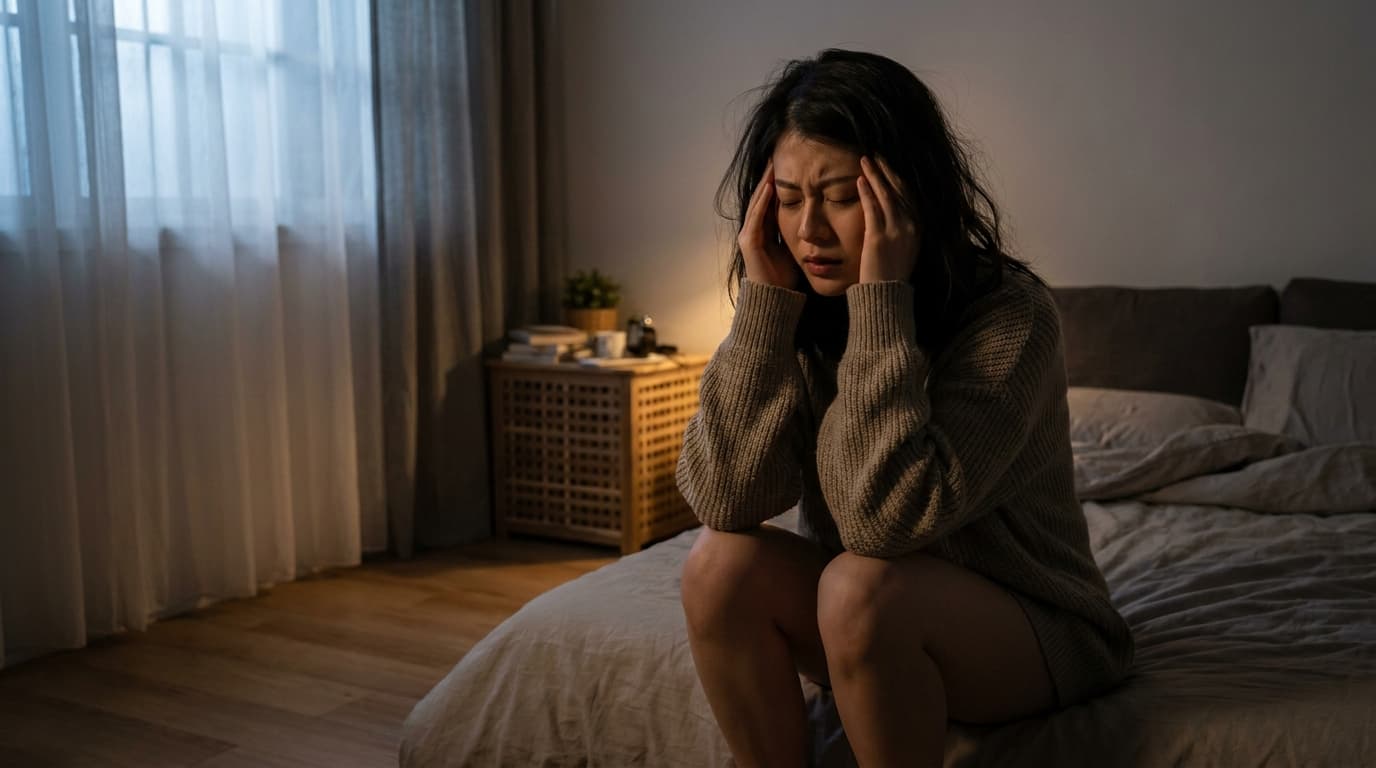
My head feels like it's splitting, could this be a warning light in my brain?
Hello, this is Dalimchae Korean Medicine Clinic. # My head feels like it's splitting, could this be a warning light in my brain? "My head feels like it's splitting." The pain contained in these few words can ruin your entire daily life, beyond mere discomfort. Headaches, which blur your vision and make you nauseous to the point where you can do nothing, become an intense stress in themselves. Do you feel like one side of your head throbs or your temples ache so much that you can't sleep, and you can't get through the day without painkillers? Brain MRI or CT scans show no abnormalities, so why do these sufferings repeat? Perhaps it is a strong warning sound sent by our body, namely, an imbalance of the autonomic nervous system. 💡 **[Key Answer]** **3 most common causes of "My head feels like it's splitting" headaches:** ① Autonomic imbalance due to stress and overwork / ② Decreased brain blood circulation and waste accumulation / ③ Muscle tension and cervical spine issues Dalimchae Korean Medicine Clinic restores the balance of the brain and body through **autonomic stabilization** treatment to solve the root cause of headaches. ## Brain overheating, does autonomic imbalance cause headaches? Chronic headaches, especially intense ones like 'My head feels like it's splitting', are often deeply related to the overheated state of the brain nervous system. If stress or overwork continues, the autonomic nervous system, especially the sympathetic nervous system, becomes excessively hyperactive, causing brain nerves to remain in an excited state without resting. This state induces a sharp increase in brain blood flow and the accumulation of waste products in nerve metabolic processes, which can eventually lead to headaches. In Korean medicine, this overheated state of the brain is explained as 'upper heat, lower cold' (Sangyeolhahan) or 'water-fire disharmony' (Suseunghagang bujo). Hot energy gathers toward the head while the lower part becomes cold, breaking the balance of Qi and blood circulation. This can be accompanied by various symptoms such as dizziness, insomnia, and anxiety as well as headaches. In particular, migraines often occur due to abnormal reactions of the brain nerves and blood vessel system, and research results show that they are closely related to autonomic dysfunction. According to a study published in 'BMC Neurology' in 2022, in a study of 60 chronic migraine patients, the maximum gradient recovery time after the cold pressor test was significantly longer compared to 60 healthy control groups (P \< 0.05), suggesting the possibility of parasympathetic dysfunction in chronic migraine patients. This is an important result showing that such autonomic nervous system imbalance can contribute to headache occurrence. ## How does Korean medicine treatment help improve headaches? Since headaches have very diverse causes and aspects, customized treatment tailored to individuals through accurate diagnosis is important. In Korean medicine, the cause of headaches is not simply viewed as a problem of the head itself, but approached from a complex perspective such as whole-body Qi and blood circulation, zang-fu organ function imbalance, and autonomic nervous system regulation abnormalities. This approach can give new hope to patients suffering from chronic headaches. In fact, various clinical research results are being published showing that Korean medicine treatment is effective in improving headache symptoms. A study by Son Ja-yeon's research team of Korean medicine doctors at Jaseng Medical Foundation published in the 'Journal of Clinical Medicine' in 2024 proved the effectiveness of suboccipital muscle pharmacopuncture treatment for 80 acute tension-type headache patients caused by traffic accidents. The pharmacopuncture treatment parallel group (n=40) showed a rapid decrease in headache intensity (NRS; 0-10) from an average of 6.91 before treatment to 3.84 in just 3 days of hospitalization, and recorded 2.27 at discharge, showing a faster recovery speed than the control group (3.42). In addition, the Headache Disability Inventory (HDI; 0-100) also decreased to 35.78 on the 4th day of hospitalization in the pharmacopuncture treatment group, showing a significant improvement compared to the control group (60.56). The researchers concluded that these results suggest that combining Korean medicine integrative treatment and suboccipital muscle pharmacopuncture treatment can be expected to quickly improve tension-type headaches. In addition, in a systematic review and meta-analysis by Pusan National University Korean Medicine Hospital research team published in 'Complementary Therapies in Medicine' in 2023, it was confirmed that scalp acupuncture has a significant effect on migraine treatment. Analyzing 8 randomized controlled trials (RCTs) including 874 patients, scalp acupuncture showed a higher total effective rate (Relative Risk [RR]: 1.24; 95% Confidence Interval [CI]: 1.08-1.43; P \< 0.01) than general acupuncture treatment. Also, compared to drug treatment, scalp acupuncture significantly decreased the headache index (Standardized Mean Differences [SMD]: -1.27; 95% CI: -2.06 to -0.48; P \< 0.01) and increased the total effective rate (RR: 1.20; 95% CI: 1.06-1.37; P \< 0.01). These studies show that scalp acupuncture can be considered an effective treatment for migraine. Based on these data, the Songdo branch of Dalimchae Korean Medicine Clinic applies various Korean medicine treatments such as acupuncture, pharmacopuncture, and herbal medicine comprehensively according to the type and cause of headaches to improve the quality of life of those suffering from headaches. ## Songdo headaches, not just pain but an autonomic nervous system problem Many people rely on painkillers when experiencing headaches. However, painkillers only temporarily alleviate pain and do not solve the root cause. Especially for modern people with severe stress and tension, headaches often start from autonomic nervous system imbalance. Our body is connected like a complex organism, and overheating of the brain can manifest as various systemic symptoms such as decreased stomach function, insomnia, and dizziness. Songdo Headache Korean Medicine Clinic, Dalimchae Korean Medicine Clinic, focuses on restoring the balance of this autonomic nervous system. Dalimchae Korean Medicine Clinic's 'autonomic stabilization' treatment aims to cool the overheated brain and calm the excited nervous system. When our body is stressed, the sympathetic nervous system is hyperactive, causing it to operate endlessly like an 'overheated engine'. If this state continues, the brain cannot rest properly and induces headaches along with chronic fatigue. Autonomic stabilization treatment focuses on lowering the heat of the nervous system and creating an environment where the brain can rest. In Korean medicine, this is called 'Suseunghagang' (rising water and descending fire), explaining that the cold energy of the body rises and the hot energy descends to regain balance. The Songdo branch of Dalimchae Korean Medicine Clinic controls the balance of the autonomic nervous system through herbal medicine prescriptions tailored to individual constitution and symptoms, and relaxes tense muscles and improves Qi and blood circulation with acupuncture and pharmacopuncture treatments to prevent headache recurrence and help fundamental treatment. ## Perhaps I also have autonomic imbalance headaches? Self-diagnosis checklist If you correspond to 3 or more of the following items, you can suspect headaches due to autonomic imbalance. We recommend receiving accurate diagnosis and treatment at the Songdo branch of Dalimchae Korean Medicine Clinic. * Back of neck and shoulders are always stiff and tight. * Severe fatigue and not feeling refreshed even after resting. * Poor sleep quality, such as difficulty falling asleep or waking up frequently. * Frequent heart palpitations or tightness in the chest. * Poor digestion, stuffy or bloated stomach. * Sensitive, anxious, and easily irritated. * Frequent dizziness or tinnitus. * Cold hands and feet or feeling heat in specific areas. * Frequent cold sweats or difficulty controlling body temperature. * Dry, blurry eyes and fatigue. 3 or more apply → Suspect autonomic imbalance → Consider Korean medicine complex treatment 5 or more apply → Recommend immediate visit for precise diagnosis --- **Q. How long do I need to be treated for headaches to improve?** A. The treatment period may vary depending on the type of headache, degree of chronic progression, and patient's lifestyle habits. Generally, symptom improvement and recurrence prevention effects can be expected through consistent treatment for 3 to 6 months. The Songdo branch of Dalimchae Korean Medicine Clinic helps effective recovery by establishing a personalized treatment plan. **Q. Can chronic headaches be treated with Korean medicine?** A. Yes, chronic headaches can be sufficiently improved with Korean medicine treatment. In particular, chronic headaches whose causes are difficult to find can find fundamental solutions when approached from Korean medical perspectives such as autonomic imbalance and Qi and blood circulation disorders. Complex treatments such as acupuncture, pharmacopuncture, and herbal medicine can reduce recurrence and help you regain a pain-free daily life. **Q. Headaches don't get better even though I keep taking painkillers. What should I do?** A. Painkillers help temporarily alleviate pain, but if they do not solve the root cause of headaches, the drug efficacy may decrease or tolerance may develop. In this case, it is important to understand the cause of headaches from the perspective of the autonomic nervous system and whole-body balance, like Dalimchae Korean Medicine Clinic Songdo branch, and attempt fundamental resolution through personalized Korean medicine treatment. **Q. I have dizziness and insomnia along with headaches, can they be treated together?** A. Yes, dizziness and insomnia appearing with headaches are often closely related to autonomic imbalance. Dalimchae Korean Medicine Clinic's autonomic stabilization treatment comprehensively restores the balance of the brain and nervous system, and is effective in improving various symptoms accompanying headaches such as dizziness and insomnia together. --- Headaches where your head feels like it's splitting are not problems solved by enduring. You no longer need to ignore the body's signals sent for a long time. If approached in the right direction, the body responds faster than you think. Please bring the symptoms you are currently experiencing as they are. The Songdo branch of Dalimchae Korean Medicine Clinic will find the cause together. Where life blooms. Herbal medicine is Dalimchae Korean Medicine Clinic. Check symptoms similar to yours first through the AI consultation on the Dalimchae Korean Medicine Clinic website! This article is health information organized together by Dalimchae medical staff based on questions actually received often in the consultation room. Medical Supervision | Brain & Autonomic Nervous System Treatment Standard Dalimchae Korean Medicine Clinic Songdo Branch Korean Medicine Doctor Oh Hyunmin (Headache Column) #Headache #Migraine #AutonomicNervousSystem #SongdoHeadacheClinic #BrainAutonomicSystem #KoreanMedicineTreatment #Dizziness #SongdoKoreanClinic Brain & Autonomic Nervous System - Headache