
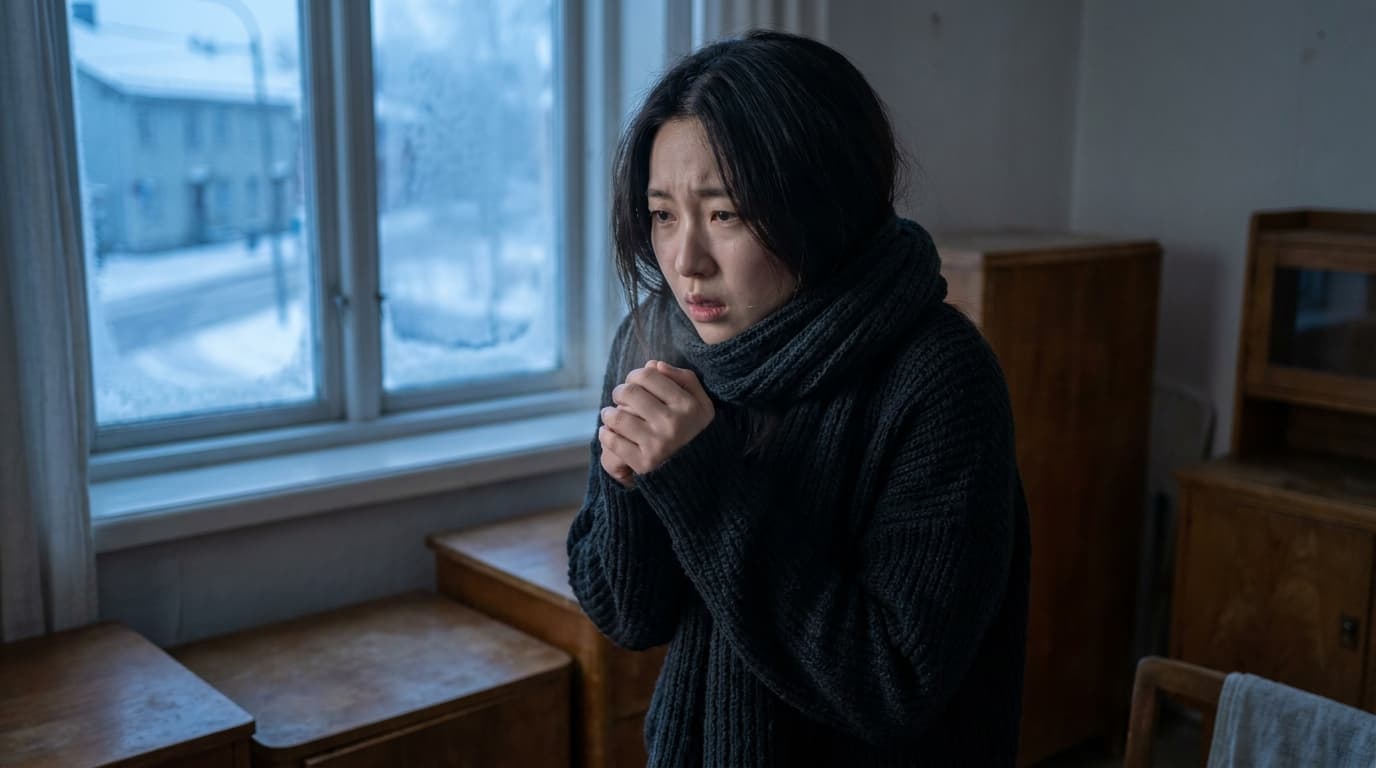
My Hands and Feet Are Too Cold Hidden Causes of Coldness and Oriental Medicine Solutions
Hello. This is Dalimchae Oriental Clinic. # Are Your Hands and Feet Too Cold? Hidden Causes of Coldness and Oriental Medicine Solutions Are you experiencing discomfort in your daily life because your hands and feet feel chilly and cold even in warm weather, not just in cold winter? Many people casually brush it off thinking 'my constitution is just cold' or 'my blood circulation is poor'. However, excessively cold hands and feet go beyond mere inconvenience and can be an important warning signal from our body. Especially for women, coldness can be closely connected with gynecological diseases such as menstrual cramps, menstrual irregularities, and even infertility, requiring special attention. 💡 **[Core Answer]** **Top 3 Most Common Causes of Cold Hands and Feet:** ① **Blood circulation disorder and peripheral vasoconstriction**: Peripheral vessels contract excessively due to stress, autonomic imbalance, etc., making blood supply inadequate. ② **Qi and Blood deficiency**: According to oriental medicine, the energy and blood that warm the body and aid circulation are insufficient, lowering overall body metabolic function. ③ **Autonomic nervous system dysfunction**: The balance of the autonomic nervous system responsible for temperature regulation is broken, making it difficult to maintain internal body temperature. Dalimchae Oriental Clinic helps you regain a healthy body that cures the root of symptoms through **constitutional improvement** and maintains warmth on its own. ## Why Are Hands and Feet Uniquely Cold? Our body maintains a constant core temperature through blood circulation. However, when blood supply to specific parts, especially peripheral parts like hands and feet far from the heart, is inadequate, body temperature drops and coldness occurs. It is not simply due to cold external environment. Complex factors such as stress, fatigue, irregular lifestyle habits, and hormonal changes affect the autonomic nervous system, contracting blood vessels and hindering blood circulation. Especially women complain of coldness more often than men. This is because changes in female hormones and Qi and blood deficiency caused by pregnancy and childbirth disrupt the balance of the autonomic nervous system and affect blood vessel expansion and contraction. Due to these causes, coldness tends to appear more severely in adolescent, pre- and post-partum, and menopausal women. ## Even Though Tests Say Normal, Why Are Hands and Feet Still Cold? Many patients with coldness receive diagnoses from hospitals that there is no particular organic abnormality. This is because coldness is often not a mechanical problem, but stems from functional imbalance throughout the body. In Western medicine, standardized treatment strategies for coldness without clear organic causes may be limited. However, in oriental medicine, coldness is not viewed merely as a problem of peripheral circulation. It is understood as a lowered state of Qi and blood circulation and functional imbalance of internal organs, meaning overall body balance is broken. Therefore, considering the patient's constitution, lifestyle habits, and accompanying symptoms along with visible symptoms, we find and treat the root cause of coldness. At Dalimchae Oriental Clinic, through this approach, we provide customized treatments tailored to each patient's body condition so that even those who received 'normal' test diagnoses can escape from coldness. ## How Does Oriental Medicine View and Treat Coldness? In oriental medicine, coldness, the symptom of cold hands and feet, is explained by concepts such as 'cold Qi' or 'deficiency and cold', and its cause is found not only in blood circulation problems but also in fundamental energy deficiency of our body, i.e., Qi and blood deficiency or autonomic nervous system imbalance. Coldness can be approached through various syndrome differentiation types rather than a single disease state, and customized prescriptions are given by comprehensively considering the patient's cold sensation pattern, accompanying symptoms, digestive state, and abdominal palpation findings. Acupuncture treatment is one of the most widely used oriental medical methods for treating coldness, helping to improve Qi and blood circulation and regulate autonomic balance by stimulating systemic acupuncture points. In addition, herbal medicine prescriptions that warm the body and replenish energy are effective in strengthening internal organ functions and improving constitution to prevent recurrence of coldness. In a randomized controlled trial titled "The Effects and Safety of Electroacupuncture in Women with Periphral Coldness" published in the Graduate School of Semyung University in 2022 by Kwon Na-yeon's research team, 72 women complaining of peripheral coldness were divided into an electroacupuncture group, acupuncture group, and untreated group, receiving 10 treatments twice a week for 5 weeks. As a result, visual analogue scale (VAS) scores and body surface temperature of subjects showed statistically significant improvement after intervention termination, and these effects were confirmed to be maintained up to 4 weeks after intervention termination (p\<0.05). In particular, body surface temperatures measured with a non-contact thermometer showed an increasing trend in both the electroacupuncture group and acupuncture group. The researchers concluded that these results suggest acupuncture treatment is effective in symptom alleviation and quality of life improvement in peripheral coldness patients. These data are in line with the treatment philosophy of Dalimchae Oriental Clinic, which helps patients suffering from coldness reduce pain, smooth Qi and blood circulation, and aid fundamental recovery of the body through acupuncture treatment. Also, in a randomized controlled trial titled "Effects of a traditional herbal medicine on peripheral blood flow in women experiencing peripheral coldness: a randomized controlled trial" published in the *BMC Complementary and Alternative Medicine* journal in 2015 by Hiroshi Arai's research team, 58 women experiencing peripheral coldness were evaluated for the effect of Tokishigyakukagoshuyushokyoto (TJ-38), a traditional oriental herbal prescription. As a result, the herbal prescription showed significant improvement in peripheral blood flow recovery after cold water bath stress. While the control group showed a blood flow recovery rate of -28.2%, the herbal treatment group showed a recovery rate of 17.2% (p=0.007), and particularly the proportion showing a blood flow recovery rate of 50% or more was significantly higher in the herbal treatment group at 32% compared to 0% in the control group (p=0.0007). The researchers concluded that traditional herbal prescriptions are effective in alleviating peripheral coldness in women by improving peripheral blood flow. This research shows that herbal medicine has proven its effect in objective indicators of actual blood flow improvement beyond simple symptom alleviation. At Dalimchae Oriental Clinic, based on body temperature control and blood circulation improvement effects of such herbal medicine, we restore the body's thermal function through herbal prescriptions tailored to each patient's constitution and coldness type. ## Coldness Is Not Just Inconvenience, It Is a 'Warning Signal'. Hand and foot coldness is uncomfortable in itself, but if neglected, it can lead to various health problems. Especially for women, it can have more serious effects. Among patients complaining of coldness, about 40.5% are accompanied by dizziness or anemia, and it has been shown to cause gastrointestinal disorders, neuropsychiatric symptoms, joint diseases, postpartum wind, and even infertility in severe cases. Chronic coldness adversely affects uterine health, increasing the risk of gynecological diseases such as menstrual cramps, menstrual irregularities, uterine fibroids, and ovarian cysts, and can negatively affect pregnancy possibility. Therefore, many women visiting Songdo Coldness Oriental Clinic worry beyond simple hand and foot chilliness, extending to overall women's health issues. Like this, coldness is like a warning light informing imbalance throughout the body. It is important to solve the root cause without ignoring this warning light. ## What Principle Does Dalimchae Oriental Clinic's Constitutional Improvement Treatment Use to Manage Coldness? At Dalimchae Oriental Clinic Songdo Branch, we focus on the principle of **constitutional improvement** for fundamental treatment of coldness. Constitutional improvement aims not to temporarily alleviate symptoms, but to understand our body's innate constitutional characteristics and current imbalance state to create a body that can maintain health on its own. To improve Qi and blood deficiency, autonomic nervous system imbalance, and blood circulation disorders that cause coldness, we analyze accurate causes utilizing oriental diagnostic methods such as pulse diagnosis, abdominal diagnosis, and tongue diagnosis for each patient, as well as peripheral blood circulation tests and autonomic nervous tests as needed. Based on this, through customized herbal prescriptions, we replenish the body's insufficient energy and blood, strengthen internal organ functions, and cultivate the ability to produce and circulate heat on oneself. Acupuncture, moxibustion, and pharmacopuncture treatments help restore autonomic balance by smoothing systemic Qi and blood communication as well as local circulation improvement. As a result, constitutional improvement treatment is a process of nurturing fundamental strength so that the body does not become cold again. By enhancing the body's self-healing power to strengthen immunity and activating metabolic functions, we create a healthy body that maintains warmth on its own. Especially since many patients worrying about Songdo peripheral coldness treatment suffer from chronic symptoms, fundamental approach through constitutional improvement is even more important. --- **Cold Diagnosis Checklist** Check how many of the following symptoms apply to you. * Hands and feet frequently feel cold even in warm indoor spaces. * Cold hands and feet are accompanied by numbness or chilliness. * Usually sensitive to cold and body cools down easily. * Feel lower abdomen or waist is cold. * Severe fatigue and frequent lethargy. * Poor digestion and frequent gas in the stomach. * Sensitive to stress and tend to be very tense. * Severe menstrual cramps or irregular menstrual cycles (for women). * Difficulty falling asleep at night or waking up frequently even after falling asleep. * Frequently experience dizziness or headaches. **Judgment Criteria:** * **3 or fewer items:** May be temporary coldness, but management is needed. * **4-6 items:** Coldness is likely progressing. Consider oriental complex treatment along with lifestyle habit improvement. * **7 or more items:** Chronic coldness is likely deepened. Since coldness due to autonomic nervous and Qi and blood circulation imbalance is suspected, immediate visit to Dalimchae Oriental Clinic Songdo Branch is recommended. --- **Q. Must hands and foot coldness be treated?** A. Beyond mere inconvenience, chronic coldness can be an important warning signal of our body. Especially for women, since it can be associated with various gynecological diseases such as menstrual cramps, menstrual irregularities, and infertility, it is important to find and treat the root cause without neglecting it. **Q. How long does coldness treatment take?** A. Treatment duration can vary depending on individual constitution, severity of symptoms, onset cause, and lifestyle improvement efforts. Generally, fundamental treatment through constitutional improvement requires consistency, and gradual improvement can be expected over weeks to months. **Q. Can men also get coldness?** A. Yes, coldness appears mostly in women but can also occur in men. Men's coldness can also appear due to problems in the autonomic nervous system and blood circulation caused by various causes such as stress, overwork, chronic fatigue, smoking and drinking, and irregular lifestyle habits. **Q. Are peripheral coldness and Raynaud's disease different?** A. Peripheral coldness is a general term for subjective symptoms of cold hands and feet, whereas Raynaud's disease is a condition accompanied by objective vascular changes where fingers and toe blood vessels temporarily contract due to specific causes, turning pale or blue. Since peripheral coldness may be an early symptom of Raynaud's disease, it is important to distinguish through accurate diagnosis. Coldness is not a problem solved by enduring. You no longer need to ignore the body's signals sent for a long time. When approached in the right direction, body responds faster than you think. Bring symptoms you are experiencing as they are. Dalimchae Oriental Clinic Songdo Branch will find the cause together. Where life blooms. Herbal medicine is naturally Dalimchae Oriental Clinic. Check similar symptoms to yours first through Dalimchae Oriental Clinic website AI consultation! Medical Supervision | Women and Pregnancy Treatment Standard, Dalimchae Oriental Clinic Songdo Branch, Korean Medicine Doctor Oh Hyunmin (Coldness Column) #coldness #peripheral_coldness #constitutional_improvement #songdo_coldness_clinic #incheon_clinic #qi_circulation #womens_health