
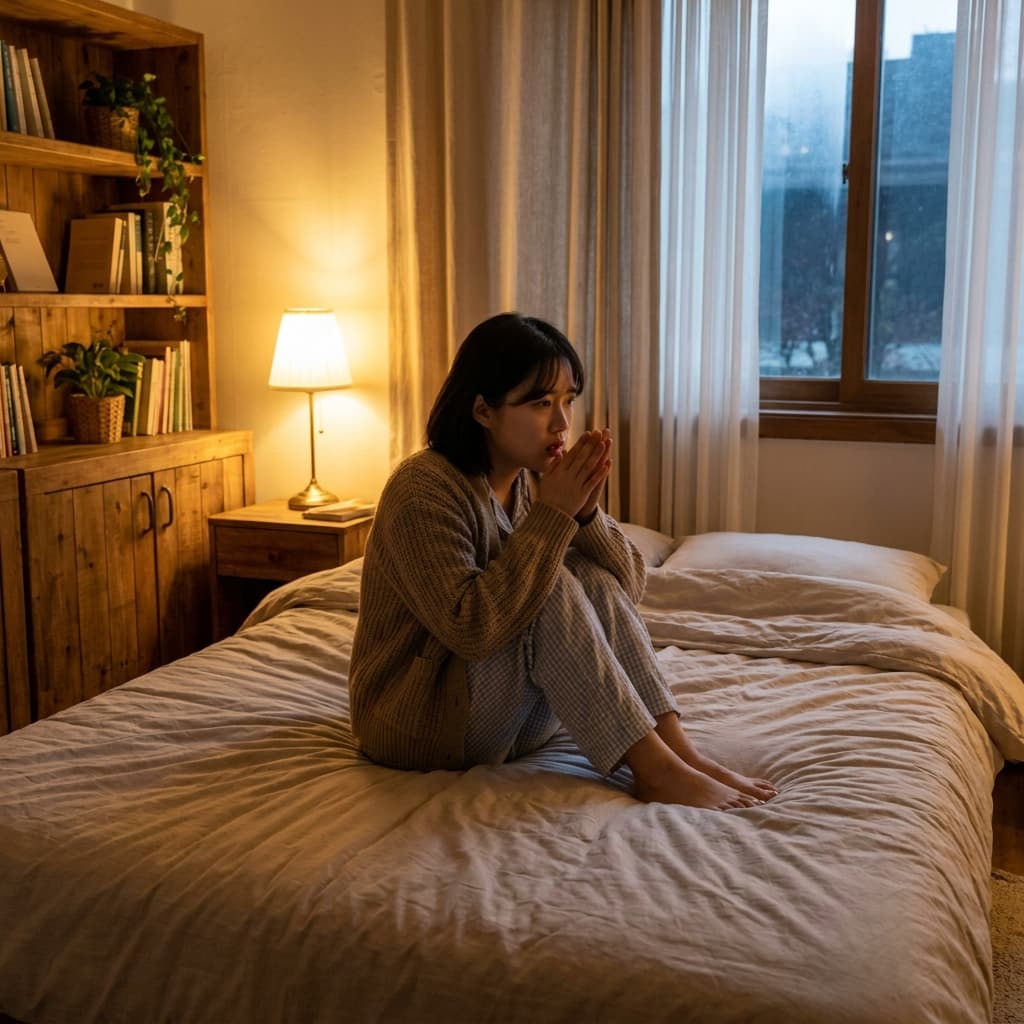
My hands and feet are freezing after childbirth. How long will you endure postpartum coldness?
Hello, this is Dalimchae Korean Medicine Clinic. # My hands and feet are freezing after childbirth. How long will you endure postpartum coldness? The joy of welcoming a new life after holding a baby for ten months and exhausting all your energy is soon followed by many mothers visiting the hospital complaining, "My hands and feet are freezing after childbirth." We heard that the postpartum recovery period (sanchokgi) is very important, but when the whole body remains chilled and hands and feet stay cold, you might feel helpless with worries like 'Is this normal?' or 'Am I the only one?' Especially, you face great discomfort in daily life, such as finding it difficult to touch cold water or wearing thick socks even in warm weather. Such postpartum coldness is not merely feeling cold, but an important signal that can have a surprising and significant impact on future health. 💡 **[Key Answer]** Top 3 most common causes of 'My hands and feet are freezing after childbirth': ① Excessive depletion of Qi and Blood and loss of physical strength during childbirth ② Autonomic nervous system imbalance due to hormonal changes ③ Systemic circulation disorders caused by inadequate lochia discharge and edema management Dalimchae Korean Medicine Clinic helps restore the weakened body fundamentally and regain warm energy through **constitutional improvement** treatment. ## Postpartum hand and foot coldness, is it simple fatigue? Childbirth brings profound changes to a woman's body. Through the process of holding a baby for about 10 months and expending tremendous energy in delivery, the depletion of Qi and Blood inevitably follows. In particular, cold hands and feet are classified as 'coldness' in Korean medicine and are one of the main symptoms of 'sanhupung' (postpartum wind disorders), encompassing various discomforts appearing after childbirth. Many mothers easily dismiss it thinking, "It's just because I'm tired," but such coldness carries a meaning beyond simple fatigue. This is because it often appears as cold energy invades the weakened body after childbirth, or as the balance of the internal **autonomic nervous system** collapses and thermoregulation ability decreases. In particular, when the function of the autonomic nervous system that controls body temperature decreases, blood circulation is not smooth, preventing warm energy from reaching the peripheral parts such as hands and feet sufficiently. ## Postpartum coldness, why does it only find me? What body changes cause it? Not all mothers experience postpartum coldness, but it appears more severely due to specific factors. The biggest cause is the massive depletion of Qi and Blood generated during childbirth, as mentioned earlier. Donguibogam emphasizes that Qi and Blood are severely damaged and weakened after childbirth, and if the body is not well cared for at this time, various diseases can occur. In addition, rapid **hormone** level changes through pregnancy and childbirth can also affect the autonomic nervous system, making thermoregulation functions unstable. Hormonal changes like relaxin induce joint relaxation, and if body recovery is not properly achieved during this time, the body becomes vulnerable to cold. Here, if lochia discharge is not smooth or postpartum **edema** management is inadequate, leaving bodily waste and **stagnant blood (eokhyul)** unremoved, systemic **circulation** disorders can occur, making hand and foot coldness even more severe. When bodily circulation decreases, metabolic rates also drop, lowering overall body temperature, which leads to weakened immunity and creates a vicious cycle hindering postpartum recovery. ## Postpartum coldness, how does Korean medicine treatment help restore body warmth? In Korean medicine, postpartum coldness is not viewed as a mere symptom, but interpreted as the result of disrupted **Qi and Blood** circulation and broken **autonomic nervous system** balance throughout the body weakened by childbirth. Therefore, Dalimchae Korean Medicine Clinic focuses on treating the root causes so that the mother's body can fully recover after childbirth. The core is to replenish our body's Qi and Blood, remove stagnant blood, and restore the broken balance of the autonomic nervous system. A 2023 study published in Scilit, "Effectiveness of the Korean Medicine-Based Postnatal Healthcare Program: A Retrospective Observational Study," retrospectively analyzed the effects of Korean medicine treatments (herbal medicine, acupuncture, pharmacopuncture, Chuna, etc.) on 37 mothers who participated in the Korean Medicine Postnatal Healthcare Program (KMPHP) of the National Development Institute of Korean Medicine. The study results showed that the Edinburgh Postpartum Depression Scale scores of participating mothers significantly decreased from an average of 8 points before treatment to 5 points after treatment (p\<0.01), and quality of life (EuroQol-5 Dimension-5L) also improved from 0.82 to 0.83 (p=0.02). Although the decrease in pain scores (NRS) was not statistically significant, 'cold sensation' was reported as a major discomfort symptom, confirming that herbal medicine treatment has a significant effect on improving depression, quality of life, and pain in mothers. This suggests that Korean medicine treatment is effective in improving both psychological and physical discomforts accompanied by postpartum coldness. In addition, in the qualitative study "Mothers' Experiences of Childbirth and Perspectives on Korean Medicine-Based Postpartum Care in Korea" published in the International Journal of Environmental Research and Public Health in 2022, the experiences of mothers participating in the Korean Medicine postpartum health care project were analyzed. In this study, mothers reported experiencing relief from uncomfortable sanhupung symptoms, especially **reduction of cold sensation**, through Korean medicine treatment. They also felt that "the body became warm and vital energy was reinforced," and showed high satisfaction with "holistic Korean medicine management for mothers." The researchers concluded that Korean medicine treatment helps directly alleviate postpartum coldness and physical discomforts in mothers, warms the body, and restores energy. These research results support that the mother-centered constitutional improvement treatment pursued by Dalimchae Korean Medicine Clinic is effective in recovering from coldness. ## Dalimchae Korean Medicine Clinic's 'constitutional improvement' treatment, how to prevent symptoms from returning? Dalimchae Korean Medicine Clinic does not stop at simply warming the hands and feet for postpartum coldness, but focuses on **constitutional improvement** treatment to "create a body where symptoms are not just turned off, but won't turn back on." This is to raise the fundamental recovery power of the body weakened after childbirth and establish a foundation to maintain a healthy state on its own. * **Replenishing Qi and Blood and strengthening circulation:** Herbal medicine prescribed according to individual constitution and symptoms replenishes Qi and Blood consumed by childbirth, removes stagnant blood, and helps smooth systemic blood circulation. Through this, warm energy is well delivered to peripheral parts such as hands and feet. * **Regulating autonomic nervous system balance:** Excessive stress and child-rearing burdens can intensify autonomic imbalance and induce coldness. Acupuncture, moxibustion, and pharmacopuncture treatments stabilize unstable autonomic systems, restore body balance, and improve thermoregulation ability. * **Enhancing immunity:** Postpartum weakened immunity makes the body vulnerable to various postpartum diseases. Constitutional improvement treatment strengthens body immunity, protects the body from external coldness, and fosters the power to recover on its own. This holistic approach contributes not only to relieving symptoms with surprising changes, but also to helping healthy postpartum recovery and preventing sanhupung with surprising changes. In particular, many mothers looking for a Songdo postpartum coldness Korean medicine clinic are regaining healthy body warmth and vitality through Dalimchae Korean Medicine Clinic's constitutional improvement treatment. Those who also complain of headaches or dizziness after childbirth can improve overall physical functions through such treatments. ## Postpartum coldness self-diagnosis checklist If 3 or more of the following items apply, you can suspect postpartum coldness and sanhupung. * ◻ Hands and feet feel cold or chilly even in warm weather. * ◻ The lower abdomen is always cold, and digestion feels poor. * ◻ The feeling of chilliness is exceptionally severe when putting hands in cold water or catching cold wind. * ◻ Easily fatigued and lacking energy compared to before childbirth. * ◻ The whole body feels chilled or a feeling of cold energy entering the body. * ◻ Joint nodes ache or pain. * ◻ Do not feel refreshed even after sleep, and frequently sweat cold sweats. * ◻ Indigestion, constipation, or diarrhea that didn't exist before has developed. **Criteria:** * **If 3 or more apply:** Suspected postpartum coldness and possibility of sanhupung -> Consider Dalimchae Korean Medicine Clinic complex treatment. * **If 5 or more apply:** Active treatment and immediate hospital visit recommended. --- **Q. How long can postpartum coldness last?** A. Postpartum coldness most commonly appears during the postpartum period (6 weeks after childbirth), but if postpartum care was insufficient or body recovery power is weak, symptoms can persist or appear late even months or years later. Especially if care is neglected, it can lead to chronic coldness, making it important to treat at the appropriate time. **Q. Can postpartum coldness heal naturally?** A. There are individual differences, but coldness caused by Qi and Blood damage and autonomic imbalance from childbirth is often difficult to recover naturally. If left unattended, it can lead to other sanhupung symptoms such as chronic fatigue, indigestion, and joint pain, so active treatment and care are necessary. **Q. Is Korean medicine postpartum coldness treatment possible during breastfeeding?** A. Yes, Korean medicine postpartum coldness treatment is possible even during breastfeeding. Dalimchae Korean Medicine Clinic provides safe and effective treatments for both mother and baby through special herbal prescriptions for breastfeeding mothers. It is important to consult medical staff before taking them to receive a prescription tailored to the mother's condition. **Q. What symptoms can postpartum coldness manifest besides hand and foot coldness?** A. Besides hand and foot coldness, various symptoms such as lower abdomen cold sensation, systemic chills, joint coldness and pain, indigestion, chronic fatigue, edema, cold sweats, and depression can accompany. In Korean medicine, the complex appearance of these symptoms is called 'sanhupung' and must be treated from a systemic perspective. --- Childbirth is the greatest thing in the world, but it brings a heavy burden to the mother's body. Body signals like "My hands and feet are freezing after childbirth" are not problems solved by enduring. You no longer need to turn away from body signals sent for a long time. If you approach in the right direction, your body reacts faster than you think. Bring the symptoms you are experiencing as they are. Dalimchae Korean Medicine Clinic will find the cause together. Where life blooms. Herbal medicine is Dalimchae Korean Medicine Clinic. Check symptoms similar to yours first through the AI consultation on the Dalimchae Korean Medicine Clinic website! This article is health information organized together by Dalimchae medical staff based on questions actually received often in the consultation room. Medical Supervision | Women & Pregnancy Care Standards, Songdo Branch of Dalimchae Korean Medicine Clinic, Korean Medicine Doctor Oh Hyun-min (Coldness Column)