
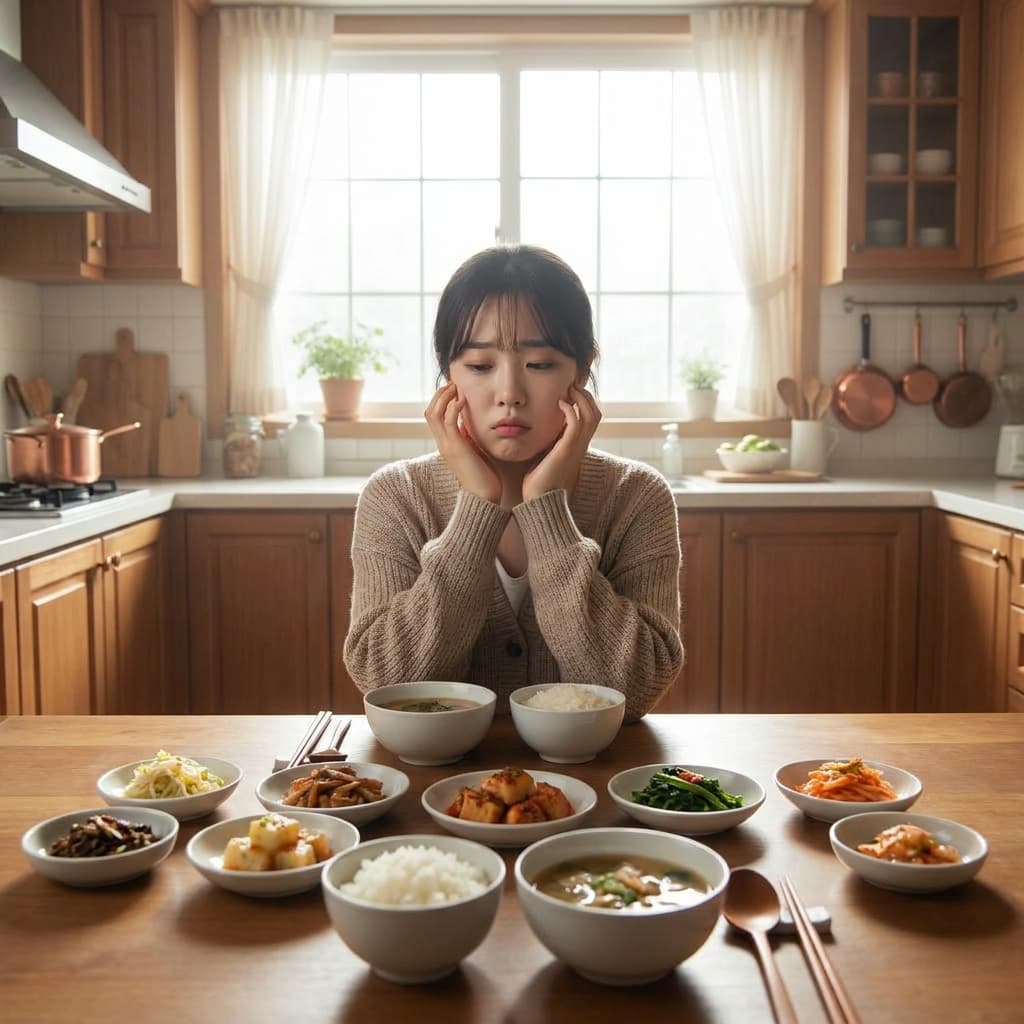
Loss of Appetite: Is It Just Mood or a Real Stomach Issue?
Hello. This is Dalimchae Korean Medicine Clinic. # I have no appetite, is it just my mood? Could there be a real problem with my stomach? \"I've had no appetite lately. I don't feel like eating even when I see food, and everything tastes bland, so I'm losing energy. Is it just stress? Or am I worried that something big is wrong with my stomach?\" Many people visit Dalimchae Korean Medicine Clinic with these concerns about loss of appetite and indigestion. The frustration of not being able to pick up a spoon even when food is in front of you, and the bloated feeling even after eating, goes beyond simple discomfort and makes your entire daily life lethargic. 💡 **[Core Answer]** The 3 most common causes of \"no appetite\": ① Decreased gastrointestinal motility / ② Autonomic nerve imbalance / ③ Changes in the gut microbiome environment Dalimchae Korean Medicine Clinic restores gastrointestinal function and strengthens systemic immunity through **gut detoxification** treatment to help you regain your lost appetite and digestive function. ## You're saying that not having an appetite isn't just because of your mood? Many people dismiss a lack of appetite as temporary fatigue or stress and ignore it. Of course, stress or fatigue can affect appetite, but if your appetite doesn't return for a long time or is accompanied by symptoms such as indigestion and bloating, it may not be just your mood. Our digestive organs are closely connected to the brain, and it goes beyond simply feeling hungry and is deeply related to our emotional state. In other words, a loss of appetite is highly likely to be a complex signal from within the body, such as gastrointestinal function problems or autonomic nervous system imbalances. ## How does Korean medicine view loss of appetite? In Korean medicine, loss of appetite and indigestion are not seen as just a problem with the stomach. We value the circulation of Qi and blood and the balance of the five viscera and six entrails, and we believe that if the function of the 'Spleen and Stomach (脾胃)' drops, the power to digest and absorb weakens and overall vitality decreases. The Spleen and Stomach mentioned here refers to a key organ system that governs digestion and nutrient absorption, as well as the energy of the entire body, beyond just the stomach itself. In particular, we pay attention to the concept of 'Damjeok (痰積)'. Damjeok refers to a state in which gastrointestinal tissue hardens and function decreases due to the accumulation of waste and toxins on the outer wall of the gastrointestinal tract. Because it is a problem on the outer wall of the stomach that is difficult to detect even with an endoscope, many people continue to suffer from indigestion, bloating, lack of appetite, and chronic fatigue even after receiving a 'normal' diagnosis on tests. Phlegm toxins not only lower gastrointestinal function but also spread throughout the body via blood and lymph, causing various systemic symptoms such as headaches, dizziness, shoulder stiffness, and depression. **A pilot study by the Woojoo Integrated Medicine Research Institute and Widam Korean Medicine Hospital published in the journal 『Healthcare』 in September 2025** compared and analyzed 16 patients with Damjeok Syndrome (DJS) accompanied by chronic indigestion and abdominal induration (hardness) and 15 healthy controls. As a result of the study, Damjeok Syndrome patients reported high rates of extra-gastrointestinal symptoms such as headache/fatigue (87.5%), anxiety/depression (81.3%), and neck/shoulder stiffness (81.3%). In autonomic nervous system analysis, parasympathetic nerve activity was significantly decreased (p \< 0.1) and the serotonin metabolite 5-HIAA level in the blood was significantly increased (p = 0.01). The researchers concluded that these results suggest that Damjeok Syndrome is associated with dysregulation of the Gut-Brain Axis. As such, Dalimchae Korean Medicine Clinic aims to solve the fundamental cause of loss of appetite through autonomic nerve balance and recovery of the gut-brain axis, rather than simple digestive enzyme prescription. ## What problems can occur if you ignore loss of appetite? If food intake decreases due to a lack of appetite, it doesn't just stop at weight loss. Our body receives essential nutrients from food, and if loss of appetite persists, nutrient imbalances can worsen, leading to weakened immunity, chronic fatigue, and anemia. In particular, according to a study published in July 2025 by Kyung Hee University Korean Medicine Hospital, the group with loss of appetite among dyspepsia patients (101 people) was more strongly associated with psychosocial and physical health problems compared to the dyspepsia group with good appetite (124 people). This shows that loss of appetite goes beyond taking away the pleasure of eating and can have a negative impact on overall quality of life. Furthermore, if the cause of loss of appetite is a gastrointestinal function problem such as Damjeok disease, ignoring it may cause phlegm toxins to spread throughout the body and cause more serious diseases such as angina and panic disorder. Thus, since a loss of appetite can be an important warning light from our body, it is important to identify the cause and start appropriate treatment in time. Many of those looking for a loss of appetite clinic in Songdo complain of chronic fatigue and lethargy along with indigestion. ## How specifically does Dalimchae Korean Medicine Clinic's 'Gut Detoxification' treatment proceed? Dalimchae Korean Medicine Clinic focuses on 'gut detoxification' treatment to solve the fundamental cause of appetite loss and indigestion. Gut detoxification goes beyond simply helping digestion; it is a process of restoring systemic health by removing toxins accumulated on the intestinal wall and activating gastrointestinal motility. **Toxins accumulated on the intestinal wall create systemic inflammation through the blood.** Dalimchae Korean Medicine Clinic's gut detoxification treatment focuses on removing hardened phlegm toxins on the outer wall of the gastrointestinal tract and regenerating the damaged intestinal wall. To this end, Korean herbal medicine processed by fermentation with special microorganisms is prescribed according to the individual's constitution and Damjeok state to dissolve and discharge phlegm toxins. **According to the results of the study 『Appetite loss in patients with dyspepsia』 in July 2025**, as a result of conducting Korean medicine treatment for 2 weeks on 225 patients with dyspepsia (101 in the group with appetite loss, 124 in the group without) at Kyung Hee University Korean Medicine Hospital, the group with appetite loss showed a symptom improvement rate of 24.77% and a quality of life improvement rate of 28.88%. After 4 weeks of treatment, more significant improvements were shown with a symptom improvement rate of 34.65% and a quality of life improvement rate of 43.85%. This study shows that Korean medicine treatment is effective in improving symptoms and quality of life for dyspepsia patients with appetite loss. Based on these data, Dalimchae Korean Medicine Clinic Songdo Branch provides gut detoxification treatment that increases the body's natural healing power by fundamentally removing phlegm toxins and restoring gut health, rather than just alleviating symptoms. In addition, we maximize the treatment effect by combining acupuncture and thermal therapy to activate gastrointestinal function and help systemic circulation. This process plays an important role in restoring gastrointestinal health and vitality for patients at Dalimchae Korean Medicine Clinic in Songdo. --- ### Is it me? Loss of Appetite Checklist If 3 or more of the following apply, your stomach may be asking for help. * The desire for food has significantly decreased for more than a month recently. * Nothing tastes good, and eating is not enjoyable. * I often feel bloated or stuffed after a meal. * There are frequent digestive symptoms such as burping, flatulence, and epigastric pain. * I am usually very stressed and feel that stress affects my digestion. * I lose weight or have no energy for no reason. * It is accompanied by skin troubles or chronic fatigue. * Sleep quality has dropped and I have become sensitive. **If 3 or more apply:** Gastrointestinal function decline suspected → Review Dalimchae Korean Medicine Clinic's gut detoxification treatment **If 5 or more apply:** Immediate gastrointestinal check-up and visit for Korean medicine complex treatment recommended --- **Q. How long does loss of appetite take?** A. The treatment period for loss of appetite may vary depending on the severity of symptoms, the cause, and lifestyle habits. At Dalimchae Korean Medicine Clinic, we usually adjust the treatment period after seeing the progress after 2-4 weeks of intensive treatment. **Q. Can loss of appetite also be treated with Korean medicine?** A. Yes, Korean medicine treatment improves the cause of appetite loss by approaching it from a systemic perspective, including not only gastrointestinal function but also autonomic nerve balance and gut environment. It helps to strengthen gastrointestinal function and regain overall vitality through fermented herbal medicine and acupuncture. **Q. Can a lack of appetite heal naturally?** A. Temporary loss of appetite can recover naturally, but chronic loss of appetite may be caused by internal problems of the body. In this case, if left untreated, it can lead to nutrient imbalances and other health problems, so it is better to seek professional help. **Q. I have no appetite along with indigestion, can they be treated together?** A. Yes, appetite loss and indigestion are symptoms that are closely connected to each other, and at Dalimchae Korean Medicine Clinic, we focus on improving both symptoms simultaneously through gut detoxification treatment. We increase digestive power and appetite together through gastrointestinal function recovery and phlegm toxin removal. --- Enduring or ignoring a lack of appetite is like ignoring the body's signals. You no longer have to ignore the body's signals that have been sent for a long time. If you approach it in the right direction, your body reacts faster than you think. Bring the symptoms you are experiencing as they are. Dalimchae Korean Medicine Clinic will find the cause together. Where life blooms. Herbal medicine is indeed Dalimchae Korean Medicine Clinic. Check your symptoms first with the AI consultation on the Dalimchae Korean Medicine Clinic website! Medical Supervision | Physician Hyunmin Oh, Dalimchae Korean Medicine Clinic Songdo Branch, based on Gastrointestinal/Digestive diagnosis (Appetite Problem Column)