
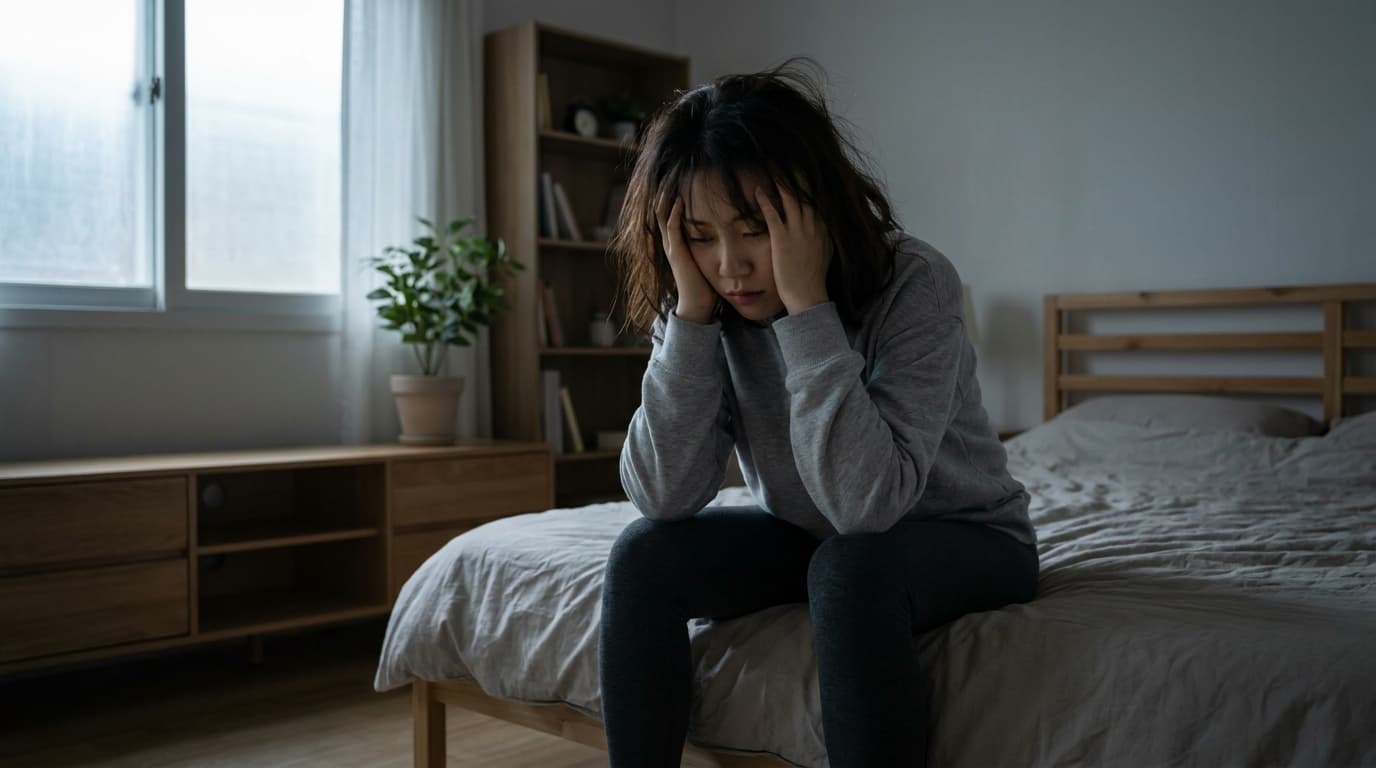
Lethargic and Depressed, Is It Burnout or Depression?
Hello. This is Dalimchae Korean Medicine Clinic. # Lethargic and Depressed, Is It Simple Burnout or Depression? Do you find it painful to open your eyes in the morning, and have days where you have no strength and don't want to do anything? Do things that used to be enjoyable now feel indifferent, and do you feel your mood swings have become severe, getting irritated at small things? When this unexplained lethargy and depression continue, many people worry, 'Could I be experiencing burnout?' or 'Is it depression?' Because these two symptoms look similar on the outside, many people are confused and unable to find the right solution. 💡 **Key Answer** The 3 most common causes of lethargy and depression: ① Mental and physical exhaustion due to chronic stress / ② Autonomic nervous system imbalance / ③ Emotional regulation and brain function decline Dalimchae Korean Medicine Clinic helps root recovery by regaining the balance of the overheated body and mind through **autonomic stabilization**. ## Burnout and Depression, How Do the Symptoms Differ? Burnout syndrome and depression can both be accompanied by lethargy, fatigue, and depression, making them difficult to distinguish on your own. However, these two show subtle differences in the cause and the focus of the main symptoms. **Burnout syndrome** refers to a 'state of mental and physical exhaustion' that occurs when exposed to chronic stress situations such as excessive work or studies for a long period. The main characteristics are: * **Emotional Exhaustion:** Extreme fatigue and lethargy as if all energy has been exhausted. * **Cynicism:** Loss of interest in work or relationships, skepticism, and negative attitudes. * **Reduced Efficacy:** Dissatisfaction with one's abilities or performance, and decreased sense of accomplishment. On the other hand, **depression** is a clinical mental illness that includes a significant drop in interest or pleasure across all areas of life, depression lasting more than 2 weeks, changes in sleep and appetite, decreased concentration, and suicidal thoughts. While burnout is deeply related to specific activities (job, school), depression affects overall daily life, and its causes can be more complex, including biological and genetic factors as well as stress. ## Could I Also Have Autonomic Imbalance? The Real Cause of Burnout and Depression In many cases, an **imbalance of the autonomic nervous system** lies at the base of burnout and depression. The autonomic nervous system is a nervous network that automatically regulates essential functions for maintaining life, such as heart rate, blood pressure, digestion, and sleep, without conscious effort. This system works by balancing the sympathetic nervous system, which is responsible for activity and tension, and the parasympathetic nervous system, which is responsible for rest and recovery. However, chronic stress, overwork, lack of sleep, and irregular lifestyle habits of modern people excessively activate the sympathetic nervous system and weaken the function of the parasympathetic nervous system. If this imbalance persists, the brain cannot rest properly, the heart keeps beating like an overheated engine, digestive function declines, and it becomes difficult to achieve deep sleep, leading to mental fatigue along with various physical symptoms. This easily leads to burnout and, furthermore, affects the balance of neurotransmitters in the brain, causing or worsening depression. Particularly, a study of Korean workers published in the `Journal of Affective Disorders` in 2020 revealed that job stress affects depressive symptoms through burnout (exhaustion, disengagement). This study of 11,421 Korean workers aged 19 to 65 reported that the association between job stress and depressive symptoms is mediated by 'exhaustion' (b = -0.256, 95% CI [0.244, 0.268]) and 'disengagement' (b = -0.052, 95% CI [0.039, 0.065]), which are key components of burnout. This suggests that chronic job stress causes burnout, and this burnout finally plays an important role in the manifestation of depressive symptoms. These research results show that the lethargy and depression we experience are not just 'problems of the heart', but may be the result of a complex interaction between stress and the autonomic nervous system. Dalimchae Korean Medicine Clinic Incheon Branch approaches burnout and depression by restoring the balance of the autonomic nervous system from this perspective. ## Can Burnout Progress to Depression? Yes, it is fully possible. If the burnout state persists for a long period, not only is physical and mental energy exhausted, but the recovery ability of brain function and the autonomic nervous system also gradually declines. This can develop into core symptoms of depression, such as difficulty in emotional regulation, sleep disorders, loss of appetite or overeating, and decreased concentration. In fact, many studies point out that burnout is a strong predictor of depression. What started as just a loss of interest in work can gradually lead to lethargy and despair in life overall, and the state of **autonomic dysfunction**, where one reacts strongly to even small stress, can deepen. Many of those who visit the Incheon Burnout Korean Medicine Clinic show this progressive pattern. Therefore, it is important not to take burnout symptoms lightly and to prevent progression to depression through active response and treatment in the early stages of symptoms. ## How Does Korean Medicine Treat Burnout and Depression? Dalimchae Korean Medicine Clinic views burnout and depression as problems of mind and body originating from an imbalance of the autonomic nervous system, and focuses on **autonomic stabilization** treatment to restore the harmony of body and mind. When the balance of the autonomic nervous system is broken, the brain cannot rest and the body remains in a state of tension. In Korean medicine, this is identified as a 'state where the harmony of mind and body (心身) is broken', and the goal is to calm the overheated nervous system and supplement degraded functions to develop the strength to recover on one's own. Korean medicine treatment utilizes the following approaches: * **Individualized Herbal Medicine:** We prescribe the most optimized herbal medicine for the individual by comprehensively considering the patient's constitution, severity of symptoms, and accompanying symptoms (insomnia, indigestion, headache, dizziness, etc.). Herbal medicine stabilizes the sympathetic nervous system over-activated by stress and helps activate the parasympathetic nervous system by supplementing deficient qi and blood. Through this, improvement in brain function recovery and emotional regulation ability can be expected. * **Acupuncture and Pharmacopuncture Therapy:** It improves qi and blood circulation and relaxes stiff muscles, directly affecting the autonomic nervous system. In particular, we combine acupuncture treatment at specific acupoints that alleviate anxiety and tension to increase the effect of stabilizing mind and body. Pharmacopuncture maximizes the treatment effect by directly injecting refined herbal medicine components into acupoints. * **Psychological Stabilization Therapy:** We help patients develop the ability to regulate their own emotions and cope with stress through stress management education, meditation, and relaxation therapy. A study published in the journal `Healthcare` in 2024 retrospectively analyzed the effects of Korean medicine treatment (acupuncture, Korean medicine psychotherapy, Chuna therapy, aromatherapy, herbal medicine) on 67 patients with anxiety disorders. As a result, after more than 4 weeks of Korean medicine treatment, the patients' anxiety (STAI X-1, STAI X-2, BAI all p \< 0.0001), depression (BDI-II, p \< 0.0001), and anger (AKI-K-I, AKI-K-O, p \< 0.05) scores significantly decreased, and quality of life (EQ-5D, EQ-VAS, p \< 0.0001) was found to be greatly improved. This study suggests that Korean medicine treatment can have a positive effect on improving anxiety and depression symptoms and quality of life. Dalimchae Korean Medicine Clinic Incheon Branch provides integrated Korean medicine treatment by analyzing each patient's symptoms and causes based on these clinical grounds, and helps regain true health through the recovery of the autonomic nervous system, rather than simply suppressing symptoms. ## Burnout and Depression Self-Checklist Check how many of the following items apply to you. * It's hard to open my eyes in the morning, and I don't feel refreshed even if I sleep enough. * I have no interest or motivation for work or studies, unlike before. * I get irritated easily even at small things, and my mood swings have become severe. * Interacting with people is tiring, and I often think I want to be alone. * Unexplained physical symptoms such as headache, dizziness, indigestion, and chest oppression are repeated. * Concentration has dropped and forgetfulness has become severe, reducing work efficiency. * I have no hope for the future, and everything feels meaningless. * The quality of sleep has worsened, such as having trouble falling asleep or waking up frequently at dawn. **Judgment Criteria:** * **If 3 or more apply:** Autonomic imbalance-type burnout is suspected. Consider Dalimchae Korean Medicine Clinic's autonomic treatment. * **If 5 or more apply:** Depression and burnout syndrome may be in a deepened state. We recommend visiting Dalimchae Korean Medicine Clinic Incheon Branch to consult with a specialist. --- **Q. If it's hard to distinguish burnout and depression on my own, what should I do?** A. Self-diagnosis is for reference, and the help of a medical professional is essential for accurate diagnosis and treatment. If it's difficult to distinguish on your own, it's important to identify your exact state through neuro-psychiatric treatment at Dalimchae Korean Medicine Clinic Incheon Branch and establish a personalized treatment plan. **Q. Does a long state of burnout always lead to depression?** A. Burnout doesn't always lead to depression, but if the burnout state is prolonged, the risk of developing depression significantly increases. Chronic exhaustion causes neurochemical changes in the brain, which can be linked to the biological mechanisms of depression. **Q. Does autonomic treatment help with burnout and depression?** A. Yes, the autonomic nervous system is directly related to stress response, so treatment to regain the balance of the autonomic nervous system is a great help in resolving physical and mental fatigue caused by burnout and alleviating symptoms of depression. This is an essential process for the brain to rest and recover. **Q. What role does herbal medicine play in treating burnout and depression?** A. Herbal medicine helps increase resistance to stress according to the patient's constitution and symptoms, regulates the balance of the autonomic nervous system, and helps improve brain function. It is also an important part of Incheon Depression Korean Medicine Clinic treatment as it induces overall mind and body stability by increasing sleep quality and lowering anxiety. --- Lethargic and depressed emotions are not problems that are solved by enduring. You no longer have to ignore the body's signals sent for a long time. If you approach it in the right direction, your body responds faster than you think. Bring your symptoms as they are. At Dalimchae Korean Medicine Clinic, we will find the cause together. Where life blooms. For herbal medicine, it's Dalimchae Korean Medicine Clinic. Check your symptoms similar to mine through the AI consultation on the Dalimchae Clinic website first! This article is health information compiled by Dalimchae medical staff based on questions frequently received in the treatment room. Medical Supervision | Brain/Autonomic Nerve Treatment Standards Dalimchae Korean Medicine Clinic Incheon Branch Korean Medicine Doctor Min Jihong (Depression Column)