
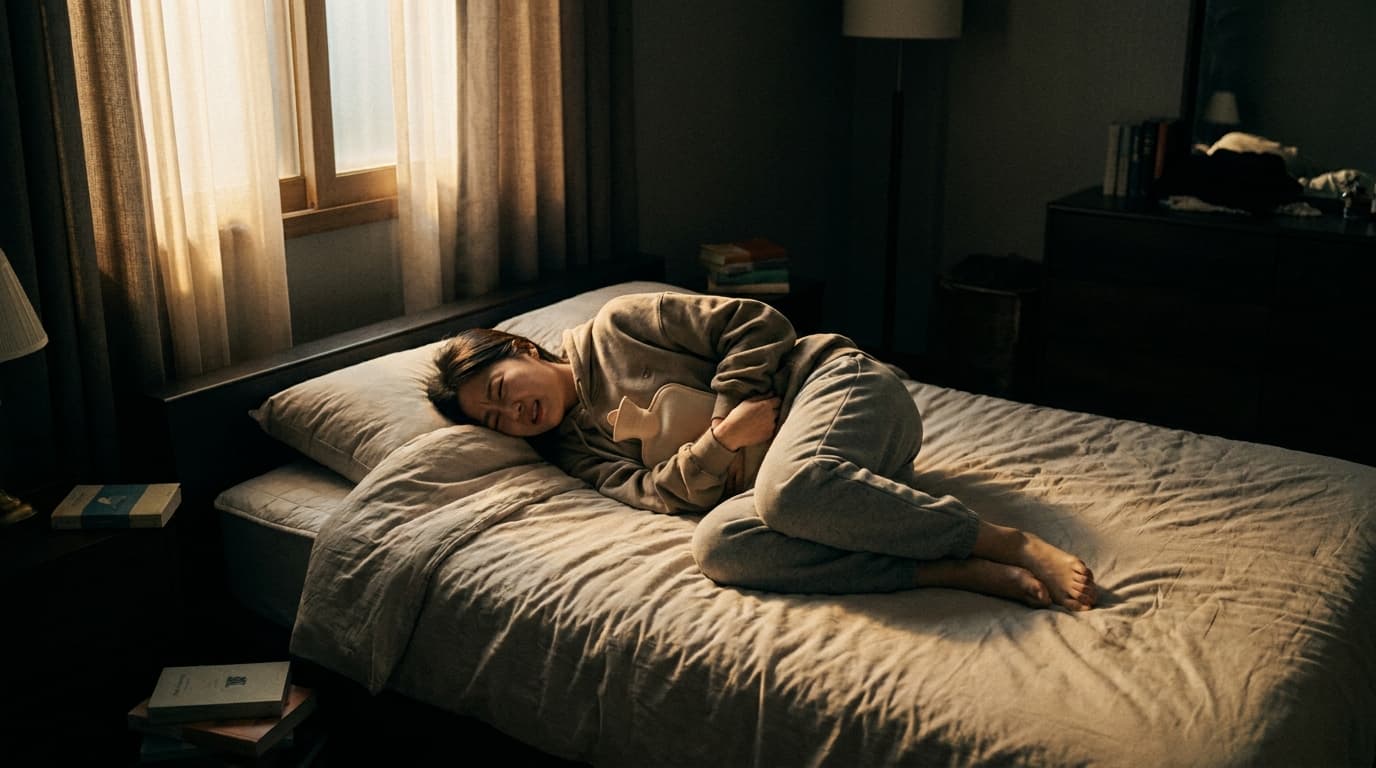
Is Your Menstrual Pain Getting Worse Over Time? It Might Not Just Be Simple Pain.
Hello. This is Dalimchae Oriental Clinic. # Is Your Menstrual Pain Getting Worse Over Time? It Might Not Just Be Simple Pain. Every month when that time arrives, do you feel anxious thinking, 'How much will it hurt this month?' due to gripping lower back and abdominal pain? If your menstrual pain, which was once tolerable, has worsened over time to the point where daily life is difficult without painkillers, it may not be simple menstrual pain. It is likely a warning sign from your body. 💡 **[Core Answer]** Top 3 most common causes of worsening menstrual pain: ① Endometriosis / ② Adenomyosis / ③ Blood stasis (Uhyeol) and decreased uterine function Dalimchae Clinic solves root pain through constitutional improvement that restores the balance of the uterus and systemic functions. ## Why Does Menstrual Pain Worsen Every Month? Could It Be a Uterine Warning Light? Menstrual pain can be broadly divided into primary and secondary dysmenorrhea. Primary dysmenorrhea occurs without a specific organic disease, mainly due to excessive uterine muscle contraction caused by overproduction of pain-inducing substances called prostaglandins in the uterus. However, if menstrual pain does not improve despite painkillers or hormonal contraceptives and gradually worsens, you should suspect secondary dysmenorrhea, particularly organic causes such as endometriosis or adenomyosis. These conditions involve endometrial tissue proliferating outside the uterus or infiltrating the uterine wall, causing inflammation and adhesions, resulting in severe pain every month that intensifies as it progresses. At Dalimchae Clinic Incheon branch, we help the uterus heal itself by improving the fundamental environment of the body rather than merely suppressing pain. ## Endometriosis: Why Does It Make Menstrual Pain Progressively Worse? Endometriosis is a condition where endometrial tissue exists outside the uterus (such as in the ovaries or peritoneum), causing inflammation, adhesions, and cysts. It occurs in 10-15% of women of childbearing age, and over 80% of them experience symptoms such as menstrual pain, chronic pelvic pain, and infertility. Endometrial tissue proliferates and bleeds with monthly hormonal changes regardless of whether it is inside or outside the uterus; bleeding outside the uterus cannot be eliminated, causing inflammation and pain in surrounding tissues. Over time, as lesions grow and adhesions worsen, the intensity of pain also increases. This worsening menstrual pain significantly degrades women's quality of life, leading to decreased academic or work efficiency and psychological stress. In a 2019 case report published in 'The Efficacy and Safety of Korean Herbal Medicine in A Patient with Endometrioma of The Ovary: A Case Report', a 36-year-old female patient diagnosed with ovarian endometrioma was treated with herbal medicine (modified Guizhifulingwan and Bogol Gongjin-dan) for 6 months. As a result, the size of the ovarian endometrioma decreased from 25x21x17mm before treatment to 17x11x10mm after treatment, and the tumor marker CA 125 level also decreased from a baseline of 47.2U/ml to within the normal range of 34.3U/ml. In particular, perimenstrual pelvic pain (VAS 7 to 1) improved significantly, and vaginal discharge, vulvar edema, and itching decreased. The researchers concluded that herbal medicine could be a potential alternative therapy for patients with ovarian endometrioma. This study suggests that herbal medicine is effective in reducing lesion size and improving pain associated with endometriosis. ## Chronic Menstrual Pain Requires 'Constitutional Improvement' to Change the Fundamental Uterine Environment Worsening menstrual pain goes beyond the excessive secretion of pain substances; it is deeply related to 'blood stasis (Uhyeol)', a state where blood circulation around the uterus is poor and waste products accumulate. In Oriental medicine, blood stasis is viewed as a pathological product caused by blood circulation disorders, acting as a major cause of uterine diseases such as endometriosis and adenomyosis. According to a 2021 meta-analysis study, 'Danggui Sini Decoction (herbal medicine) for the treatment of primary dysmenorrhoea: a systematic review and meta-analysis', herbal treatment (Danggui Sini Decoction) for 1005 patients with primary dysmenorrhoea showed a higher effective cure rate (RR = 1.42, 95% CI = 1.30-1.55, p\<0.01) and lower recurrence rate compared to conventional treatment. Based on these research findings, Dalimchae Clinic performs constitutional improvement treatment to remove blood stasis in the uterus and lower abdomen and improve qi and blood circulation, reorganizing the intrauterine environment healthily according to each patient's constitution and symptoms. Rather than putting out symptoms, we build a body where symptoms do not re-ignite. Just as an overheated engine eventually breaks down, we resolve chronic inflammation and functional decline of the uterus so patients visiting the Incheon menstrual pain clinic can regain a pain-free, healthy life. ## Menstrual Pain Warning Checklist for Every Month If you check 3 or more of the following items, you should suspect uterine abnormalities, and if you check 5 or more, it is recommended to visit Dalimchae Clinic Incheon branch for accurate diagnosis and consultation. * The intensity of menstrual pain increases every month and painkiller dosage increases. * Menstrual pain persists outside of menstruation or has developed into chronic pelvic pain. * Menstrual volume has increased or menstrual duration has prolonged. * Dyspareunia (painful intercourse) has developed or worsened. * Digestive symptoms such as indigestion, diarrhea, and constipation become particularly severe during menstruation. * Fatigue, dizziness, and anemia symptoms frequently appear. * Diagnosed with infertility or difficulty getting pregnant. * Menstrual blood has become clumpy. **Judgment Criteria:** * **3 or more items checked:** Suspected uterine health abnormality → Consider herbal combination treatment * **5 or more items checked:** Immediate visit recommended → Start precise diagnosis and customized treatment at Incheon Endometriosis Clinic ## Menstrual Pain Herbal Medicine: Reduced Burden with Herbal Health Insurance Oriental medicine treatment for menstrual pain involves herbal medicine, acupuncture, moxibustion, and pharmacopuncture according to individual symptoms and physical condition. In particular, herbal medicine prescribes drugs that remove blood stasis or nourish qi and blood depending on the cause, and acupuncture mainly relieves pain, regulates pain, and promotes blood circulation. Since April 2024, the herbal medicine health insurance system for menstrual pain has been implemented, significantly reducing the patient's burden. This applies to 6 Korean medicine conditions including menstrual pain and allergic rhinitis, allowing more people to receive effective oriental treatment without burden. **Q. Can menstrual pain get better naturally?** A. Mild primary dysmenorrhoea can improve with lifestyle modifications, but progressively worsening menstrual pain may have organic causes such as endometriosis, making it difficult to heal naturally and worsening if left untreated. Precise diagnosis and treatment are necessary. **Q. Can endometriosis be treated with Oriental medicine?** A. Yes. Oriental medicine views endometriosis within the category of blood stasis and proceeds with treatment focusing on blood stasis removal and uterine environment improvement. Research results show that herbal medicine, acupuncture, and moxibustion can help relieve pain and suppress recurrence. **Q. Can menstrual pain and menstrual irregularities be treated together?** A. Yes. Menstrual pain and menstrual irregularities are closely related to decreased uterine and systemic functions, making it effective to treat them together. Dalimchae Clinic normalizes uterine function and balances hormones through constitutional improvement to simultaneously improve both symptoms. **Q. How long does menstrual pain herbal medicine treatment take?** A. The duration varies depending on symptom severity, cause, and constitution, but we generally recommend consistent treatment for about 3 to 6 months. Initially, it focuses on pain relief and gradually aims for recurrence prevention and uterine environment improvement. Menstrual pain is not a problem that can be solved by enduring it. You no longer have to ignore the body signals you have sent for a long time. If you approach it in the right direction, your body reacts faster than you think. Bring your current symptoms as they are. Dalimchae Clinic will find the cause together with you. Where life blossoms. Herbal medicine is Dalimchae Oriental Clinic. Check similar symptoms first through Dalimchae Clinic homepage AI consultation! This article is health information compiled together by Dalimchae medical staff based on frequently received questions in the treatment room. Medical Supervision | Women & Pregnancy Treatment Standards: Min Ji-hong, Oriental Medical Doctor, Dalimchae Clinic Incheon Branch