
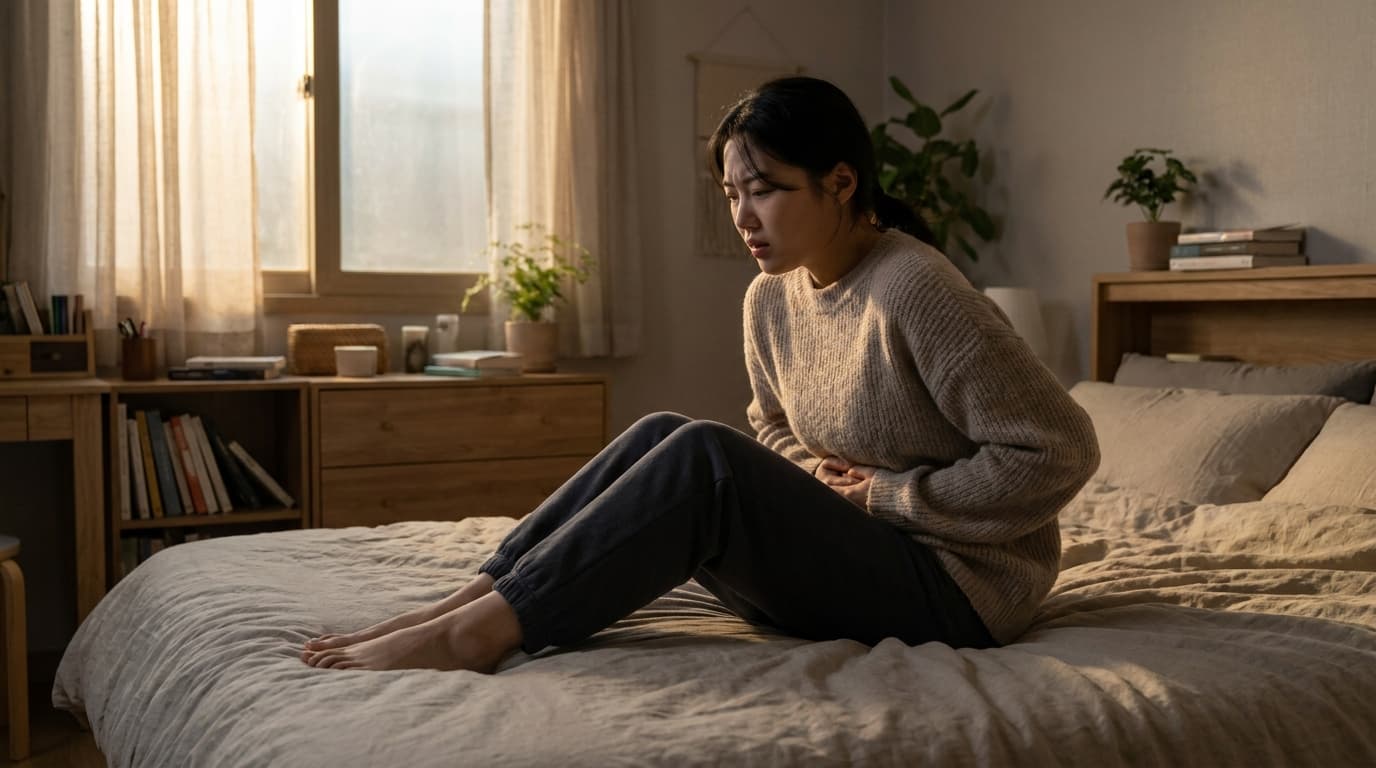
Is Uterine Fibroid Surgery Necessary? Non-Surgical Korean Medicine Treatment Is Now an Alternative, Not a Choice
# Is Uterine Fibroid Surgery Necessary? Non-Surgical Korean Medicine Treatment Is Now an Alternative, Not a Choice. When you receive a sudden diagnosis of 'uterine fibroids' and are advised to undergo surgery, many women feel panicked and anxious. "Can't I treat uterine fibroids without surgery?" This question reflects not only fear of surgery, but also an earnest desire to preserve our precious uterus and restore health. Uterine fibroids, which are found in nearly half of women of childbearing age, are said to be harmless if asymptomatic, but once they appear, they do not easily disappear and require continuous management. Since uterine health is directly linked to women's quality of life, it is time to listen to the small signals our bodies send and find fundamental solutions. 💡 **[Core Answer]** **Can't uterine fibroids be treated without surgery?** The 3 most common causes: ① **Hormone imbalance (Estrogen dominance)** / ② **Genetic predisposition** / ③ **Blood circulation disorders and blood stasis (Eohyeol)** Dalimchae Korean Medicine Clinic aims for fundamental treatment that creates a healthy intrauterine environment through **constitutional improvement (Chejil-gaeseon)** and suppresses the growth and recurrence of fibroids. ## Why Do Uterine Fibroids Occur? 3 Fundamental Causes Treatable Without Surgery Uterine fibroids are benign tumors that occur in the muscular layer of the uterus, and their exact cause is not yet clearly known. However, various studies and clinical cases suggest that a combination of the following factors affects the occurrence and growth of fibroids. Most uterine fibroids do not pose serious risks, but they can cause pain or excessive bleeding. ### 1. Hormone imbalance, especially 'estrogen dominance', may be the cause. Uterine fibroids are tumors that react very sensitively to the female hormones estrogen and progesterone. In particular, estrogen dominance is cited as a major cause of fibroid growth. Fibroid tissue has more estrogen and progesterone receptors than normal uterine tissue, making it more vulnerable to hormonal changes. This is also why fibroids tend to temporarily increase in size during pregnancy and naturally shrink after menopause as hormone levels decrease. Stress, obesity, and poor dietary habits can also cause hormone imbalances and worsen uterine fibroids. ### 2. Family history and genetic factors cannot be ignored. Uterine fibroids tend to have an increased risk of occurrence when there is a family history, and specific genetic changes are known to influence fibroid development. Racial differences have also been reported; for example, African women tend to develop uterine fibroids more frequently, at an earlier age, and with larger sizes compared to other races. This supports the idea that genetic predisposition plays an important role in the onset of uterine fibroids. ### 3. 'Blood stasis (Eohyeol)' and blood circulation disorders inside the body strain the uterus. In Korean medicine, uterine fibroids are viewed as deeply related to 'blood stasis (Eohyeol)'. Blood stasis refers to a state where waste products accumulate and blood stagnates due to poor blood circulation in the body. When blood circulation inside the uterus stagnates, the intrauterine environment worsens, which can become a factor promoting the occurrence and growth of fibroids. In addition, chronic stress and irregular lifestyle habits affect the autonomic nervous system, deteriorating overall physical functions and adversely affecting uterine health. ## The Possibility of Treating Uterine Fibroids Without Surgery: A Korean Medicine Approach The treatment method for uterine fibroids is determined by comprehensively considering their size, location, number, presence of symptoms, and the patient's pregnancy plans. Rather than unconditional surgery, it is important to preserve uterine function, suppress the progression of fibroids, and create a healthy uterine environment. Dalimchae Korean Medicine Clinic Songdo branch provides Korean medicine treatment that preserves the uterus without surgery while managing fibroids and preventing recurrence. ### Korean medicine treatment can contribute to alleviating uterine fibroid symptoms and reducing size. Korean medicine utilizes various methods such as herbal medicine, acupuncture, moxibustion, and cupping to treat uterine fibroids. In particular, herbal medicine helps remove intrauterine blood stasis, improves blood circulation, and regulates hormone balance to help suppress fibroid growth and alleviate symptoms. **A randomized double-blind clinical study conducted at a Hong Kong Korean medicine clinic in 2022** announced the results of administering **Guizhi Fuling Wan (桂枝茯苓丸)**, a traditional herbal medicine, at low and standard doses to women with uterine fibroid symptoms. According to the study, both doses significantly improved uterine fibroid-related symptoms and fibroid volume, and showed particular excellence in terms of safety. **The researchers concluded that Guizhi Fuling Wan is a safe and effective herbal medicine for alleviating symptoms and reducing fibroid volume in women with uterine fibroids.** Based on these research results, Dalimchae Korean Medicine Clinic focuses on compounding medicinal herbs tailored to each patient's symptoms and constitution to improve discomfort from uterine fibroids and create a healthy intrauterine environment. In addition, **a 2009 study published in *Phytotherapy Research* on the efficacy of traditional Korean herbal extracts** confirmed that **crude extracts of 13 traditional herbal herbs inhibited cell proliferation in human uterine leiomyoma cells**. In particular, specific extract fractions such as *Euonymus alatus*, *Spatholobus suberectus*, and *Curcuma zedoaria* significantly inhibited the proliferation of leiomyoma cells compared to normal uterine smooth muscle cells. **The researchers suggested that these results could help develop alternative treatments for uterine fibroids with minimal side effects.** Thus, Dalimchae Korean Medicine Clinic expands the possibilities of non-surgical treatment for uterine fibroids by utilizing herbal medicines based on scientific research. ## 'Constitutional Improvement (Chejil-gaeseon)' That Creates a Body Where Symptoms Don't Turn Back On Dalimchae Korean Medicine Clinic Songdo branch focuses on **constitutional improvement (Chejil-gaeseon)**, which goes beyond simply suppressing visible symptoms and changes the body's environment where uterine fibroids are prone to occur and recur. A woman's uterus is an important place where the energy and blood of the five viscera and six bowels gather. If circulation here stagnates or hormone balance is broken, it can lead not only to fibroids but also to various women's diseases such as dysmenorrhea, infertility, and adenomyosis. Our body is a single organism, and uterine fibroids are a signal indicating an imbalance in overall health, not just a uterine issue. Dalimchae Korean Medicine Clinic closely analyzes each individual's constitution, smooths blood supply to the uterus to clear blood stasis, restores hormone balance, and builds the strength for the uterus to maintain health on its own. In other words, rather than temporarily calming symptoms, the goal is to optimize the body's immunity and self-healing power so that uterine fibroids never rear their heads again. This is the fundamental treatment pursued by Dalimchae Korean Medicine Clinic Songdo branch. ## Uterine Fibroids, Could It Be Me Too? Symptom Checklist If you check 3 or more of the following items, you are likely experiencing discomfort due to uterine fibroids. While uterine fibroids often have no symptoms, if the following symptoms appear, active screening and treatment should be considered. * □ Menstrual volume has suddenly increased or the menstrual period has become longer. * □ Menstrual pain has become more severe than before and is not well controlled by painkillers. * □ Blood clots frequently come out during menstruation. * □ There is breakthrough bleeding even when it is not the menstrual period. * □ A hard lump can be felt in the lower abdomen or a sense of pressure is felt. * □ Urination has become frequent (frequency) or constipation has worsened. * □ There is back pain, pelvic pain, or dyspareunia (pain during intercourse). * □ You feel chronic fatigue and dizziness (especially when accompanied by anemia). * □ You have experienced infertility or repeated miscarriages. **Judgment Criteria:** * **If 3-4 items apply:** It may be a symptom caused by uterine fibroids, so it is recommended to visit Dalimchae Korean Medicine Clinic Songdo branch for accurate consultation. * **If 5 or more items apply:** Discomfort from symptoms is significant, and uterine health is likely facing a red light. Immediate examination and professional Korean medicine treatment are needed to preserve the uterus and regain health. ## FAQ: Questions About Non-Surgical Treatment for Uterine Fibroids **Q. How long does non-surgical treatment for uterine fibroids take?** A. The treatment period varies depending on the size, number, and location of fibroids, patient symptoms, and constitution. Generally, consistent treatment for 3 to 6 months or more is required, and treatment plans are adjusted while checking changes in fibroids and symptom improvement. **Q. Can uterine fibroids heal naturally?** A. Uterine fibroids are benign tumors, and their size often decreases or symptoms improve after menopause due to a decrease in female hormones. However, they rarely disappear naturally during childbearing age, and if left unattended, their size may increase or symptoms may worsen, so active management is necessary. **Q. I have uterine fibroids along with dysmenorrhea and infertility. Can they be treated together?** A. Yes, the Korean medicine treatment at Dalimchae Korean Medicine Clinic does not just look at uterine fibroids, but aims for overall health and hormone balance of the uterus and surrounding organs. Therefore, various women's disease symptoms such as dysmenorrhea, breakthrough bleeding, and infertility related to uterine fibroids can be improved together. **Q. What is special about the uterine fibroid treatment at Dalimchae Korean Medicine Clinic Songdo?** A. Dalimchae Korean Medicine Clinic aims for constitutional improvement where the uterus preserves its function and becomes healthy on its own, rather than simply removing uterine fibroids. Through personalized herbal medicine prescriptions, acupuncture, and moxibustion treatments, we clear blood stasis, improve blood circulation, balance the autonomic nervous system to optimize the hormonal environment, and suppress the growth and recurrence of fibroids. Uterine fibroids are not problems solved by enduring. You no longer have to turn away from the signals your body has been sending for a long time. When approached in the right direction, your body reacts faster than you think. Bring the symptoms you are experiencing as they are. Dalimchae Korean Medicine Clinic will find the cause together. Where life blossoms. Herbal medicine is indeed Dalimchae Korean Medicine Clinic. Check your similar symptoms first through the Dalimchae Korean Medicine Clinic website AI consultation! This article is health information compiled by Dalimchae medical staff based on questions frequently received in the treatment room. Medical Supervision | Dalimchae Korean Medicine Clinic Songdo Branch Korean Medicine Doctor Hyunmin Oh (Women & Pregnancy Treatment Standard)