
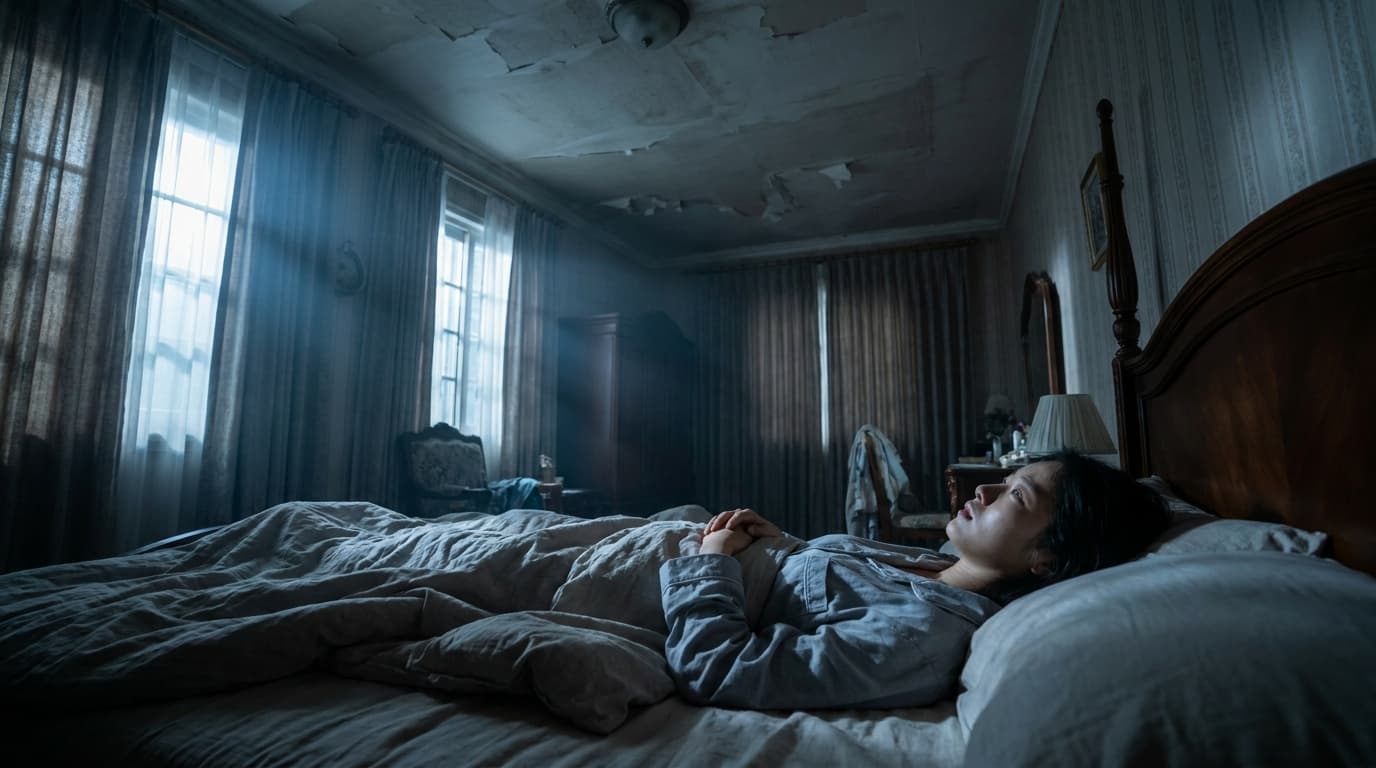
Is It Too Scary and Hard to Open Your Eyes in the Morning This Is the SOS Signal Sent by Your Brain and Autonomic Nervous System
Hello, this is Dalimchae Korean Medicine Clinic. # Is It Too Scary and Hard to Open Your Eyes in the Morning? This Is the SOS Signal Sent by Your Brain and Autonomic Nervous System. Do you feel like every morning is a war, and even getting out of bed feels overwhelming? Surprisingly many people complain, "It's too scary and hard to open my eyes in the morning." Dismissing it simply as not getting enough sleep overlooks how morning fear and lethargy consume the entire daily life, leading to deep depression and anxiety. If you cannot fall asleep even in bed, and repeatedly wake up often and have unrefreshed mornings even when you manage to fall asleep, this may be a warning signal sent by our bodys important system, going beyond simple insomnia. Especially when the balance of the brain and autonomic nervous system is broken, such symptoms easily appear. 💡 [Key Answer] Top 3 most common causes of "It's too scary and hard to open your eyes in the morning": ① Excessive brain fatigue / ② Autonomic imbalance / ③ Emotional instability (depression and anxiety) Dalimchae Korean Medicine Clinic helps deep recovery by restoring the balance of brain and body through autonomic stabilization treatment. ## Are You Afraid of Mornings, Perhaps Because of 'Autonomic Imbalance'? If opening your eyes in the morning is too scary and hard, the first thing to suspect is brain fatigue and autonomic system imbalance. The autonomic nervous system is like a control tower regulating all unconscious functions of our body. Heart rate, digestion, body temperature regulation, and most importantly, the sleep-wake cycle are all governed by the autonomic nervous system. Sympathetic nerves tighten the body and activate energy, while parasympathetic nerves relax and recover the body. When the balance between the two breaks, the brain cannot rest like an overheated engine and continues to maintain an arousal state, disturbing deep sleep and robbing morning freshness. Chronic stress, irregular lifestyle habits, and excessive thinking excessively hyperactivate sympathetic nerves and drop parasympathetic function. When this happens, the body does not relax even at night so you cannot sleep, and even if you force yourself to sleep, you repeat shallow sleep. Eventually, both body and mind are exhausted in the morning, making you feel "It's too scary and hard to open my eyes in the morning." Such symptoms can be accompanied by various physical symptoms such as headaches, dizziness, and indigestion, as well as insomnia. ## How Does Oriental Medicine Treatment Scientifically Approach Insomnia and Autonomic Imbalance? Recently in Korean medicine as well, scientific research results on insomnia and autonomic imbalance are actively being published. These research results show that Korean medicine treatment contributes to restoring the fundamental functions of the brain and autonomic nervous system, going beyond simply alleviating symptoms. In a multicenter clinical study led by researcher Jun-Hwan Lee's research team at the Korea Institute of Oriental Medicine published in 'Nature and Science of Sleep' in 2021, the effect of electroacupuncture treatment was investigated with 150 insomnia patients along with 4 affiliated Korean medicine hospitals of 4 Korean medicine universities in Korea. In this study, the electroacupuncture treatment group showed a significant improvement in the Insomnia Severity Index (ISI) from a pre-treatment average of 19.02 to 10.13 after treatment termination totaling 10 sessions over 4 weeks. Especially regarding sleep efficiency, the improvement degree of the electroacupuncture treatment group (8.2%p) was about 1.9 times higher compared to the fake electroacupuncture group (4.3%p), and anxiety (HADS-A) and depression (HADS-D) scales were also confirmed to improve. What is even more noteworthy is the fact that these improvement effects continued until 2 months after treatment termination. Researchers concluded that electroacupuncture treatment effectively improves insomnia severity, sleep quality, as well as anxiety and depression symptoms, and its effect can be maintained long-term. These research results are in line with the treatment philosophy of Dalimchae Korean Medicine Clinic raising sleep quality through stabilization of brain and autonomic nervous system as an Incheon insomnia Korean medicine clinic. Also, in the latest clinical trend research on Cheonwangbosimdan published in Yaksa Gongron in 2026, treatment effects of 1,256 insomnia patients participating in 14 studies were analyzed, and through meta-analysis of 5 randomized controlled trials (RCTs), Cheonwangbosimdan was evaluated as beneficial in reducing sleep onset time. Especially in improving sleep quality (PSQI), Cheonwangbosimdan showed a generally favorable tendency, and even when combined with western medicine, only 1 mild side effect case was reported, showing safety secured. This suggests that herbal medicine prescriptions tailored to individual constitution and symptoms at Dalimchae Korean Medicine Clinic Incheon Branch can play an important role in improving insomnia. ## What Makes Dalimchae Korean Medicine Clinic's 'Autonomic Stabilization' Treatment Different? At Dalimchae Korean Medicine Clinic, patients complaining "It's too scary and hard to open my eyes in the morning" are deeply understood and approached as a problem of the autonomic nervous system. The core is correcting the 'brain overheating' state where the brain cannot rest sufficiently due to excessive sympathetic nerve hyperactivation and parasympathetic nerve decline. Dalimchae Korean Medicine Clinic's autonomic stabilization treatment does not simply induce sleep forcibly like sleeping pills. It elevates our body's inherent recovery power to create an environment where you can sleep by yourself. In Korean medicine, this process is explained as "lowering the heat of the nervous system and creating an environment where the brain can rest — in Korean medicine, this is called Suseunghwagang (water ascending and fire descending)." It lowers overheated brain heat, restores the balance of autonomic nerves suppressed by stress, and helps recover natural sleep patterns. Through this, brain fatigue is resolved, and you can wake up in the morning feeling refreshed and energetic. Many people visiting Incheon insomnia Korean medicine clinics suffer from emotional instability, depression, chronic fatigue, and sleep problems together. Dalimchae Korean Medicine Clinic Incheon Branch aims to integrally diagnose and treat these complex symptoms from the perspective of the autonomic nervous system, aiming to improve sleep quality as well as recover overall vitality of life. ## Could I Also Have 'Morning Fear Insomnia'? Symptom Checklist Check the SOS signals sent by your autonomic nervous system through the following items. - □ It is often painful to open your eyes every morning, and hard to get out of bed. - □ You frequently fail to fall asleep for over 30 minutes even when lying down to sleep. - □ You wake up frequently at night, and once awake, it is hard to fall asleep again. - □ You are not refreshed and feel tired in the morning even though you slept enough. - □ You feel heartbeat pounding or stuffiness in your chest for no reason. - □ You are experiencing chronic headaches or dizziness. - □ You easily get irritated even over trivial things and have severe mood swings. - □ Concentration has dropped and forgetfulness seems to have worsened. - □ You have stomach problems such as indigestion or frequent gas in the stomach. **Judgment Criteria:** - **3+ items apply:** Suspect insomnia due to autonomic imbalance. Consider consulting Dalimchae Korean Medicine Clinic, specialized in Incheon sleep disorder treatment. - **5+ items apply:** Immediate expert help is needed. It is recommended to visit Dalimchae Korean Medicine Clinic to make an exact diagnosis and customized treatment plan. ## FAQ: Questions and Answers for Those Who Fear Mornings **Q. Is it hard and scary to open eyes in the morning, is it insomnia?** A. If getting up in the morning is difficult and scary, it is highly likely to be a type of insomnia called 'sleep maintenance disorder' or 'early morning awakening'. This can be a sign that sleep quality is low or the brain could not rest sufficiently due to autonomic imbalance. **Q. How long does insomnia take? What is the treatment period?** A. Insomnia treatment period can vary greatly depending on individual symptom severity, cause, lifestyle habits, and treatment response. Generally, it often improves gradually through consistent treatment and lifestyle habit improvement for about 1 to 3 months, and chronic cases may require a longer period. **Q. Hard to open eyes in the morning and depression are present together, can they be treated together?** A. Yes, insomnia and depression are closely related, and autonomic imbalance is often the main cause. Dalimchae Korean Medicine Clinic improves sleep quality through treatment restoring brain and autonomic balance, and consequently helps alleviate depression. **Q. Can I receive insomnia treatment at Dalimchae Korean Medicine Clinic in Incheon?** A. Yes, Dalimchae Korean Medicine Clinic Incheon Branch is a brain and autonomic nervous system disease specialized Korean medicine clinic, improving insomnia with morning eye-opening difficulty and accompanying anxiety, depression, and brain fatigue symptoms through systematic diagnosis and customized Korean medicine treatment. "It's too scary and hard to open my eyes in the morning" is not a problem solved by enduring. You no longer need to ignore the body signals sent for a long time. When approached in the right direction, the body responds faster than you think. Bring the symptoms you are experiencing as they are. Dalimchae Korean Medicine Clinic will find the cause together. Where life blooms. Herbal medicine is Dalimchae Korean Medicine Clinic. Check symptoms similar to yours first through Dalimchae Korean Medicine Clinic homepage AI consultation! This health information was organized together by Dalimchae medical staff based on questions frequently received in the clinic room. Medical Supervision | Brain & Autonomic Nervous System Treatment Standard: Dalimchae Korean Medicine Clinic Incheon Branch Oriental Medical Doctor Min Jihong (Depression Column)