
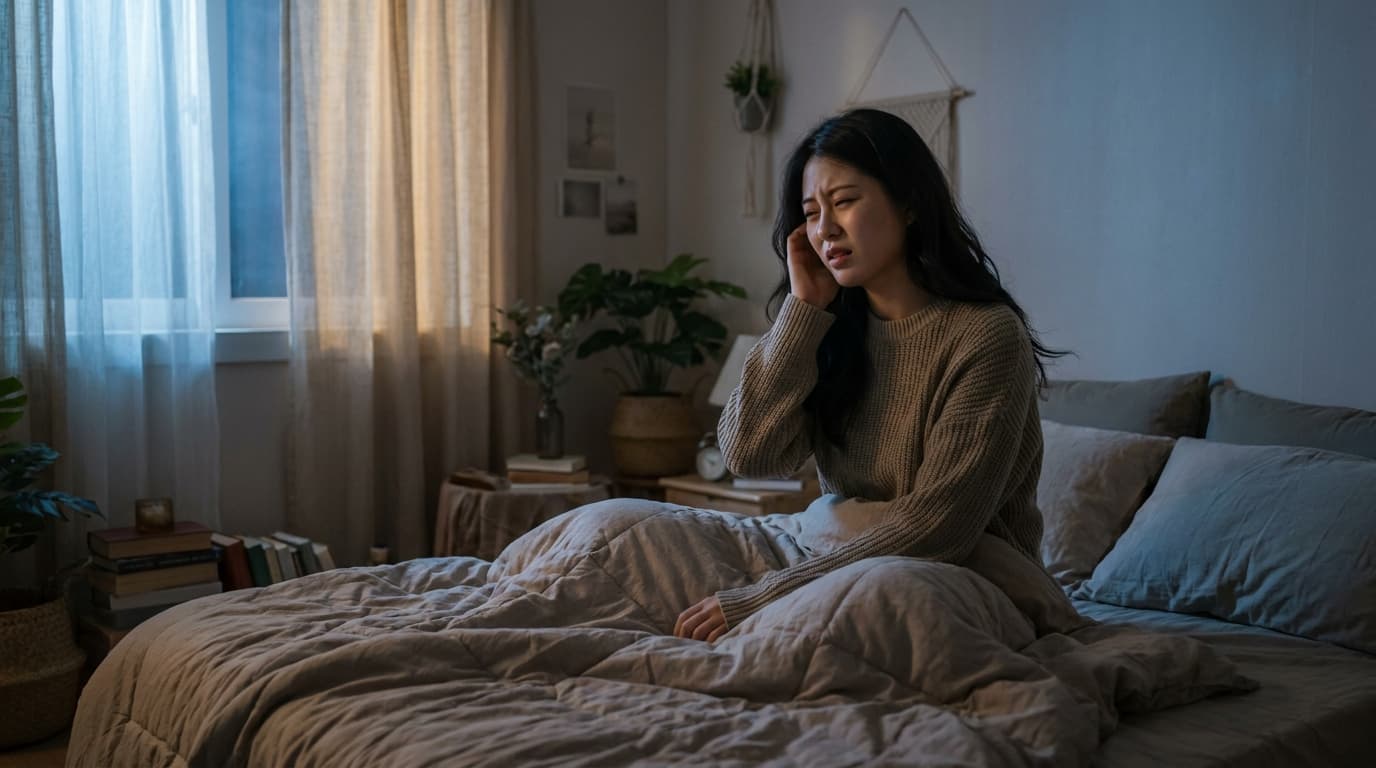
Irritable Before Period It's Not Just Hormones It's This
Hello. This is Dalimchae Oriental Clinic. # Feeling Irritable for No Reason Before Your Period? It's Due to 'This,' Not Hormones. As those days approach every month, many people complain that they feel irritable for no reason as if they became a different person, and even trivial matters cause severe mood swings, making relationships with people around them difficult. Has 'Here it starts again this month' become a familiar daily routine of quietly enduring? The emotional changes that come only before menstruation are easy to think of as simply due to 'hormones,' but in fact, they may be signals sent from a much deeper part of our body. In particular, many people who visit Songdo premenstrual syndrome Oriental clinics experience such difficulties often as a result of broken autonomic nervous system balance in the body. 💡 **[Core Answer]** Top 3 most common causes of "Feeling irritable for no reason before your period": ① Autonomic imbalance / ② Qi stagnation in the liver (Ganjang-ulgyeol) leading to stagnation of qi and blood / ③ Brain function decline due to accumulated stress Dalimchae Clinic resolves the root cause of premenstrual mood swings and physical symptoms through **autonomic stabilization** treatment. ## Why Do Mood Swings Become Particularly Severe Before Menstruation? Is It Simply Due to Hormones? Pre-menstrual emotional changes are commonly diagnosed as premenstrual syndrome (PMS) or premenstrual dysphoric disorder (PMDD). Many people attribute this to hormonal changes, but hormones are merely one of the 'signal transmission systems' of our body. The real problem lies in how these hormone signals affect our brain and autonomic nervous system. A woman's body undergoes significant changes in estrogen and progesterone levels according to the menstrual cycle, during which the balance of neurotransmitters in the brain (serotonin, dopamine, etc.) is easily broken. Especially if you have a lot of stress or a habitually unstable autonomic nervous system, you react more sensitively to these changes, making emotional control difficult. ## The Warning Light of My Body: Autonomic Imbalance Fuels Pre-Menstrual Emotional Changes. The autonomic nervous system consists of our body's sympathetic and parasympathetic nerves, regulating all bodily functions that occur without conscious awareness, such as heartbeat, digestion, sleep, and emotional control—much like our body's main circuit breaker switch. When the balance of this autonomic nervous system breaks, the brain is like an overheated engine that cannot rest, easily becoming excited or sensitive to minor stimuli. Hormonal changes before menstruation act as a stressor on the autonomic nervous system, further intensifying this imbalance, which leads to various emotional issues such as irritability, anxiety, depression, and agitation. Heart rate variability (HRV) testing allows objective assessment of autonomic state, and actual autonomic function decline is observed in many PMS patients. In Oriental medicine, these pre-menstrual emotional changes are explained as 'Ganjang-ulgyeol' (liver qi stagnation) or 'Simhwa-hangseong' (excessive heart fire). When the liver's qi becomes stagnant and flow is blocked due to stress and overwork, emotional control becomes difficult, and when heat accumulates in the heart, symptoms such as anxiety, agitation, and insomnia may appear. This connects with the modern concept of autonomic imbalance, and making an environment where the brain can comfortably rest and smoothing qi and blood circulation become the core of treatment. ## Oriental Treatment: The Path to Escaping Distressing Pre-Menstrual Emotions The effectiveness of Oriental treatment for women suffering from pre-menstrual mood swings and physical symptoms has been proven through various studies. In a study published in the 2022 international journal 『Journal of Clinical Medicine』, 120 patients with premenstrual syndrome (PMS) and premenstrual dysphoric disorder (PMDD) underwent Oriental combination treatment including herbal medicine and acupuncture for 8 weeks. As a result, the PMDD symptom rating scale (DRSP) score, which averaged 3.82 before treatment, significantly decreased to 1.58 after treatment (p\<0.001). In particular, high improvement rates were shown in emotion-related symptoms such as irritability, anxiety, and depression, and the researchers concluded that Oriental treatment had a positive effect on neuroendocrine regulation and autonomic nervous system stabilization. These research results suggest that Oriental treatment is effective in restoring autonomic imbalance and hormone regulation function, which are the root causes of pre-menstrual emotional changes. In another study published in the 『Evidence-Based Complementary and Alternative Medicine』 journal in 2021, 90 PMS patients were compared between a group taking a specific herbal prescription (Gamisoyosan) for 12 weeks and a placebo group. The results showed that the herbal medication group had a 35% greater decrease in PMS symptom score (Daily Symptom Report) compared to the control group (p\<0.01), and in particular, the LF/HF Ratio, which indicates autonomic balance among heart rate variability (HRV) indices, was statistically significantly improved. The researchers explained that the herbal prescription regulates stress responses and stabilizes autonomic nervous system function, contributing to improved emotional control ability before menstruation. Based on these data, Dalimchae Clinic focuses on **autonomic stabilization** treatment, which goes beyond simple symptom relief to regain the balance of the autonomic nervous system, the root of symptoms. When autonomic balance collapses, the brain cannot rest and reacts excessively. We aim to lower the heat of the nervous system and create an environment where the brain can rest—known in Oriental medicine as Susunghwagang (water rising and fire descending). At Dalimchae Clinic Songdo branch, we help restore autonomic balance and escape from painful emotions before menstruation through Oriental combination therapies such as herbal medicine, acupuncture, moxibustion, and pharmacopuncture. Sometimes patients also complain of premenstrual headaches, dizziness, or insomnia together, which is also closely related to autonomic imbalance, enabling integrated treatment. ## Could I Also Have Premenstrual Syndrome? Self-Diagnosis Checklist If 3 or more of the following items apply to you, and these symptoms appear 1 week before menstruation starts and disappear after menstruation begins, you can suspect premenstrual syndrome. * Easily irritated and angry over trivial matters. * Feel anxious, agitated, and tense for no reason. * Suddenly become depressed, sad, and lethargic. * Severe mood swings and sensitivity without special reason. * Explosive appetite or craving for specific foods. * Severe fatigue and feeling unrefreshed even after sleeping. * Headache, breast pain, lower abdomen pain. * Feeling of body swelling and weight gain. **Judgment Criteria:** * **3 or more items apply:** Suspected autonomic imbalance type premenstrual syndrome → Consider Dalimchae Clinic Oriental combination treatment. * **5 or more items apply:** Immediate clinic visit and consultation recommended. Active treatment needed before symptoms worsen. --- ## FAQ **Q. Why is irritation before menstruation so severe?** A. Because pre-menstrual hormonal changes affect brain neurotransmitters and the autonomic nervous system, degrading emotional control ability. Stress and inherent constitutional factors are also causes that further intensify these mood swings. **Q. Can pre-menstrual mood swings really be treated with Oriental medicine?** A. Yes, Oriental treatment is effective in improving the root causes of pre-menstrual mood swings—autonomic imbalance and qi/blood circulation stagnation—to restore emotional control ability. Significant improvement effects are also reported in actual clinical studies. **Q. How long should premenstrual syndrome be treated to improve?** A. Although it varies depending on individual symptom severity and constitution, we generally expect symptom improvement through consistent treatment for about 2 to 3 months. Dalimchae Clinic Songdo branch establishes personalized treatment plans to help effective recovery. **Q. My menstrual pain is also severe, can they be treated together?** A. Of course. Menstrual pain is also closely related to qi and blood circulation problems such as autonomic imbalance or blood stasis (uhyeol), so treating it together with premenstrual syndrome can produce even better effects. --- Premenstrual syndrome is not a problem solved by enduring it. You no longer have to ignore the body signals you have sent for a long time. If you approach it in the right direction, your body reacts faster than you think. Bring your current symptoms as they are. Dalimchae Clinic will find the cause together with you. Where life blossoms. Herbal medicine is Dalimchae Oriental Clinic. Check similar symptoms first through Dalimchae Clinic homepage AI consultation! Medical Supervision | Women & Pregnancy Treatment Standards: Oh Hyunmin, Oriental Medical Doctor, Dalimchae Clinic Songdo Branch (Premenstrual Syndrome Column)