
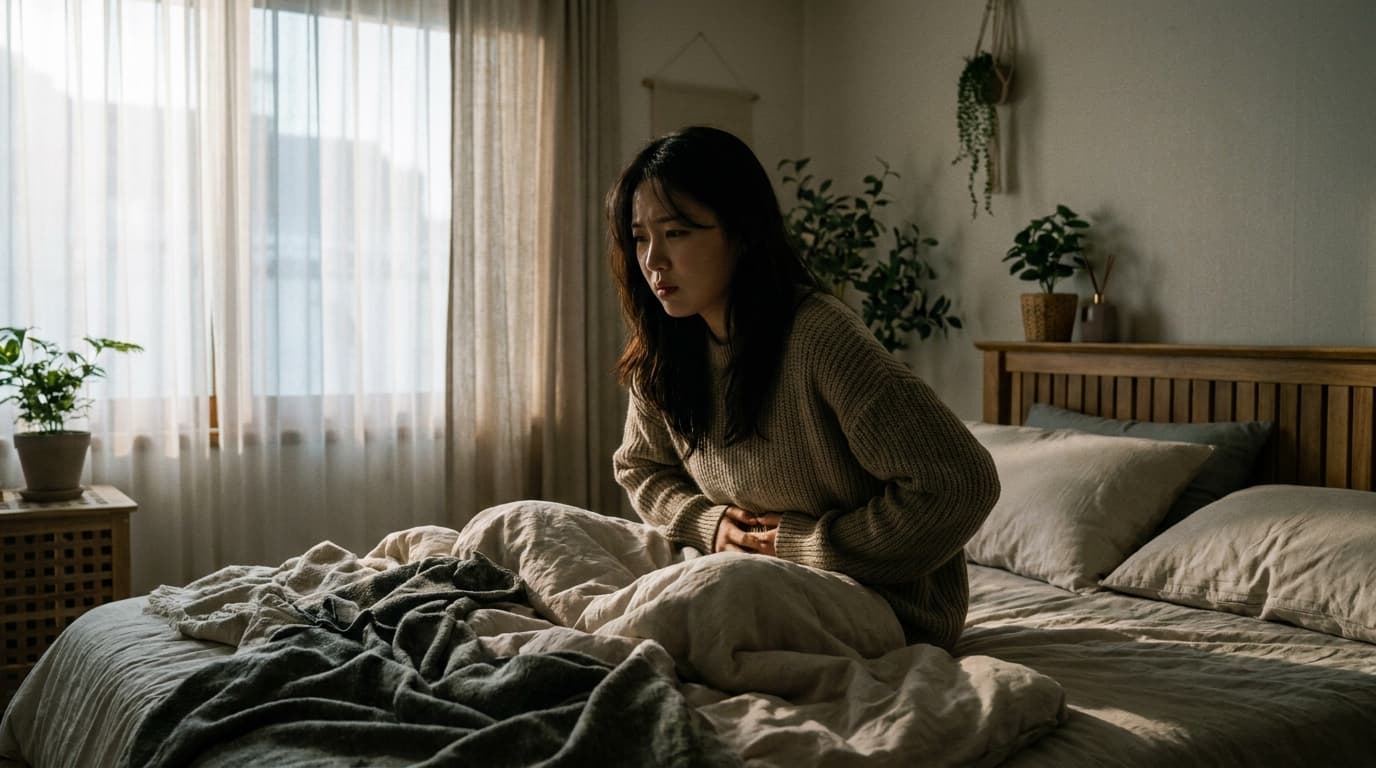
If You Notice a Slight Spotting After Intercourse If You Are Worried It Might Be a Serious Illness
Hello, this is Dalimchae Oriental Medicine Clinic. # If You Notice a Slight Spotting After Intercourse, If You Are Worried It Might Be a Serious Illness During a precious moment with your loved one, experiencing sudden spotting can be distressing and worrying for anyone. Especially when there is no pain or other symptoms, many people say, "I noticed a slight spotting after intercourse." When this situation repeats, people often visit the hospital with anxiety that it might be a serious illness, but end up feeling frustrated when they only receive "normal" test results without finding a solution. Postcoital bleeding, or contact bleeding, is not a mere coincidence but an important signal from our body. Through this article, we will find its causes and oriental medicine solutions together. 💡 **[Core Answer]** Top 3 most common causes of **spotting after intercourse**: ① **Minor damage and inflammation of the cervix**: Physical friction during intercourse causing weak cervical tissue damage, or cervicitis. ② **Hormonal imbalance**: Instability of the endometrium due to hormonal changes around ovulation or before and after menstruation. ③ **Decreased immunity in the uterine environment**: Weakened recovery and defense power of cervical tissue due to stress and overwork. Dalimchae Oriental Medicine Clinic creates an bodily environment where the uterus can heal itself through **constitutional improvement**. ## Why Does Bleeding Occur After Intercourse? Is It a Serious Illness? Postcoital bleeding is a relatively common symptom experienced by 0.7% to 9.0% of all women of childbearing age. Most cases are caused by benign conditions, but the most serious cause can be cervical cancer. About 11% of cervical cancer patients present with postcoital bleeding as an initial symptom. Therefore, if you have this symptom, it is essential to get an accurate cause diagnosis through a gynecological examination. The most common causes are cervicitis or cervical erosion (ectropion). Cervical erosion refers to a condition where the surface of the cervix is lightly abraded, causing inflammation, or columnar epithelial cells that produce cervical secretions are exposed toward the vagina, appearing red. It is especially common in women of childbearing age with active hormone activity, and sometimes it can be a normal physiological phenomenon, but when accompanied by bacterial infection, it can cause yellowish purulent discharge, contact bleeding, and rarely dyspareunia. Other causes include vaginitis, cervical polyps, cervical dysplasia, pregnancy, or taking certain medications. In particular, cervical dysplasia is a state where cervical cells are abnormally deformed due to human papillomavirus (HPV) infection, which can progress to cervical cancer if left untreated, making early treatment very crucial. ## Why Does Postcoital Bleeding Continue Despite "Normal" Test Results? Many people visit the hospital for postcoital bleeding symptoms, but often find no special abnormalities in the test results. While a "normal" diagnosis provides peace of mind, anxiety can grow if symptoms persist. This is because even if there are no noticeable lesions or inflammation levels in Western medical diagnostic criteria, oriental medicine views it as a result of micro-circulation problems in the uterus and pelvis or decreased immunity. In oriental medicine, postcoital bleeding is viewed under the category of 'metrorrhagia (Bongru)', caused by stagnation of Qi and Blood around the uterus and cervix, damp-heat (湿熱), and blood stasis (瘀血). Stress, overwork, and irregular lifestyle habits directly affect uterine health, weakening the internal uterine environment and making it prone to bleeding even with minor stimulation. When the immunity of the uterus and vaginal mucosa is weakened, it overreacts to external stimuli or mild inflammation. In fact, studies show that traditional medical approaches are effective for chronic cervical diseases. According to a study published in the **International Journal of Reproductive Medicine** in 2024, Henna (Lawsonia inermis) oil vaginal suppositories showed significant effects in improving cervicitis symptoms when combined with antibiotic treatment. In a randomized placebo-controlled trial of 92 premenopausal women with cervicitis, the Henna group showed significant improvements (p < 0.001) in vaginal discharge, cervical ulcer size, dyspareunia, and postcoital bleeding compared to the placebo group. The researchers concluded that Henna oil is effective in improving clinical symptoms of cervicitis. Furthermore, a 2026 case study published in **Clinical Case Reports** reported that applying Unani herbal vaginal washes for 21 days to 3 patients with chronic cervicitis unresponsive to antibiotics led to progressive improvements in subjective symptoms such as vaginal discharge, dyspareunia, and postcoital bleeding, with no recurrence or side effects during a 2-month follow-up period. The researchers suggested that Unani herbal vaginal washes can be a complementary treatment option for chronic cervicitis. These studies demonstrate that traditional medical treatments utilizing herbal medicines can help reduce inflammation and damage to the cervix, ultimately helping to improve symptoms such as postcoital bleeding. Dalimchae Oriental Medicine Clinic Songdo branch aims for fundamental treatment that prevents recurrence by focusing on reorganizing the uterine environment healthily, beyond simply suppressing inflammation. ## How Does 'Constitutional Improvement' Treatment at Dalimchae Oriental Medicine Clinic Songdo Branch Root Out the Disease? Dalimchae Oriental Medicine Clinic focuses on 'constitutional improvement' treatment, finding the root cause of postcoital bleeding in the body's 'constitution' and helping the uterus restore health on its own. The goal is not merely to suppress symptoms, but to create a healthy body where symptoms do not recur. The uterus in our body is a sophisticated organ that reacts sensitively to external environments and internal stress. When stress, irregular living, and decreased immunity persist, Qi and Blood circulation around the uterus is hindered, inducing chronic inflammation states or mucosal weakening, which easily leads to postcoital bleeding. To resolve this imbalance in the uterine environment, Dalimchae Oriental Medicine Clinic Songdo branch provides the following treatments tailored to individual constitution and symptoms: 1. **Uterine and Pelvic Circulation Improvement Herbal Medicine**: Removes blood stasis (瘀血) and damp-heat (濕熱) around the uterus, smooths Qi and Blood circulation, and enhances the recovery power of cervical tissue. This helps calm inflammation and regenerate damaged mucosa. 2. **Immunity Enhancement**: Boosts the immunity of the uterus and vaginal mucosa to build resistance against external viruses (e.g., HPV) or bacterial infections. Especially when HPV infection is the cause, such as in cervical dysplasia, immunity enhancement is crucial. 3. **Hormone Balance Regulation**: Helps the body regulate and stabilize hormone secretion on its own for bleeding caused by female hormone imbalance. 4. **Stress and Autonomic Nervous System Regulation**: Excessive stress can cause autonomic nervous system imbalance, affecting uterine health. Oriental medicine treatment helps calm mind and body, restoring autonomic balance and aiding overall body recovery. This **constitutional improvement** treatment solves the root problems of uterine health, having a positive impact not only on postcoital bleeding but also on related conditions such as menstrual irregularities, chronic vaginitis, and endometriosis. Many people looking for a Songdo uterine bleeding oriental clinic are regaining their health through the delicate medical care of Dalimchae Oriental Medicine Clinic Songdo branch. ## Postcoital Bleeding, Don't Ignore It Anymore: Self-Checklist Check the following items. If any apply to you, we recommend seeking help from Dalimchae Oriental Medicine Clinic Songdo branch. * Spotting after intercourse occurs more than twice a month. * The amount of bleeding is small, but it repeats for several months. * Vaginal discharge is increasing or there are changes in color and odor. * Accompanied by other discomforts such as dyspareunia, lower abdominal pain, or back pain. * Severe stress or frequent physical fatigue. * Feeling cold hands and feet in cold water or feeling the lower abdomen cold. * Cervical cancer screening results are normal, but symptoms persist. **If 3 or more apply:** There is a high possibility that the balance of the uterine environment is broken. Consider constitutional improvement treatment at Dalimchae Oriental Medicine Clinic. **If 5 or more apply:** Immediate oriental medicine diagnosis and treatment may be necessary. We recommend receiving a detailed examination at Dalimchae Songdo Oriental Medicine Clinic. ## Healthy Lifestyle Habits to Prevent and Manage Vaginal Bleeding To prevent and manage postcoital bleeding, maintaining healthy lifestyle habits is important. 1. **Maintain Cleanliness**: Keep external genitalia clean, but avoid excessive vaginal douching as it can destroy beneficial vaginal flora. 2. **Stress Management**: Relieve stress through meditation, yoga, hobbies, etc., and achieve mental and physical stability. 3. **Regular Lifestyle**: Get enough sleep and maintain body immunity through regular meals. 4. **Lower Body Warmth**: Keep the lower abdomen and lower body warm to aid pelvic circulation and protect the uterus. 5. **Regular Checkups**: Confirm uterine health through gynecological examinations at least once a year, and receive immediate medical care if abnormal signs occur. ## FAQ **Q. How long does it take to treat postcoital bleeding?** A. The treatment period for postcoital bleeding varies depending on the cause, individual constitution, and symptom severity. The goal is usually to improve the uterine environment and prevent recurrence through consistent oriental medicine treatment for about 3 to 6 months. **Q. Can postcoital bleeding be treated with oriental medicine?** A. Yes, postcoital bleeding is a condition that can be sufficiently improved with oriental medicine treatment. Dalimchae Oriental Medicine Clinic provides constitutional improvement treatment that removes blood stasis and damp-heat around the uterus and strengthens the immunity of the uterus and vaginal mucosa to solve the root cause of bleeding. **Q. Can cervical erosion also be treated with oriental medicine?** A. While cervical erosion itself can be a physiological phenomenon, oriental medicine treatment can be effective if accompanied by chronic inflammation or bleeding. Oriental medicine treatment helps cervical tissue regeneration and relieves inflammation, helping to improve uncomfortable symptoms. **Q. Can postcoital bleeding and cervical dysplasia be treated together?** A. Yes, they can be treated together. HPV virus infection, the main cause of cervical dysplasia, is closely related to immunity. The constitutional improvement treatment of Dalimchae Oriental Medicine Clinic helps enhance uterine immunity, increasing resistance to the virus while simultaneously improving postcoital bleeding. Spotting after intercourse is not a problem that can be resolved by enduring it. You no longer have to ignore the body's signals sent for a long time. If approached in the right direction, the body responds faster than you think. Bring the symptoms you are experiencing right now as they are. Dalimchae Oriental Medicine Clinic Songdo branch will help you find the cause together and regain a healthy uterus. A place where life blossoms. Herbal medicine is Dalimchae Oriental Medicine Clinic. Check your similar symptoms first through Dalimchae Oriental Medicine Clinic's website AI consultation! This health information was compiled together by Dalimchae medical staff based on questions frequently received in the clinic room. Medical Supervision | Women's & Pregnancy Treatment Standards, Dalimchae Oriental Medicine Clinic Songdo Branch, Oriental Medical Doctor Oh Hyun-min (Cervical Cancer Management Column) #PostcoitalBleeding #Spotting #VaginalBleeding #Cervicitis #CervicalErosion #SongdoUterineBleedingClinic #SongdoWomensClinic #ConstitutionalImprovement #UterineHealth #OrientalMedicineTreatment