
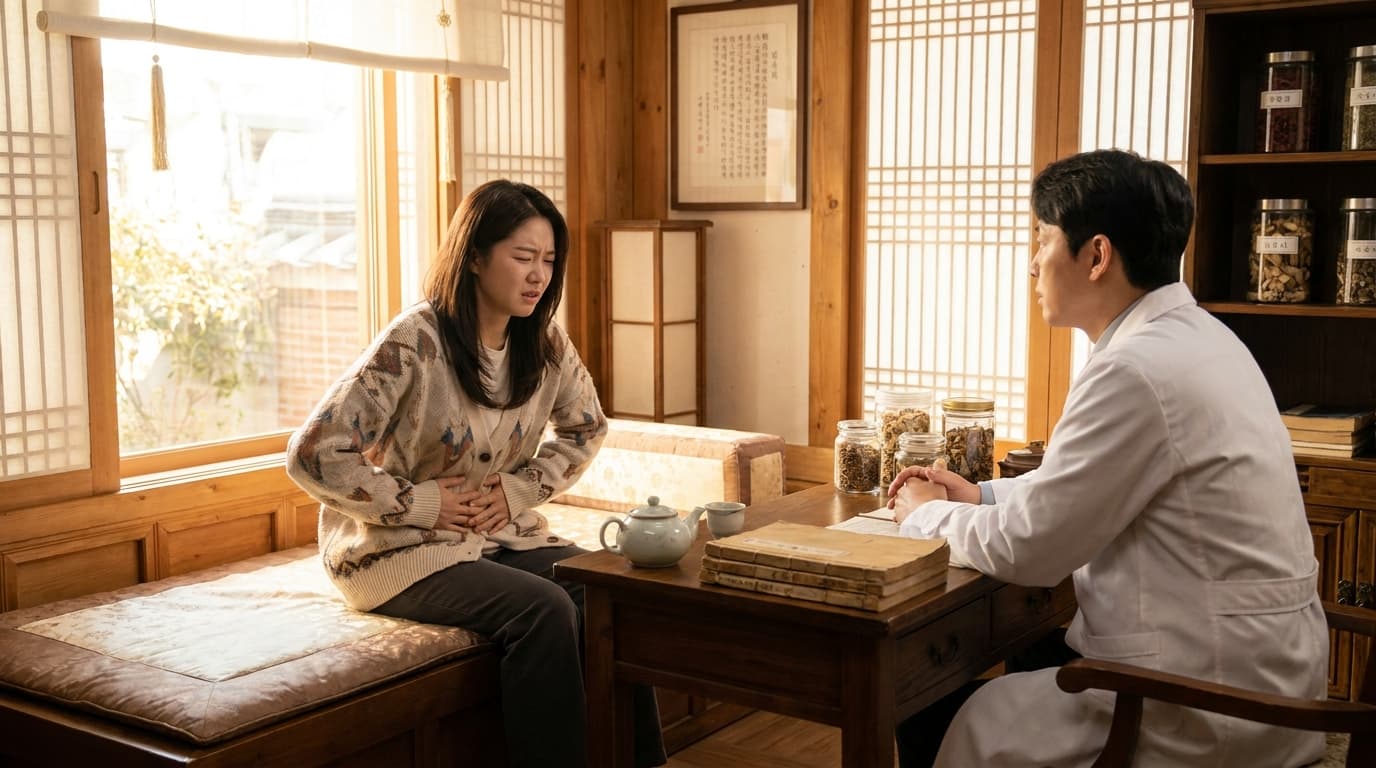
If You Feel Bloated After Every Meal It Might Be Due to This Not Just Simple Indigestion
Hello, this is Dalimchae Korean Medicine Clinic. # If You Feel Bloated After Every Meal, It Might Be Due to This Not Just Simple Indigestion. "I feel bloated every time I eat. It always feels like my stomach is blocked, and nothing digests well." Many people suffer from chronic indigestion while casually thinking, "It's probably just because my stomach is naturally weak." However, this repeated stomach discomfort goes beyond simple digestive function decline and may be an important signal sent from deep within our body. Especially if symptoms persist despite no special abnormalities found in tests, it is necessary to suspect problems with the outer stomach wall or autonomic nervous system imbalance. 💡 **[Core Answer]** The 3 most common causes of feeling bloated after every meal: ① **Hardening of the outer stomach wall (Damjeok)** / ② **Decline in stomach peristalsis function** / ③ **Autonomic nervous system imbalance** Dalimchae Korean Medicine Clinic restores the original function of the stomach and restores body balance through integrated **intestinal detoxification** and **autonomic nervous system stabilization** treatments. ### Why do I feel stuffed and bloated after eating? Symptoms of bloating and discomfort after a meal have a significant impact on our daily lives. The causes of these symptoms can involve complex factors beyond simply "poor digestion." In Korean medicine, such chronic indigestion is not viewed merely as a problem inside the stomach, but focuses on changes in the outer stomach wall and systemic imbalance. One of the most common causes is **'Damjeok' (hardening of the outer stomach wall)**. Damjeok refers to a phenomenon where the outer wall tissue inside the stomach mucosa hardens and its function deteriorates due to unnecessary waste products and toxins. When the outer stomach wall hardens, the peristaltic movement of the stomach is hindered, reducing the ability to properly digest and excrete food. This is like an old, hardened hose failing to properly flush water through. This leads to symptoms such as postprandial fullness, bloating, and early satiety. Furthermore, Damjeok can cause systemic symptoms by affecting the nervous and immune systems as well as the gastrointestinal tract itself. The second cause is **decline in stomach peristaltic movement function**. The stomach performs regular peristaltic movements to mix food with digestive enzymes and push it into the duodenum. When this function weakens, food stays in the stomach longer, causing bloating and fullness. This can be a problem with the stomach itself, but psychological factors like stress can also cause the autonomic nervous system to react excessively and interfere with stomach movement. The third cause is **imbalance of the autonomic nervous system**. The autonomic nervous system regulates unconscious functions of our body such as digestion, heartbeat, and respiration. When the balance of the autonomic nervous system is broken due to stress, irregular lifestyle habits, etc., it directly affects digestive function. In particular, when parasympathetic nerve function responsible for digestion decreases and sympathetic nerves are excessively activated, stomach movement slows down and digestive juice secretion decreases, making chronic indigestion symptoms easy to appear. ### Korean medicine finds and treats the root cause of chronic indigestion. Many people visit hospitals for indigestion symptoms only to receive a diagnosis of "neurogenic" and feel frustrated when they cannot find special treatments. However, Korean medicine views this functional indigestion as a pathological change in the outer stomach wall, namely 'Damjeok', and focuses on treatments to improve it. In a study published in *Frontiers in Pharmacology* in 2023, a research team led by Professors Jin-Sung Kim and Ha-Yeon Hana of Kyung Hee University conducted a 4-week randomized double-blind placebo-controlled clinical trial evaluating the efficacy and safety of the herbal formula 'Naesohwajeung-tang' in 116 patients with functional indigestion. As a result of the study, the patient group taking Naesohwajeung-tang showed significantly alleviated overall indigestion symptoms compared to the placebo group (p\<0.05), and showed significant effects in improving individual symptoms such as upper abdominal heartburn, postprandial fullness, and early satiety, as well as quality of life. The researchers explained that these results provide clinical evidence for herbal treatment of functional indigestion. These data support Dalimchae Korean Medicine Clinic's treatment philosophy of strengthening the stomach's original functions and improving the intestinal environment through herbal prescriptions for chronic indigestion. In addition, a randomized controlled trial evaluating the effect of Saam acupuncture on functional indigestion conducted by the Korea Institute of Oriental Medicine, published in *PubMed* in 2022, applied Saam acupuncture 3 times a week for 4 weeks to 24 functional indigestion patients. The results suggested that Saam acupuncture is feasible and preliminarily effective and safe as a treatment for functional indigestion. This shows that beyond mere medication treatment, acupuncture treatment can improve digestive function through autonomic nervous system regulation of the gastrointestinal tract. ### Why is my stomach bloated? Could it be due to 'Damjeok'? (Indigestion/Damjeok Self-Diagnosis Checklist) Are you wondering if you are also suffering from chronic indigestion or Damjeok symptoms? Check your symptoms through the checklist below. * Frequent bloating and stuffed feeling in the stomach after meals. * Feeling full quickly after eating even a small amount (early satiety). * Pain or discomfort frequently appearing in the epigastric or upper abdominal area. * Taking digestants or stomach medicine helps only temporarily, effects do not last long. * Suffering from frequent burping, flatulence, and abdominal bloating. * Excess gas and frequent rumbling sounds from the stomach. * Frequent nausea and upset stomach. * Accompanying symptoms outside the stomach such as weight loss, systemic fatigue, dizziness, or headaches. * Indigestion and stomach discomfort worsen significantly when stressed. **Diagnosis Results:** * **3 or more items matched:** Functional indigestion due to outer stomach wall function decline (Damjeok) or autonomic nervous system imbalance can be suspected. It is recommended to consider precise diagnosis and Korean medicine complex treatment at Dalimchae Korean Medicine Clinic. * **5 or more items matched:** Since it is highly likely a chronic gastrointestinal disease, it is recommended to visit immediately for consultation to grasp the exact cause and systematic treatment. Find **Songdo Indigestion Korean Medicine Clinic** and start fundamental treatment. ### How does Dalimchae Korean Medicine Clinic's intestinal detoxification treatment comfort the stomach? At Dalimchae Korean Medicine Clinic, chronic indigestion symptoms like "feeling bloated after every meal" are fundamentally resolved through intestinal detoxification treatment. Intestinal detoxification goes beyond simply clearing the intestines; it is a **treatment principle that cuts off the cycle where toxins accumulated in the intestinal barrier travel through the blood to create systemic inflammation and adversely affect the Gut-Brain Axis**. When intestinal barrier function weakens due to excessive stress, irregular eating habits, proliferation of harmful bacteria, etc., Leaky Gut Syndrome occurs, and undigested food debris or toxins can penetrate into the blood and induce systemic inflammatory responses. These inflammations not only deteriorate the stomach's own function but also affect the gut-brain axis, an important connection passage between gut and brain, intensifying autonomic nervous system imbalance, and eventually leading to various symptoms such as chronic indigestion, fatigue, and lethargy. Dalimchae Korean Medicine Clinic's intestinal detoxification treatment helps normalize intestinal function by discharging gastrointestinal toxins, alleviating inflammation, and restoring damaged intestinal barriers through herbal medicine prescriptions tailored to individual constitutions and symptoms. Through this, it revitalizes stomach peristalsis and ensures smooth digestive juice secretion, preventing food from stagnating inside the stomach. In addition, by creating a beneficial gut flora environment to strengthen immunity and regain the balance of the gut-brain axis to stabilize the autonomic nervous system, it aims to improve not only indigestion but also systemic symptoms such as headaches, dizziness, and insomnia that can occur due to it. **Songdo Korean Medicine Clinic** Dalimchae helps you regain overall body balance and foster the strength to maintain health on your own beyond stomach function recovery through such intestinal detoxification treatments. --- ### FAQ Knowledge Snippet **Q. My stomach feels bloated whenever I eat, could it be due to Damjeok?** A. Yes, if you chronically feel bloated and unable to digest whenever you eat, 'Damjeok' where the outer stomach wall hardens may be the cause. Damjeok hinders stomach peristalsis and deteriorates digestive function, causing discomfort. **Q. How long does Korean medicine treatment for indigestion take?** A. Treatment duration varies depending on individual symptom severity, chronicity, and constitution. Generally, initial symptoms can be expected to improve within 2 to 4 weeks, and chronic cases may require steady treatment for 3 months or more. **Q. Should I just improve my eating habits for frequent indigestion?** A. Improving eating habits is very important, but if fundamental stomach function decline, Damjeok, or autonomic nervous system imbalance is the cause, improving eating habits alone has limitations. It is important to grasp the cause through professional diagnosis and combine appropriate Korean medicine treatments tailored to the individual. **Q. After eating, my stomach feels bloated and headaches or dizziness accompany it. Can they be treated together?** A. Yes, headaches and dizziness accompanying indigestion are highly likely related to gut-brain axis imbalance and autonomic nervous system problems. Dalimchae Korean Medicine Clinic's intestinal detoxification treatment helps stabilize the autonomic nervous system, effective in improving not only stomach symptoms but also related systemic symptoms. --- Stomach bloating and discomfort after meals are not problems solved by enduring. You no longer have to ignore the body signals sent for a long time. When approached in the right direction, the body responds faster than you think. Bring the symptoms you are currently experiencing as they are. Together, we will find the cause at Dalimchae Korean Medicine Clinic **Songdo Branch**. A place where life blossoms. Herbal medicine is Dalimchae Korean Medicine Clinic. Check symptoms similar to yours first through Dalimchae Korean Medicine Clinic website AI consultation! This article is health information compiled together by Dalimchae medical staff based on questions frequently received in the clinic room. Medical Supervision | Intestinal & Digestive Treatment Standard: Dalimchae Korean Medicine Clinic Songdo Branch Korean Medicine Doctor Oh Hyun-min (Indigestion Column)