
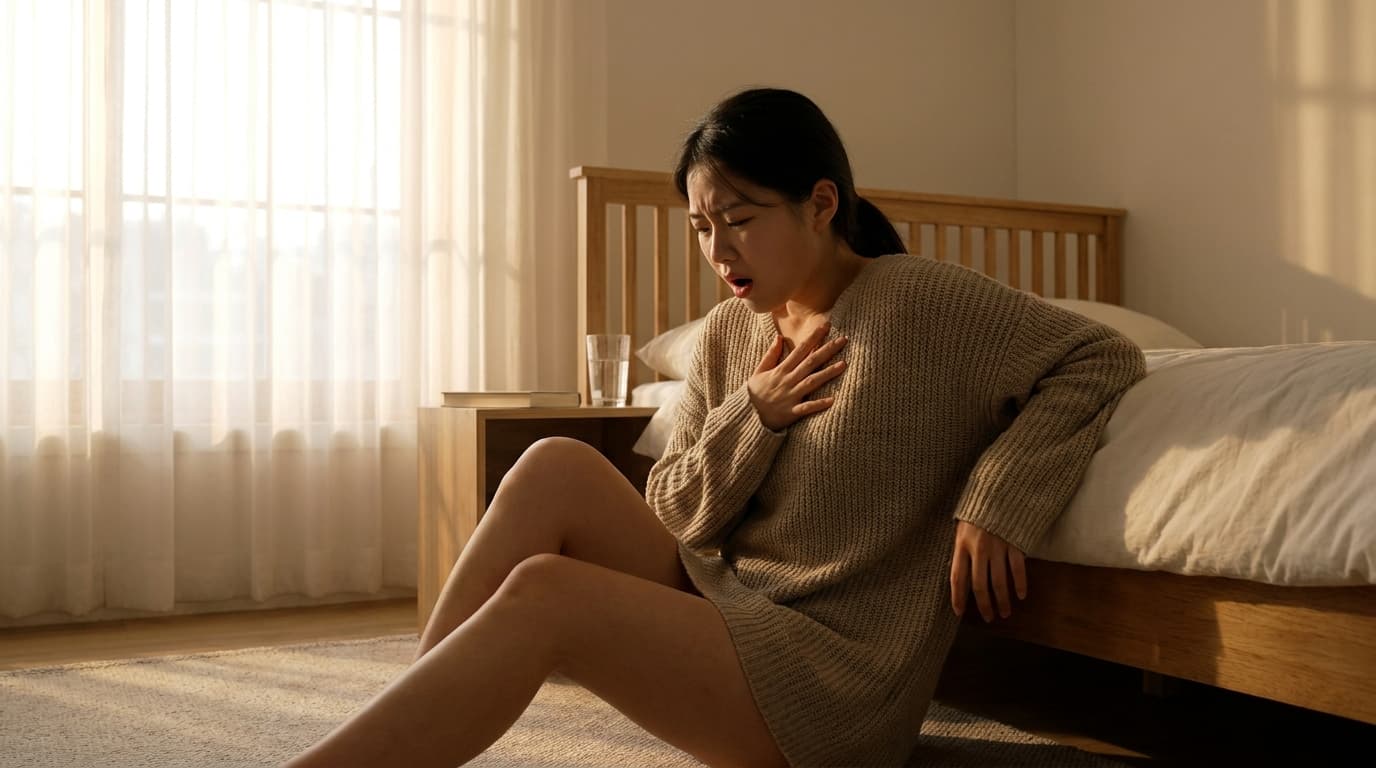
I feel like I am about to collapse, is this anxiety a symptom of panic disorder?
Hello, this is Dalimchae Korean Medicine Clinic. # I feel like I'm about to collapse, is this anxiety a symptom of panic disorder? Have you ever experienced a sudden, pounding heartbeat, breathless gasp, and intense fear that you are about to die? Many people visit the emergency room thinking "I feel like I'm about to collapse," only to feel even greater confusion and anxiety when tests show nothing is wrong. These symptoms are not simply a matter of being sensitive or weak-minded. It may be a powerful warning signal sent by your body: panic disorder. Dalimchae Korean Medicine Clinic helps you identify the root cause of your anxiety and fear, restore your broken body balance, and regain a healthy daily life. 💡 **Core Answer** Top 3 most common causes of panic attacks like "I feel like I'm about to collapse": ① Autonomic imbalance / ② Brain hyperactivation / ③ Continuous accumulation of psychological stress. Dalimchae Korean Medicine Clinic calms overheated body and brain warning systems through autonomic stabilization and helps you restore balance on your own. ## Why do these sudden collapse-like symptoms occur? Panic disorder is characterized by sudden, unpredictable panic attacks. Various physical symptoms accompany them, such as rapid heartbeat, accelerated breathing, sweating, dizziness, or numbness in hands and feet. When these symptoms appear, many people actually feel a terrifying fear of dying or losing control. Such panic attacks are often not just psychological problems, but stem from abnormalities in the autonomic nervous system and brain function, which are important regulatory systems of our body. The autonomic nervous system is responsible for life-maintenance functions essential to life, such as heartbeat, breathing, digestion, and body temperature regulation, regardless of our will. This system consists of the sympathetic nervous system, which arouses the body in stressful situations, and the parasympathetic nervous system, which relaxes the body in a resting state, and the balance between the two is crucial. Panic disorder patients tend to have overly activated sympathetic nerves, causing their bodies to recognize minor stimuli as emergency situations and trigger excessive reactions. It is akin to a fire truck malfunctioning, sounding a loud alarm and dousing water even at a tiny spark. Such imbalance is closely related to hyperactivity of specific brain regions, especially the amygdala, which is responsible for fear and anxiety. ## Is panic disorder simply a problem of the mind? Many people mistakenly believe panic disorder is a disease caused by a "weak mind." However, this is a complex problem of autonomic nervous system and brain function where the body reacts excessively regardless of the patient's will. According to data from the National Health Insurance Service in 2023, the number of people treated for panic disorder increased by about 44.5% from 2017 to 2021, and the number treated for autonomic dysfunction increased by about 120% over 10 years. This suggests deep correlation with modern stress and that simple psychological therapy alone may have limitations. Our brain has important parts called the amygdala and prefrontal cortex. The amygdala acts as an "alarm system" that detects threats and triggers fear responses, while the prefrontal cortex acts as a "control center" responsible for rational judgment and emotional regulation. In people with panic disorder, the amygdala is often overactivated, causing strong anxiety as if an emergency bell rings even at minor stimuli, while the function of the prefrontal cortex, which should regulate this, is diminished. A study published in an academic journal in 2016 analyzed the connection between the amygdala, prefrontal cortex, and autonomic nervous system through heart rate variability (HRV) indices. This study revealed that people with high connectivity between the amygdala and prefrontal cortex, where the prefrontal cortex well regulates amygdala activation, have higher HRV indices. This implies that the harmony between brain function and the autonomic nervous system is very important in controlling anxiety symptoms. Therefore, at Incheon panic disorder Korean medicine clinics, rather than simply suppressing anxiety, it is important to restore the balance of the brain and autonomic nervous system to help the body find stability on its own. ## How does Korean medicine treat panic disorder? In Korean medicine, panic disorder is viewed not merely as a mental problem, but as a problem of imbalance in bodily organ functions and qi and blood circulation. In particular, when the harmony of organ functions such as heart (心), liver (肝), and kidney (腎) is broken and the unstable state of the autonomic nervous system persists, symptoms like panic attacks appear. From this perspective, Dalimchae Korean Medicine Clinic Incheon Branch provides treatments focused on calming overheated body and brain warning systems and restoring autonomic balance. A 2021 study published in KoreaScience titled "Literature Review on Clinical Studies of Korean Medical Treatment for Panic Disorder" analyzed domestic clinical studies and showed that Ondamtang-type herbal medicine, acupuncture at LI4 and PC6 points, moxibustion at ST36, CV4, and CV12 points, Li-Gyeung-Byun-Qi therapy, and breathing training were effective in improving panic disorder symptoms. In most studies, Korean medical treatment showed positive results in improving panic disorder symptoms. Additionally, a study by Director Noh Young-beom published in the Journal of Korean Oriental Internal Medicine in 2012 applied herbal medicine monotherapy including Yeonggyegamjotang for 3 months to two male and female panic disorder patients in their 30s with extreme anxiety states (BAI score 31 or higher). It reported a "post-treatment management" case where heart palpitations and anxiety symptoms improved within half a month of treatment, and attack symptoms completely disappeared after two months. This demonstrates that herbal medicine treatment can directly act on core symptoms of panic disorder and bring meaningful improvement effects. Recently, a 2024 study published in PubMed conducted Korean medical treatment (acupuncture, psychological therapy, Chuna therapy, aromatherapy, or herbal medicine) for at least 4 weeks on 67 anxiety disorder patients. The results showed significant decreases in anxiety (STAI X-1; STAI X-2; BAI, p \< 0.0001), depression (BDI-II, p \< 0.0001), and anger (AKI-K-I; AKI-K-O, p \< 0.05), and an increase in quality of life (EQ-5D; EQ-VAS, p \< 0.0001). This supports that Korean medical complex treatment can contribute to improving overall symptoms and quality of life in patients with anxiety and panic disorders. Based on these data, Dalimchae Korean Medicine Clinic focuses on creating an environment where the body can heal itself by restoring autonomic balance, rather than simply suppressing symptoms. When excessive stress and overheated brain states persist, autonomic balance collapses and the body reacts hypersensitively even to minor stimuli. In Korean medicine, this is explained as "when autonomic balance collapses, the brain cannot rest." Stabilizing the brain and autonomic nervous system to calm excessive alarm systems and boosting the body's resilience is Dalimchae Korean Medicine Clinic's core treatment philosophy. To this end, Korean medical complex treatments such as herbal medicine, acupuncture, moxibustion, cupping, and pharmacopuncture tailored to individual constitutions and symptoms are applied to lower the heat of overheated nervous systems and create an environment where the brain can rest. ## Could I also have panic disorder? Self-Diagnosis Checklist If 3 or more of the following questions apply to you, we recommend confirming your exact state through treatment at Dalimchae Korean Medicine Clinic Incheon Branch and considering Korean medical complex treatment for autonomic balance recovery. If 5 or more apply, immediate visits and consultation with experts are advised. * Suddenly feeling heart pounding or racing. * Feeling breathless or suffocated. * Frequently feeling dizzy or about to collapse. * Experiencing trembling or numbness in hands and feet. * Feeling feverish or breaking out in cold sweats. * Feeling stuffy chest and chest pain. * Feeling as if reality is not real or detached from oneself. * Seized by extreme fear of dying. * Fear of going crazy or losing control. * Anticipatory anxiety about the next attack and avoiding certain places. ## Q&A: Frequently Asked Questions About Panic Disorder **Q. How long do I need treatment to recover from panic disorder?** A. Treatment duration for panic disorder varies depending on personal symptom severity, duration of onset, and presence of accompanying conditions. Generally, steady treatment and management beyond symptom relief are important for recurrence prevention. Dalimchae Korean Medicine Clinic usually recommends intensive treatment for 3 to 6 months or more. **Q. How should I cope when a panic attack occurs?** A. When a panic attack occurs, it is important to sit or lean in a safe place and stabilize breathing through deep breathing. Giving cooling stimuli to the brain can also help. If it is too difficult, seek help from surroundings or visit a medical institution to find stability. **Q. Can panic disorder be treated with Korean medicine?** A. Yes, Korean medicine views the cause of panic disorder as autonomic imbalance and bodily organ function problems, providing effective treatments to improve them. Treatments like herbal medicine, acupuncture, and moxibustion help stabilize the autonomic nervous system and regulate brain hyperactivation to improve symptoms. **Q. Can panic disorder, dizziness, and headaches be treated together?** A. Yes, many panic disorder patients complain of dizziness, headaches, and insomnia together. Since these symptoms are closely related to autonomic imbalance, Dalimchae Korean Medicine Clinic provides integrative treatments that improve accompanying symptoms along with panic disorder treatment. Panic disorder is not a problem solved by enduring. You no longer need to ignore the signals your body has sent for a long time. Approaching in the right direction, the body responds faster than you think. Bring your current symptoms as they are. Dalimchae Korean Medicine Clinic will find the causes together with you. Where life blooms. Herbal medicine is Dalimchae Korean Medicine Clinic. Check your similar symptoms first through Dalimchae Korean Medicine Clinic homepage AI consultation! This article is based on questions frequently received in the treatment room, health information compiled together by Dalimchae medical staff. Medical Review | Brain & Autonomic Nervous System Treatment Standard Dalimchae Korean Medicine Clinic Incheon Branch Korean Medicine Doctor Yang Yuchan (Panic Disorder Column)