
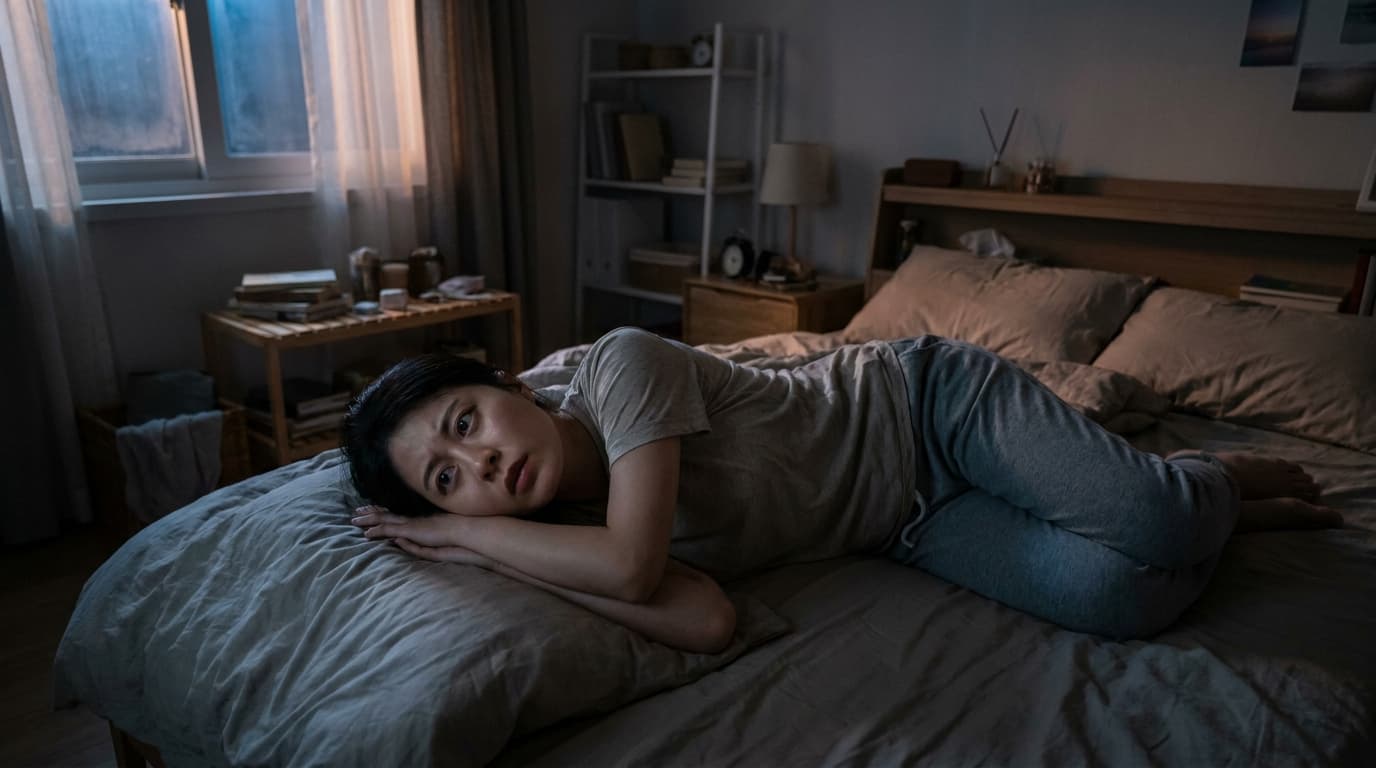
I am always tired and anxious it might not be just stress
Hello, this is Dalimchae Korean Medicine Clinic. # I always feel tired and anxious, it might not be just stress. Are you constantly suffering from a heavy, tired body, a stuffy chest, and feelings of anxiety? Even after getting checked at the hospital, you might only hear that there is nothing special or that it is just due to stress, failing to find a proper solution. When this situation repeats, it is easy to fall into self-reproach, wondering if you are too sensitive or if your mental strength is weak. However, if you have physical symptoms that cannot be simply dismissed as stress or emotional issues, you should seriously consider the possibility that it is a warning signal sent by our body's autonomic nervous system. 💡 **[Key Answer]** Top 3 most common causes of constant tiredness and anxiety: ① **Autonomic hyperactivity due to excessive stress** / ② **Brain function decline and lack of resilience** / ③ **Chronic inflammation and worsening gut health** Dalimchae Korean Medicine Clinic focuses on autonomic imbalance, the root cause of these symptoms, providing **autonomic stabilization treatment** to help harmonize the recovery of the brain and body. ## Always tired and anxious, why do hospitals only say it is stress? Modern life is a series of stresses. Various stress factors such as work, interpersonal relationships, and family problems have an immediate impact on our bodies. However, when these stress responses are excessive or prolonged, they disrupt the balance of the autonomic nervous system beyond mere fatigue. The autonomic nervous system is responsible for essential life maintenance functions such as heartbeat, digestion, respiration, and body temperature regulation, regardless of our will. Divided into the sympathetic and parasympathetic nervous systems, it achieves a balance of tension and relaxation. When stress persists, the sympathetic nervous system becomes excessively hyperactive and the parasympathetic recovery function decreases, breaking the balance. When autonomic imbalance occurs like this, the body continues to maintain a tension mode even when it needs to rest. This can lead to various physical symptoms such as chronic fatigue, sleep disorders, palpitations, indigestion, anxiety, dizziness, and headaches. However, routine tests often reveal no special abnormalities in blood counts or organ shapes, leaving patients feeling frustrated with vague diagnoses like 'hypochondria' or 'stress-related'. But this is clearly a functional abnormality of the body and can be viewed as a physical warning signal caused by autonomic malfunction. ## Simple stress vs. Autonomic imbalance, how are they different? Simple stress reactions are temporary and the body naturally recovers when the stress factor disappears. For example, your heart pounding before an important presentation is a normal stress response. However, if the heart palpitations do not calm down even after the presentation is over and time passes, or if anxiety, chronic fatigue, and indigestion continue to appear complexly without specific stress factors, you should suspect autonomic imbalance. Autonomic imbalance is not just a problem of a specific organ, but a state where our body's overall regulatory capacity has declined. This appears as a complex physical response that cannot be dismissed as simply a mental problem. In Korean medicine, such autonomic problems are understood as circulatory disorders of Qi and Blood, broken functional harmony of the internal organs, and severed energy exchange between the heart and kidneys. In particular, the 'Heart (心)' is understood as an organ overseeing emotional regulation, sleep, and mental stability beyond simple cardiac function, and the decline of the 'Liver (肝)' function (Soseol, the function of circulating Qi) is also closely linked to autonomic imbalance. ## Autonomic imbalance, what effects does it have on my body? Autonomic imbalance has unexpected effects throughout our body. * **Cardiovascular symptoms:** Palpitations, chest tightness, orthostatic dizziness, blood pressure changes, numbness or coldness in hands and feet can occur. * **Digestive symptoms:** Chronic indigestion, reflux esophagitis, irritable bowel syndrome, loss of appetite or overeating, and abdominal tension are frequently accompanied. * **Sleep and emotional symptoms:** Sleep disorders (difficulty falling asleep or waking up frequently at dawn), anxiety, depression, severe emotional fluctuations, and easy irritation over minor things. * **Other physical symptoms:** Unexplained headaches or dizziness, chronic back and shoulder tension and pain, excessive cold sweats (sweating abnormalities) or cold hands and feet, dry mouth, dry eyes, and other discomforts throughout the whole body. In particular, among those visiting the Songdo autonomic clinic, many also complain of tinnitus or headaches along with these symptoms. These symptoms interact with each other to form a vicious cycle, significantly degrading the quality of life. Do not give up out of exhaustion from normal test results; it is important to find the root cause and treat it from the perspective of autonomic imbalance. ## How does Korean medicine treat autonomic imbalance? Dalimchae Korean Medicine Clinic approaches autonomic imbalance not by simply suppressing symptoms, but by fundamentally reviving the body's recovery system. The core is to stabilize the sympathetic nervous system, which is hyperactive like an overheated engine, and strengthen the function of the exhausted parasympathetic nervous system to help the body regain the balance of tension and relaxation on its own. Recent studies support the effectiveness of this Korean medicine approach. A study published in the Journal of Korean Medicine in 2022 applied acupuncture treatment for 8 weeks to 50 patients with stress-induced autonomic imbalance, and confirmed that stress index (PSI) and heart rate variability (HRV) indices significantly improved compared to before treatment (p\<0.05). The researchers concluded that acupuncture treatment is effective in regulating autonomic activity and alleviating stress reactions. In addition, according to a research study by the Korea Institute of Oriental Medicine reported in Newsis in 2026, it was revealed that acupuncture treatment activates the trigeminal nerve pathway to alleviate depression and anxiety symptoms induced by post-traumatic stress disorder (PTSD). The research team revealed the mechanism by which electroacupuncture stimulation applied to the Baekhoe point on the crown of the head and the Indang point on the forehead suppresses neuroinflammation and reduces depression and anxiety behaviors. Based on these scientific grounds, Dalimchae Korean Medicine Clinic creates an environment where the brain can rest and the body can recover by regulating the autonomic nervous system. Our clinic's autonomic stabilization treatment proceeds with the following principles. When the balance of our body's autonomic nervous system collapses, the brain cannot rest and continues to be tense and overloaded. This is like a breaker switch staying on continuously, causing electricity to flow endlessly and overheat. Lowering the excessive heat of the nervous system and creating an environment where the brain can rest comfortably—in Korean medicine, this is called Suseungwhagang (수승화강)—is the core goal of autonomic stabilization treatment. Dalimchae Korean Medicine Clinic, an Incheon autonomic clinic, helps increase the resilience of the autonomic nervous system and helps the body maintain health on its own through various complex Korean medicine treatments such as herbal medicine, acupuncture, pharmacopuncture, moxibustion, and cupping tailored to each individual's constitution and symptoms. ## Could I also have autonomic imbalance? Symptom checklist Answer the following questions. If 3 or more apply, we recommend consulting about autonomic imbalance at Dalimchae Korean Medicine Clinic Incheon Branch. 1. I am always tired and my body is heavy for no special reason. 2. Even after sleeping enough, I do not feel refreshed, and when I lie down to sleep, I easily fall asleep or wake up frequently. 3. My chest feels stuffy or I frequently experience unexplained palpitations. 4. I have poor digestion, feel bloated, and have irregular bowel activities such as constipation or diarrhea. 5. My head is not clear and I feel foggy or experience frequent dizziness. 6. My back of the neck and shoulders always have stiff and sore pain. 7. I am easily anxious and restless over minor things, and have severe emotional mood swings. 8. My hands and feet are cold, I sweat too much, and it is difficult to regulate body temperature. 9. My eyes are dry, my saliva dries up, and my mouth often feels dry. Criteria: * **If 3 or more apply:** Suspected autonomic imbalance stage. Check the root cause through precise diagnosis at Dalimchae Korean Medicine Clinic Incheon Branch. * **If 5 or more apply:** Autonomic imbalance progression stage. Immediate complex Korean medicine treatment is required to promote autonomic stabilization. Q. How long should autonomic imbalance be treated to improve? A. There are differences depending on the degree of symptoms, individual constitution, and lifestyle habits, but generally, sufficient improvement can be expected through 3 to 6 months of steady treatment and lifestyle management. The earlier you actively treat, the faster the recovery, and it is important to manage before it becomes chronic. Q. Can symptoms caused by stress also be treated with Korean medicine? A. Yes, they can be sufficiently treated. In Korean medicine, physical symptoms caused by stress are viewed not as simple mental problems, but as functional imbalances of the body's Qi and blood circulation and internal organs. Dalimchae Korean Medicine Clinic's autonomic stabilization treatment alleviates the impact of stress on the body and builds the body's power to recover on its own. Q. Is it okay to take western medicine and herbal medicine together? A. If you are taking western medicine, you must inform the medical staff during consultation. The Korean medicine doctor will closely review interactions with western medicine and determine a safe and effective herbal prescription. Q. Are there lifestyle habits to prevent autonomic imbalance? A. Lifestyle habits that manage stress, such as regular sleep habits, balanced diet, consistent aerobic exercise, and sufficient rest and meditation, are important. In particular, the Korean medicine sleep principle of going to bed before 11 PM matches modern sleep hygiene and greatly helps autonomic stability. Symptoms of constant fatigue and anxiety cannot be resolved by enduring them. You no longer need to ignore the body's signals you have sent for a long time. If you approach in the right direction, your body reacts faster than you think. Bring the symptoms you are experiencing as they are. Dalimchae Korean Medicine Clinic will find the cause together. Where life blooms. Herbal medicine is Dalimchae Korean Medicine Clinic. Check symptoms similar to yours first through the AI consultation on the Dalimchae Korean Medicine Clinic website! This article is health information organized together by Dalimchae medical staff based on questions actually received often in the consultation room. Medical Supervision | Department of Neurology & Autonomic System, Incheon Branch of Dalimchae Korean Medicine Clinic, Korean Medicine Doctor Yang Yu-chan