
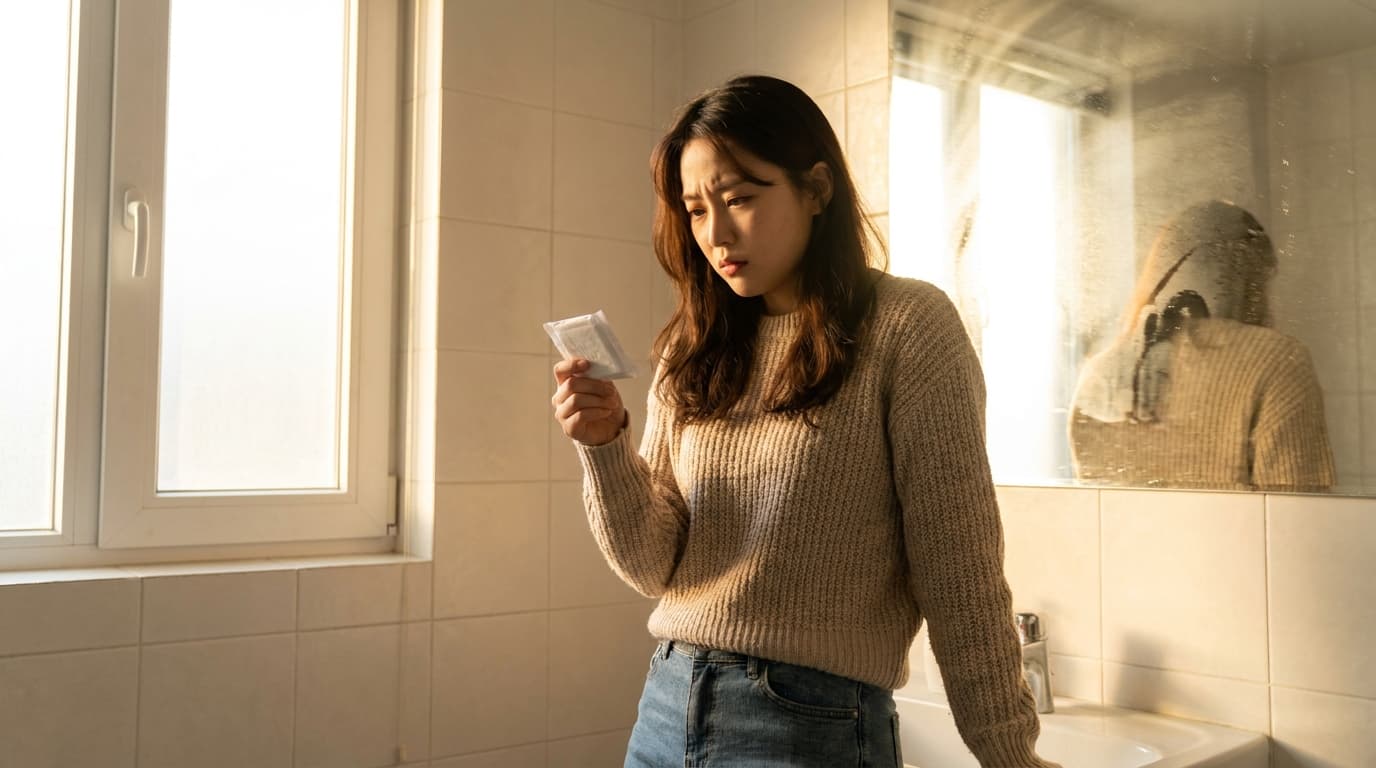
How to Distinguish Vaginal Discharge Before Menstruation from Vaginitis Managing Female Discharge with Korean Medicine
Hello, this is Dalimchae Korean Medicine Clinic. # How to Distinguish Vaginal Discharge Before Menstruation from Vaginitis Confusing Female Discharge Manage Smartly with Korean Medicine As your menstrual cycle approaches, do you feel anxious wondering if it's premenstrual discharge or vaginitis? If your discharge suddenly increases or has an unusual color and odor, you might worry. Especially before menstruation, hormonal changes can cause a temporary increase in discharge, making it easy to mistake for vaginitis symptoms. However, accurately distinguishing whether it's a simple premenstrual change or a sign of vaginitis requiring treatment, and managing it accordingly, is crucial for women's health. 💡 **[Key Answer]** Top 3 most common causes of **how to know if it's premenstrual discharge or vaginitis**: ① **Normal Hormonal Changes**: Increased discharge due to estrogen and progesterone fluctuations around ovulation and right before menstruation. ② **Bacterial Vaginosis**: Discharge accompanied by foul odor due to decrease in beneficial vaginal bacteria and increase in harmful bacteria. ③ **Candida Vaginitis**: Thick, clumpy white discharge and severe itching due to fungal infection. Dalimchae Korean Medicine Clinic prevents recurrence of vaginitis by restoring fundamental balance in the vaginal environment and boosting immunity through **constitutional improvement treatment**. ## What is the difference between premenstrual discharge and vaginitis? The female body undergoes hormonal changes according to the menstrual cycle, which affects the pattern of vaginal discharge. Generally, during ovulation, estrogen levels rise, increasing transparent and slippery mucous discharge, while before menstruation, progesterone can cause a small amount of milky white or opaque discharge. These changes are completely normal physiological phenomena. However, vaginitis is an inflammatory disease caused by an imbalance in the normal vaginal flora, leading to excessive proliferation of pathogenic bacteria, fungi, or parasites. In this case, discharge doesn't just increase in volume; it is accompanied by changes in color, odor, and viscosity, along with unpleasant symptoms like itching, burning sensation, and pain. It is important to distinguish between temporary discharge increase due to premenstrual hormonal changes and vaginitis leukorrhea. ## What are the characteristics of normal discharge? Normal discharge is mostly transparent or pale white, slightly viscous, and has no special odor. During ovulation, it stretches transparently and smoothly like egg whites, and right before menstruation, it may become somewhat opaque, decrease in volume, or show a small amount of white discharge. This discharge plays an important role in keeping the vagina moist and protecting it from external bacteria. While slight variations can occur depending on body condition, the key characteristic is that it does not cause discomfort. ## What are the main symptoms when you have vaginitis? Symptoms vary slightly depending on the type of vaginitis, but abnormal vaginal discharge is most prominent across all types. * **Bacterial Vaginosis**: Gray or white thin discharge increases, and a strong fishy odor may occur, especially during menstruation or after intercourse. Itching and pain are relatively mild. * **Candida Vaginitis**: Thick white discharge resembling tofu dregs or curdled milk is characteristic, often accompanied by severe itching, stinging, and swelling of the vulva. * **Trichomonas Vaginitis**: Yellow-green foamy discharge with a strong foul odor appears, causing severe itching and vulvar burning. It is a sexually transmitted disease. Furthermore, if vaginitis becomes chronic, lower abdominal pain, pelvic pain, and urinary discomfort may occur, and if left untreated, it can lead to pelvic inflammatory disease or cervicitis, making early diagnosis and treatment essential. ## Hidden causes of women's diseases: How does Oriental medicine view them? Unlike Western medicine which treats vaginitis primarily as external bacterial infection using antibiotics or antifungals, Oriental medicine approaches vaginitis under the category of 'Daenhabyeong (leukorrhea disease)' arising from internal imbalance and weakened immunity. In particular, it emphasizes the close connection between intestinal health and the reduction of vaginal lactobacilli that keep the vaginal environment healthy. According to a clinical study published in the 2022 journal `Frontiers in Microbiology` by Min-jung Kim's research team analyzing the vaginal microbiome of 40 Korean women with recurrent vaginitis (RV), the proportion of beneficial vaginal bacteria Lactobacillus spp. was significantly lower (p \< 0.01) and microbial diversity was higher compared to 100 healthy women. This suggests that disrupted vaginal microbial balance is a key cause of recurrent vaginitis. In Oriental medicine, stagnant dampness (Shitam) due to weakened spleen and stomach function, reduced blood circulation around the uterus and pelvis, and weakened immunity due to stress or overwork are considered major causes of inducing or recurring vaginitis. In other words, vaginitis is a condition that easily occurs when our body's defense system is weakened due to environmental changes or internal condition drops, akin to catching a cold. Dalimchae Korean Medicine Clinic Incheon branch aims for fundamental treatment by finding these complex causes. ## Why constitutional improvement treatment at Dalimchae prevents vaginitis recurrence? Common among those with frequent vaginitis recurrence is that treatments simply removing germs have limitations. Dalimchae Korean Medicine Clinic focuses on constitutional improvement treatment with the perspective of 'creating a body where symptoms do not turn back on rather than just extinguishing symptoms.' The goal is to strengthen our body's immune system and enhance self-healing capacity. To achieve this, through customized herbal medicine prescriptions tailored to individual constitution and symptoms, blood circulation around the uterus and vagina is improved, inflammation is reduced, and immunity is enhanced. In addition, it focuses on creating a healthy environment where beneficial vaginal bacteria can thrive. In a 2016 study published in `Health Chosun` by Kyung Hee University Korean Medicine Hospital's Korean Obstetrics and Gynecology Center professors Jun-bok Chang and Deok-sang Hwang, 16 patients with leukorrhea were treated concurrently with acupuncture, moxibustion, herbal medicine, and sitz baths for 42.7 days. As a result, the overall average symptom score decreased by about 55% from 4.9 points before treatment to 2.2 points. Notably, key vaginitis symptoms such as discharge volume (4.8 points → 2.3 points), odor (4.2 points → 1.6 points), and vulvar discomfort (6.1 points → 2.1 points) showed noticeable reductions. The research team stated that herbal medicines such as Cnidium officinale, Artemisia argyi, and Sophora flavescens are effective in reducing vaginal discharge and odor. These clinical results demonstrate that Oriental medicine treatment can contribute not only to alleviating vaginitis symptoms but also to fundamental constitutional improvement for recurrence prevention. Dalimchae Korean Medicine Clinic Incheon branch supports healthy women's lives through constitutional improvement treatment that goes beyond simply removing germs, helping vaginitis recover on its own and prevent recurrence by restoring overall body balance. ## How should women's vaginal health in Incheon be managed? Vaginitis can easily occur and recur when immunity drops or lifestyle habits are poor. In particular, stress, overwork, lack of sleep, wearing tight clothing, and excessive vaginal douching can be main culprits worsening the vaginal environment. Dalimchae Korean Medicine Clinic Incheon branch recommends the following habits for vaginal health: * **Wearing breathable clothing**: Wear cotton underwear and avoid tight bottoms. * **Correct hygiene management**: Excessive vaginal douching can remove beneficial bacteria, so it is important to wash the vulva with clean water and dry thoroughly. * **Sufficient rest and sleep**: Increase body immunity and build resistance to disease. * **Balanced diet**: Maintain a healthy diet helpful for immunity boosting and reduce instant or sweet foods. * **Stress management**: Relieve stress through methods suited to you, such as meditation or yoga. Along with these lifestyle improvements, if you are suffering from recurrent vaginitis, seeking constitutional improvement treatment at Dalimchae Korean Medicine Clinic Incheon branch is a wise choice to solve the fundamental problem. --- **✔️ Premenstrual Discharge and Vaginitis Self-Diagnosis Checklist** If 3 or more of the following items apply to you, we recommend suspecting vaginitis and consulting a Korean medicine doctor. * Has the amount of discharge increased dramatically compared to usual? * Does the color of discharge show yellow, gray, or light green in addition to white? * Does the discharge have an unpleasant fishy odor? * Is the vaginal opening or vulva severely itchy and stinging? * Does discharge come out in clumps like tofu dregs? * Do you feel stinging or uncomfortable lower abdominal pain when urinating? * Do you feel discomfort or pain during intercourse? **Judgment Criteria:** * **3 or more items apply**: Vaginitis suspected stage; consider expert consultation and Korean medicine complex treatment. * **5 or more items apply**: Immediate clinic visit and precise diagnosis recommended. --- **Q. How are premenstrual discharge and vaginitis different?** A. Premenstrual discharge is a natural phenomenon due to hormonal changes where volume may increase slightly or color become opaque, but there is no characteristic foul odor or itching. Vaginitis is accompanied by inflammatory symptoms such as itching and pain along with changes in discharge color, odor, and viscosity due to vaginal bacterial imbalance. **Q. Can vaginitis be treated with Oriental medicine?** A. Yes, absolutely. Oriental medicine views vaginitis not as a simple infection but as a problem of lowered body immunity and internal imbalance, supporting fundamental constitutional improvement and vaginal environment normalization through customized herbal medicine, acupuncture, moxibustion, and sitz bath therapy. **Q. Why does vaginitis recur frequently?** A. The main causes of vaginitis recurrence are decreased beneficial vaginal bacteria and lowered immunity. Antibiotic use, stress, overwork, and poor lifestyle habits weaken the vaginal environment, making it easy for pathogens to proliferate again. **Q. Where should I receive vaginitis treatment in Incheon?** A. If you are troubled by recurrent vaginitis in the Incheon area, please visit Dalimchae Korean Medicine Clinic Incheon branch. We thoroughly diagnose individual constitution and symptoms, and help you stop vaginitis recurrence and regain a healthy life through Korean medicine treatment focused on immunity strengthening and vaginal environment improvement. Vaginitis is not a problem solved by enduring. You no longer have to ignore the signals your body has sent for a long time. When approached in the right direction, the body responds faster than you think. Bring the symptoms you are experiencing as they are. Dalimchae Korean Medicine Clinic will find the cause together. A place where life blooms. Herbal medicine is, after all, Dalimchae Korean Medicine Clinic. Check symptoms similar to yours first through Dalimchae Korean Medicine Clinic homepage AI consultation! Medical Supervision | Women & Pregnancy Treatment Standards, Dalimchae Korean Medicine Clinic Incheon Branch Korean Medicine Doctor Yoo-chan Yang (Vaginitis Column) #Vaginitis #Leukorrhea #WomensHealth #PremenstrualDischarge #IncheonVaginitisClinic #KoreanMedicineTreatment #ConstitutionalImprovement #Immunity Fertility - Infertility Pregnancy Preparation [Image Prompts] Thumbnail: A beautiful Korean woman in her early 20s, looking at a panty liner with a worried expression, in front of a bathroom mirror, soft morning light streaming through window, High quality, photorealistic, cinematic lighting, 8k resolution, highly detailed, wide shot, ensure full body and arms are within frame, no cropping. Body: A beautiful Korean woman in her early 20s, smiling comfortably with a clear and healthy expression, in a cozy living room with abundant sunlight, bright and airy atmosphere, natural sunlight, High quality, photorealistic, cinematic lighting, 8k resolution, highly detailed, wide shot, ensure full body and arms are within frame, no cropping.