
Hot and Then Chills: If You Are Experiencing Menopause, Check Your Autonomic Balance First
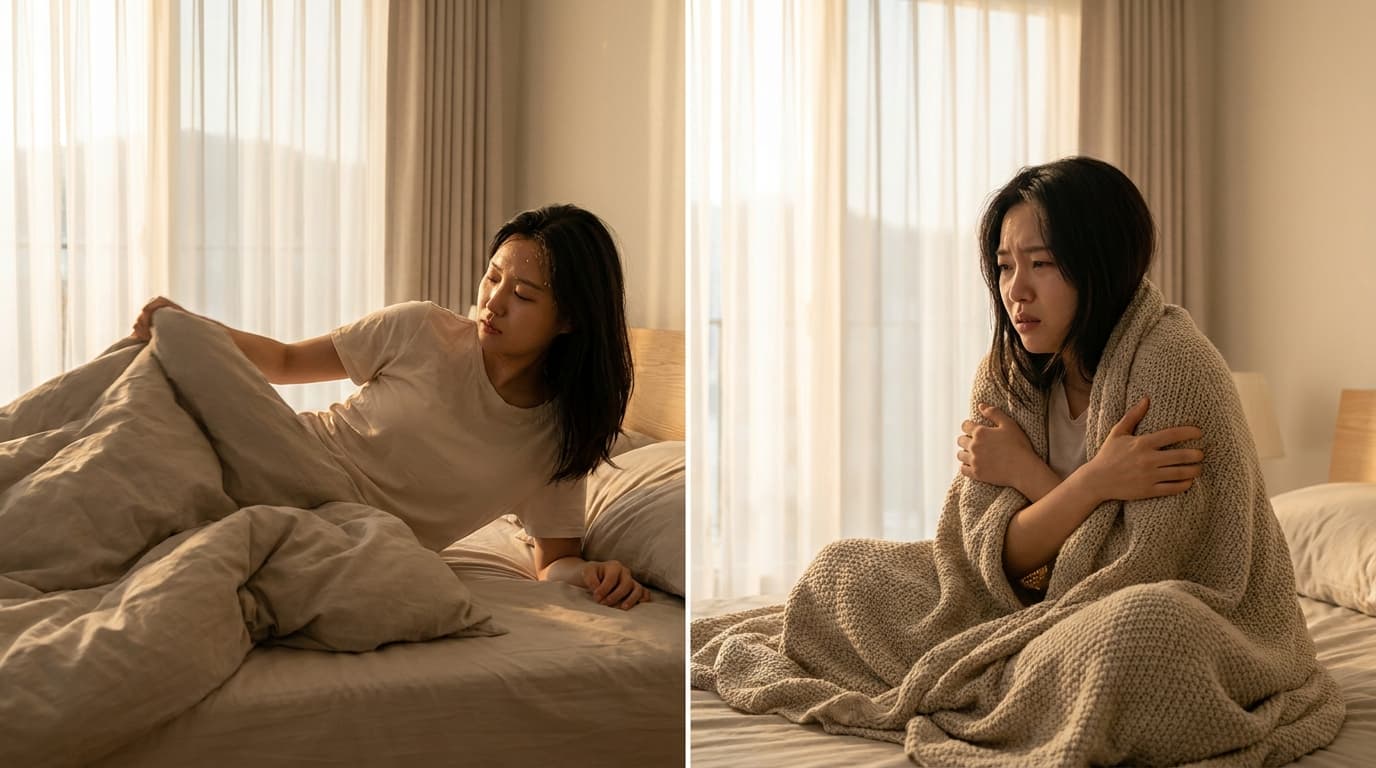
Hello. This is Dalimchae Korean Medicine Clinic. # Hot and Then Chills: If You Are Experiencing Menopause, Check Your Autonomic Balance First There are moments when the image of myself in the mirror feels unfamiliar. For no reason, my chest feels stuffy, and every night my whole body feels hot so I can't sleep, soon pulling the blanket back over me at a chillingly cold draft. Even in weather that is neither cold nor hot, I sweat profusely alone, my nerves are on edge, and it's hard to control my emotions over small things. Like this, repeatedly irregular feelings of heat and chills, and an unstable mind, may not simply be due to mood, but a signal announcing an important change in the body. Especially for women in their mid-40s to 50s, they must recognize that these symptoms are deeply related to 'menopause' and listen to the changes in their bodies. 💡 **[Key Answer]** 3 most common causes of menopausal symptoms like **"Feeling hot and then suddenly having chills"**: ① **Autonomic Nervous System Dysfunction** due to female hormone imbalance ② **Upper Heat and Lower Cold (上熱下寒)** occurring from instability of the body temperature control center ③ **Systemic Immunity and Vitality Decline** where psychological stress and physical changes act complexly Dalimchae Clinic helps you regain the balance of body and mind for these menopausal symptoms through autonomic stabilization treatment. ## Why can't menopause be brushed off simply as getting older? Menopause is a natural physical change process where ovarian function decreases and secretion of the female hormone estrogen decreases. However, this hormone change does not simply affect the menstrual cycle or reproductive capability. Estrogen plays diverse roles across the whole body, including brain function, cardiovascular health, bone health, and autonomic nervous system regulation. When estrogen decreases, the balance of the autonomic nervous system easily breaks. The autonomic system unconsciously regulates vital functions necessary for life maintenance such as body temperature regulation, heart rate, digestion, and sleep. When the autonomic nervous system becomes unstable, the body temperature control center located in the brain's hypothalamus malfunctions. Due to this, the body experiences abnormal temperature responses regardless of the actual external temperature, suddenly feeling hot (hot flashes, upper heat sensation) or feeling cold (chills). In addition to these vasomotor symptoms, various psychological and physical symptoms such as insomnia, anxiety, depression, headaches, dizziness, and heart palpitations can accompany. Therefore, menopausal symptoms should not be understood simply as discomforts due to aging, but as complex physical and psychological reactions created by the autonomic nervous system disturbance caused by hormone changes. ## How does Korean medicine view and treat menopausal upper heat and lower cold symptoms? In Korean medicine, menopausal symptoms are approached from the perspectives of 'deficiency of essence and blood (精血不足)' and 'deficiency heat (虛熱)'. As we age, when essence and blood, which are body fluids and raw material substances, become deficient—just as water in a pot decreases and boils quickly even with a small fire—deficiency heat occurs in the body, inducing upper heat sensation (hot flashes) and facial flushing. At the same time, people frequently complain of 'upper heat and lower cold (上熱下寒)' where the lower body or hands and feet become cold. This cannot be solved simply by lowering heat; fundamental treatment is required to fill the deficient parts of the body and restore the balance of qi and blood circulation. Dalimchae Clinic Incheon Branch focuses on restoring the balance of the autonomic nervous system and normalizing the body's temperature control ability. In a systematic literature review and meta-analysis study by the Korea Institute of Oriental Medicine research team published in the 2022 international journal 'Complementary Therapies in Clinical Practice', the effect of ginseng on health management in menopausal women was analyzed. As a result of analysis targeting 515 menopausal women who participated in a total of 15 randomized controlled trials (RCTs), ginseng significantly reduced menopausal symptoms (p=0.02), and was confirmed to be particularly effective in lowering hot flash scores (p=0.04). In addition, it showed a significant positive effect in improving quality of life scores (p=0.05). The researchers concluded that ginseng can significantly improve hot flashes, overall menopausal symptoms, and quality of life in menopausal women. Based on these data, Dalimchae Clinic focuses on restoring autonomic balance and strengthening overall body functions through customized herbal medicine prescriptions tailored to individual constitutions and symptoms. In addition, in a randomized double-blind clinical study by the Wonkwang University Hospital research team registered on PubMed in 2025, the effect of 8 weeks of cheonggukjang (fermented soybean paste) intake on menopausal symptoms and gut microbiota in 60 postmenopausal women was evaluated. As a result of the study, Kupperman index scores decreased significantly in all cheonggukjang intake groups, and showed the greatest improvement effect particularly in the high beneficial bacteria cheonggukjang group. This suggests that cheonggukjang supplements significantly alleviate menopausal symptoms and improve gut microbial composition such as increasing beneficial bacteria and decreasing harmful bacteria. The fact that gut health affects menopausal symptoms in this way is consistent with Dalimchae Clinic's 'Gut-Brain Axis' treatment philosophy. Dalimchae Clinic does not simply suppress symptoms, but improves gut function to enhance immunity and promote stabilization of the autonomic nervous system. ## How is Dalimchae Clinic's menopausal autonomic stabilization treatment carried out? When the balance of the autonomic nervous system collapses, the brain cannot rest. Menopausal symptoms are like a warning light indicating that the body's regulatory function is not working properly, much like an overheated engine. At Dalimchae Clinic, we perform 'autonomic stabilization' treatment to correct this imbalance of the autonomic nervous system, helping the brain rest sufficiently and the body regain homeostasis. Lowering excessive heat of the nervous system and creating an environment where the brain can rest—in Korean medicine, this is called Water Up and Fire Down (水昇火降)—is the core. Dalimchae Clinic's autonomic stabilization treatment proceeds in the following directions: 1. **Accurate Diagnosis**: Objectively grasp the current activity and balance state of the autonomic nervous system through pulse wave tests and autonomic balance tests, and closely analyze individual constitutions and symptom types. 2. **Customized Herbal Medicine Prescription**: Prescribe customized herbal medicine that simultaneously catches upper heat sensation and chills, and alleviates accompanying autonomic symptoms such as insomnia, anxiety, and depression. We focus on supplementing the body's deficient essence and blood and smoothing qi and blood circulation to restore autonomic balance. In particular, we provide personalized treatment for those looking for an Incheon menopause clinic. 3. **Acupuncture & Pharmacopuncture Treatment**: Parallel acupuncture treatment to relax tense nerves and promote qi and blood circulation, and pharmacopuncture treatment to directly inject drugs into specific acupuncture points to maximize therapeutic effects. Through this, we cultivate the body's self-healing power. If your quality of life is declining due to menopausal symptoms, you can regain a comfortable and vibrant daily life through autonomic stabilization treatment at Dalimchae Clinic Incheon Branch. Songdo Menopause Clinic also provides similar integrated oriental medical treatments to protect women's health. ## Could I also have menopausal autonomic imbalance? Menopause Symptom Checklist Check the following items: * Suddenly, my face, neck, and chest area become hot regardless of day or night. * Heat rises, followed by cold sweats, and then I suddenly feel chillingly cold. * It's hard to fall asleep at night or I wake up often, and once awake, it's hard to fall asleep again. * I feel anxious and edgy for no special reason, and my mood swings are severe. * My chest beats for no reason or I feel stuffy. * I frequently experience headaches or dizziness. * My hands and feet feel cold or numb, and my shoulders or neck stiffen easily. * My skin is dry and loses elasticity, and unexplainable itching occurs. * Fatigue is severe and my vitality is not like before. * Digestion is poor, or bowel problems such as constipation and diarrhea have become frequent. **Judgment Criteria:** * **3 or more apply**: Suspected autonomic menopause stage. Since it may be a symptom appearing due to broken autonomic balance, we recommend reviewing Dalimchae Clinic's oriental medicine combination treatment. * **5 or more apply**: Autonomic imbalance due to menopause is highly likely to have intensified. Active treatment and management are required, so we recommend visiting immediately for precise diagnosis and starting treatment. ## FAQ **Q. How long do menopausal symptoms last?** A. Menopausal symptoms vary greatly by individual, but are known to last on average 4 to 7 years. Some women experience symptoms for 10 years or more after menopause, so if you feel discomfort, active management is important. **Q. Can insomnia caused by menopausal symptoms be treated with Korean medicine?** A. Yes, it can be sufficiently treated. Menopausal insomnia is mainly caused by autonomic nervous system imbalance and psychological instability; Dalimchae Clinic's autonomic stabilization treatment, customized herbal medicine, and acupuncture treatment improve sleep quality and help stable deep sleep. **Q. Can menopausal symptoms heal naturally?** A. Since menopause is a natural physical change process, symptoms sometimes alleviate over time. However, if symptoms are severe or persist for a long time, they can significantly lower the quality of life, so it is good to actively manage with the help of experts. **Q. I have severe depression along with menopausal symptoms, can they be treated together?** A. Yes, depression due to menopause is closely related to autonomic nervous system instability. Dalimchae Clinic's autonomic stabilization treatment deals with not only physical symptoms but also emotional problems such as anxiety and depression together, helping to regain the balance of body and mind. The menopausal symptom of feeling hot and chill, stuffy in the chest and unable to sleep is not a problem solved by enduring. You no longer have to ignore the signals your body has sent for a long time. If you approach in the right direction, the body responds faster than you think. Bring the symptoms you are currently experiencing just as they are. At Dalimchae Clinic, we will find the cause together. Where life blooms. For herbal medicine, it's Dalimchae Korean Medicine Clinic. Check symptoms similar to mine through AI consultation on the Dalimchae Clinic website first! This article is health information organized together by Dalimchae medical staff based on questions frequently received in the treatment room. Medical Supervision | Women & Pregnancy Treatment Standards Dalimchae Clinic Incheon Branch Korean Medicine Doctor Yang Yuchan (Menopause Column)