
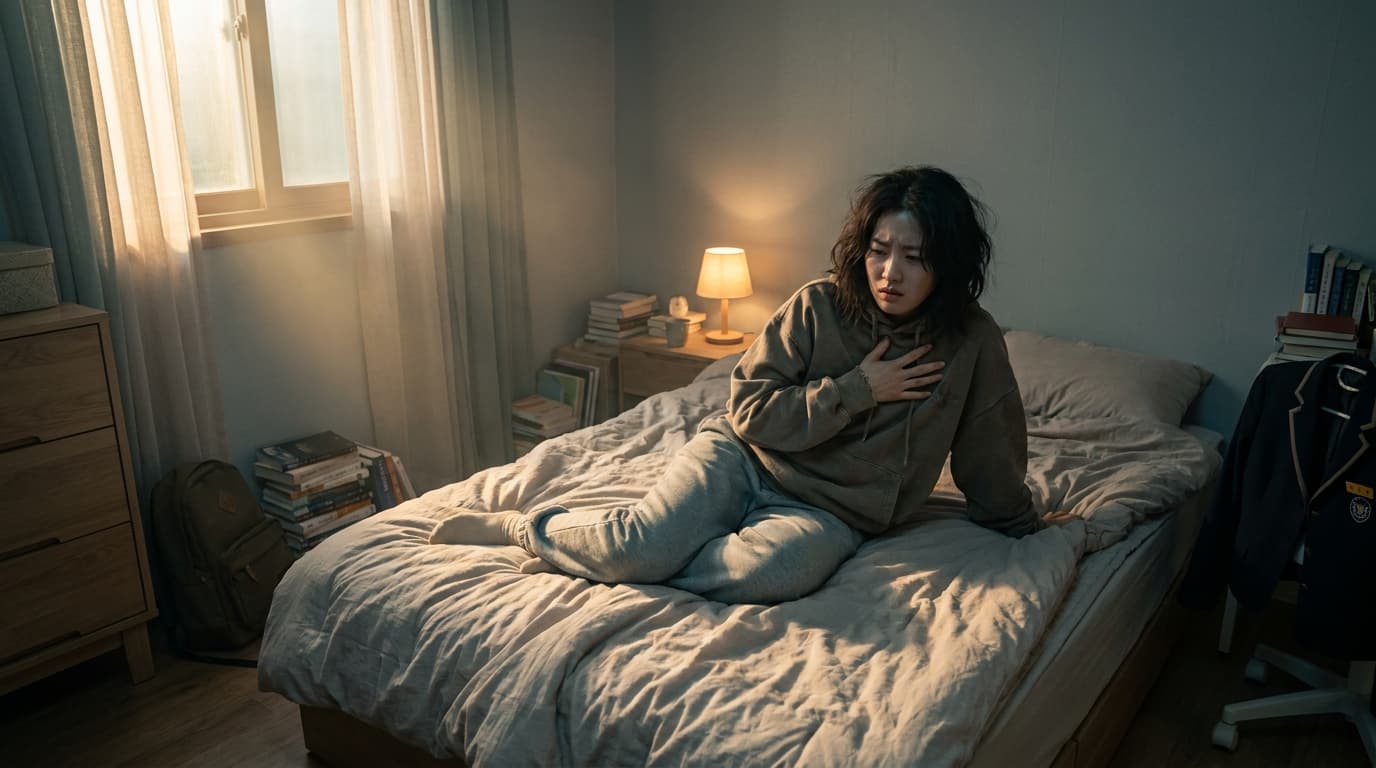
Heart pounding Shift work aftereffects recover with autonomic balance
Hello, this is Dalimchae Korean Medicine Clinic. # Heart pounding? Recover shift work aftereffects with autonomic balance! Working shifts without day or night is an essential part of our society, but our bodies constantly struggle to adapt to this rapid change. Are you unable to sleep comfortably at night due to the symptom "My heart is pounding" and feeling anxious during the day? Amidst irregular lifestyle rhythms, your autonomic balance may be breaking down without you realizing it. Heart palpitations may not be simple fatigue, but an important warning signal sent by your body. 💡 **[Key Answer]** Top 3 most common causes of "My heart is pounding": ① **Circadian rhythm disturbance due to irregular sleep patterns** / ② **Sympathetic hyperactivity due to chronic stress** / ③ **Autonomic imbalance accompanied by decreased heart rate variability (HRV)** Dalimchae Korean Medicine Clinic helps restore the balance of broken autonomic nerves so that the brain and body can comfortably harmonize. ## Why does my heart pound so much whenever I work shifts? Shift work is a task that forcibly changes the circadian rhythm, which is our body's inherent biological clock. Our body is designed to be active during the day and rest at night, and when this rhythm is broken, the autonomic nervous system is overloaded first. The autonomic nervous system is a system that regulates functions essential for maintaining life, such as heartbeat, respiration, digestion, and sleep, regardless of our will. In particular, shift work causes sympathetic nerves, which should be active during the day, to operate excessively even at night, or parasympathetic nerves, which should relax at night, to fail to function properly. This autonomic imbalance appears as a change in heart rate variability (HRV), and heart rate variability is an important indicator showing the regulatory capacity of the autonomic nervous system. In a study by Hulsegge and colleagues published in the **International Journal of Cardiology** in 2018, the relationship between shift work and cardiac autonomic activity was investigated in 665 blue-collar workers. This study showed that shift work was associated with decreased heart rate variability (HRV) during sleep, particularly in men. Specifically, male shift workers showed a significant decrease in HRV indices such as RMSSD, SDNN, VLF, and Total Power, suggesting that autonomic imbalance may increase the risk of cardiovascular disease (p \< 0.10). Based on these data, the Incheon branch of Dalimchae Korean Medicine Clinic closely examines the autonomic balance broken by shift work and provides autonomic stability treatment tailored to each patient's condition through HRV tests, helping the body build the power to recover on its own. ## Heart pounding, what problems happen if left unattended? Heart palpitations, which you might initially brush off as simply being tired, are one of the representative symptoms of autonomic ataxia. Leaving this unattended can lead to various physical and mental symptoms beyond simply pounding hearts. Irregular heartbeats induce anxiety and panic attacks, lower sleep quality, and aggravate chronic fatigue and daytime sleepiness. In addition, related diseases such as indigestion, headache, dizziness, and decreased concentration can appear, causing major disruptions in daily life. Chronic autonomic imbalance can also increase the risk of cardiovascular diseases such as hypertension and diabetes. In particular, among those looking for Incheon autonomic ataxia Korean medicine clinics, many experience these symptoms complexly while doing shift work. ## Autonomic ataxia, how is it viewed and treated in Korean medicine? In Korean medicine, autonomic ataxia is not viewed simply as a nervous system problem, but as a state where the balance of the entire body is broken. In particular, autonomic imbalance due to shift work is interpreted as occurring through the complex interaction of external stress and internal organ function decline. It is important to correct the state where the heat of the nervous system becomes excessive or the body's body fluid lacks so that the brain cannot rest. A systematic review and meta-analysis study published in the **Journal of Occupational Health** in 2023 analyzed the effect of 24-hour shift work on autonomic function through HRV methodology. This study analyzed a total of 12 related papers, and although the results varied from study to study, it suggested that parasympathetic activity tends to decrease after 24-hour shift work. In particular, among 9 studies, 3 (33.3%) showed a significant increase in the low-frequency/high-frequency (LF/HF) ratio, and among 5 studies, 2 (40%) showed a significant decrease in high frequency (HF). This shows that shift work can increase the activity of sympathetic nerves associated with stress response and decrease the function of parasympathetic nerves responsible for relaxation. These research results share the same philosophy with Dalimchae Korean Medicine Clinic that when the balance of the autonomic nervous system collapses, the brain cannot rest. At Dalimchae Korean Medicine Clinic, we focus on 'autonomic stability' treatment to restore the balance of broken autonomic nerves so that the brain can rest and the body can function harmoniously. When the balance of autonomic nerves collapses, the brain cannot rest. Various diseases of modern people occur as the brain and autonomic nervous system are exposed to excessive stress and fail to function properly. In Korean medicine, this is explained from the perspective of 'Suseunghwagang' (water rises and fire descends). The head should be cool and the lower belly should be warm for a healthy state, but when stress or overwork causes heat to gather in the head and the lower belly to become cold ('Sangyeolhahan'), autonomic imbalance intensifies. Dalimchae Korean Medicine Clinic's autonomic stability treatment goal is to lower nervous system heat, create an environment where the brain can rest, and restore the harmony of sympathetic and parasympathetic nerves. Through this, we help those looking for Incheon heart palpitations Korean medicine clinics regain overall body recovery and health beyond simple symptom alleviation. ## Could I also have autonomic ataxia? Symptom checklist If 3 or more of the following questions apply to you, you can suspect autonomic imbalance. If 5 or more apply, we recommend visiting the Incheon branch of Dalimchae Korean Medicine Clinic for professional consultation and examination. * My heart pounds and feels stuffy frequently without reason. * It is difficult to fall asleep at night or I wake up frequently while sleeping. * I am tired no matter how much I sleep and my body feels heavy. * My head is not clear and dizziness or headaches frequently occur. * My hands and feet are cold, or conversely, I sweat a lot. * I have trouble digesting and my stomach feels bloated or stuffy. * I easily feel anxious or irritated over small things. * My neck or shoulders frequently stiffen and feel sore. * Symptoms worsen in sudden tension or stress situations. **Criteria:** * **3~4 apply:** Autonomic imbalance early suspicion stage. You can consider lifestyle habit improvement along with Korean medical management and treatment. * **5 or more apply:** Discomfort due to autonomic ataxia can be significant. It is important to establish accurate diagnosis and custom treatment plans at Dalimchae Korean Medicine Clinic. ## FAQ: Questions and answers about heart pounding after shift work **Q. Heart pounding after shift work, is it an autonomic problem?** A. Yes, irregular living due to shift work disturbs our body's biological rhythm and easily breaks the balance of the autonomic nervous system. This appears as a change in heart rate variability (HRV) and can lead to various autonomic ataxia symptoms such as heart palpitations, anxiety, and sleep disorders. **Q. How long does Korean medicine treatment for autonomic ataxia take?** A. Treatment duration may vary depending on individual symptom severity, lifestyle habits, and body resilience. Generally, in the initial stage, it can improve within weeks to months, and even in chronic cases, symptom improvement and recurrence prevention are possible through steady treatment and management. Dalimchae Korean Medicine Clinic's Incheon branch establishes a custom treatment plan considering each patient's condition. **Q. Is treatment possible while continuing shift work?** A. It is often difficult to completely stop shift work. Dalimchae Korean Medicine Clinic guides treatments and lifestyle management methods to help maintain and recover autonomic balance as much as possible even in shift work environments. You can control and improve symptoms by increasing body adaptability and strengthening resistance to stress. **Q. I have heart pounding and insomnia together, can they be treated together?** A. Heart pounding and insomnia are representative accompanying symptoms of autonomic ataxia. Dalimchae Korean Medicine Clinic's autonomic stability treatment corrects the root cause of these complex symptoms, which is autonomic imbalance, and is effective in improving both symptoms simultaneously. As sleep quality improves, you can experience heart palpitations and anxiety decreasing together. Heart pounding is not a problem that can be solved by enduring it. You no longer need to ignore the body's signals you have sent for a long time. If you approach it in the right direction, your body reacts faster than you think. Bring the symptoms you are experiencing as they are. Dalimchae Korean Medicine Clinic will find the cause together. Where life blooms. Herbal medicine is Dalimchae Korean Medicine Clinic. Check symptoms similar to yours first through the AI consultation on the Dalimchae Korean Medicine Clinic website! This article is health information organized together by Dalimchae medical staff based on questions actually received often in the consultation room. Medical Supervision | Neurology & Autonomic System Treatment Standard, Incheon Branch of Dalimchae Korean Medicine Clinic, Korean Medicine Doctor Min Ji-hong (Autonomic Ataxia Column) #AutonomicAtaxia #HeartPalpitations #Palpitations #IncheonAutonomicKoreanMedicine #ShiftWorkAftereffects #KoreanMedicineTreatment #AutonomicImbalance #DalimchaeKoreanMedicineClinic Brain & Autonomic System - Autonomic Nerve