
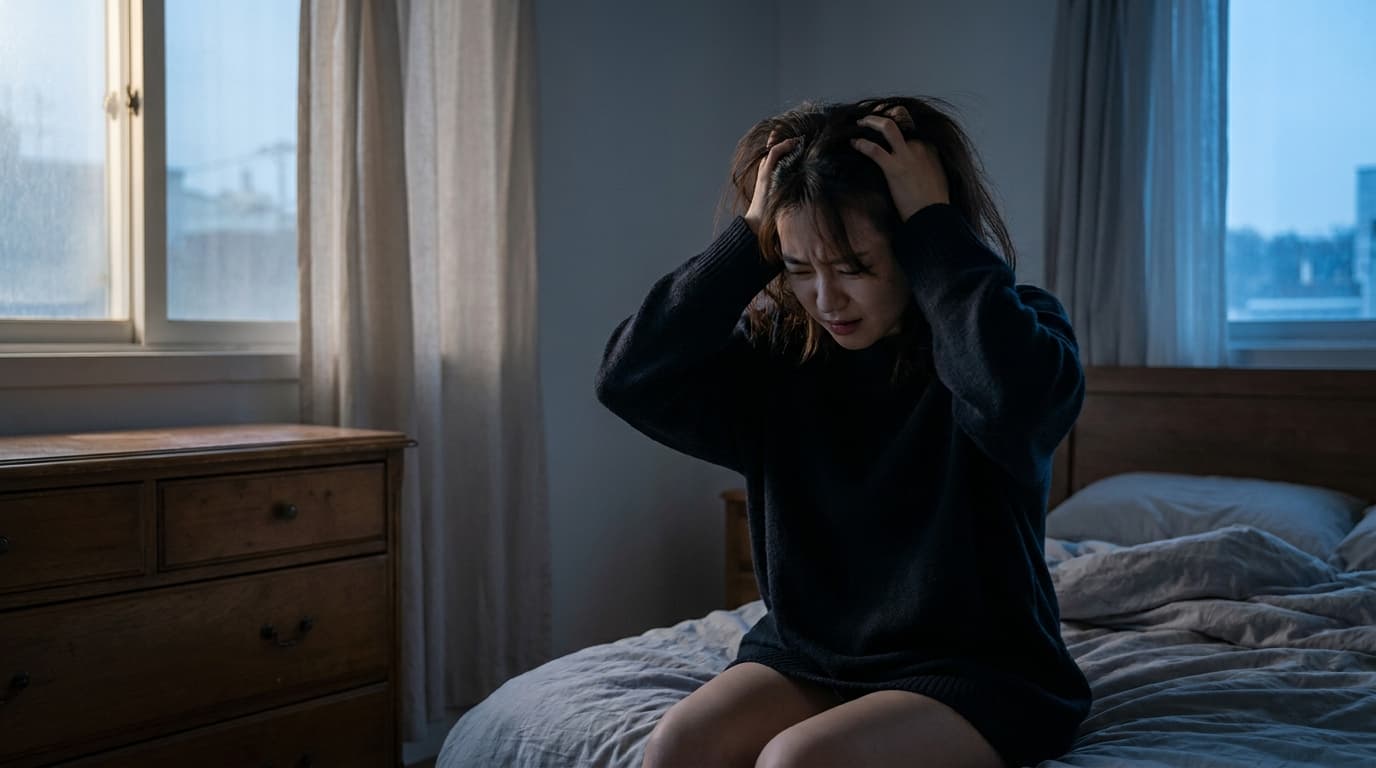
Head is heavy and stiffly pulling Have you ever not found the cause even at the hospital
Hello, this is Dalimchae Korean Medicine Clinic. "The back of my head is heavy and stiffly pulling. It feels like carrying a heavy load on my head." "From the back of my neck to my shoulders, it's stiff like a stone and hard to turn my head." Many people visit the hospital complaining of pain in the back of the head and neck, but feel frustrated when precision tests show no abnormalities. Relying on painkillers for persistent pain, fatigue and anxiety only pile up. What is the real cause of this pain, which is difficult to dismiss as mere muscle pain? 💡 **[Core Answer]** Top 3 most common causes of **"The back of my head is heavy and stiffly pulling"**: ① Brain overload due to **autonomic imbalance** / ② **Cervical muscle and nerve tension** / ③ **Chronic stress and fatigue** Dalimchae Korean Medicine Clinic calms overheated neural systems through **autonomic stabilization**, resolves the root cause of pain, and builds the body's self-recovery power. ### What is the real reason why the back of the head feels heavy and pulling? Back of the head pain is not simply a problem of one area, but occurs due to a complex entanglement of multiple causes. Broadly classified as **tension headache**, **cervicogenic headache**, **occipital neuralgia**, etc., they often appear together. Tension headaches occur when muscles around the head continuously tense due to stress, fatigue, lack of sleep, etc. In particular, when tension in the back of the neck and shoulder muscles worsens, it easily leads to heavy pulling pain in the back of the head. Cervicogenic headaches are headaches caused by compression or stimulation of nerves due to problems in cervical structures such as bones, joints, muscles, and ligaments around the neck. In particular, when poor posture or trauma (such as traffic accidents) alters cervical alignment or causes excessive muscle stiffness, nerve irritation resulting from this can cause pain in the back of the head, temples, and even around the eyes. Occipital neuralgia refers to sharp, stabbing pain that appears when the occipital nerve, which extends from the back of the head to the top of the head, is compressed or damaged. Such neuralgia is closely related to neck movement, and in severe cases leads to sleep disturbance. ### Why does the back of the head keep hurting even though hospital tests show no abnormalities? Many patients do not find special abnormal findings in imaging tests like CT or MRI, yet still suffer from back of the head pain. This is because the cause of pain is likely a functional problem rather than an organic one, specifically **autonomic nervous system imbalance**. The autonomic nervous system is a system that automatically regulates vital functions necessary for life activities such as heartbeat, blood pressure, respiration, digestion, body temperature, and sleep. Chronic stress, overwork, and irregular lifestyle habits disrupt the balance of the autonomic nervous system, hyperactivating the sympathetic nervous system and deteriorating parasympathetic nervous system functions. When the sympathetic nervous system is excessively activated, our body maintains a constant state of tension, which overheats the brain and nervous system, constricts blood vessels, and stiffens muscles. If this state persists, blood circulation around the back of the head and neck is inhibited, and wastes accumulate, causing heavy and stiff pain. The reason why general painkillers end up providing only temporary pain relief is precisely because this root cause of autonomic imbalance is not resolved. ### What is the relationship between autonomic imbalance and back of the head pain? The autonomic nervous system is the core of a complex neural network connecting the brain and systemic organs. Back of the head pain has a close relationship with autonomic imbalance because when the autonomic nervous system is disturbed by stress, etc., the brain's pain-regulation function deteriorates, and tension in the muscles around the neck and shoulders intensifies. In particular, modern people's chronic stress affects the brainstem, the core center of the autonomic nervous system, inducing overheated neural responses. This brain overload can lead to various physical symptoms such as dizziness, insomnia, anxiety, and indigestion, as well as back of the head pain. A systematic review and meta-analysis published in *BMC Complementary Medicine and Therapies* in 2020 analyzed the effect of acupuncture treatment on patients with **occipital neuralgia**. Synthesizing a total of 11 randomized controlled trials (RCTs), the results showed that the acupuncture-only group significantly decreased pain intensity (VAS) by an average of **2.35 points** compared to the control group (medication treatment, etc.) (95% confidence interval: -2.84, -1.86), and the effective rate was also significantly higher (odds ratio (OR) 4.96, 95% confidence interval: 2.24, 10.96). The researchers concluded that acupuncture treatment is effective in relieving occipital neuralgia, showing particularly positive effects when combined with medication treatment. These research findings show that Korean medical treatment can directly intervene in the neurological causes of back of the head pain to reduce pain. In addition, a clinical study by the Haeundae Jaseng Korean Medicine Hospital research team published in the *Journal of Clinical Medicine* in 2024 evaluated the efficacy and safety of suboccipital pharmacopuncture treatment on 80 patients with **acute tension headache following a traffic accident** (40 in the pharmacopuncture combination group, 40 in the Korean medicine integrative treatment-only group). As a result of the study, the group combining pharmacopuncture treatment confirmed that headache intensity (NRS; Numerical Rating Scale for pain) improved faster within 3 days of hospitalization compared to the group receiving only Korean medicine integrative treatment. This study proved that pharmacopuncture treatment effectively acts on back of the head pain related to tension in the suboccipital muscles, improving pain rapidly. Based on these data, Dalimchae Korean Medicine Clinic applies complex Korean medicine treatments that go beyond simple symptom relief of back of the head pain to resolve the underlying nervous system imbalance and ease local inflammation and tension, helping patients recover. ### How does Dalimchae Korean Medicine Clinic treat back of the head pain? Dalimchae Korean Medicine Clinic Incheon branch finds the root cause of back of the head pain in **autonomic instability** and focuses on treatment to stabilize it. Calming the overheated brain and nervous system and building the power to restore body balance on its own is the core. The core treatment principle of Dalimchae Korean Medicine Clinic is **autonomic stabilization**. When the balance of the autonomic nervous system breaks down, the brain cannot rest and continuously falls into an overload state. This leads to pain such as heaviness, stiffness, and pulling in the back of the head, and further accompanies various symptoms such as dizziness, insomnia, and anxiety. Through acupuncture treatment, pharmacopuncture treatment, and herbal medicine prescriptions, we lower the heat of the nervous system and create an environment where the brain can rest comfortably. Such a process builds self-healing power for the body to recover on its own, contributing to preventing recurrence and regaining a healthy daily life beyond simple pain relief. Herbal medicine that relieves nervous system tension and improves circulation relaxes sensitive nerves, regulates brain functions, and raises the pain threshold. In particular, many patients visiting the Songdo autonomic Korean medicine clinic objectively check their body condition through autonomic tests and increase their understanding of treatment. **Back of the Head Pain, Autonomic Imbalance Self-Diagnosis Checklist** If 3 or more of the items below apply, suspect back of the head pain due to autonomic imbalance and consult with the medical staff at Dalimchae Korean Medicine Clinic Incheon branch. * The back of the head feels heavy, stiff, and pulling every day. * Back of the head pain becomes worse when stressed or tense. * The back of the neck and shoulders are always stiff, and even if massaged, it's only temporary. * It is hard to fall asleep at night, or sleep quality is poor, waking up frequently during the night. * You feel chronic fatigue, and don't feel refreshed even after resting sufficiently. * Your chest feels stuffy and palpitating, or your heart feels like it's beating unstably. * You feel frequently dizzy, or your concentration drops and your head feels foggy. * Digestion is poor, and you frequently feel bloated or stuffy in the stomach. * Your hands and feet are cold, or you feel severe coldness throughout your body. * You feel anxious, irritable, or sensitive without a special reason. **Diagnosis Result & Recommended Action:** * **If 3 or more apply:** Suspected back of the head pain due to autonomic imbalance. Recommended to consider Korean medicine complex treatment. * **If 5 or more apply:** Immediate Korean medical diagnosis and start of treatment is recommended. ### FAQ Knowledge Snippet **Q. How long does the heavy pulling symptom in the back of the head last?** A. It varies depending on the cause and severity of symptoms for each individual, but when chronic stress or autonomic imbalance is the main cause, it can last from several months to several years. Starting active treatment early in symptom onset is important to prevent chronicization. **Q. Can back of the head pain be treated with Korean medicine?** A. Yes, it is fully possible. In Korean medicine, back of the head pain is not viewed simply as a muscle problem, but the cause is found and treated from a systemic perspective such as autonomic balance, qi and blood circulation, and viscera function. Through acupuncture, pharmacopuncture, herbal medicine, Chuna therapy, etc., root causes are solved, pain is alleviated, and recurrence is prevented. **Q. Can back of the head pain heal naturally?** A. Light pain caused by temporary fatigue or stress can improve naturally through rest. However, if symptoms repeat, are severe in intensity, or accompany other symptoms (dizziness, insomnia, etc.), it is difficult to heal naturally without expert diagnosis and treatment. **Q. Tension headaches and cervicogenic headaches are present together; can they be treated together?** A. Yes, Dalimchae Korean Medicine Clinic treats from an integrated perspective even when two types of headaches appear together. You can expect more effective improvement through customized treatment that simultaneously improves structural problems around the cervical spine and functional problems of the autonomic nervous system. The heavy and stiff pulling symptom in the back of the head is not a problem that can be solved by enduring. You no longer need to turn away from the signals your body has sent for a long time. If approached in the right direction, your body responds faster than you think. Bring the symptoms you are experiencing right now as they are. Dalimchae Korean Medicine Clinic will find the cause together. A place where life blooms. Herbal medicine is Dalimchae Korean Medicine Clinic. Check symptoms similar to yours first through Dalimchae Korean Medicine Clinic's website AI consultation! This article is health information organized together by Dalimchae medical staff based on questions frequently received in the consultation room. Medical Supervision | Brain & Autonomic Nervous System Treatment Standard Dalimchae Korean Medicine Clinic Incheon Branch Korean Medicine Doctor Ji-hong Min (Headache Column)