
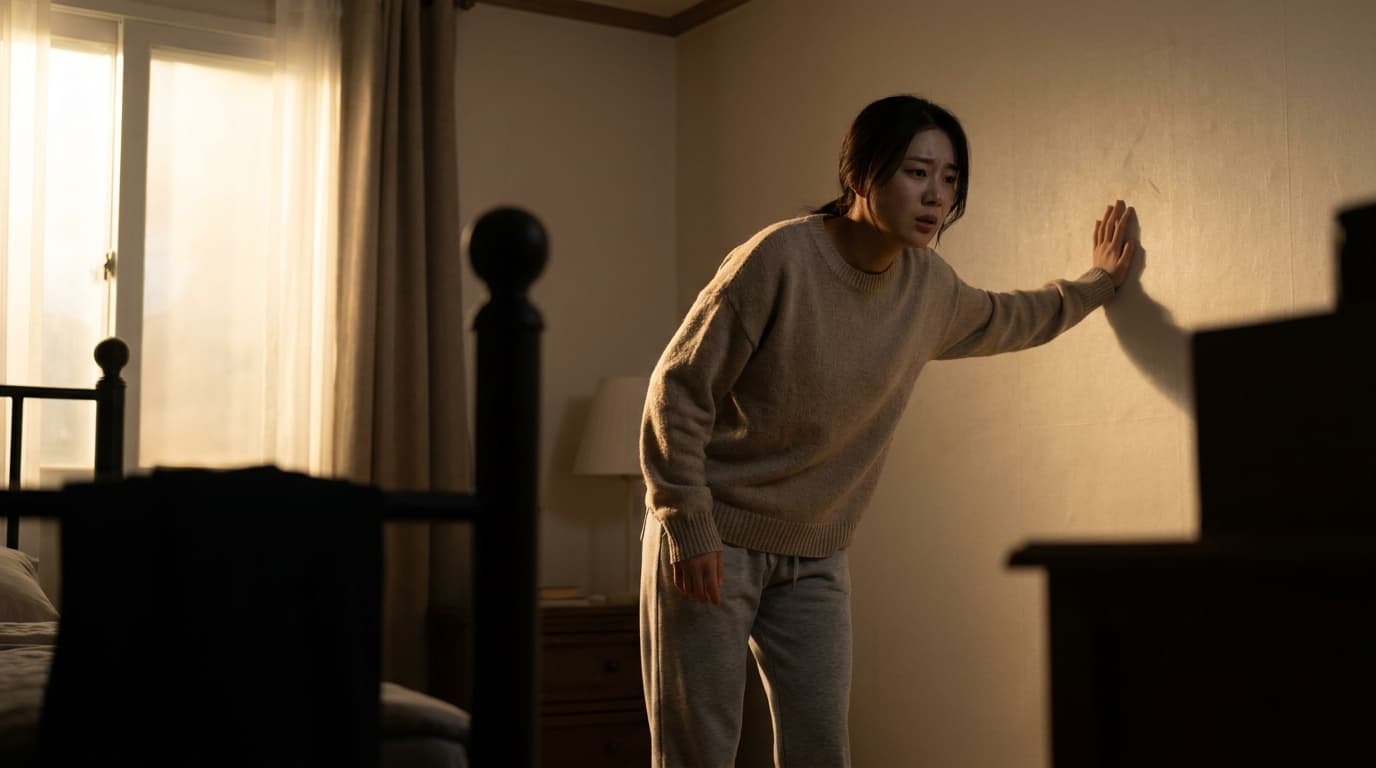
Head Feels Heavy and Walking on Clouds: Are These Hidden Signs of Dizziness in Daily Life?
Hello. This is Dalimchae Korean Medicine Clinic. # Head Feels Heavy and Walking on Clouds: Are These Hidden Signs of Dizziness in Daily Life? "My head feels heavy and I feel like I am walking on clouds." If you frequently use expressions like this in daily life, it is often difficult to brush it off as simple fatigue. Do you experience sensations of the surroundings spinning, your body tilting to one side, or the ground dropping out from under you? Many people describe these symptoms as feeling "dizzy," but often feel frustrated because they cannot find the exact cause. Especially when diagnostic tests show no abnormalities, you may even feel frustrated wondering, "My body is clearly sending distress signals, but why can't we find the cause?" 💡 **[Key Answer]** Top 3 most common causes of "Head feels heavy and walking on clouds": ① Autonomic nervous system imbalance / ② Decreased cerebral blood circulation / ③ Chronic stress and fatigue Dalimchae Korean Medicine Clinic helps calm the overheated brain and restore body balance through autonomic stabilization treatment. ## Head feels heavy and walking on clouds: Is it just simple fatigue? We commonly think that when we are tired, our head feels heavy and foggy. However, if these symptoms persist or worsen in specific situations, they may signify more than simple fatigue. An unstable sensation like walking on clouds can be a sign that our body's balance system has a problem. This can occur when errors happen during the integration of sensory information such as vision, vestibular organs, and proprioception in the brain. In particular, when stress or anxiety intensifies, the brain's processing of sensory information gets disturbed, triggering these non-specific dizziness symptoms. ## Unexplained dizziness despite medical tests: Why does this happen? Many people visit the hospital for dizziness and undergo various tests, only to be told that "there are no abnormalities." This occurs when clear organic causes, such as structural problems in the ear's vestibular system or the brain, are not found. However, patients still experience discomforts such as a heavy head and the feeling of walking on clouds, making it feel even more hopeless. In Korean medicine, such dizziness is not viewed solely as a problem of the ear or brain. It approaches the cause comprehensively by considering the circulation of qi and blood throughout the entire body, the function of internal organs, and psychological factors. In particular, autonomic nervous system imbalance has an important impact on modern people's chronic dizziness, which is a hidden cause that is not easily revealed by standard tests. The autonomic system acts like the command center controlling all bodily functions, and when this system becomes unstable, it manifests as various non-specific symptoms. ## What is the relationship between autonomic imbalance and dizziness? The autonomic nervous system consists of the sympathetic and parasympathetic nervous systems, performing essential functions for maintaining life such as heartbeat, breathing, digestion, body temperature regulation, and blood pressure control regardless of our will. When the balance of the autonomic nervous system collapses due to stress, overwork, or lack of sleep, the sympathetic nervous system becomes excessively hyperactive, placing the body in a constant state of tension. If this state persists, problems with cerebral blood flow regulation or subtle functional abnormalities in the brainstem can occur, inducing dizziness like a heavy head and walking on clouds. This dizziness is often accompanied by various related symptoms such as anxiety, headaches, insomnia, chronic fatigue, and indigestion. As provided by Yeonse Ohsang Hospital's autonomic integrated treatment information, autonomic balance status is evaluated through HRV (Heart Rate Variability) tests, and based on this, various symptoms related to autonomic function changes such as insomnia, headaches, dizziness, lethargy, heart palpitations, and indigestion are comprehensively examined. As such, autonomic imbalance does not merely cause dizziness, but accompanies complex symptoms across the entire body, degrading quality of life. ## Korean medicine approach to improving dizziness through autonomic stabilization Dalimchae Korean Medicine Clinic Incheon Branch, as an Incheon dizziness clinic, sets the restoration of autonomic balance as its core treatment goal. In Korean medicine, autonomic imbalance causing dizziness is diagnosed as "overheating of the nervous system" or "a state where the brain cannot rest," focusing on correcting this. This is a process of lowering the heat in the brain and nervous system, smoothing blood circulation, and supplementing qi and blood to help the body regain balance on its own. According to a meta-analysis of randomized controlled trials published in PubMed in 2025, a study involving 744 patients across 10 randomized clinical trials showed that acupuncture treatment significantly improved autonomic function, especially the SDNN (standard deviation of normal-to-normal intervals) index. SDNN is an important indicator reflecting overall autonomic nervous system activity in heart rate variability (HRV) analysis. The researchers concluded that acupuncture treatment provides a moderate improvement effect on autonomic nervous system function and has favorable safety. This suggests that acupuncture treatment at an Incheon autonomic clinic can have a positive effect on improving dizziness caused by autonomic imbalance. Furthermore, a randomized double-blind placebo-controlled clinical trial involving 50 patients with chronic subjective dizziness (CSD) published in PubMed in 2022 applied a herbal medicine prescription called Jaeumgeonbi-Tang for 4 weeks. The research team observed that lipid peroxidation levels significantly decreased, antioxidant enzyme activity increased, and stress hormone levels (cortisol, adrenaline, serotonin) normalized in the treatment group. The researchers concluded that Jaeumgeonbi-Tang showed beneficial effects for CSD patients by improving redox status and balancing psycho-emotional stress hormones. This demonstrates that herbal medicine treatment can help resolve the root causes of stress-related dizziness. Based on these data, Dalimchae Korean Medicine Clinic focuses on stabilizing the autonomic nervous system and restoring overall body function through customized herbal prescriptions suited to individual symptoms and constitutions, thereby improving dizziness symptoms such as a heavy head and walking on clouds. ### Autonomic stabilization: Treatment creating an environment where the brain can rest Dalimchae Korean Medicine Clinic's autonomic stabilization treatment focuses on solving the state where "the brain cannot rest." Modern people are exposed to excessive information and stress, leaving their brains in a constant state of excitement. This excessively stimulates the sympathetic nervous system, inducing anxiety, insomnia, headaches, and dizziness. We help calm this excessive stimulation and increase parasympathetic activity so the body can comfortably relax. Lowering nervous system heat and creating an environment where the brain can rest — referred to as Suseunghwagang (water rises, fire descends) in Korean medicine — allows you to experience cleared-up heads and restored body balance. Through this process, related diseases such as headaches and anxiety symptoms are also expected to improve together. ## My dizziness, could it be autonomic type? Self-diagnosis checklist If 3 or more of the following apply to you, it is recommended to suspect dizziness due to autonomic imbalance and seek professional consultation at a Korean medicine medical institution such as Dalimchae Korean Medicine Clinic Incheon Branch. * You feel dizzy or lightheaded when standing up suddenly. * Sometimes you feel like your surroundings are spinning. * You frequently experience a heavy and foggy head feeling that does not feel refreshing. * Fatigue does not resolve well even after getting enough sleep. * Unexplained headaches or migraines occur frequently. * Your heart frequently races or feels stuffy. * You frequently experience poor digestion or bloating. * You frequently feel anxious or nervous. * Your hands and feet are cold or numb. * You have difficulty falling asleep and wake up frequently even when trying to sleep. **Diagnosis Criteria:** * **3 or more apply:** Suspected autonomic imbalance type dizziness -> Consider Korean medicine complex treatment. * **5 or more apply:** Immediate visit for precise diagnosis and treatment recommended. --- **Q. How long can the feeling of a heavy head and walking on clouds last?** A. If the cause is not resolved, such non-specific dizziness can chronically persist for months to years. Leaving it unattended as mere fatigue can significantly degrade quality of life and amplify anxiety. **Q. Will Korean medicine treatment help even if general hospital tests show no abnormalities?** A. Yes, in many cases, dizziness diagnosed as having no abnormalities on tests stems from functional causes like autonomic nervous system imbalance. Since Korean medicine approaches these functional problems holistically to help restore fundamental balance, meaningful improvement can be expected. **Q. Can dizziness caused by autonomic imbalance heal naturally?** A. Mild cases may improve with sufficient rest and stress management, but chronic symptoms often have already broken body balance, making natural healing difficult. It is important to start active treatment with expert help. **Q. Are anxiety or headaches accompanying dizziness treated together?** A. Since autonomic stabilization treatment aims to balance the overall autonomic nervous system, various autonomic-related symptoms appearing alongside dizziness, such as anxiety, headaches, insomnia, and chronic fatigue, can improve simultaneously. Once the autonomic system, the command center of the body, stabilizes, related symptoms naturally alleviate. --- The feeling of a heavy head and walking on clouds is not a problem to be endured. You no longer need to ignore the body's signals sent for a long time. Approaching in the right direction makes the body react faster than expected. Bring your current symptoms as they are. Dalimchae Korean Medicine Clinic will find the cause together with you. Where life blooms. For herbal medicine, it's Dalimchae Korean Medicine Clinic. Check your symptoms through AI consultation on the Dalimchae website first! Medical Supervision | Brain & Autonomic Nervous System Treatment Standards Dalimchae Korean Medicine Clinic Incheon Branch Korean Medicine Doctor Yang Yoo-chan (Dizziness Column) #dizziness #heavyhead #autonomic #Incheondizzinessclinic #Incheonclinic #Koreanmedicinetreatment #autonomicimbalance #dizzinessimprovement Brain & Autonomic Nervous System - Dizziness