
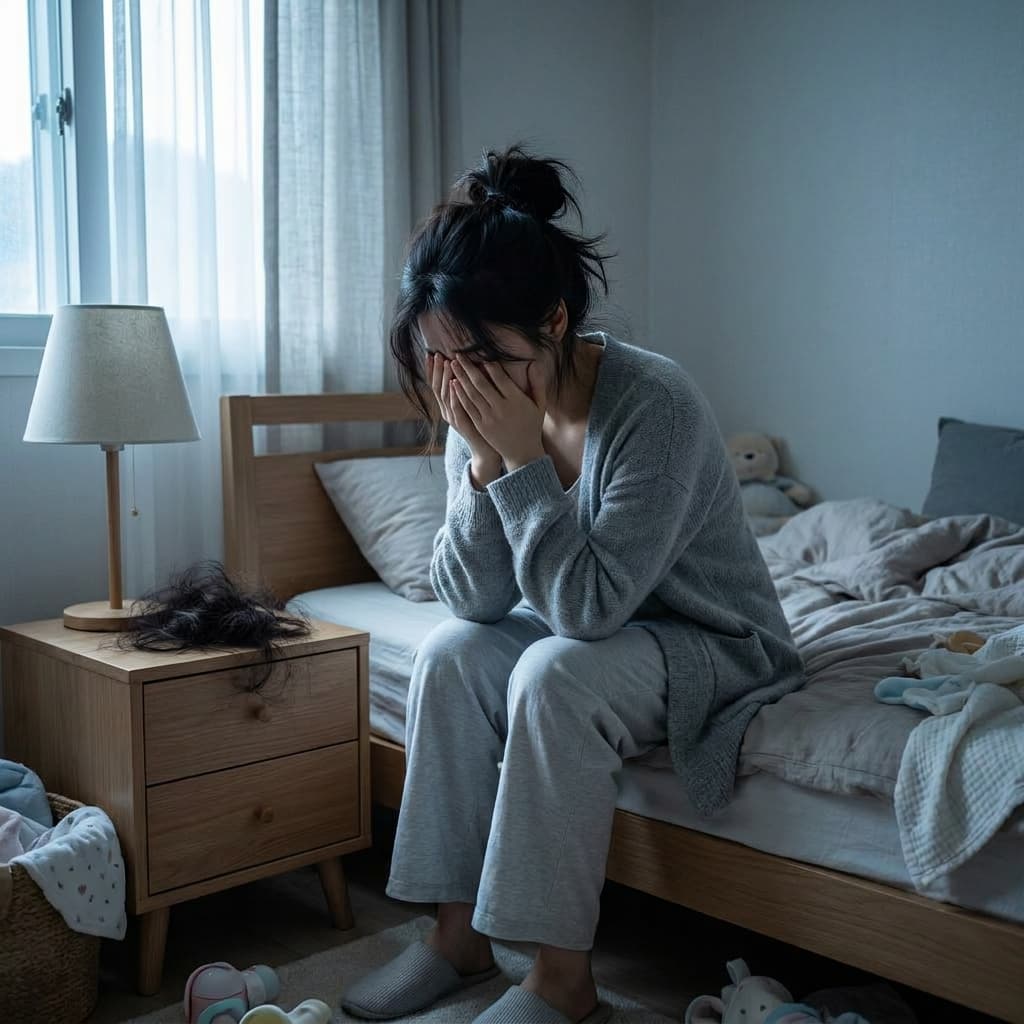
Hair falling out after giving birth? Postpartum hair loss, solve from the roots with Korean medicine!
Hello. This is Dalimchae Korean Medicine Clinic. # Hair falling out after giving birth? Postpartum hair loss, solve from the roots with Korean medicine! The joy of giving birth is short-lived, and many mothers fall into deep distress when they see a handful of hair falling out every time they look in the mirror. The cry "My hair is falling out too much after having a baby" goes beyond simple stress and can come as a serious problem that even threatens their confidence as a woman. Every time you see a clump of hair piled up in the drain after showering or a pillow full of hair, you will worry if you can regain your thick hair as before. 💡 **[Key Answer]** **3 most common causes of "hair falling out too much after having a baby":** ① Sudden hormonal changes / ② Consumption of Qi and Blood and nutritional imbalance due to childbirth / ③ Parenting stress and lack of sleep Dalimchae Clinic solves the fundamental cause of postpartum hair loss with **constitution improvement** that replenishes the mother's Qi and Blood lowered after childbirth and restores overall physical strength. ## Is hair loss after childbirth a natural phenomenon? Many people consider hair loss after childbirth as a 'natural phenomenon' and wait for time. In fact, during pregnancy, the growth phase of hair becomes abnormally long due to the influence of female hormones, so less hair falls out. However, after childbirth, as these hormone levels drop sharply, the hair that should have fallen out originally converts to the resting phase all at once and falls out in large quantities. This is called 'postpartum telogen effluvium'. However, the vague belief that "it will be okay as time passes" can rather cause you to miss the treatment period. According to a survey study published by Imoonwon Korean Medicine Clinic in the *Journal of Korean Oriental Medical Ophthalmology & Otolaryngology & Dermatology*, 60% of mothers who experienced postpartum hair loss responded that hair loss continued until 9 months to 1 year after childbirth. Furthermore, only 14% of mothers answered that they fully regained their previous hair volume, while 86% felt they could not recover. This suggests that postpartum hair loss is an 'area of treatment' that requires active management. ## Why does postpartum hair loss appear more severely for some mothers? Postpartum hair loss is not just a problem of hormonal changes. Going through the major process of childbirth, the mother's body experiences serious Qi and Blood consumption and nutritional imbalance. In addition, lack of sleep and stress caused by 24-hour parenting break the balance of the autonomic nervous system, which becomes the main cause of depleting the energy needed for hair growth. According to a study by Seo Hyun-deok et al. published in the *Korean Journal of Dermatology* in 2009, the prevalence of telogen effluvium after childbirth was found to be highly associated with multiparous mothers (mothers who gave birth several times), cesarean section delivery, significant weight gain during pregnancy, and high gestational age (p=0.026, p=0.014). This shows that the childbirth process and the mother's physical condition can affect the degree of postpartum hair loss. Eventually, postpartum hair loss is deeply connected to overall health conditions rather than a problem of the hair itself. ## How does Korean medicine treat postpartum hair loss? At Dalimchae Clinic, we approach postpartum hair loss from the perspective of restoring the entire body of the mother weakened after childbirth, rather than just a hair problem. In particular, we proceed with **constitution improvement** treatment with the goal of "making a body that doesn't just turn off symptoms, but doesn't turn them back on." According to a study published by Kim Kyung-han's research team in the *Journal of Korean Medicine Ophthalmology & Otolaryngology & Dermatology* in 2021, the Korean medicine approach for hair loss treatment includes herbal medicine, acupuncture, topical agents, pharmacopuncture, and light therapy. As a result of analyzing 1,464 patients in a total of 22 studies, Korean medicine treatment showed potential to improve the patient's condition. In particular, herbal medicines such as Gagam-cheongyeong-tang, Gagam-hwajung-hwan, and Yukmi-jihwang-tang/hwan were mainly used, and pharmacopuncture therapy using placenta and bee venom was also reported as an effective treatment method. In addition, a literature study on the current status of Korean medicine hair loss treatment in Korea published by Park So-jung's research team in the *Journal of Korean Oriental Medical Ophthalmology & Otolaryngology & Dermatology* in 2019 analyzed 369 cases of patients in 23 case report papers. As a result, partial or complete improvement was confirmed in 292 cases through various Korean medicine treatments including herbal medicine and acupuncture treatment. The average Korean medicine treatment period was found to be 144 days. This suggests that Korean medicine treatment can provide significant help in improving various hair loss symptoms, including postpartum hair loss, from a long-term perspective. At Dalimchae Clinic Incheon Branch, based on this data, we replenish the Qi and Blood that became insufficient after postpartum and strengthen immunity to create a body environment where hair can grow healthily again. The key is to help the hair roots become strong by regaining the balance of the autonomic nervous system, which has become unstable due to stress and lack of sleep. Beyond simply filling in the fallen hair, we help restore overall postpartum recovery so that you can enjoy a healthy life again. ## Postpartum hair loss, does it apply to me? Self-checklist Check if any of the following questions apply to you. * Is hair still falling out a lot even though 3-6 months have passed since childbirth? * Do you feel much more hair falling out than usual every time you wash your hair after showering? * Does the hair volume at the crown, bangs, or parting area seem noticeably reduced? * Are you breastfeeding or lacking a lot of sleep due to nighttime feeding, etc.? * Is parenting stress severe, and have you become anxious or sensitive? * Do you have no appetite after childbirth, or are you unable to eat properly? * Do you feel your hair has become thin and brittle without strength? * Are you experiencing other postpartum symptoms such as headache, dizziness, and numbness in hands and feet together? **Judgment Criteria:** * **3 or more apply:** It's good to suspect postpartum hair loss and review Korean medicine treatment for overall strength recovery and scalp management. * **5 or more apply:** Since the possibility of symptoms worsening is high, it is recommended to visit an Incheon postpartum hair loss clinic like Dalimchae Clinic Incheon Branch for accurate diagnosis and immediate treatment. ## FAQ: Questions about postpartum hair loss **Q. How long does postpartum hair loss last?** A. It is generally known to start from 3-6 months after childbirth and stop naturally between 6 months and 1 year. However, many mothers experience hair loss for more than a year or often fail to regain their previous hair volume even after recovery. **Q. Does breastfeeding affect postpartum hair loss?** A. It is difficult to see breastfeeding itself as a direct cause of hair loss. However, since more nutrients and energy are consumed from the mother's body during breastfeeding, hair loss can worsen if sufficient nutritional intake and rest are not provided. **Q. Is there any way to prevent or alleviate postpartum hair loss?** A. Sufficient rest and balanced nutritional intake after childbirth are most important. In particular, it is good to consume foods rich in protein, vitamins, and minerals, manage stress, and minimize scalp irritation. If you are considering Incheon hair loss treatment, get a consultation at Dalimchae Clinic Incheon Branch. **Q. I also have postpartum wind or postpartum depression, can they be treated together?** A. Yes, postpartum hair loss is often caused by overall imbalances after childbirth, such as postpartum wind and postpartum depression. Dalimchae Clinic helps improve not only postpartum hair loss but also other postpartum symptoms through constitution improvement treatment that regains the balance of the entire body. The symptom of hair falling out too much after having a baby is not a problem that can be solved by enduring. You no longer have to ignore the signals your body has been sending for a long time. If you approach in the right direction, the body responds faster than you think. Bring your symptoms exactly as they are. At Dalimchae Clinic, we will find the cause together. Where life blooms. For herbal medicine, it's Dalimchae Korean Medicine Clinic. Check your symptoms similar to mine through the AI consultation on the Dalimchae Clinic website first! This article is health information compiled by Dalimchae medical staff based on questions frequently received in the treatment room. Medical Supervision | Skin Symptom Treatment Standards Dalimchae Clinic Incheon Branch Korean Medicine Doctor Yang Yuchan (Hair Loss Column)