
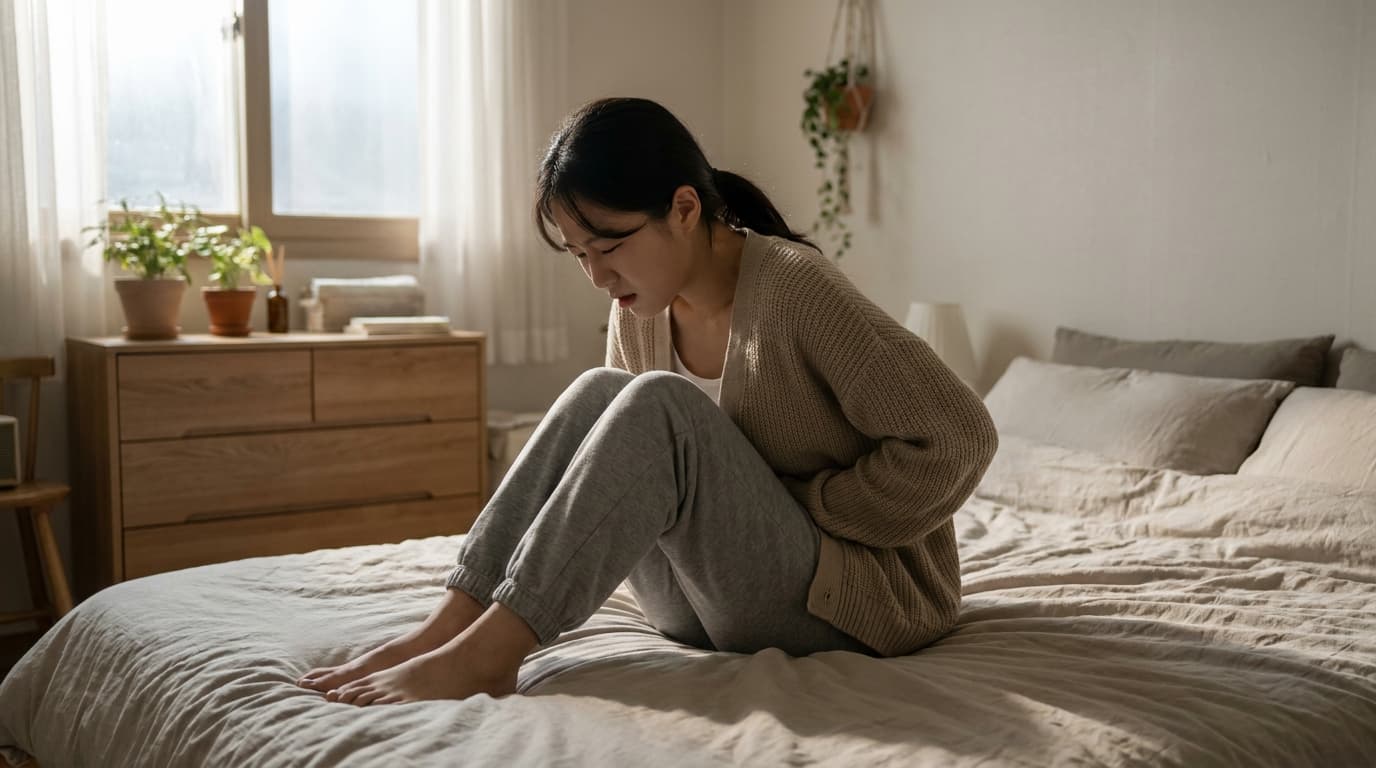
Frequently Bloated and Pained Abdomen? It Could Be a Sign of Irritable Bowel Syndrome Beyond Simple Indigestion.
Hello, this is Dalimchae Korean Medicine Clinic. # Frequently Bloated and Pained Abdomen? It Could Be a Sign of Irritable Bowel Syndrome Beyond Simple Indigestion. "My stomach gets bloated and hurts too often." "I always feel bloated and uncomfortable after meals." "I get anxious in important situations wondering if my stomach will suddenly make gurgling noises." Are you experiencing these symptoms? Have you dismissed the constant abdominal pain and discomfort simply as poor digestion, or scolded yourself for being too sensitive? Persistent pain and discomfort can significantly reduce your quality of life and even cause psychological distress. If discomfort persists even after medical exams show nothing unusual, you should suspect 'Irritable Bowel Syndrome (IBS)'. This can be a complex signal from your gut and brain that goes beyond simple indigestion. 💡 **[Core Answer]** Top 3 most common causes of **frequently bloated and pained abdomen**: ① **Gut-Brain Axis Imbalance**: When gut function becomes hypersensitive due to stress and autonomic nervous system abnormalities. ② **Gut Microbiota Imbalance**: When gut health deteriorates due to a decrease in beneficial bacteria and an increase in harmful bacteria. ③ **Increased Intestinal Permeability**: When gut barrier function weakens, intensifying toxin absorption and inflammatory responses. Dalimchae Korean Medicine Clinic improves the gut environment through **gut detoxification** and ensures smooth communication between the gut and brain to resolve the root cause of IBS. ## Why is your abdomen frequently bloated and pained? Is it simply because you are sensitive? IBS is a common chronic disease affecting about 10% of the global population, severely lowering quality of life due to recurring abdominal pain, diarrhea, constipation, and gas. Many people think their gut is unusually sensitive, but recent medical science views IBS not just as a gastrointestinal disease, but as a neural-based disease associated with abnormalities in the 'Gut-Brain Axis'. The gut and brain in our body are closely connected through the autonomic nervous system. When stress and fatigue repeat, the balance of the autonomic nervous system breaks down, directly affecting gut motility and sensory regulation. In particular, IBS patients often experience a persistent state of tension where the sympathetic nervous system is overly activated, leading to recurring hypersensitivity of the gut even to minor stimuli. ## IBS: Traditional Korean Medicine Treatment Can Regulate Gut Inflammation and the Gut-Brain Axis Since the causes of IBS are complex, treatments that simply suppress symptoms have limitations. In Korean medicine, gut health is understood not merely as a digestive function issue, but as a matter of systemic balance, aiming for fundamental treatment centered on the gut-brain interaction and improvement of the intestinal environment. According to a study published in **Minjok Medicine News in 2026**, a joint research team from the Korea Institute of Oriental Medicine and Kyung Hee University conducted a randomized double-blind placebo-controlled trial on 60 adult patients with diarrhea-predominant IBS (IBS-D). In this study, the patient group taking **Gwakjeongtang-gami**, a commonly prescribed herbal medicine for IBS in Korea, showed a treatment response rate more than 2 times higher than the placebo group. During the 4-week intake period, not a single drug-related side effect or adverse reaction occurred, suggesting it can be a safe treatment alternative for IBS patients needing gut recovery. In particular, this study scientifically proved overall symptom improvement effects, including decreased abdominal pain and normalized stool form. Additionally, in a study published in **Pharmaceuticals (an international journal) in May 2026 by Professor Go Seok-jae's research team in the Department of Korean Internal Medicine at Kyung Hee University Hospital**, it was confirmed that the traditional herbal prescription **Banhasasim-tang** can improve IBS symptoms by regulating inflammatory signaling pathways in the body. The research team combined network pharmacology analysis and animal experiments to reveal that Banhasasim-tang suppresses inflammatory responses and improves gut dysfunction and pain. Notably, in animal experiments, key IBS-related indicators such as decreased colon length, changes in stool status, and increased pain behavior significantly improved, and inflammatory cytokine levels also decreased. The researchers concluded that these results prove Banhasasim-tang can directly regulate the core cause of IBS—intestinal inflammatory responses—beyond temporary symptom relief. These research results show that herbal medicine treatment can be an effective alternative for regulating intestinal inflammatory responses in IBS and restoring the balance of the gut-brain axis. Dalimchae Korean Medicine Clinic Songdo Branch focuses on improving the intestinal environment and stabilizing hypersensitive guts through personalized Korean medicine treatments considering each patient's gut condition and constitution based on these scientific data. ## Dalimchae's Gut Detoxification Treatment Addresses Gut and Brain Together At Dalimchae Korean Medicine Clinic, IBS is viewed not just as a gut problem, but as stemming from an imbalance in gut-brain interaction, applying **gut detoxification** as a core principle. Gut detoxification starts from the perspective that toxins accumulated on the intestinal wall enter the blood to create systemic inflammation, which adversely affects not only gut function but also brain function, intensifying IBS. We focus on eliminating gut toxins, strengthening gut mucosal function, and healthily re-establishing the intestinal microbial environment. A healthy gut prevents the penetration of harmful substances to reduce inflammatory responses and helps intestinal microbes produce beneficial neurotransmitters. This facilitates smooth communication of the gut-brain axis, stabilizes hypersensitive gut sensations, and contributes to improving autonomic nervous system imbalances caused by stress. This gut detoxification treatment is also effective for other digestive diseases like indigestion (Damjeok) and reflux esophagitis, and helps enhance overall immunity. Dalimchae Korean Medicine Clinic Songdo Branch meticulously analyzes individual symptoms, constitutions, and lifestyle habits to establish a comprehensive treatment plan combining the most appropriate herbal medicine prescriptions, acupuncture, and moxibustion. ## IBS: Do You Fall Into This Category? Symptom Checklist If you check 3 or more of the following items, you should suspect IBS; if 5 or more, we recommend starting treatment immediately through professional consultation. If you are considering **Songdo IBS** treatment, consult at Dalimchae Korean Medicine Clinic Songdo Branch. **[IBS Self-Diagnosis Checklist]** 1. Recurring abdominal pain for at least 3 days a month over the past 3 months. 2. Abdominal pain tends to improve after defecation. 3. Abdominal pain occurs along with changes in bowel habits (diarrhea or constipation). 4. Frequently feel changes in stool form during bowel movements. 5. Frequently feel bloated in the abdomen and experience abdominal distension after meals. 6. A strong urge to go to the restroom accompanied by sudden abdominal pain. 7. Abdominal pain or diarrhea occurs more frequently when stressed. 8. Experiencing other discomforts such as chronic fatigue, headaches, and insomnia together. 9. Persistent abdominal discomfort despite no special abnormalities found in tests. 10. Symptoms tend to worsen when eating certain foods. * **3 or More Checked:** Suspected IBS stage. Gut-brain axis imbalance probability is high, so considering Korean medicine complex treatment is recommended. * **5 or More Checked:** Immediate visit for precise diagnosis and active Korean medicine treatment is necessary. Find the exact cause and seek improvement measures with professional medical staff at Dalimchae Korean Medicine Clinic. --- ### **Q. Can IBS be managed after treatment?** A. Although IBS is a chronic condition, symptoms can be sufficiently controlled and quality of life greatly improved through consistent treatment and lifestyle habit improvements. Fundamental Korean medicine treatment that addresses root causes helps prevent symptom recurrence and normalizes gut function. ### **Q. What foods should be avoided when the abdomen is frequently bloated and pained?** A. While there are individual differences, generally high-FODMAP foods (onions, garlic, legumes, certain fruits, etc.), dairy products, wheat foods, artificial sweeteners, and carbonated beverages can induce gas or irritate the gut and are best avoided. Finding a diet that suits you is important. ### **Q. How does the Korean medicine clinic diagnose and treat IBS?** A. At Dalimchae Korean Medicine Clinic, we understand patient symptoms, lifestyle habits, and stress levels through consultation, and diagnose gut and autonomic nervous system states through pulse and abdominal examinations. Afterward, we conduct treatments to improve the intestinal environment and recover gut-brain axis balance through personalized herbal medicine prescriptions, acupuncture, and moxibustion. ### **Q. Does stress really affect IBS?** A. Yes, the gut and brain are closely connected via the 'gut-brain axis', making stress a major factor exacerbating IBS symptoms. When autonomic nervous system balance is broken due to stress, gut motility disorders, intestinal microbiota imbalances, and visceral hypersensitivity can be induced. --- Abdominal bloating and pain cannot be solved by simply enduring. You no longer need to ignore the signals your body has been sending for a long time. Approaching in the right direction makes the body react faster than you think. Bring the symptoms you are experiencing just as they are. Dalimchae Korean Medicine Clinic will find the cause together with you. A place where life blossoms. Herbal medicine is Dalimchae Korean Medicine Clinic. Check symptoms similar to yours first with Dalimchae Korean Medicine Clinic website AI consultation! This article is health information organized together by Dalimchae medical staff based on questions frequently received in the treatment room. Medical Supervision | Gut & Digestive Treatment Standard, Dalimchae Korean Medicine Clinic Songdo Branch, Korean Medicine Doctor Oh Hyun-min (Abdominal Symptom Column)