
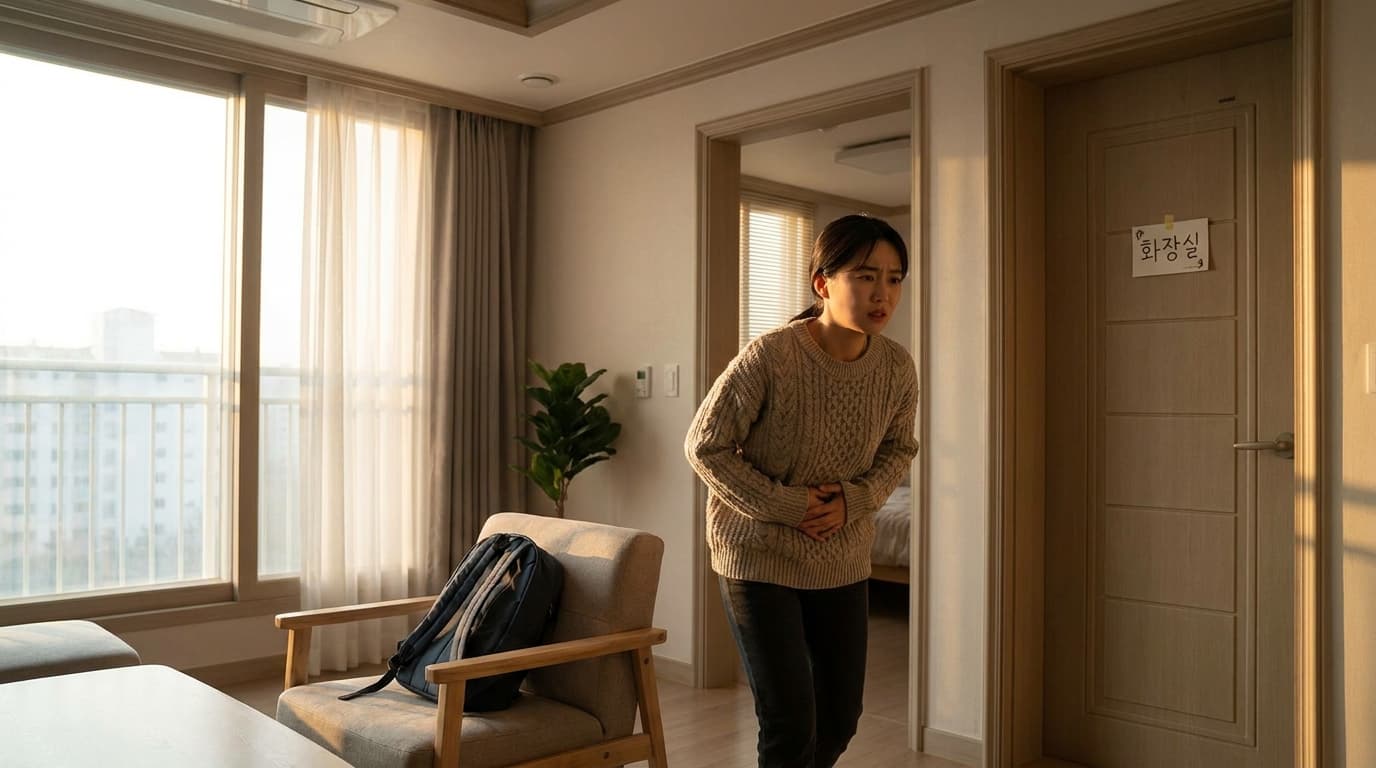
Frequent Abdominal Pain and Diarrhea Is It Simple Enteritis or Irritable Bowel Syndrome
Hello, this is Dalimchae Korean Medicine Clinic. # Frequent Abdominal Pain and Diarrhea? Is It Simple Enteritis or Irritable Bowel Syndrome? When sudden abdominal pain and diarrhea start, many people brush it off thinking, 'Is it enteritis?' However, if these symptoms do not end in a day or two and repeat chronically, it is difficult to dismiss them as simple enteritis. Especially if you are struggling with daily life due to recurring abdominal pain and bowel problems, wondering "Am I confused between simple enteritis and irritable bowel," you need to suspect whether the symptoms you are experiencing are 'Irritable Bowel Syndrome' (IBS), a functional bowel disorder. 💡 **Core Answer** **The 3 most common causes of frequent abdominal pain and diarrhea:** ① Acute enteritis / ② Irritable bowel syndrome / ③ Stress and autonomic imbalance Dalimchae Korean Medicine Clinic helps achieve fundamental gut recovery through **gut detoxification** via gut environment and autonomic regulation. ## What is the Difference Between Simple Enteritis and Irritable Bowel Syndrome? While abdominal pain and diarrhea appear in both enteritis and irritable bowel syndrome, their causes and courses have clear differences. Simple enteritis is an acute inflammatory reaction caused by bacterial or viral infection, accompanied by fever and vomiting, usually improving within a few days. On the other hand, irritable bowel syndrome is a functional bowel disorder where chronic abdominal pain and bowel habit changes repeat even though no special inflammation or structural abnormality is found in the gut. Symptoms tend to worsen when experiencing stress or consuming specific foods. The core difference is the 'cause'. Enteritis is acute inflammation due to external invasion, while irritable bowel syndrome involves complex interwoven causes including gut motility abnormalities, visceral hypersensitivity, Gut-Brain Axis interaction abnormalities, gut microbiome imbalance, and psychological factors. ## Why Do Doctors Say There Is No Problem in the Gut for Irritable Bowel Syndrome? Many irritable bowel syndrome patients feel frustrated after receiving diagnoses of "no abnormality found" in endoscopies or other tests. This is because IBS stems mostly from 'functional abnormalities' rather than physical gut damage. Recent studies highlight 'low-grade inflammatory response' as a major cause, confirmed by increased immune cell activation and inflammatory cytokine secretion in the gut mucosa of IBS patients. This inflammation is at a microscopic level undetectable by standard endoscopies, thus appearing 'normal' in tests. Furthermore, IBS is closely linked with 'gut-brain axis' imbalance where the gut and brain exchange signals. Psychological factors like stress and anxiety directly affect gut motility and pain sensitivity, inducing or worsening abdominal pain, diarrhea, and constipation. Therefore, rather than looking solely at surface gut problems, examining the balance of the autonomic nervous system connecting gut and brain is crucial. Songdo Irritable Bowel Korean Medicine Clinic diagnoses and treats considering these complex causes. ## How Does Korean Medicine Treat Irritable Bowel Syndrome? At Dalimchae Korean Medicine Clinic Songdo branch, IBS treatment focuses not merely on suppressing symptoms, but on improving the root causes: gut environment imbalance and gut-brain axis abnormality. Particularly, 'gut detoxification' aims to remove toxins accumulated in gut walls and normalize gut functions. Gut detoxification breaks the vicious cycle where toxins in gut walls travel through blood to cause systemic inflammation and impair gut function. It helps restore gut microbiome balance and enhance gut mucosal regenerative power to achieve a healthy gut. **A multi-center clinical study by Xiyuan Hospital affiliated with the China Academy of Chinese Medical Sciences, cited by the Association of Korean Medicine in 2016**, supports herbal treatment efficacy for IBS. In this study, 216 IBS patients diagnosed per ROME III criteria were administered an improved Tongsai formula, 'Jian'an No. 1 prescription', for 8 weeks and followed up for 8 weeks. Results showed the herbal group had significantly improved IBS Symptom Severity Scores (IBS-SSS) compared to the placebo group: average 113.62 points lower at week 8, and 116.55 points at week 16, versus placebo group's 166.35 and 176.90 points. This demonstrates herbal treatment is effective in improving abdominal pain and bowel problems in IBS. Recently, **in 2026, research team led by Professor Seok-jae Koh of Department of Korean Internal Medicine at Kyung Hee University Hospital at Gangdong announced via Health Chosun that the herbal medicine 'Banhasasim-tang' modulates gut inflammatory responses**, a core cause of IBS. Combining network pharmacology analysis and animal experiments, Banhasasim-tang acted on body inflammatory signaling pathways to suppress inflammation and improve gut dysfunction and pain. Researchers evaluated that these results open possibilities for fundamental treatment approaches addressing disease pathogenesis beyond symptom relief. Based on these data, Dalimchae Korean Medicine Clinic provides gut detoxification treatment to fundamentally treat IBS by regulating gut inflammation and restoring gut-brain axis balance. ## Could You Also Have Irritable Bowel Syndrome? Self-Diagnosis Checklist If 3 or more of the following items apply, you can suspect IBS. If 5 or more apply, visiting Songdo Dalimchae Korean Medicine Clinic for accurate diagnosis and consultation is recommended. * Have you experienced abdominal pain or discomfort at least 3 days a month over the past 3 months? * Does abdominal pain or discomfort tend to ease after bowel movements? * Have your bowel movement frequencies changed more frequently or rarely than usual? * Do stool forms (loose stools, hard stools, sticky stools, etc.) change frequently? * Do you frequently experience sudden diarrhea after meals or immediately upon waking in the morning? * Do you frequently feel incomplete evacuation even after a bowel movement? * Do stress or tension make your stomach hurt more and worsen diarrhea? * Do abdominal bloating, burping, gas, and a feeling of gas in the stomach occur frequently? * Are gastrointestinal symptoms accompanied by headaches, menstrual irregularities, urination disorders, anxiety, or depression? **3-4 items apply:** IBS suspicion stage - lifestyle improvements and herbal combination treatment recommended. **5+ items apply:** IBS progression stage - immediate visit for precise diagnosis and treatment recommended. ## FAQ: Frequently Asked Questions About Irritable Bowel Syndrome **Q. How long does IBS treatment take?** A. IBS is a chronic condition; treatment duration varies by symptom severity, cause, and treatment response. Consistent management and treatment are important to control symptoms and improve quality of life. **Q. Can IBS be treated with Korean medicine?** A. Yes, IBS falls under categories of abdominal pain, diarrhea, and constipation in Korean medicine, and can be effectively treated through constitution- and symptom-tailored herbal medicine and acupuncture to improve gut function and calm the autonomic nervous system. Songdo IBS Korean Medicine Clinic conducts customized treatments considering gut-brain axis imbalance and gut microbiome environments. **Q. Can IBS heal naturally?** A. While IBS can sometimes improve on its own, it has a strong tendency to recur chronically and worsen with stress or diet. Leaving it unaddressed can lead to reduced quality of life and psychological problems like depression, making active treatment and management necessary. **Q. Indigestion and IBS appear together; can they be treated together?** A. Yes, indigestion and IBS often appear together, worsening simultaneously especially when stress or autonomic imbalance is the cause. Dalimchae Korean Medicine Clinic improves overall gastrointestinal function and stabilizes the gut-brain axis through gut detoxification treatment to treat both conditions concurrently. ## Unending Discomfort, Now Is the Time to Break Free Frequent abdominal pain and recurring diarrhea are not problems solved by endurance. You no longer need to ignore the signals your body has sent for a long time. Approaching in the right direction makes your body respond faster than expected. Bring the symptoms you are experiencing right now as they are. Dalimchae Korean Medicine Clinic will find the cause together. Where life blossoms. Herbal medicine is Dalimchae Korean Medicine Clinic. Check your similar symptoms first via Dalimchae Korean Medicine Clinic website AI consultation! This article is health information compiled together by Dalimchae medical staff based on questions frequently received in the consultation room. Medical Supervision | Digestive Treatment Standard Dalimchae Korean Medicine Clinic Songdo Branch Korean Medicine Doctor Oh Hyunmin (Digestive Column) #IBS #Enteritis #GutDetox #SongdoIBSClinic #GutBrainAxis #Indigestion #ChronicDiarrhea #IncheonClinic Gut - Indigestion (Damjeok)