
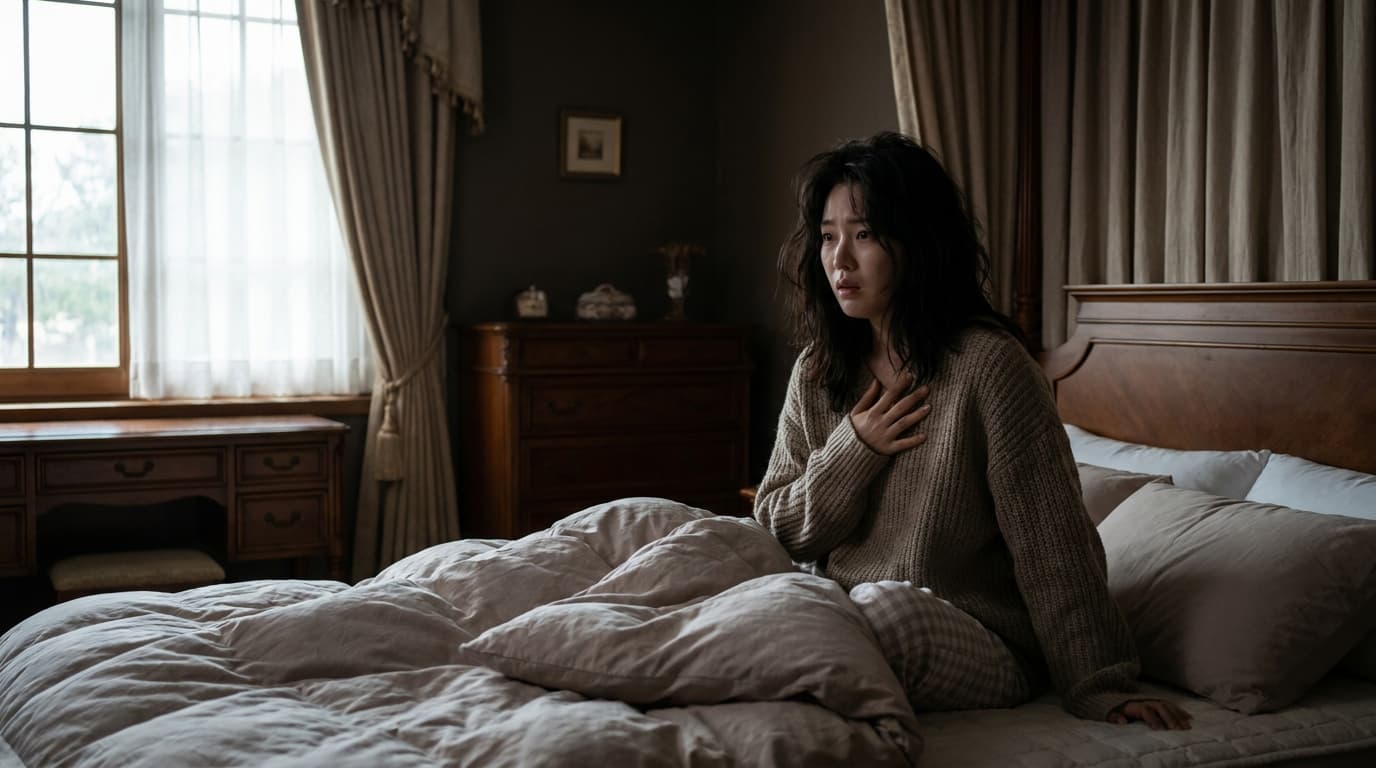
Feeling Your Heart Race When Stressed Why You Should Not Ignore It
Hello, this is Dalimchae Korean Medicine Clinic. # Feeling Your Heart Race When Stressed? Why You Should Not Ignore It Have you ever felt your heart pounding wildly before an important presentation or when stuck in heavy traffic? Many office workers complain of symptoms such as "my heart races when I am stressed" or "my chest feels tight." These symptoms are easy to brush off, but they can be important warning signs from our bodies. In particular, heart palpitations related to stress are not simply a matter of mood; they can be a representative symptom of autonomic nervous system imbalance. 💡 **Core Answer** Top 3 most common causes of the **"my heart races when stressed"** symptom: ① Autonomic nervous system hyperactivity due to excessive stress / ② Autonomic nervous system imbalance / ③ Anxiety and panic disorder Dalimchae Korean Medicine Clinic helps your heart regain a comfortable and stable state by calming the overheated autonomic nervous system through **autonomic stabilization treatment**. ## Why Does Your Heart Race When You Are Stressed? A Warning Sign from the Autonomic Nervous System When our body experiences stress, neural tissue structures such as the hypothalamus and limbic system in the brain react, activating the autonomic nervous system. The autonomic nervous system is a system that regulates vital functions necessary for life maintenance, such as heartbeat, breathing, and digestion, regardless of our willpower. Composed of the sympathetic and parasympathetic nervous systems, they operate in balance like a seesaw. The sympathetic nervous system acts to tense and arouse the body to cope with danger. When stressed, sympathetic hyperactivity increases the secretion of hormones such as adrenaline and noradrenaline, accelerating heartbeat and constricting blood vessels. While this is temporarily necessary to deal with threats, when this state becomes chronic, the balance of the autonomic nervous system collapses, manifesting as various physical symptoms. In particular, heart palpitations, or palpitation, are a common symptom of autonomic imbalance. ## How Does Korean Medicine Help with Stress-Induced Palpitations? Modern Korean medicine views heart palpitations caused by stress as a form of autonomic imbalance, focusing on restoring the balance of the autonomic nervous system rather than simply suppressing symptoms. It is important to calm the excessively hyperactive sympathetic nervous system, restore the lowered function of the parasympathetic nervous system, and help the body regain self-regulation ability. A study led by Myung-Soo Lee published in the 2004 journal *Human Psychopharmacology* evaluated the efficacy of herbal medicine (Ondam-tang-gamibang) in 40 medical students experiencing exam stress (20 in the herbal medicine group, 20 in the placebo group). The results showed that systolic blood pressure, plasma norepinephrine, and cortisol levels significantly decreased in the herbal medicine group, and positive changes were observed in psychological variables such as anxiety, depression, stress, and emotional state. The researchers concluded that these results suggest herbal medicine treatment can contribute to lowering blood pressure and catecholamine levels by stabilizing the sympathetic nervous system. Furthermore, a systematic review and meta-analysis study by Jae-Yoon Ahn, Hong-Min Joo, Jung-Tae Lee, and Jong-Min Yoon published in the *Medicine (Baltimore)* journal in 2022 evaluated the effectiveness and safety of Korean medicine treatment for various cardiac arrhythmia conditions. Analyzing a total of 82 randomized controlled trials, Korean medicine treatment showed a significantly higher total effective rate across various arrhythmia conditions, including unspecified arrhythmias, premature ventricular contractions, sinus bradycardia, tachycardia, and atrial fibrillation (e.g., risk ratio 1.23, 95% confidence interval: 1.15–1.32 for tachycardia). The researchers stated that Korean medicine treatment, alone or in combination with Western medicine, is effective for cardiac arrhythmia conditions, and no serious adverse reactions were observed. These studies support that the autonomic stabilization treatment pursued by Dalimchae Korean Medicine Clinic has a scientific basis in regulating the uncomfortable signals sent by the heart. ## How Is Dalimchae Korean Medicine Clinic's Autonomic Stabilization Treatment Conducted? At the Songdo branch of Dalimchae Korean Medicine Clinic, **autonomic stabilization** is adopted as the core treatment principle, focusing on calming the autonomic nervous system overheated by stress. Stress and overwork disrupt the balance of the autonomic nervous system, leaving the brain in a state of constant overload without rest. This is like a car engine overheating and failing to perform at its best—our body's warning light turns on. In Korean medicine, this autonomic imbalance is diagnosed as "mind-spirit restlessness" or "liver qi stagnation," and treatments are conducted to promote smooth circulation of Qi and blood and peace of mind. Lowering the heat of the nervous system and creating an environment where the brain can comfortably rest—known in Korean medicine as **Susunghwakang (Water Up, Fire Down)**—is crucial. We help restore autonomic balance by lowering the hot energy concentrated in the upper body and warming the lower body, improving systemic circulation. Through this, we can expect to calm excessive heart palpitations and simultaneously improve accompanying symptoms such as anxiety, insomnia, and dizziness. Many visitors to the Songdo autonomic nervous medicine clinic complain of these complex symptoms. Dalimchae Korean Medicine Clinic helps restore the harmonious function of the autonomic nervous system through customized treatments such as herbal medicine, acupuncture, moxibustion, and pharmacopuncture tailored to each individual's constitution and symptom severity. ## Could It Be Autonomic Imbalance? Symptom Checklist Check how many of the following items apply to you: * Frequent heart palpitations and a feeling of tightness in the chest. * Feeling anxious or jittery for no apparent reason. * Difficulty falling asleep or waking up frequently at night. * Easily fatigued and unrefreshed even after resting. * Frequent headaches or dizziness. * Indigestion or bloating. * Cold or numb hands and feet. * Frequent stiffness and tension in the neck or shoulders. * Excessive sweating or experiencing cold sweats. * Difficulty regulating body temperature and feeling flushed in the face. **Judgment Criteria:** * **3 or more items apply:** Autonomic imbalance is suspected. Begin management for mental stability and consider expert consultation if necessary. * **5 or more items apply:** Autonomic imbalance is likely progressing. We recommend visiting a professional medical institution such as a Songdo Korean medicine clinic for accurate diagnosis and comprehensive Korean medicine treatment. ## Frequently Asked Questions (FAQ) **Q. Can the symptom of your heart racing when stressed heal naturally?** A. Heart palpitations caused by temporary stress can naturally improve once the cause disappears. However, if symptoms recur or affect daily life, autonomic imbalance may deepen, requiring active treatment and management. **Q. I have both heart palpitations and anxiety symptoms. Can they be treated together?** A. Yes, heart palpitations and anxiety symptoms are representative symptoms of autonomic imbalance and are closely related. At Dalimchae Korean Medicine Clinic, our goal is to simultaneously improve both symptoms through treatments that restore autonomic balance. **Q. Is it okay to combine Korean medicine treatment with Western medicine?** A. Yes, in most cases, Korean medicine treatment can be combined with Western medicine to produce synergistic effects. However, considering potential interactions with specific drugs, it is important to consult with medical staff to establish a medication plan. **Q. What tests are conducted at the Songdo heart palpitation Korean medicine clinic?** A. At Dalimchae Korean Medicine Clinic, beyond listening to symptoms and medical history, we objectively evaluate the activity and balance state of the autonomic nervous system through Heart Rate Variability (HRV) testing. Based on this, we establish a personalized treatment plan. Stress-induced heart palpitations cannot be resolved by simply enduring them. You no longer need to ignore the signals your body has been sending for a long time. When approached in the right direction, the body responds faster than you think. Bring your current symptoms just as they are. Dalimchae Korean Medicine Clinic will find the cause together with you. A place where life blooms. Herbal medicine is, after all, Dalimchae Korean Medicine Clinic. Check similar symptoms first through Dalimchae Korean Medicine Clinic's website AI consultation! This health information was organized together by the Dalimchae medical team based on questions frequently received in the treatment room. Medical Supervision | Brain & Autonomic Nervous System Treatment Standards, Dalimchae Korean Medicine Clinic Songdo Branch, Korean Medicine Doctor Oh Hyun-min (Column on Autonomic Imbalance)