
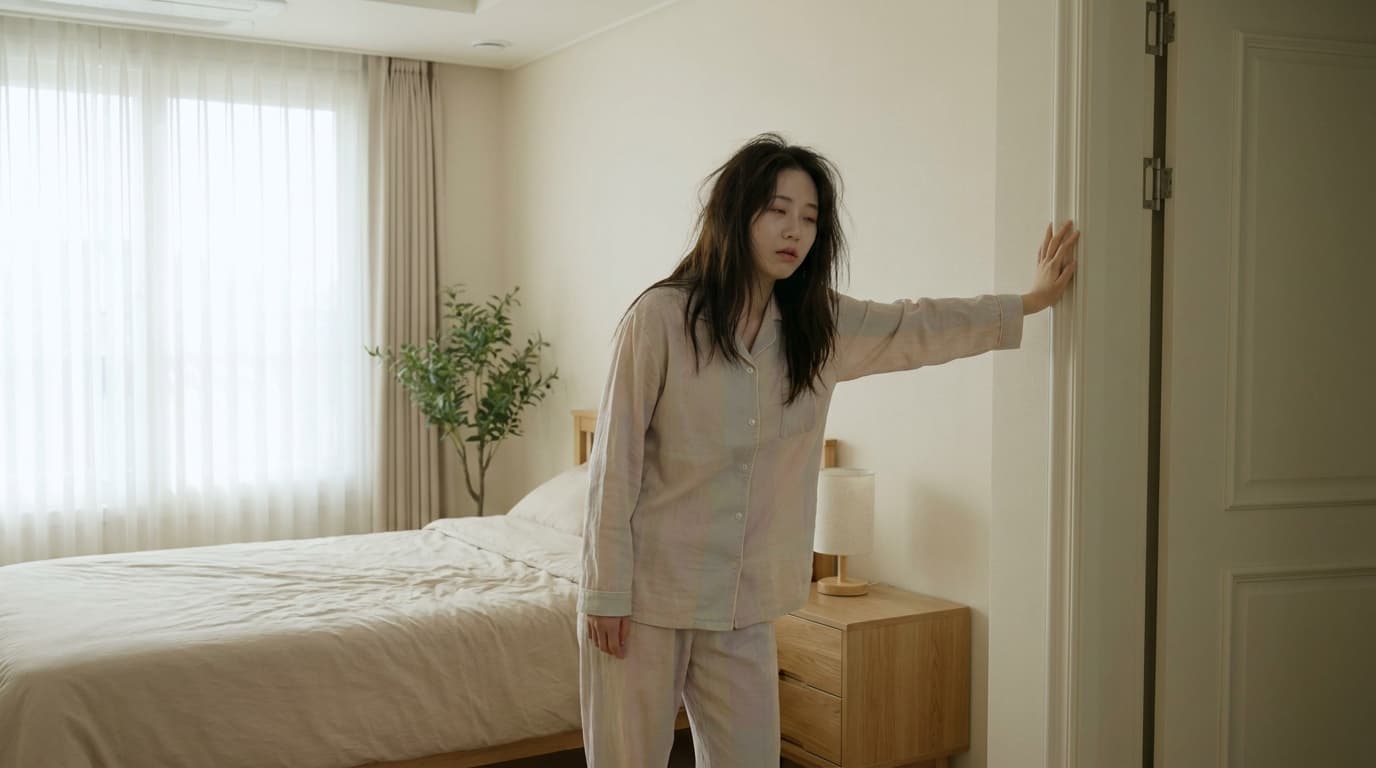
Feeling Weak All Over and Dizzy Is It Simple Anemia A Danger Signal Sent by the Autonomic Nervous System
Hello, this is Dalimchae Korean Medicine Clinic. # Feeling Weak All Over and Dizzy Is It Simple Anemia A Danger Signal Sent by the Autonomic Nervous System Have you ever experienced a sudden loss of strength throughout your body accompanied by blacking out, a floating sensation, or the world spinning around you? Many people dismiss these symptoms as simple anemia or fatigue. However, if they persist without improvement despite adequate rest, it may be a danger signal sent by our body's crucial balance system—the autonomic nervous system. In particular, dizziness is a representative symptom of autonomic imbalance commonly seen in modern people suffering from stress and overwork. 💡 **Core Answer** Top 3 most common causes of feeling weak all over and dizzy: ① Excessive stress and chronic fatigue / ② Autonomic nervous system imbalance / ③ Reduced cerebral blood flow circulation Dalimchae Korean Medicine Clinic calms overheated nervous systems through autonomic stabilization treatment and restores our body's balance to resolve the root cause of dizziness. ## Why Do Weakness and Dizziness Repeat? Dizziness can occur due to various causes, but if symptoms continue without any specific organic disease, autonomic imbalance can be suspected. The autonomic nervous system regulates all unconscious functions of our body. It is responsible for essential life-sustaining functions such as heartbeat, blood pressure, digestion, respiration, and body temperature regulation, maintaining body homeostasis through the balance of sympathetic and parasympathetic nerves. However, when autonomic balance breaks down due to excessive stress, irregular lifestyle habits, or chronic fatigue, it malfunctions—much like a car's brakes and accelerator being pressed simultaneously or only one operating excessively. At this time, problems occur in regulating blood flow to the brain, or functional abnormalities develop in equilibrium-controlling areas like the brainstem, easily causing dizziness—especially orthostatic dizziness or vertigo (spinning sensation). Furthermore, weakness throughout the body and lethargy can accompany this. ## Dizziness Must Be Addressed at Its Root, Beyond Simple Symptom Treatment Most dizziness is treated by finding specific causes such as BPPV or Meniere's disease, but many people suffer from chronic dizziness with no abnormalities found on tests. In such cases, approach with autonomic dysfunction in mind. In Korean medicine, dizziness is viewed as vertigo (Hyeon-un), encompassing blurred vision and spinning feelings, arising from various organ imbalances such as liver dysfunction, qi-blood deficiency, phlegm, and blood stasis. From this perspective, Dalimchae Korean Medicine Clinic focuses on resolving autonomic imbalance—the root cause of dizziness—to prevent recurrence and foster the body's self-healing power. ## Improvement Cases of Dizziness Through Korean Medicine Clinical Research Korean medical approaches to dizziness have had their effectiveness reported through various clinical cases. In January 2026, a clinical case study was published regarding a 63-year-old female suffering from persistent dizziness due to Ramsay Hunt syndrome who underwent 18 days of Sa-am acupuncture, vestibular rehabilitation, and herbal medicine combination treatment. After treatment, her Numerical Rating Scale (NRS) score for symptom severity improved significantly from 8 to 1. Dizziness Handicap Inventory (DHI) scores assessing daily living disability and quality of life indicators also showed meaningful improvement. Researchers suggested such integrated Korean medical treatment has potential usefulness in managing dizziness caused by vestibular dysfunction. Additionally, in another clinical study reported in July 2026, patients with benign paroxysmal positional vertigo (BPPV) accompanied by qi deficiency symptoms (lack of energy) were treated with herbal formulas like Bojungikgitang combined with Chuna therapy. The dizziness NRS score decreased from 8 at admission to 1 at discharge, and DHI scores markedly improved from 64 (severe handicap) to 10 (slight handicap). This study demonstrates that Korean integrated treatment can be effective in alleviating qi deficiency symptoms and dizziness associated with BPPV, emphasizing the need for future research. Even considering these are individual case reports, such clinical data serve as important evidence that Dalimchae Korean Medicine Clinic's treatment approach—restoring autonomic stabilization and body balance—substantially improves patients' quality of life. Particularly for those visiting Incheon dizziness Korean medicine clinics seeking help for unexplained dizziness that persists despite normal test results, Dalimchae Korean Medicine Clinic finds and treats subtle imbalances in the autonomic nervous system. ## Your Autonomic Nervous System Where the Brain Cannot Rest: Dalimchae Korean Medicine Clinic's Autonomic Stabilization Treatment Dalimchae Korean Medicine Clinic diagnoses the core cause of dizziness as 'autonomic imbalance' and concentrates on **autonomic stabilization** treatment to correct it. When autonomic balance collapses, our brain cannot rest properly and remains in a constant state of excessive tension. Functioning like an overheated engine, it sends abnormal signals throughout the body, manifesting as dizziness, headaches, insomnia, and tinnitus. In Korean medicine, this is viewed as a breakdown of the principle of 'Su-seung-hwa-gang' (water rises, fire descends). That is, healthy circulation requires cool energy to rise and hot energy to descend; however, autonomic imbalance creates an 'upper heat, lower cold' state where heat rises to the head and the lower abdomen is cold, overloading the brain and nervous system. Dalimchae Korean Medicine Clinic's autonomic stabilization treatment lowers excessive heat in the nervous system, creates an environment where the brain can comfortably rest, and restores body balance. Through this, dizziness as well as accompanying headaches or sleep disorders can be improved together. At the Incheon branch, Dalimchae Korean Medicine Clinic restores autonomic harmony through carefully prescribed herbal medicine, acupuncture, pharmacopuncture, and moxibustion tailored to the patient's constitution and symptoms, maximizing the body's resilience to help you reclaim a healthy daily life. ## Dizziness: Could I Have Autonomic Ataxia? Symptom Checklist If you match 3 or more of the following items, suspect dizziness due to autonomic imbalance and consider Korean medicine complex treatment at Dalimchae Korean Medicine Clinic Incheon branch. If 5 or more, immediate clinic visits are recommended. - When standing up suddenly, your vision darkens or you feel dizzy. - A sensation of the surroundings spinning frequently occurs. - Accompanied by chest tightness, anxiety, or heart palpitations. - Difficulty falling asleep at night or frequently waking up, leading to poor sleep quality. - Poor digestion, abdominal bloating, or alternating constipation and diarrhea. - Severe chronic fatigue and a feeling of weakness throughout the body. - Frequent stiffness in the neck or shoulders accompanied by headaches. - Ringing in the ears (tinnitus) or feeling of muffled ears. - Severe emotional swings and sensitive reactions to minor things. ## Frequently Asked Questions (FAQ) **Q. Feeling weak all over and dizzy—how do anemia and autonomic ataxia dizziness differ?** A. Anemia dizziness arises from reduced oxygen-carrying capacity in the blood, mainly accompanied by lightheadedness or dizziness when standing up from a seated position. Autonomic ataxia dizziness appears due to poor blood pressure regulation, cerebral blood flow imbalance, or stress, presenting in various forms such as spinning vertigo, floating sensations, and lethargy. If dizziness persists despite normal anemia tests, autonomic ataxia should be suspected. **Q. Chronic dizziness repeats; can it be treated with Korean medicine?** A. Yes. Many chronic dizziness patients experience co-occurring autonomic imbalance. Dalimchae Korean Medicine Clinic Incheon branch helps resolve the root cause of dizziness and prevent recurrence by restoring autonomic balance through customized herbal prescriptions, acupuncture, pharmacopuncture, moxibustion, and Chuna therapy tailored to the patient's constitution and symptoms. Particularly, many visitors to Songdo dizziness Korean medicine clinics visit after failing to find causes through various Western medical tests. **Q. Are other autonomic ataxia symptoms treated alongside dizziness?** A. Autonomic ataxia accompanies various symptoms such as headaches, tinnitus, insomnia, indigestion, anxiety, and palpitations, in addition to dizziness. Dalimchae Korean Medicine Clinic's autonomic stabilization treatment improves overall autonomic nervous system function, effectively alleviating these accompanying symptoms and enhancing overall bodily resilience. **Q. How long does dizziness treatment take?** A. Treatment duration varies depending on the cause of dizziness, patient health status, and symptom severity. Generally, early stages show relatively rapid improvement, but chronic or complex cases require steady treatment over a sufficient period. Dalimchae Korean Medicine Clinic provides accurate diagnoses and treatment plans through 1:1 personalized consultations. Feeling weak all over and dizzy is not a problem solved by enduring. You no longer need to ignore the body's signals sent for a long time. Approaching in the right direction makes the body react faster than expected. Bring the symptoms you are experiencing as they are. Dalimchae Korean Medicine Clinic Incheon branch will find the cause together. Where life blooms. Herbal medicine is Dalimchae Korean Medicine Clinic. Check your similar symptoms first through Dalimchae Korean Medicine Clinic website AI consultation! This text is health information organized together by Dalimchae medical staff based on questions frequently received in the clinic room. Medical Supervision | Brain & Autonomic Nervous System Treatment Standards, Dalimchae Korean Medicine Clinic Incheon branch, Korean Medicine Doctor Yang Yuchan (Autonomic Ataxia Column)