
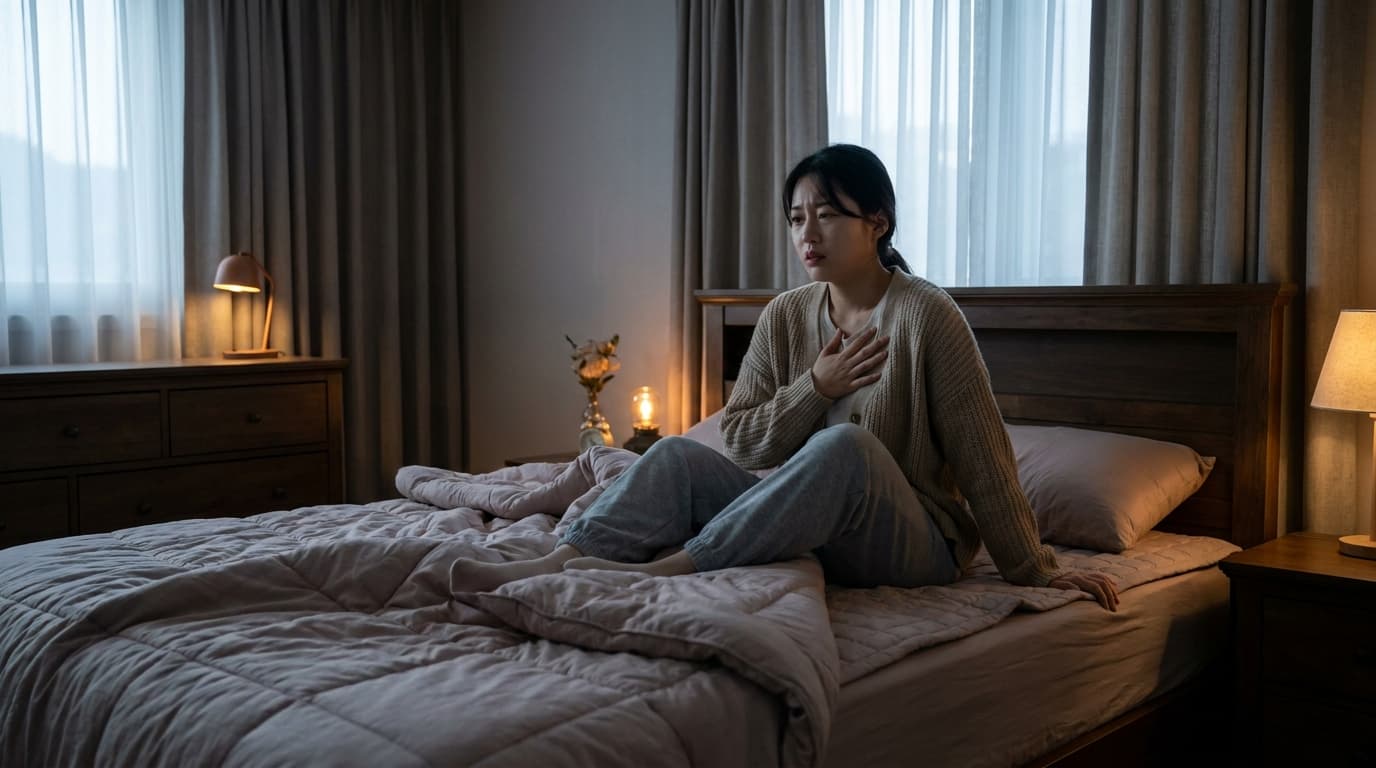
Feeling Oppressed and Anxious in the Chest, Could it Be the Autonomic Nervous System?
Hello. This is Dalimchae Korean Medicine Clinic. # My chest feels oppressed and I feel anxious. Could it be due to my autonomic nervous system? At Dalimchae Korean Medicine Clinic, we often hear complaints like "My chest feels tight and I feel anxious," or "I'm told I'm fine, but anxiety keeps washing over me." Especially when you're physically and mentally exhausted due to solitary parenting or excessive stress, many people experience unexplained chest oppression that leads to anxiety. You might visit a hospital fearing a major illness because of difficulty breathing or a pounding heart, only to be told that the test results are always 'normal'. However, your body's pain doesn't lie. Much of this discomfort starts with an imbalance in the autonomic nervous system. 💡 **Key Answer** The 3 most common causes of "chest oppression and anxiety": ① **Autonomic imbalance** / ② **Accumulation of chronic stress** / ③ **Decline in organ function (heart, liver, stomach, etc.)** Dalimchae Korean Medicine Clinic helps you regain peace by relaxing the tension in your brain and body through **autonomic stabilization**. ## Why do I keep feeling oppressed and anxious in my chest? Symptoms of chest oppression or anxiety are mostly caused by excessive stress and the resulting autonomic imbalance. The autonomic nervous system is a nervous system that self-regulates essential functions for maintaining life, such as heart rate, respiration, digestion, and body temperature. The sympathetic nervous system is activated when you're tense and active, and the parasympathetic nervous system is activated when you're resting and relaxing, and they balance each other. However, chronic stress in modern society, especially excessive tension from situations like solitary parenting, keeps the sympathetic nervous system continuously hyperactive. If this state persists for a long time, the recovery ability of the parasympathetic nervous system decreases, and the balance of the autonomic nervous system collapses. When the brain can't rest and is always in a state of alert, physical symptoms such as a feeling of pressure in the chest, difficulty breathing, and palpitations (heart pounding) can appear without a special reason, along with anxiety, restlessness, insomnia, chronic fatigue, and in severe cases, symptoms of panic disorder. ## They say I'm fine after tests, but why does my body say it hurts? Many people visit hospitals due to chest oppression and anxiety symptoms and undergo various tests like EKGs and blood tests, only to hear the result "normal." This only means it's not a structural problem or a specific disease in the body, it doesn't mean there is no actual suffering. In Korean medicine, these symptoms are understood as a 'state where the harmony between mind and body is broken', and focus is placed on treating both the root of the symptoms, autonomic nervous system imbalance, and the decline in organ functions such as the heart, liver, and stomach, rather than simply suppressing the symptoms. In particular, we diagnose conditions such as 'liver qi stagnation' where the circulation of qi is blocked due to stress, or 'heart and gallbladder deficiency' which occurs when the mind becomes weak and phlegm accumulates, and proceed with personalized treatment. ## How does Korean medicine treatment help with autonomic imbalance and anxiety symptoms? At Dalimchae Korean Medicine Clinic, we take 'autonomic stabilization' treatment as the basic principle to help the body and mind find peace by regaining the balance of the autonomic nervous system. This is like cooling down the heat of an engine called the overheated brain and turning off the circuit breaker switch to help the whole system stabilize. Creating an environment where the heat of the nervous system is lowered and the brain can rest — in Korean medicine, this is called 'Suseunghwagang' (coolness rising, heat descending) —극대화 maximizes the body's natural healing ability by calming the excessively hyperactive sympathetic nervous system and restoring the function of the weakened parasympathetic nervous system. Actual clinical studies also report the effectiveness of Korean medicine treatment. In a retrospective observational study published in 2023, applying a Korean medicine-based postpartum health management program (KMPHP) to 37 postpartum women showed that the score of the postpartum depression screening test (Edinburgh Postnatal Depression Scale, EPDS) was significantly improved from an average of 8 points to 5 points (p \< 0.01). In addition, quality of life (EuroQol-5 Dimension-5L and EuroQol Visual Analog Scale) also significantly improved from 0.82 to 0.83 points (p=0.02) and from 70 to 80 points, respectively. The researchers concluded that Korean medicine-based intervention is effective in improving the emotional state and quality of life of mothers and can also help with postpartum pain relief. In this way, Dalimchae Korean Medicine Clinic Incheon branch is helping to improve the emotional anxiety and physical discomfort of mothers exhausted by solitary parenting. In addition, according to an animal study by a joint research team led by Dr. Kim Hyoung-jun of the Korea Institute of Oriental Medicine and Professors Ham Dae-hyun and Lee Bom-bi of Kyung Hee University, published in the international journal 'Animal Models and Experimental Medicine' in 2026, it was confirmed that acupuncture treatment is effective in alleviating depression and anxiety symptoms induced by post-traumatic stress disorder (PTSD) through the trigeminal nerve pathway. The research team identified the mechanism by which trigeminal nerves are activated and neuroinflammation is regulated when electroacupuncture stimulation is applied to the Baekhui point (GV20) at the top of the head and the Indang point (EX-HN3) on the forehead, reducing depression and anxiety behaviors. The results of this study suggest that acupuncture treatment can have a positive effect on anxiety and depression by regulating brain neural activity and inflammatory responses, and support the scientific basis of autonomic stabilization treatment conducted at Dalimchae Korean Medicine Clinic. ## Is my chest oppression and anxiety symptoms due to autonomic imbalance? (Checklist) Check how many of the following items apply to you. * Recently, my chest often feels oppressed or tight without a special reason. * I often feel my heart pounding or beating fast. * The quality of my sleep has dropped, such as having trouble falling asleep or waking up frequently at dawn. * I easily feel anxious or restless even at small things and become sensitive. * It's accompanied by digestive symptoms such as poor digestion, feeling bloated, or frequent belching. * I often experience headaches or dizziness. * My neck or shoulders are often stiff and sore, and I feel chronic fatigue. * My hands and feet are cold or I sweat a lot, and there is a feeling of heat rising to the face or upper body. * Mood swings are severe, and I often feel depressed or irritated. **Judgment Criteria:** * **If 3 or more items apply:** Autonomic imbalance is suspected, so we recommend identifying your exact condition through a consultation at the Incheon Anxiety Disorder Clinic and reviewing combined Korean medicine treatment. * **If 5 or more items apply:** It is highly likely that autonomic imbalance has progressed significantly. It is best to start active treatment through immediate visit. Dalimchae Korean Medicine Clinic Incheon branch provides personalized treatment for these autonomic imbalance symptoms. ## FAQ: We will solve your questions about chest oppression and anxiety symptoms. **Q. Can symptoms of chest oppression and anxiety heal on their own?** A. Mild symptoms caused by temporary stress can improve naturally through sufficient rest and stability. However, if symptoms persist or recur and interfere with daily life, it is highly likely that autonomic imbalance has become chronic, so it is important to receive professional treatment. **Q. If anxiety symptoms are severe, can it lead to panic disorder?** A. Yes, chronic anxiety and autonomic imbalance can increase the risk of panic attacks. If initial anxiety symptoms are neglected, it can develop into panic disorder and significantly lower the quality of life, so it is necessary to actively manage it before symptoms worsen. **Q. What kind of tests do I get at the Incheon Anxiety Disorder Clinic?** A. At Dalimchae Korean Medicine Clinic Incheon branch, we go through a Korean medical diagnosis process such as pulse diagnosis, tongue diagnosis, and abdominal diagnosis along with a detailed interview about the patient's symptoms. Also, if necessary, we objectively evaluate the balance state of the autonomic nervous system through heart rate variability (HRV) tests to establish a personalized treatment plan. **Q. Can other symptoms besides anxiety symptoms be treated together?** A. Since the autonomic nervous system affects the whole body, it is possible to treat various physical and mental symptoms that appear along with anxiety symptoms, such as headaches, dizziness, insomnia, indigestion, and chronic fatigue. At Dalimchae Korean Medicine Clinic, we help with fundamental improvement by considering these related symptoms integrally. Chest oppression and anxiety are not problems solved by enduring them. You no longer have to ignore the body's signals sent for a long time. If you approach it in the right direction, your body responds faster than you think. Bring your symptoms as they are. At Dalimchae Korean Medicine Clinic, we will find the cause together. Where life blooms. For herbal medicine, it's Dalimchae Korean Medicine Clinic. Check your symptoms similar to mine through the AI consultation on the Dalimchae Clinic website first! This article is health information compiled by Dalimchae medical staff based on questions frequently received in the treatment room. Medical Supervision | Brain/Autonomic Nerve Treatment Standards Dalimchae Korean Medicine Clinic Incheon Branch Korean Medicine Doctor Yang Yuchan (Anxiety Disorder Column)