
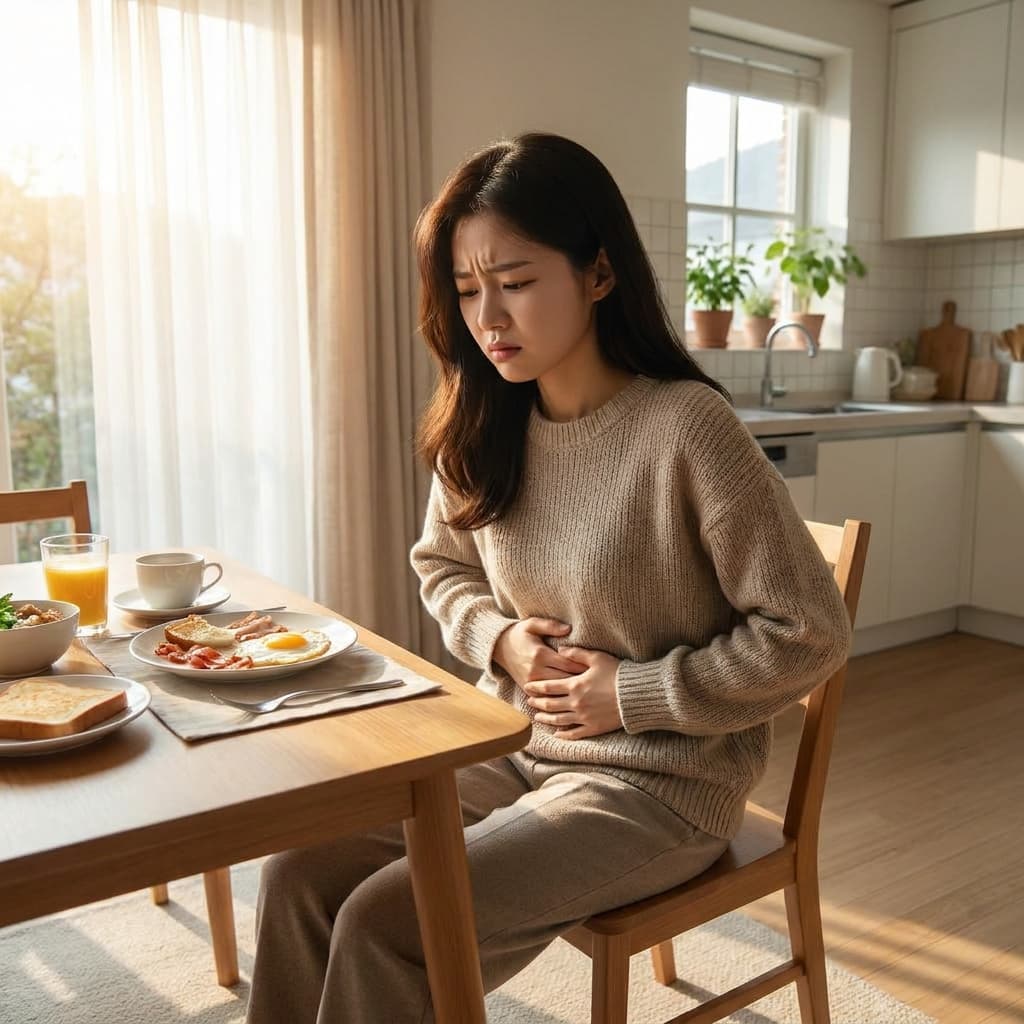
Feel Like Your Stomach Is Completely Blocked After Eating Could It Be Damjeok Disease
Hello, this is Dalimchae Korean Medicine Clinic. # Feel Like Your Stomach is Completely Blocked After Eating? Could It Be 'Damjeok Disease'? For many people, daily meals—which should be a joyful time—often turn into a painful experience. If you habitually talk about symptoms like "I feel like my stomach is blocked after eating" or "My epigastrium feels stuffy and I have indigestion," you need to suspect whether it might be 'Damjeok disease,' beyond simply having weak digestive functions. Even when endoscopies show no special abnormalities, if discomfort persists, it is time to find the root cause: whether the outer wall of your stomach has hardened due to Damjeok and is failing to function properly. 💡 **Key Answer** Top 3 most common causes of **"feeling like my stomach is completely blocked after eating"**: ① Decreased stomach motility / ② Hardening of the outer stomach wall (Damjeok) / ③ Autonomic nervous system imbalance Dalimchae Korean Medicine Clinic aims to restore stomach function and improve systemic inflammation through bowel detoxification treatment. ## Q. Feel like my stomach is blocked after eating. How are simple indigestion and Damjeok different? The 'indigestion' commonly experienced in daily life is temporary indigestion that easily appears when overeating or eating quickly. However, if symptoms like "feeling like my stomach is blocked after eating" repeat and persist, it may not be simple indigestion. In Korean medicine, 'Damjeok (痰積)' refers to a condition where waste products called 'Dam-eum (痰飮)' accumulate inside the stomach mucosa, i.e., the outer wall of the stomach, causing the stomach to harden rigidly. When the outer wall of the stomach hardens, the stomach's natural peristaltic movement function decreases, and problems occur in digestive enzyme secretion, leading to chronic indigestion. Damjeok disease can cause various systemic symptoms beyond digestive diseases, such as headaches, dizziness, and chronic fatigue. This happens because Dam toxins accumulated on the outer wall of the stomach are absorbed into the blood through the intestinal barrier and spread throughout the body. Endoscopic examinations can only confirm inflammation in the stomach mucosa, making it difficult to discover Damjeok, which is a problem of the outer stomach wall. Therefore, Songdo Damjeok Korean Medicine Clinic comprehensively diagnoses the hardening of the outer stomach wall and overall digestive function decline to find the root cause of chronic discomfort. ## Q. Stomach examination says 'normal', why does it keep feeling uncomfortable? "I had an endoscopy at the hospital and they said there was nothing wrong. But why does my stomach keep feeling uncomfortable?" This is a story echoed by many Damjeok disease patients. While modern medical endoscopies are effective for checking inflammation or ulcers on the 'inner' mucosa of the stomach, they struggle to directly diagnose Damjeok—waste products accumulated on the 'outer' wall of the stomach. When the outer wall of the stomach hardens due to Damjeok, stomach motility significantly drops, and such functional problems are rarely caught by general exams, easily leading to a diagnosis of 'functional dyspepsia.' In fact, the effectiveness of Korean medical treatments for functional dyspepsia has been proven through various studies. A meta-analysis of 6 studies involving 707 patients with functional dyspepsia, conducted by Kyung Hee University medical staff and published in the journal *Frontiers in Pharmacology* in 2023, revealed that the herbal medicine Xiaoyao-san (XYS) significantly improved the Total Clinical Efficacy rate (TCE) by 1.15 times compared to conventional Western medical treatments (WM) (RR = 1.15, 95% CI: 1.05, 1.26, p = 0.002). Notably, it confirmed significant reduction effects on dyspepsia-related symptom scores (DSS) such as abdominal bloating and upper abdominal pain (SMD = -0.72, p \< 0.00001), and the incidence of side effects was also significantly lower in the XYS group (RR = 0.20, p = 0.006). The researchers concluded that Xiaoyao-san is effective and safe in reducing discomfort in functional dyspepsia patients. These research results serve as the basis for Dalimchae Korean Medicine Clinic in Songdo to view functional dyspepsia and Damjeok disease not as mere psychological/neurogenic issues, but to comprehensively examine outer stomach wall problems and functional declines for treatment. Rather than merely suppressing symptoms, we aim for fundamental treatment by restoring natural stomach functions and removing Dam toxins. ## Q. If left untreated, what problems can Damjeok disease cause? Damjeok disease not only inhibits stomach motility, but Dam toxins accumulated on the outer wall of the stomach can spread throughout the body via blood and lymph, causing various problems. This is akin to debris accumulating in an old drainage pipe, obstructing water flow and emitting bad odors. When toxins accumulated in the intestinal barrier create systemic inflammation via the blood, the following problems can occur alongside digestive symptoms: * **Worsening digestive symptoms:** Chronic indigestion, fullness, belching, abdominal bloating, gastroesophageal reflux disease, irritable bowel syndrome, gastritis, etc. * **Neurological symptoms:** Headaches, dizziness, insomnia, chest tightness, chronic fatigue, and in severe cases, autonomic imbalance symptoms like panic disorder. * **Circulatory and other symptoms:** Hand and foot edema, heavy and tired body, skin troubles, lowered immunity, etc. As such, Damjeok disease can develop into a systemic condition that disrupts the balance of our entire body, not just the stomach. Especially modern lifestyle habits such as stress, irregular eating habits, and excessive alcohol consumption act as factors that further intensify Damjeok. Therefore, it is important to suspect Damjeok early and visit a Songdo indigestion Korean medicine clinic to start accurate diagnosis and treatment. Dalimchae Korean Medicine Clinic applies **bowel detoxification** principles to solve these Damjeok problems. Bowel detoxification removes waste and toxins accumulated in the intestinal barrier, creating a healthy intestinal environment to restore stomach function. Once toxins are removed and the intestinal barrier becomes robust, the amount of toxins entering the blood decreases, easing systemic inflammatory responses and improving overall physical function and immunity. This goes beyond simply alleviating digestive symptoms to become a fundamental solution for regaining body health balance. ## Q. How does Dalimchae Korean Medicine Clinic treat Damjeok disease? Dalimchae Korean Medicine Clinic Songdo branch deeply understands the suffering of patients experiencing discomfort due to Damjeok disease, and provides customized treatments to improve outer stomach wall problems and normalize bowel function. The core of Damjeok treatment is loosening the hardened outer wall of the stomach, effectively excreting accumulated Dam toxins, and reviving natural stomach motility. In a study by a research team led by Professors Jin-sung Kim and Ha-yeon Lee from Kyung Hee University Korean Medicine Hospital, published in the journal *Frontiers in Pharmacology* in 2023, 116 functional dyspepsia patients took the 'Naesohwajeung-tang' herbal formulation for 4 weeks. As a result, overall dyspepsia symptoms were significantly alleviated compared to the placebo group. In particular, it showed significant effects in improving individual symptoms such as upper abdominal heartburn, postprandial fullness, and early satiety, as well as quality of life. The researchers emphasized that proving the efficacy of Naesohwajeung-tang holds significant meaning in providing objective grounds for the clinical application of functional dyspepsia. Like these research results, Dalimchae Korean Medicine Clinic Songdo branch promotes stomach motility and helps excrete Dam toxins through personalized herbal prescriptions considering individual symptoms and constitutions. In addition, we combine acupuncture, moxibustion, and pharmacopuncture therapies to soften hardened outer stomach wall tissue and improve blood circulation, activating the detoxification and excretion of Dam toxins. Rather than simply taking digestive medicine to suppress symptoms, we pull out the root of Damjeok to fundamentally restore stomach function and help you regain a comfortable and healthy daily life. --- ### Damjeok Disease Self-Diagnosis Checklist If any of the following items apply to you, you may suspect Damjeok disease: * □ Feeling stuffy or completely blocked at the end of the epigastrium frequently after meals. * □ Poor digestion, stuffy stomach, and frequent gas accumulation in the abdomen. * □ Feeling a hard lump or pain when pressing around the epigastrium or navel. * □ Frequently suffering from indigestion, or severe stomach cramps leading to emergency room visits. * □ Frequent belching, acid reflux, and recurring gastroesophageal reflux disease symptoms. * □ Frequent heavy head, unexplained headaches, or dizziness. * □ Chest tightness, anxiety, and heart palpitations. * □ Chronic fatigue and a heavy body feeling. * □ Suffering from insomnia or reduced sleep quality. * □ Continuing discomfort despite western medical examinations showing no special abnormalities. **Diagnosis Results:** * **3 or more apply:** Damjeok disease suspicion stage. There is a possibility of decreased stomach function and Dam toxin accumulation, so try to understand the exact cause through Korean medical examination. * **5 or more apply:** Damjeok disease has progressed significantly. Active treatment and lifestyle improvements are necessary, so immediate hospital visit is recommended. * **7 or more apply:** Systemic symptoms caused by Damjeok disease may be severe. You must find a fundamental solution through precise diagnosis and systematic Korean complex treatment. --- **Q. How long does Damjeok disease need to be treated?** A. Because Damjeok disease is often chronic, treatment duration may vary depending on the patient's degree of symptoms, medical history, and constitution. Usually, the goal is stomach function recovery and Dam toxin excretion through 3 to 6 months of steady treatment, accompanied by lifestyle improvements to prevent recurrence. **Q. Can Damjeok disease be fundamentally treated with Korean medicine?** A. Yes, since the main causes of Damjeok disease are the hardening of the outer stomach wall and accumulation of Dam toxins, Korean medicine focuses on treatments resolving these root causes. Various Korean medical treatments such as customized herbal medicine, acupuncture, moxibustion, and pharmacopuncture strengthen stomach function and excrete toxins, helping not only alleviate symptoms but also prevent recurrence. **Q. How should I manage my diet in daily life?** A. During Damjeok disease treatment, a diet that is easily digestible and puts no burden on the stomach is important. Avoid flour, cold foods, fried foods, instant foods, and excessive meat consumption, and chew slowly and thoroughly focusing on warm vegetables, fruits, and multi-grain rice. Stress management and regular eating habits are also important. **Q. Is Songdo Dalimchae Korean Medicine Clinic's Damjeok treatment special?** A. Songdo Dalimchae Korean Medicine Clinic approaches the core cause of Damjeok disease from a 'bowel detoxification' perspective, aiming to excrete whole-body toxins and restore autonomic balance beyond just the stomach. Through 1:1 customized herbal prescriptions matching each patient's symptoms and constitution and various Korean complex treatments, we focus on fundamentally strengthening stomach function, creating a healthy intestinal environment, and lowering the recurrence rate. --- Discomforts like "feeling like my stomach is blocked after eating" are problems that cannot be solved by enduring them. You no longer need to turn away from the signals your body has been sending for a long time. When approached in the right direction, the body responds faster than you think. Bring the symptoms you are experiencing as they are. Dalimchae Korean Medicine Clinic will find the cause together with you. The place where life blooms. Herbal medicine is Dalimchae Korean Medicine Clinic. Check symptoms similar to yours first through Dalimchae Korean Medicine Clinic website AI consultation! This information is health data compiled together by Dalimchae medical staff based on questions frequently received in the clinic. Medical Supervision | Department of Bowel & Digestion, Dalimchae Korean Medicine Clinic Songdo Branch, Korean Medicine Doctor Hyun-min Oh (Indigestion Column)