
Facial Heat and Autonomic Dysfunction - More Than Just a Skin Issue
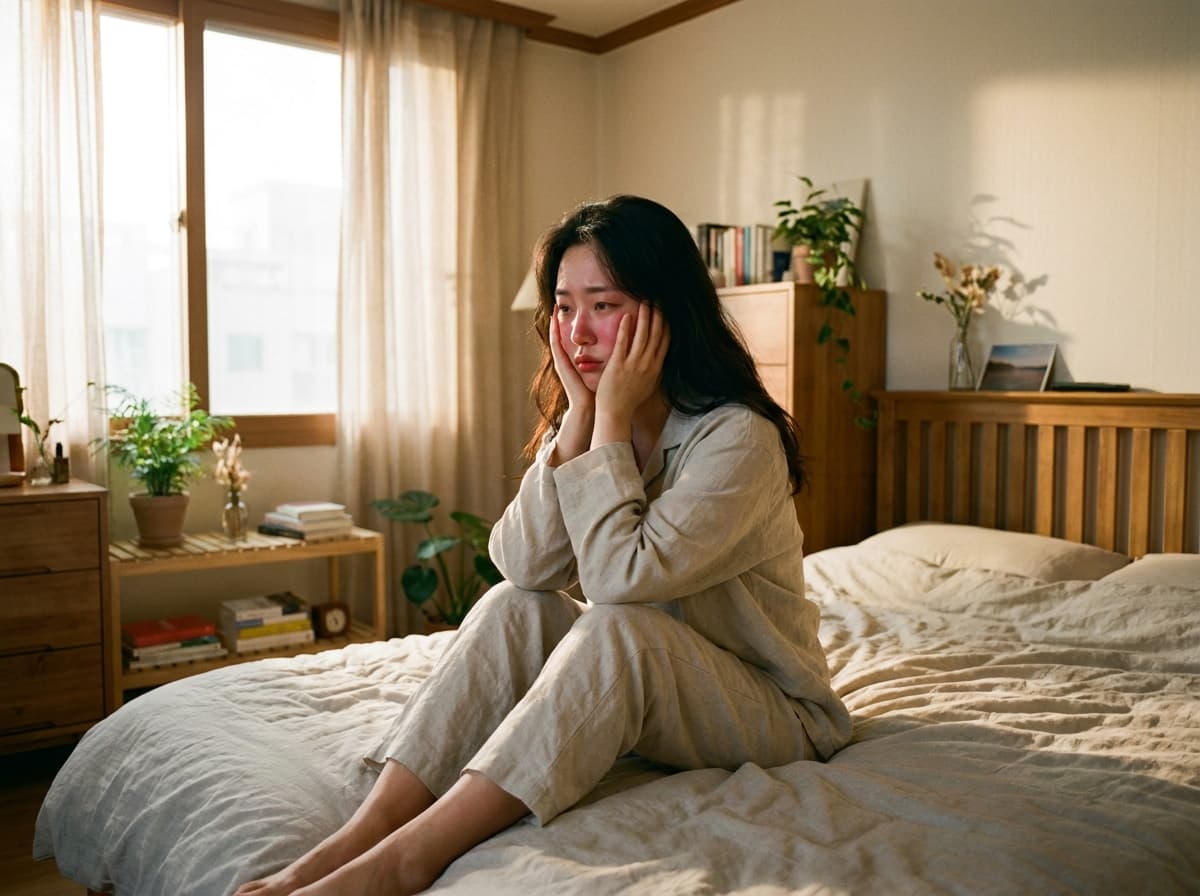
Hello. This is Dalimchae Korean Medicine Clinic. # Is your face heating up and not cooling down? It might not be just a skin problem. Have you ever looked in the mirror and seen your face flushed or felt it heating up and not cooling down at any given moment? This can be especially distressing before an important presentation, or when your face alone is burning even in air conditioning, causing great inconvenience in daily life. You might wonder if it's just because your skin is sensitive or if it's due to stress, but the symptoms don't seem to improve and even appear to worsen. The facial heat visible on the outside may actually be a warning signal indicating an internal imbalance in our body. 💡 **[Key Answer]** **The 3 most common causes of "face heating up and not cooling down":** ① Autonomic Nervous System Imbalance / ② Chronic Inflammatory Reaction / ③ Hormonal Changes Dalimchae Korean Medicine Clinic helps to turn off the "overheated" switch in your body and restore the skin's natural health through **autonomic nervous system stabilization**. ### Why does the face alone heat up and burn so much? Facial heat is often not just a skin issue, but a result of an imbalance in our body's internal systems, especially the autonomic nervous system. The autonomic nervous system is responsible for essential functions like heart rate, digestion, and body temperature regulation, regardless of our will. Among these, the sympathetic nervous system is activated in tension or stress situations, constricting blood vessels and increasing heart rate, while the parasympathetic nervous system is responsible for relaxation and rest, dilating blood vessels and calming the body. Facial heat or flushing often occurs when the balance of this autonomic nervous system is broken, leading to abnormalities in the blood vessel movement control function. In particular, blood vessels in the face react hypersensitively to stress, emotional changes, hot food, or stimulating environments, leading to abnormal dilation of capillaries and resulting in heat and redness. ### Does autonomic imbalance lead to chronic inflammation? Chronic autonomic imbalance can go beyond simple facial heat and trigger chronic inflammatory reactions throughout the body. When the sympathetic nervous system is excessively hyperactive, it can also affect the immune system, increasing the secretion of inflammatory cytokines, which leads to a weakened skin barrier function and becomes the cause of various inflammatory skin diseases. Facial skin is particularly sensitive to external stimuli and has a high distribution of blood vessels, so these internal changes appear more prominently. The fact that the face heats up and doesn't cool down could be a sign that unnecessary inflammation is continuing inside the body beyond just "the skin being hot." This can soon develop into or worsen conditions like facial flushing. ### How does Korean medicine view facial heat and flushing? In Korean medicine, the symptom of the face heating up, or "Sang-yeol-gam" (Upper Body Heat), is seen as a phenomenon where heat gathers in a specific area because the circulation of Gi and blood is not smooth. It is explained that heat surges to the face due to various causes such as heart heat (Sim-hwa), liver heat (Gan-hwa), or kidney Yin deficiency (Sin-eum-heo). This aligns with the modern medical concept of autonomic imbalance or blood vessel movement abnormalities. The disharmony of "Su-seung-hwa-gang" (Water ascending, Fire descending), where the lower body is cold and heat gathers in the upper body, especially the face, is also pointed out as a major cause. Correcting this imbalance, improving the overall circulation of the body, and stabilizing the excessively hyperactive nervous system is the core of Korean medicine treatment. ### How is the effectiveness of Korean medicine treatment being proven by the latest research? A systematic literature review and meta-analysis study published in the 2021 *Journal of Korean Medicine* analyzed 18 randomized controlled trials involving 1,500 patients complaining of facial flushing and heat. The study confirmed that Korean medicine treatments, including herbal medicine and acupuncture, significantly reduced the severity of facial heat compared to the control group (SMD -1.23, 95% CI -1.56 to -0.90; p \< 0.001) and remarkably improved the patients' quality of life. Furthermore, a study published in the 2023 *Journal of Internal Korean Medicine* reported that after 8 weeks of combined acupuncture and herbal medicine treatment on 45 facial flushing patients, the Facial Flushing Severity Index (FFSI) significantly decreased from an average of 12.5 points before treatment to 6.2 points after treatment (p \< 0.001). The researchers concluded that these results suggest Korean medicine treatment is effective in regulating hypersensitive blood vessel reactions and restoring autonomic balance. Based on this data, Dalimchae Korean Medicine Clinic in Incheon views the fundamental cause of facial heat as an autonomic nervous system issue and focuses on regulating blood vessel movement and resolving upper body heat tailored to each individual's constitution and symptoms. ### How is Dalimchae's autonomic stabilization treatment performed? Dalimchae Korean Medicine Clinic sees the symptom of the face heating up and not cooling down not just as a problem of the skin surface, but as a result of the overall balance of the body being broken. The core treatment principle is **autonomic stabilization**. When the balance of the autonomic nervous system is broken, the brain cannot rest and the body remains in a state of excessive tension. At this time, stress hormones are over-secreted and blood vessels unnecessarily constrict and dilate, accelerating the phenomenon of heat gathering in the face. Lowering the heat of the nervous system and creating an environment where the brain can rest — which is called Su-seung-hwa-gang in Korean medicine — is the goal of autonomic stabilization treatment. At the Incheon branch of Dalimchae Korean Medicine Clinic, we understand the current autonomic state through precise pulse wave tests and autonomic nervous system tests, and through individual customized herbal medicine prescriptions, we relax the hyperactive sympathetic nervous system and strengthen the function of the parasympathetic nervous system. In addition, through acupuncture, moxibustion, and pharmacopuncture treatment, we improve blood circulation, lower facial heat, and calm inflammatory reactions. Through this process, the body regains its balance, and we help you return to a healthy daily life free from symptoms like facial heat or Incheon facial flushing. Those who also complain of headaches, dizziness, or insomnia can also expect overall symptom improvement through autonomic stabilization treatment. ### Facial Heat and Flushing Self-Diagnosis Checklist If 3 or more of the following items apply, you can suspect facial heat due to autonomic imbalance. If 5 or more apply, we recommend visiting Dalimchae Korean Medicine Clinic Incheon branch for a precise diagnosis and consultation. 1. The face flushes easily and the heat lasts for a long time. 2. The face burns more in situations of emotional change (anger, tension, anxiety) or stress. 3. The face flushes severely when eating hot or spicy food. 4. Face redness is exceptionally severe and lasts long after drinking alcohol. 5. The facial skin reacts sensitively to external temperature changes. 6. Digestion is usually poor, or there is frequent gas in the abdomen. 7. The hands and feet are cold, but heat is often felt in the face or head. 8. The quality of sleep is poor, such as difficulty falling asleep or waking up frequently. 9. Fatigue is severe, and you are suffering from chronic stress. 10. You get startled easily even at small things or have symptoms of heart palpitations. --- **Q. How long is the treatment period for facial heat symptoms?** A. The treatment period for facial heat symptoms varies depending on individual constitution, severity of symptoms, and the cause of onset. Usually, a significant improvement can be expected within 8 to 12 weeks through consistent Korean medicine treatment, but it may take longer in chronic cases. **Q. Is facial flushing also treated by Korean medicine?** A. Yes, facial flushing is effectively treated from a Korean medicine perspective by approaching it as an autonomic nervous system imbalance and Gi/blood circulation issue. Through herbal medicine, acupuncture, and pharmacopuncture, we regulate hypersensitive blood vessel reactions, calm inflammation, and restore the body's balance to improve the root cause of facial flushing. **Q. Can facial heat heal naturally?** A. In the early stages, it might improve with just stress management or lifestyle habit improvements, but if facial heat is chronic and doesn't cool down, natural improvement is difficult. If left unattended, it can worsen into facial flushing or inflammatory skin diseases, so it is better to seek help from a specialist. **Q. I have a headache along with facial heat, can they be treated together?** A. Yes, facial heat and headaches are symptoms that often appear simultaneously due to autonomic imbalance and blood circulation issues. The autonomic stabilization treatment at Dalimchae Korean Medicine Clinic Incheon branch improves the root cause of these complex symptoms together to help overall health recovery. --- The symptom of the face heating up and not cooling down is not a problem that can be solved by enduring. You no longer have to ignore the signals your body has been sending for a long time. If you approach in the right direction, the body responds faster than you think. Bring your symptoms exactly as they are. At Dalimchae Korean Medicine Clinic, we will find the cause together. Where life blooms. For herbal medicine, it's Dalimchae Korean Medicine Clinic. Check your symptoms similar to mine through the AI consultation on the Dalimchae Clinic website first! Medical Supervision | Skin Disease Treatment Standards Dalimchae Korean Medicine Clinic Incheon Branch Korean Medicine Doctor Min Ji-hong (Inflammatory Skin Disease Column)