
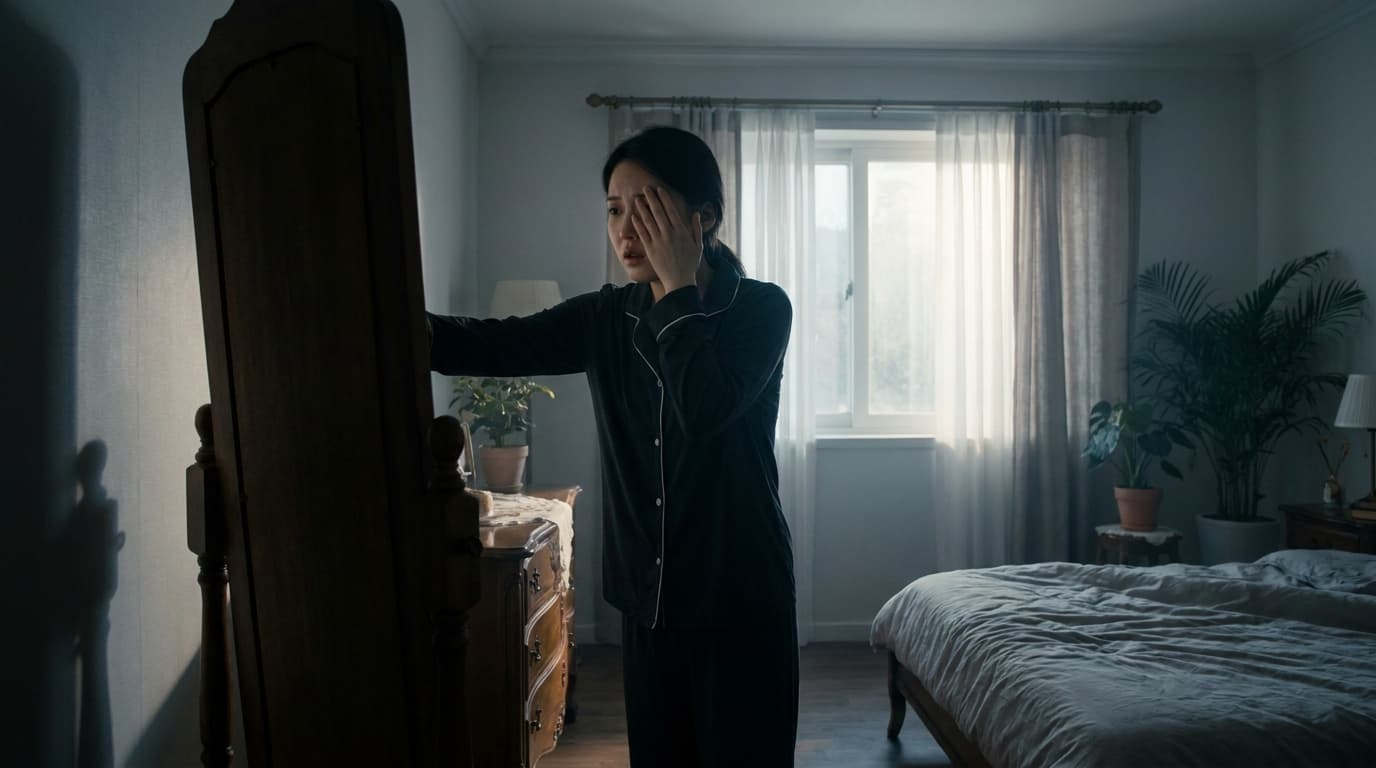
Eye Twitching or Facial Paralysis Early Symptom Accurate Distinction is Important
Hello, this is Dalimchae Oriental Clinic. # Eye Twitching or Facial Paralysis Early Symptom Accurate Distinction is Important When your lower eyelid suddenly starts twitching, many people feel anxious. Brushing it off as "just being tired" leaves an uneasy feeling, wondering if it's a sign of a more serious condition. In particular, many people visit Dalimchae Oriental Clinic Incheon Branch concerned whether eye twitching is an early symptom of facial paralysis. Since such facial twitching symptoms can appear due to various causes ranging from simple muscle spasms to serious neurological disorders, accurate distinction and appropriate response are important. 💡 **[Key Answer]** Top 3 most common causes of eye twitching and facial paralysis early symptoms: ① Simple fatigue and stress: The main cause of eye twitching, often improving with sufficient rest alone. ② Facial nerve functional abnormality: The direct cause of facial paralysis, where the facial nerve is damaged by viral infection or inflammation. ③ Vascular compression or neurological disease: Neurological abnormalities such as hemifacial spasm caused by blood vessels compressing the facial nerve can be the cause. Dalimchae Oriental Clinic resolves the root cause of symptoms by restoring the balance of brain and nerves through autonomic nerve stabilization. ## How are Eye Twitching and Facial Paralysis Different? "Eye twitching" is medically termed 'eyelid myokymia', a symptom where the orbicularis oculi muscle around the eyelid repeatedly contracts minutely without one's will. Most appear as a light twitching of the lower eyelid, and main causes are often fatigue, lack of sleep, excessive caffeine intake, and stress. Such twitching usually tends to naturally improve in a short period. In contrast, facial paralysis means a state where facial muscle movement weakens or is completely paralyzed due to facial nerve damage. In particular, idiopathic facial paralysis called 'Bell's palsy' is the most common type, where one side of the face is paralyzed making it difficult to close the eye, distorting the corner of the mouth, and making speech inaccurate. While eye twitching is simply a minute muscle spasm, facial paralysis is a wide facial muscle paralysis caused by facial nerve functional abnormality itself, showing a major difference. ## What Should Be Cautious About Facial Paralysis Early Symptoms? Starting treatment within 72 hours after symptom onset has a very important impact on prognosis in facial paralysis. Therefore, accurately distinguishing between simple eye twitching and facial paralysis early symptoms is crucial. If the following symptoms accompany, you should suspect facial paralysis rather than simple eye twitching and receive examination immediately. * **Scope of twitching**: When twitching or paralysis spreads beyond the eye area to the mouth, cheek, or the entire one side of the face. * **Muscle weakness**: When it is difficult to move specific facial expression muscles such as closing eyes, raising the corner of the mouth, or wrinkling the forehead. * **Sensory abnormality**: When sensory lowering or abnormality is felt on the paralyzed side of the face. * **Accompanying pain**: When pain accompanies behind the ear or face. * **Drooling or speech abnormality**: When the corner of the mouth sags causing drooling or slurred speech. * **Tear flow abnormality**: When tears flow excessively because the eye does not close well or conversely becomes dry. In particular, according to a 2022 study targeting recurrent Bell's palsy patients, patients in their teens to 40s showed excellent results after treatment. This suggests that active treatment in the early stages when facial paralysis symptoms appear is important. ## Misconception That Magnesium Deficiency is the Cause, and Oriental Medicine Perspective? Many people think of magnesium first and take supplements when eye twitching starts. Magnesium is a mineral regulating nerve and muscle excitation, and deficiency can cause mild muscle spasms. However, in actual clinical practice, most patients have normal blood magnesium levels, so magnesium intake alone often shows limited effects in improving eye twitching or facial paralysis symptoms. In Oriental medicine, eye twitching or facial paralysis is not simply seen as specific nutrient deficiency, but interpreted as a whole-body imbalance problem. In particular, complex factors such as stress, lack of sleep, and decreased immunity act to overload the autonomic nervous system, which is viewed to cause abnormalities in facial nerve function. ## Facial Paralysis Oriental Medicine Treatment: Focusing on Nerve Recovery and Preventing Recurrence Oriental medicine treatment for facial paralysis focuses on helping recovery of damaged facial nerves, improving autonomic nervous system imbalance which is the root cause of symptoms, and preventing recurrence. A randomized controlled trial review published in 2020 in 「Journal of Acupuncture Research」 confirmed that both Oriental medicine treatment and integrative Korean-Western medicine treatment were effective in improving symptoms of Bell's palsy patients, and integrative treatment was particularly more effective than Oriental medicine alone. This study shows that various Oriental medicine treatments such as acupuncture, moxibustion, and herbal medicine have meaningful effects on facial paralysis treatment. In addition, a paper published in the 「Frontiers」 journal in 2024 suggested that herbal medicine is a promising alternative for Bell's palsy treatment through inflammation reduction, symptom improvement, and neuroprotective effects. This study mentioned that combining acupuncture and herbal medicine accelerated overall recovery speed and shortened the initial recovery period. Based on these data, Dalimchae Oriental Clinic Incheon Branch calms inflammation around the facial nerve, improves blood circulation, and helps nerve recovery through herbal prescriptions tailored to symptoms and constitution. In addition, acupuncture treatment relieves facial muscle tension, promotes Qi and blood circulation, reduces twitching symptoms, and contributes to restoring the function of paralyzed muscles. Complex Oriental medicine treatments tailored to individual conditions such as pharmacopuncture, electroacupuncture, moxibustion, cupping, and Chuna therapy increase the recovery speed of damaged nerves and help rapidly normalize functions of nerves and muscles responsible for facial movement. In particular, for those seeking facial paralysis Korean medicine in Incheon, this integrative approach provides even more satisfying results. ## Autonomic Nerve Stabilization: Creating an Environment Where the Brain Can Rest Dalimchae Oriental Clinic diagnoses the root cause of facial paralysis and eye twitching as autonomic nervous system imbalance and focuses on restoring it. Autonomic nerves are an important system regulating all unconscious functions of our body, overseeing heartbeat, digestion, immune response, and stress response. When the balance of autonomic nerves collapses due to stress, overwork, or lack of sleep, the sympathetic nerves are excessively activated, placing the body in a tension state and preventing the brain from resting. Such a state can induce minute twitching of the facial nerve or, if severe, worsen nerve inflammation leading to facial paralysis. Dalimchae Oriental Clinic's autonomic nerve stabilization treatment aims to stabilize excessively hyperactive sympathetic nerves and activate parasympathetic nerve functions so that the body and brain can relax comfortably. This is equivalent to lowering heat in the nervous system and creating an environment where the brain can rest — in Oriental medicine, this is called Suseunghwagang (Water up, Fire down). When body balance is recovered, pressure applied to the facial nerve decreases, and twitching or paralysis symptoms can naturally improve. As an Incheon autonomic nerve Korean medicine clinic, Dalimchae Oriental Clinic aims for fundamental health recovery beyond simple symptom relief through customized treatments fitting individual constitutions and symptoms. Those complaining of headaches or dizziness together can also improve overall physical condition through this recovery of autonomic balance. ## Eye Twitching and Facial Paralysis Suspected Symptoms Checklist If 3 or more of the following items apply, get precision diagnosis and consultation at Dalimchae Oriental Clinic. * Eye twitching persists for more than a few days or gradually worsens. * Eye twitching spreads beyond the eye area to other facial parts like the mouth and cheeks. * It is difficult to close or open eyes, and one-sided facial expression is unnatural. * Water or food leaks out of one side of the mouth when drinking water or eating. * It is difficult to wrinkle the forehead or raise eyebrows. * Sensory dullness or abnormal sensation is felt on the paralyzed side of the face. * Pain accompanies behind the ear or around the temporomandibular joint. * Fatigue, stress, and lack of sleep continue chronically. **When 3+ items apply → Suspected early facial paralysis or autonomic imbalance → Consider Oriental complex treatment** **When 5+ items apply → Recommended immediate visit for precision diagnosis** **Q. How long does eye twitching take?** A. Eye twitching due to simple fatigue often improves naturally within a few days with sufficient rest and sleep. However, if it persists for 3 months or gets progressively worse, it is recommended to find other causes. **Q. Can facial paralysis also be treated with Oriental medicine?** A. Yes, facial paralysis is a condition where good effects can be expected from Oriental medicine treatment. Through acupuncture, pharmacopuncture, herbal medicine, moxibustion, and Chuna therapy, recovery of damaged facial nerves is helped, sequelae are minimized, and whole-body health management for recurrence prevention is performed. **Q. Can facial paralysis heal naturally?** A. In the case of Bell's palsy, about 70-85% recover without special treatment, but about 15-30% may recover incompletely or leave sequelae. Especially since active treatment starting in the early stages of onset increases the complete recovery rate, getting examined by an expert when symptoms occur is important. **Q. What should be done if eye twitching and facial paralysis appear together?** A. If facial paralysis symptoms accompany eye twitching, it is highly likely facial nerve damage rather than simple twitching. In such cases, it is very important to immediately visit a medical institution like a Korean medicine clinic to receive accurate diagnosis and start early intensive treatment. Eye twitching or facial paralysis symptoms are not problems solved by enduring. You no longer need to ignore the body's signals sent for a long time. When approached in the right direction, the body responds faster than you think. Bring the symptoms you are experiencing as they are. Dalimchae Oriental Clinic Incheon Branch will find the cause together and open a path for the body to heal itself. A place where life blooms. Herbal medicine is, after all, Dalimchae Oriental Clinic. Check your similar symptoms first through Dalimchae Oriental Clinic website AI consultation! This article is based on questions frequently received in the clinic room, compiled together by Dalimchae medical staff as health information. Medical Supervision | Brain and Autonomic Nervous System Treatment Standard, Dalimchae Oriental Clinic Incheon Branch Korean Medicine Doctor Min Jihong (Facial Paralysis Column)