
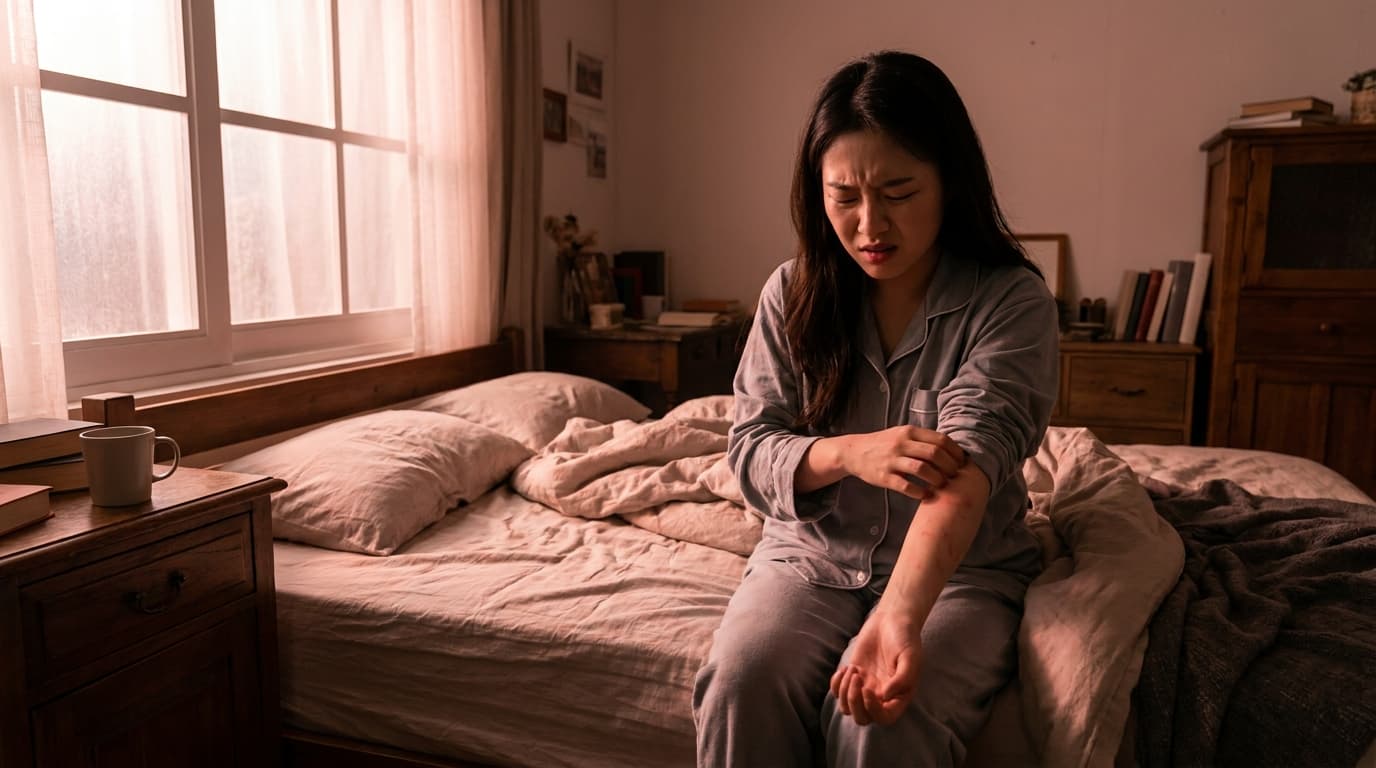
Experiencing Hives All Over Your Body? Could It Be Stress? Finding the Hidden Causes Damaging Your Skin
Hello, this is Dalimchae Korean Medicine Clinic. Have you ever experienced the sudden appearance of itchy, red wheals all over your body? If it gets particularly bad before an important presentation, after staying up all night, or following severe stress, it might not just be a skin issue. It could be a powerful warning sign from your body: autonomic nervous system imbalance. Core Answer Top 3 most common causes of whole-body hives: 1. Autonomic Nervous System Imbalance: High stress overactivates the sympathetic nervous system, triggering immune and inflammatory responses. 2. Immune System Hypersensitivity: The body's defense mechanism malfunctions against external stimuli, releasing unnecessary inflammatory substances like histamine. 3. Skin Barrier Degradation: Stress and internal imbalance weaken the skin's protective layer, making it more vulnerable to external stimuli. Dalimchae Korean Medicine Clinic uses autonomic stabilization treatment to regulate oversensitive immune responses and create an environment where the skin can heal itself. Why Does Stress Cause Hives All Over the Body? The link between stress and hives is deeper than you might think. When our bodies experience stress, they react in various ways like turning on a warning light, and the skin is on the front line. Stress directly affects the autonomic nervous system, over-stimulating the sympathetic nervous system and causing immune system imbalance. This hypersensitive immune system excessively secretes inflammatory mediators like histamine, causing itching, wheals, and redness on the skin. In particular, cholinergic urticaria is known to be closely related to the malfunction of cutaneous sympathetic nerves responsible for body temperature regulation. Why Does Chronic Urticaria Keep Recurring and Fail to Heal Easily? When hives recur for over 6 weeks, they are classified as chronic urticaria. About 80-90% of chronic urticaria patients are diagnosed as chronic idiopathic urticaria where specific causes are hard to find. While Western medicine primarily treats chronic urticaria with antihistamines, symptoms often recur upon stopping the medication because suppressing symptoms alone cannot solve the root problem. The skin is a mirror of our internal body health. Complex factors such as internal organ imbalance, weakened immunity, and autonomic disturbance caused by stress intertwine to manifest as chronic skin reactions. Latest Research Revealing Deep Connection Between Stress and Chronic Urticaria A 2026 review paper titled 'Chronic Idiopathic Urticaria: Mental Health and Quality of Life' highlighted that chronic urticaria (CSU) patients frequently suffer from mental health issues such as sleep problems, anxiety, and depression. According to this review, psychiatric or psychological symptoms appeared in about one-third of CSU patients, specifically sleep-wake disorders in 36.7%, anxiety disorders in 30.6%, and depression in 29.4%. This study explains the 'neuro-immune-skin axis' concept where skin, immune system, and nervous system communicate, stating that chronic stress alters the functioning of the hypothalamic-pituitary-adrenal axis and sympathetic nervous system to increase inflammatory substances, playing an important role in hive occurrence. These research findings align with Dalimchae Korean Medicine Clinic's treatment philosophy that hives triggered or worsened by stress are not just skin problems, but complex interactions of autonomic and immune system imbalances deep inside the body. It is important to calm overheated body systems and help them regain balance on their own, going beyond simply soothing the itch. Herbal Treatment Effective in Improving Symptoms and Reducing Recurrence Rate in Chronic Urticaria Patients According to a systematic review and meta-analysis on traditional medicine treatment for chronic urticaria (CU) published in the journal Medicine in 2025, analyzing 1,192 patients across 14 studies showed that traditional medicine treatment is effective in improving chronic urticaria symptoms and significantly reduces adverse event rates and recurrence rates (p \< 0.00001). Furthermore, another meta-analysis published in Frontiers in Medicine in 2026 showed that acupuncture treatment significantly improved the clinical effective rate of chronic spontaneous urticaria (CSU) compared to antihistamines (RR 1.19, 95% CI 1.10-1.29, p \< 0.0001), lowered the recurrence rate (RR 0.25, 95% CI 0.01-0.62, p = 0.003), and improved quality of life index (DLQI). These research findings suggest that traditional medicine treatments can resolve internal imbalances which are root causes of chronic urticaria, and have positive effects on symptom relief as well as recurrence prevention. Dalimchae Korean Medicine Clinic Incheon Branch provides treatments based on scientific traditional medicine to correct autonomic imbalances caused by stress, tailored to each patient's constitution and symptoms. How Does Dalimchae's Autonomic Stabilization Treatment Cure Hives? Dalimchae Korean Medicine Clinic focuses on the fact that psychological factors like stress greatly influence hive onset and worsening. In such cases, it is crucial to restore bodily balance through autonomic stabilization treatment rather than just treating skin symptoms. When autonomic balance collapses, the brain cannot rest and the body remains in a constant state of hypersensitivity. Especially when stress intensifies, excessive sympathetic hyperactivation constricts blood vessels and disrupts skin immune responses, making one vulnerable to inflammatory diseases like hives. Dalimchae Korean Medicine Clinic treats with the goal of lowering neural heat and creating an environment where the brain can rest—known in Korean medicine as 'subseunghwagang' (water up, fire down). Customized herbal medicine prescriptions tailored to individual constitution and symptoms lower internal heat, soothe inflammation, and stabilize excessively hyperactive sympathetic nerves. In addition, acupuncture, pharmacopuncture, and moxibustion treatments are combined to smooth qi and blood circulation and enhance skin regeneration. Many patients visiting the Incheon branch for hives recover healthy daily lives free from itching and wheals through Dalimchae's autonomic stabilization treatment. Also, those suffering from headaches or dizziness experience overall physical condition improvement. Self-Diagnosis Checklist: Could It Be Stress Hives? If 3 or more of the following apply, autonomic imbalance due to stress is likely affecting your hives. We recommend receiving a detailed consultation and diagnosis at Dalimchae Korean Medicine Clinic Incheon Branch. - Hives frequently occur after severe stress or overwork. - Hives worsen mostly in the evening or night, often disturbing sleep due to itching. - Symptoms do not completely disappear even with antihistamines, or recur immediately as drug effects wear off. - Accompanied by indigestion, chest tightness, headaches, dizziness, or anxiety besides skin symptoms. - Frequent feeling of body heat, or skin becoming sensitive and easily reddened/itchy with minor stimuli. - Hives repeating for over 6 weeks without specific cause, becoming chronic. 3+ matches: Suspected hives due to autonomic imbalance -> Consider Dalimchae Korean Medicine Clinic's combined therapy. 5+ matches: Immediate detailed diagnosis and treatment needed -> Recommended to visit Dalimchae Korean Medicine Clinic Incheon Branch. FAQ – Questions About Hives Q. How long do stress hives last? A. Stress hives can improve relatively quickly once the triggering stress is resolved, but chronic stress can cause them to persist for over 6 weeks and develop into chronic urticaria. Since chronicity can last from months to years, early active treatment is important. Q. Do I have to take antihistamines for the rest of my life after hive treatment? A. Antihistamines temporarily relieve hive symptoms, but without resolving root causes, stopping medication often leads to recurrence. Dalimchae Korean Medicine Clinic Incheon Branch aims to restore immune balance through autonomic stabilization treatment to reduce drug dependency and lower recurrence rates. Q. I feel anxiety and depression along with hives, can they be treated together? A. Yes, absolutely. Stress hives are closely related to autonomic imbalance and psychological factors. Dalimchae Korean Medicine Clinic's autonomic stabilization treatment helps improve overall mental and physical health including anxiety, depression, and sleep disorders, as well as skin symptoms. Q. Can hives be cured just by diet control? A. Diet is one of many triggering factors, but chronic urticaria often makes it hard to find causes through food alone. If stress or autonomic imbalance is the main cause, diet control alone has limitations, so professional diagnosis and treatment should be combined. Hives all over your body cannot be solved by enduring them. You no longer need to ignore the body's signals you've sent for a long time. Approach it the right way, and your body responds faster than you think. Bring your current symptoms as they are. Dalimchae Korean Medicine Clinic will find the cause together. Where life blooms. Herbal medicine is Dalimchae Korean Medicine Clinic. Check your similar symptoms first through Dalimchae Korean Medicine Clinic homepage AI consultation! This article is health information organized together by Dalimchae medical staff based on frequently asked questions in the treatment room. Medical Supervision | Dermatology Treatment Standards Dalimchae Korean Medicine Clinic Incheon Branch Korean Medicine Doctor Yang Yuchan (Skin Symptom Column) #Hives #StressHives #WholeBodyHives #AutonomicNerves #IncheonHivesClinic #IncheonKoreanMedicineClinic #SkinHypersensitivity #ChronicUrticaria Skin - Itching & Allergy