
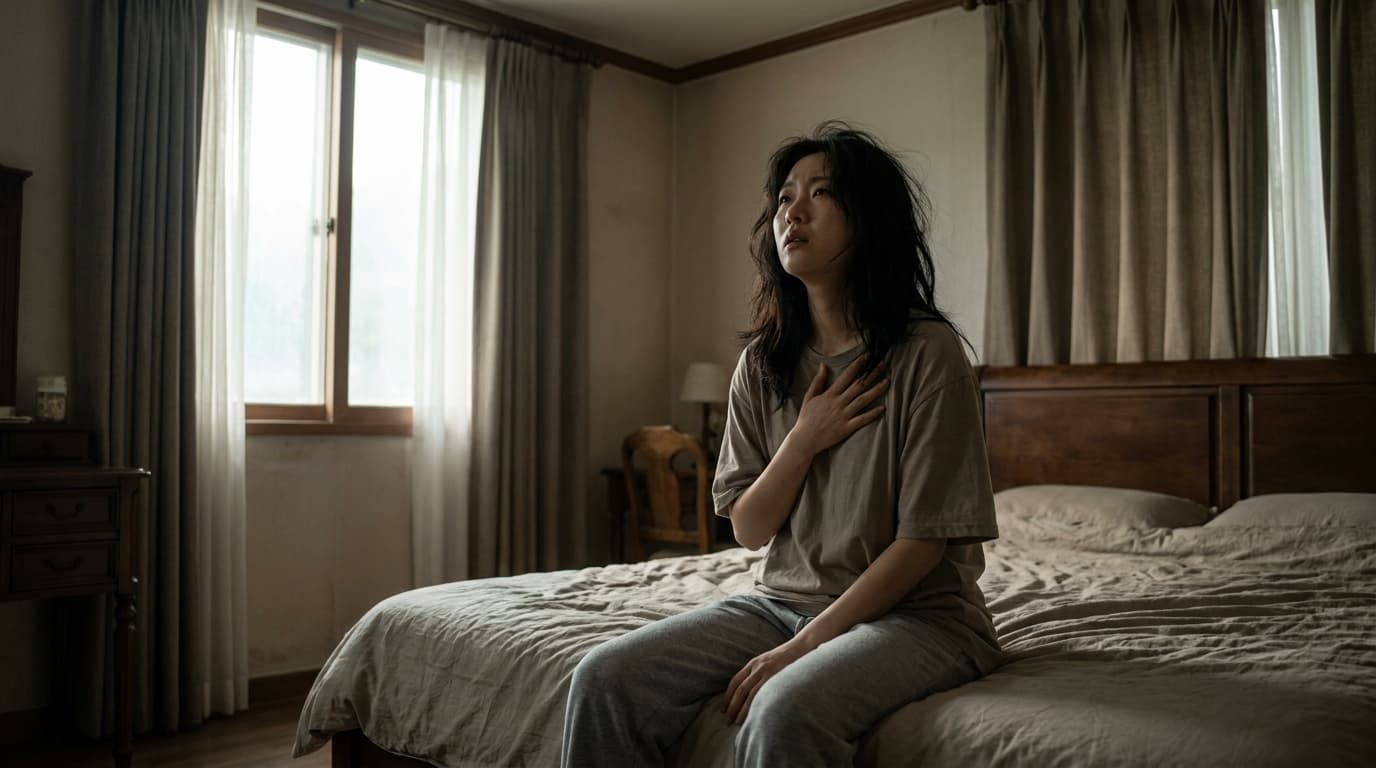
Even If You Go to the Emergency Room They Say Nothing Is Wrong Could It Be Panic Disorder
Hello. This is Dalimchae Oriental Clinic. # Even If You Go to the Emergency Room They Say Nothing Is Wrong Could It Be Panic Disorder? Suffocating Anxiety, Time to Stop Now Have you ever experienced your heart beating crazily out of nowhere, breath catching in your throat, and being engulfed in a fear that you might die? Not a few people have visited the emergency room with such extreme symptoms, only to hear that their test results were "normal." When told that nothing is wrong despite feeling clearly distressed, confusion sets in, along with growing anxiety that maybe you have panic disorder. In particular, we frequently meet people at Dalimchae Oriental Clinic Incheon Branch who ask with anxiety, "Even if I go to the emergency room they say nothing is wrong, is this panic disorder?" Sudden intense anxiety and physical symptoms like these may not simply be psychological issues, but an emergency signal from our body's vital control system, the autonomic nervous system. 💡 **[Core Answer]** Top 3 most common causes of "Even if I go to the emergency room they say nothing is wrong, could it be panic disorder?": ① Autonomic nervous system imbalance due to extreme stress ② Overactivation of the brain's fear circuit and neurotransmitter disturbance ③ Psychological and physical sensitivity vulnerable to stress Dalimchae Oriental Clinic aims for fundamental treatment that helps the brain control anxiety on its own through the recovery of autonomic balance. ## Why Do They Say 'Normal' Even When Going to the Emergency Room? Panic attacks are accompanied by sudden severe anxiety symptoms and various physical symptoms. Rapid heartbeat, difficulty breathing, chest tightness, or dizziness are representative examples. Because these symptoms resemble dangerous conditions like myocardial infarction or stroke, many people visit the emergency room out of anxiety. However, even after undergoing ECG, blood tests, and brain imaging tests in the emergency room, most show no special abnormal findings. This is because the cause of panic attacks is not a structural problem in the heart, lungs, or brain itself, but rather in our body's 'autonomic nervous system,' which reacts excessively to stress. The autonomic nervous system controls heartbeat, breathing, digestion, and temperature regulation regardless of our will, preparing the body to 'fight or flight' in threatening situations. In panic disorder patients, this alarm system malfunctions and activates excessively even in situations without actual threat. ## Suffocating Anxiety, Is the 'Brain' Really the Problem? At the core of panic disorder lies an imbalance in the autonomic nervous system, which is deeply connected to brain function. When stress persists, areas responsible for fear, such as the amygdala in the brain, become overactivated, and the balance of neurotransmitters that regulate anxiety, such as serotonin and GABA, is broken. In other words, the brain is placed in a state of constant tension and overheating, like a car with its warning light permanently on. In this state, the body reacts hypersensitively to minor stimuli, leading to a vicious cycle that increases the frequency and intensity of panic attacks. A 2024 clinical case report in Korean medicine applied acupuncture 1-2 times a week for 48 days to a panic disorder patient with panic agoraphobia, resulting in a 43% decrease in the Panic Disorder Severity Scale (PDSS) score. In addition, the Hamilton Anxiety Scale (HSAS) decreased by 65%, the Hamilton Depression Scale (HSDS) by 96%, and the Somatic Symptom Scale (SSS-8) by 76%, confirming overall symptom improvement effects. The researchers explained that acupuncture stimulated sensory nerves to communicate with the brainstem and hypothalamus, reducing sympathetic nerve activity and increasing parasympathetic nerve activity, thereby contributing to improving autonomic nervous system balance. These results suggest that Korean medicine treatment can help alleviate panic disorder symptoms by improving brain autonomic regulation functional abnormalities. At Dalimchae Oriental Clinic Incheon Branch, we focus on treatments that help the brain regain the power to control anxiety on its own by restoring the harmony of the autonomic nervous system. ## How Does Korean Medicine Approach Panic Disorder? In Korean medicine, panic disorder is not viewed simply as a psychological problem, but as a problem of organ function imbalance and Qi-blood circulation, such as 'Simdam-heogeop' (heart-gallbladder timidity) or 'Giul' (Qi stagnation). In particular, it is viewed that the functions of the heart and gallbladder weaken and energy stagnates, causing symptoms such as anxiety, nervousness, and heart palpitations. According to a 2021 case report by researchers Lee Kyung-eun, Wi Min-ji, and Kim Geun-woo from the Department of Oriental Neuropsychiatry, College of Korean Medicine, Dongguk University, published in the Journal of Oriental Neuropsychiatry, a panic disorder patient who developed symptoms during military service received combined Korean medicine treatment and psychotherapy-based exposure therapy. As a result, significant improvements were observed in anxiety, panic attack frequency, and physical symptoms. In particular, heart rate variability (HRV) test results before and after treatment showed an increasing trend in HRV after relaxation training, confirming the reflection of autonomic nervous system relaxation responses. The researchers concluded that Korean medicine treatment can have a positive effect on psychological stability as well as autonomic function recovery. These results show the importance of Korean medicine approaches that manage both body and mind in treating panic disorder. For those looking for an Incheon panic disorder Korean medicine clinic, Dalimchae Oriental Clinic proposes treatment that restores body balance and pulls out the root of anxiety. Dalimchae Oriental Clinic's autonomic stabilization treatment aims to calm the overheated brain and unstable autonomic nervous system. Just like turning off the main circuit breaker switch of an overloaded electrical circuit and making it operate stably again, we calm unnecessary excitement of the nervous system and create an environment where the brain can rest and recover on its own. Through this, the heart stabilizes, breathing becomes comfortable, and patients are helped to escape from extreme fear and regain a peaceful daily life. Those suffering from headaches, dizziness, or insomnia together can also expect overall symptom improvement through autonomic stabilization. At Dalimchae Oriental Clinic Incheon Branch, an Incheon autonomic Korean medicine clinic, we delicately adjust the balance of the autonomic nervous system through personalized treatment. ## Panic Symptoms, Could It Apply to Me? Self-Diagnosis Checklist Check the following items. Answer honestly based on the symptoms you experienced over the past month. * Suddenly feel heart racing, pounding, or rapid pulse. * Feel short of breath or suffocated. * Chest pain or tightness. * Feeling dizzy, lightheaded, or like fainting. * Body trembling or shivering. * Excessive sweating or cold sweats. * Numbness or loss of feeling in hands and feet. * Chills or flushing of the face. * Nausea or stomach discomfort. * Feeling that the surroundings are unreal or feeling detached from your body. * Fear of losing self-control or going crazy. * Intense fear of dying. **Judgment Criteria:** * **3 or more items apply:** Suspected panic symptoms due to autonomic imbalance. Recommended to consider Korean medicine combination treatment at Dalimchae Oriental Clinic. * **5 or more items apply:** Immediate professional diagnosis and treatment are needed. Visit Dalimchae Oriental Clinic for accurate diagnosis and personalized treatment planning. ## FAQ: Frequently Asked Questions About Panic Disorder **Q. How long does panic disorder take?** A. The treatment duration for panic disorder varies depending on individual symptom severity, duration of onset, concurrent conditions, and lifestyle habits. Generally, steady treatment for several months to over a year is required, and Dalimchae Oriental Clinic establishes treatment plans from the perspective of remarkable changes for recurrence prevention. **Q. Can panic disorder be treated with Korean medicine?** A. Yes, Korean medicine views the cause of panic disorder as autonomic nervous system imbalance and internal organ dysfunction, and proceeds with treatments to improve them. Various Korean medicine treatments such as acupuncture, moxibustion, herbal medicine, and pharmacopuncture are effective in alleviating anxiety symptoms and stabilizing autonomic functions. **Q. Can panic symptoms improve naturally?** A. Temporary anxiety can improve naturally, but extreme symptoms like panic attacks are difficult to disappear on their own. Rather, leaving them unattended can cause symptoms to become chronic or lead to other anxiety disorders such as depression or agoraphobia, so receiving early active treatment is important. **Q. Do chest tightness and breathing difficulty symptoms get treated together?** A. Chest tightness and breathing difficulty are common physical symptoms of panic disorder, deeply related to excessive activation of the autonomic nervous system. Dalimchae Oriental Clinic's autonomic stabilization treatment helps improve overall symptoms by addressing the root causes of these physical symptoms together. Panic disorder is not a problem solved by enduring it. You no longer have to ignore the body signals you have sent for a long time. If you approach it in the right direction, your body reacts faster than you think. Bring your current symptoms as they are. Dalimchae Oriental Clinic will find the cause together with you. Where life blossoms. Herbal medicine is Dalimchae Oriental Clinic. Check similar symptoms first through Dalimchae Clinic homepage AI consultation! Medical Supervision | Brain & Autonomic Nervous System Treatment Standards: Yang Yuchan, Oriental Medical Doctor, Dalimchae Clinic Incheon Branch (Panic Disorder Column)