
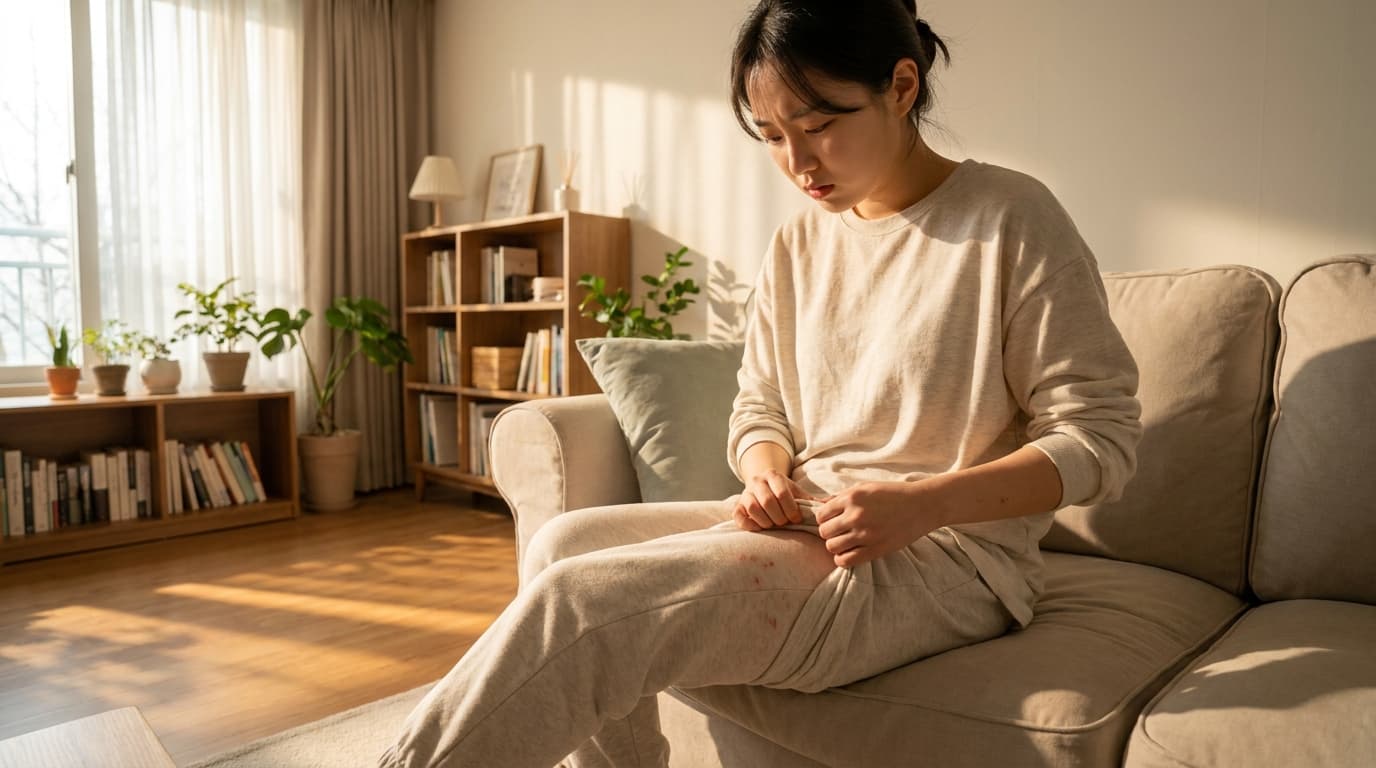
Does Purpura Heal on Its Own? Why It Repeats If Left Untreated and Fundamental Treatment
Dalimchae Korean Medicine Clinic - Does Purpura Heal on Its Own? Why It Repeats If Left Untreated and Fundamental Treatment Have you ever been embarrassed by sudden red spots or bruises on your skin? Especially when these spots mainly appear on legs or arms, are accompanied by itching or pain, and do not disappear easily, it often causes anxiety. Some people might feel anxious because symptoms worsen or spread to other parts of the body if left alone, thinking, "It will get better over time." Purpura can be an important signal sent by our body. 💡 **[Key Answer]** Top 3 most common causes for the question "Does purpura heal on its own?": ① Immune Imbalance: Inflammation occurs in blood vessels due to hypersensitivity to external factors. ② Vascular Fragility: Capillaries weaken due to stress, fatigue, etc., causing bleeding. ③ Impaired Gut Function: Toxins from gut barrier damage pollute the blood and cause systemic inflammation. Dalimchae Korean Medicine Clinic corrects the disrupted immune system through **gut detoxification** to resolve the root cause of purpura. ## Why Does Purpura Occur? It Is Not Just a Simple Skin Issue. Purpura refers to a pathological condition where red or purple spots appear clustered on the skin surface, appearing in the form of petechiae or purpuric spots that look like bruises. Although the causes vary, Oriental medicine views this not merely as a surface skin problem, but as an overall physical problem such as internal immune system abnormalities, internal organ imbalance, and blood heat. In particular, Henoch-Schönlein purpura (HSP), one of the most common types of purpura, has no exact cause yet identified, but upper respiratory infections such as colds or throat infections often precede it. Allergic immune reactions where immune cells fail to function normally and attack blood vessels due to stress, overwork, and accumulated fatigue are also cited as major causes. In addition, platelet count abnormalities or liver function problems can also affect purpura occurrence. These causes eventually go through a complex process of inducing inflammation in vessel walls and increasing vascular permeability to cause bleeding. ## Does Purpura Really Heal on Its Own? You Must Know the Dangers of Neglect. Henoch-Schönlein purpura (HSP) usually improves naturally within 6 to 16 weeks after onset, and 94% are known to fully recover within 2 years. For this reason, many people neglect purpura or delay treatment, thinking, "It will get better over time." However, purpura tends to recur frequently and carries the risk of leading to serious problems such as kidney complications. In particular, if kidneys are invaded, the possibility of progressing to chronic renal failure cannot be excluded, requiring attention from the perspective of profound bodily changes. In addition, if left untreated, symptoms may persist for months to years, or recur after disappearing, becoming chronic. Therefore, purpura should not be viewed as a simple skin trouble, but as an important signal to check our body's immune system and general health status and start fundamental treatment. ## How Does Dalimchae Treat Purpura? Focusing on 'Gut', the Root of Immunity. Dalimchae Korean Medicine Clinic finds the root cause of purpura in immune system imbalance and impaired gut function, seeking answers in **gut detoxification** treatment. About 70% of our body's immune cells are distributed in the gut, so gut health has a decisive effect on immunity. When the gut barrier is damaged or there are many harmful bacteria in the gut, toxins travel through the blood and spread throughout the body, inducing inflammatory responses, which can appear as immune diseases such as purpura. Dalimchae helps the immune system operate normally by detoxifying toxins accumulated in the gut barrier and strengthening gut function. ### Oriental Medicine Treatment for Purpura: Effects Confirmed by Actual Research Results In a study published in the 2014 international journal 『Journal of Traditional Chinese Medicine』, a Chinese research team conducted a randomized controlled trial comparing a **clearing heat and promoting diuresis herbal medicine treatment group (126 patients)** and a **Western medicine treatment group (60 patients)** targeting **186 pediatric patients aged 5-16 suffering from Henoch-Schönlein purpura nephritis**. In this study, the herbal treatment group took prescriptions utilizing herbs such as Phryma leptostachya, Coix lacryma-jobi, and Sophora flavescens three times at 4-week intervals, and changes in urinalysis, urine protein, and immunoglobulin levels were observed after 4 and 12 weeks of treatment. As a result, significant changes in specific primary symptom improvement and immune markers were confirmed in the herbal treatment group, and researchers concluded that when damp-heat damages the kidneys and causes immune reactions, herbal medicines with diuresis, detoxification, and kidney-tonifying actions are safe and effective. In addition, a case study reported in the 『Journal of Korean Medicine Ophthalmology & Otolaryngology & Dermatology』 in 2025 introduced the results of administering **Hyeonggyeyeongyotang-gagam (荆芥连翘汤加减) prescription, Hwangryeonhaedok-tang (黄连解毒汤) wet wrap therapy, and acupuncture treatment** as standalone Oriental medicine treatments for 6 days to a **12-year-old pediatric patient with recurrent Henoch-Schönlein purpura accompanied by contact dermatitis**. This patient showed improvement from the 3rd day of treatment, and upon discharge on the 6th day, purpura symptoms such as lower extremity purpura, gastrointestinal symptoms, and lower extremity joint pain almost disappeared, and even pruritus, erosion, and pain caused by contact dermatitis improved. Researchers mentioned that although limited by a single case report, complex Oriental medicine treatment suggests it can be effective for Henoch-Schönlein purpura and accompanying dermatitis. These research data show that Oriental medicine approaches to immune and vascular diseases such as purpura are valid. Dalimchae Korean Medicine Clinic Incheon Branch utilizes decoctions, pharmacopuncture, and king moxibustion that strengthen immunity to remove inflammation, relieve pain, and help immune enhancement and cell regeneration. We focus on creating a healthy body where purpura does not recur through customized treatment tailored to individual constitution and symptoms. ## Purpura Symptom Checklist: Could It Be Me? Check how many of the following items apply to you: * Sudden red or purple spots or bruise marks appeared on legs or arms. * The spots are accompanied by itching or pain. * You had a cold or throat cold before the spots appeared. * You usually have a lot of stress and feel tired often. * Digestive disorders, abdominal pain, diarrhea, and other gastrointestinal symptoms frequently appear. * Joint pain or swelling is sometimes accompanied. * Blood mixes in urine or proteinuria is suspected. * You had purpura before, but it recurred after treatment. **If 3 or more apply:** Immune imbalance-type purpura can be suspected. Consider precise diagnosis and complex Oriental medicine treatment at Dalimchae Korean Medicine Clinic Incheon Branch. **If 5 or more apply:** There is a high possibility of purpura accompanied by decreased immunity and gut function problems. Immediate visit and active treatment are recommended. ## FAQ on Purpura **Q. How long does purpura take?** A. It varies depending on the type of purpura and the patient's condition, but Henoch-Schönlein purpura usually improves naturally within 6 to 16 weeks. However, since it often becomes chronic or recurs, preventing recurrence through fundamental cause treatment is important. **Q. Can purpura be treated with Oriental medicine?** A. Yes, Oriental medicine views the cause of purpura as immune imbalance, vascular problems, and internal organ function decline, aiming to treat through immunity enhancement, inflammation removal, and blood circulation improvement. Customized treatments such as herbal medicine, pharmacopuncture, and moxibustion can help alleviate symptoms and prevent recurrence. **Q. Can purpura heal naturally?** A. Some purpuras improve naturally over time, but recurrence is common and it can carry serious risks such as kidney complications. Rather than taking purpura lightly and neglecting it, actively treating it from the early stages to prevent complications and restore health is wise. **Q. Do purpura and atopy get treated together if they coexist?** A. Purpura and atopy are both skin diseases deeply related to the immune system, and overall immune imbalance and gut health problems in the body are often the causes. Dalimchae Korean Medicine Clinic conducts integrated treatment to simultaneously improve both diseases through gut detoxification and immunity improvement. Purpura is not a problem to be endured and solved. You no longer need to ignore the signals your body has been sending for a long time. When approached in the right direction, the body responds faster than you think. Bring the symptoms you are experiencing as they are. Dalimchae Korean Medicine Clinic will find the cause together. Where life blooms. Herbal medicine is Dalimchae Korean Medicine Clinic. Check symptoms similar to yours first through Dalimchae Korean Medicine Clinic homepage AI consultation! Medical Supervision | Skin Disease Treatment Standard: Dalimchae Korean Medicine Clinic Incheon Branch Oriental Medical Doctor Min Jihong (Purpura Column)