
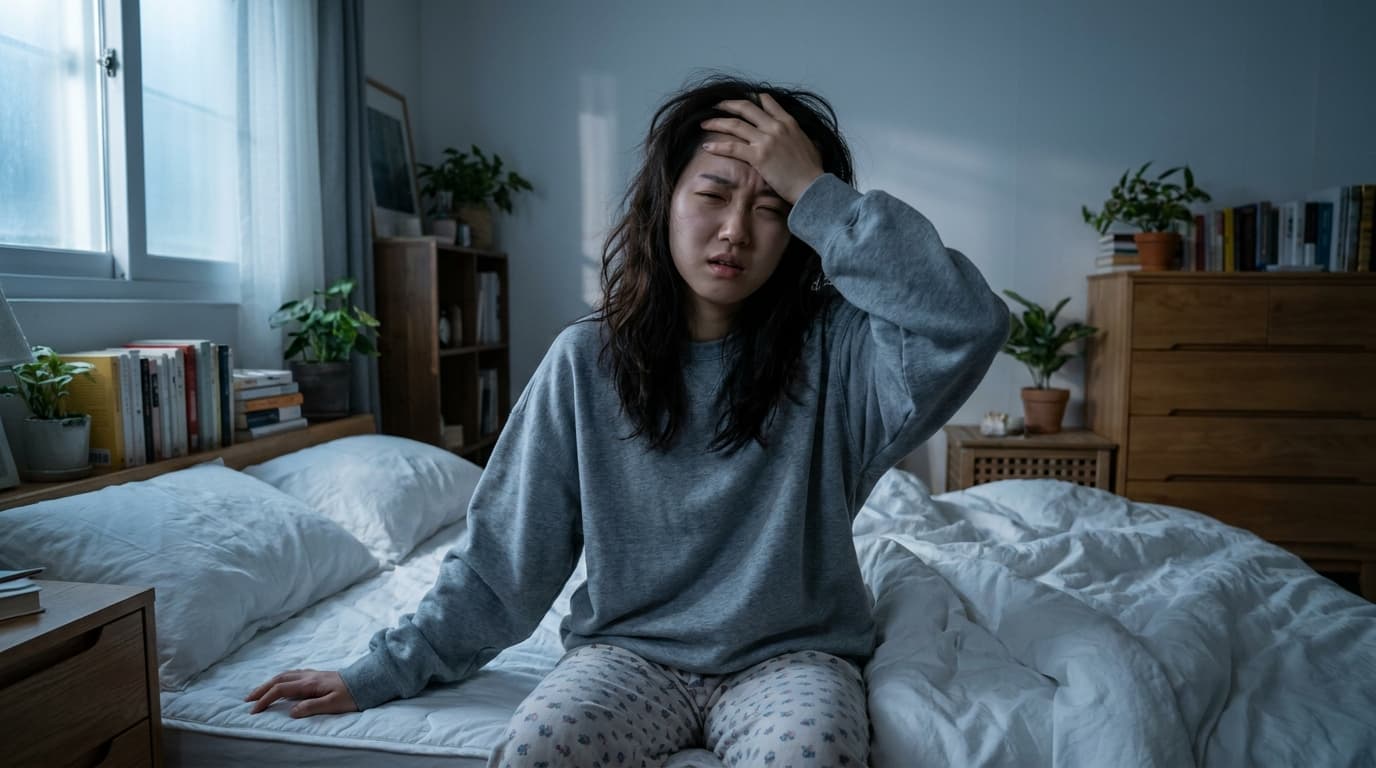
Dizziness where the world spins: Simple fatigue or BPPV? From causes to Korean medicine treatment
Hello, this is Dalimchae Korean Medicine Clinic. # Dizziness where the world spins: Simple fatigue or BPPV? From causes to Korean medicine treatment. Have you ever experienced a sudden blackout or dizziness where the surrounding world seemed to spin in circles? If you feel a dizzying thrill like riding a roller coaster whenever you sit up, turn your head, or toss and turn in bed, it causes significant anxiety in your daily life as well as psychologically. It is natural to worry if it might be a serious illness rather than just writing it off as fatigue. Especially ranging from clearly understood conditions like BPPV to chronic dizziness where tests show no abnormality, the aspects and causes are very diverse. 💡 **[Core Answer]** Top 3 most common causes of dizziness where the world spins: 1. BPPV / 2. Autonomic imbalance / 3. Meniere's disease Dalimchae Korean Medicine Clinic addresses the root causes of dizziness and prevents recurrence through autonomic stabilization treatment approach. ## Why does the world suddenly spin? Dizziness is a complex symptom that appears when various organs responsible for our body's balance encounter problems. Broadly speaking, it can be divided into peripheral dizziness caused by inner ear vestibular problems, central dizziness caused by brain nervous system problems, and nonspecific dizziness caused by overall physical condition or autonomic nervous system imbalance without falling into either category. BPPV (Benign Paroxysmal Positional Vertigo), one of the most commonly known causes, is a condition where otoconia from the inner ear vestibular system detach and enter the semicircular canals, inducing severe rotational dizziness according to positional changes. In addition, Meniere's disease caused by pressure abnormalities in the inner ear cochlea and vestibule, and vestibular neuritis caused by inflammation of the vestibular nerve, represent typical peripheral dizziness. However, not all dizziness stems solely from ear problems. There are also many cases complaining of dizziness as the balance of the autonomic nervous system collapses due to stress, overwork, chronic fatigue, or lack of sleep. ## How can BPPV be distinguished from other types of dizziness? As there are various types of dizziness, accurate cause differentiation is the first step in treatment. BPPV, which patients are most curious about, has the following characteristics: * **BPPV (BPPV):** Short but intense rotational dizziness lasting from a few seconds to within 1 minute occurs due to specific positional changes (turning the head, lying down, or standing up). Autonomic symptoms such as nausea and vomiting may accompany it. Repeating the posture that triggers dizziness gradually alleviates symptoms. * **Meniere's disease:** Characterized by paroxysmal rotational dizziness accompanied by ear fullness (aural fullness), tinnitus, and hearing loss. Dizziness can last from 20 minutes to several hours. * **Vestibular neuritis:** Severe rotational dizziness appears suddenly and persists for several days, with severe nausea and vomiting, but hearing is often unaffected. * **Dizziness due to autonomic imbalance:** Chronic lightheadedness, floating sensations, or postural instability appear mainly without specific triggers. Various autonomic symptoms such as palpitation, indigestion, insomnia, headache, and anxiety often accompany it. Patients are frequently told that special abnormalities are not found on tests. Accurate differentiation requires medical diagnosis, and Dalimchae Korean Medicine Clinic Songdo branch identifies the root cause of dizziness through precise pulse diagnosis and examinations rather than just listening to symptoms. ## Having tested without finding the cause, could it be an autonomic issue? Many patients visit hospitals for dizziness only to hear that they are "normal" or "have no special abnormalities," leaving them frustrated. In such cases, problems with the autonomic nervous system that regulates body balance may be the cause. The autonomic nervous system is a network that automatically regulates important body functions such as heart rate, blood pressure, digestion, respiration, and body temperature without conscious effort. When stress, overwork, and lack of sleep persist, autonomic imbalance can occur as the balance between sympathetic and parasympathetic nerves breaks down. Autonomic imbalance induces unstable cerebral blood flow, vestibular dysfunction, and psychological anxiety, manifesting as various forms of dizziness. Symptoms vary, including a foggy head, nausea, swaying sensation, and persistent spinning dizziness. Especially after the age of 40, recovery capacity of the autonomic nervous system declines due to hormonal changes and accumulated stress, making these symptoms more frequent. A clinical case report published in the Journal of Korean Medicine Pathology in October 2025 by Park Soo-jung's research team reported a 71-year-old female patient with acute stress disorder accompanied by various autonomic symptoms and dizziness such as anxiety, chest tightness, indigestion, facial heat, and insomnia. After receiving 27 days of inpatient complex Korean medicine treatment including herbal medicine such as Sosiho-tang and Cheonwangbosim-dan, acupuncture, cupping, and moxibustion, her severe anxiety (BAI score 29) improved to the normal range (18), and her quality of life index (EQ-5D) significantly improved from 0.485 to 0.816. The researchers concluded that such complex Korean medicine treatment suggests effectiveness in relieving psychological and autonomic symptoms. These research findings show that dizziness caused by autonomic imbalance can be sufficiently improved through Korean medicine treatment. Dalimchae Korean Medicine Clinic focuses on the therapeutic principle of stabilizing autonomic imbalance, the root cause of dizziness, based on these data. ## How does Dalimchae Korean Medicine Clinic treat dizziness? Customized treatment is important depending on the type and cause of dizziness. Dalimchae Korean Medicine Clinic views dizziness not merely as a symptom, but aims for fundamental treatment by comprehensively diagnosing the patient's overall physical condition and autonomic nervous system function. **Autonomic Stabilization Treatment Principle** Autonomic stabilization treatment at Dalimchae Korean Medicine Clinic focuses on restoring the balance of the brain and autonomic nervous system to eradicate the roots of dizziness. When autonomic balance collapses, the brain cannot rest and enters an overheated state, sending incorrect warning signals. This leads to dizziness as well as headaches, insomnia, and indigestion. Our nervous system must constantly find balance between tension (sympathetic) and relaxation (parasympathetic), but modern lifestyles easily break this balance. In Korean medicine, this is explained as an imbalance of "Su Seung Hwa Gang" (Water ascending, fire descending). Rising heat toward the head and cooling in the lower body are viewed as closely related to autonomic imbalance. Dalimchae Korean Medicine Clinic emphasizes lowering the heat of overheated nervous systems and creating an environment where the brain can rest comfortably. Through this, we correct autonomic malfunctions causing dizziness and help the body restore balance on its own. Many people visiting Songdo Dizziness Korean Medicine Clinic experience symptom improvement through such autonomic stabilization treatment. **Effects of Complex Korean Medicine Treatment** A systematic review and meta-analysis study published in the Journal of Physiology & Pathology in Korean Medicine in November 2021 analyzed the effects of the herbal medicine Banhabackchulcheonma-tang (半夏白朮天麻湯) for BPPV. This study suggested that Banhabackchulcheonma-tang can be an effective therapeutic alternative for BPPV patients accompanied by autonomic stimulation symptoms such as residual dizziness, nausea, vomiting, palpitations, and headache even after canalith repositioning maneuvers. This shows that herbal medicine contributes not only to relieving dizziness symptoms but also to improving accompanying autonomic symptoms. Furthermore, a scoping review study on Korean medicine treatment trends for Meniere's disease published in an international otorhinolaryngology journal in June 2025 stated that various Korean medicine interventions such as acupuncture, herbal medicine, and pharmacopuncture are utilized to improve symptoms in Meniere's disease patients, with actual clinical studies reporting symptom amelioration. In particular, complex interventions such as herbal medicine (9 cases), acupuncture (7 cases), and pharmacopuncture (3 cases) were actively performed, with Oryeong-san and Banhabackchulcheonma-tang appearing as main prescriptions. This study suggests that Korean medicine treatment can expect meaningful supplemental therapeutic effects even for intractable dizziness diseases like Meniere's disease. As such, Dalimchae Korean Medicine Clinic stabilizes the autonomic nervous system through herbal medicine prescriptions and helps improve cause-specific symptoms of dizziness. In addition, acupuncture treatment promotes smooth qi and blood circulation, relaxes tense nerves, and is effective in relieving headaches, insomnia, and other symptoms accompanying dizziness. Such integrated Korean medicine treatment reduces recurrence and aids fundamental health recovery. ### Dizziness Self-Diagnosis Checklist Check how many of the following items apply to you. * Suddenly the world spins or surroundings feel swaying. * Dizziness worsens when sitting up, standing up, or changing posture in bed. * Ringing sound in the ears or ear fullness accompanies dizziness. * Palpitations, cold sweats, nausea, or vomiting symptoms accompany dizziness. * Hospital tests fail to find a special cause, but dizziness persists. * Dizziness worsens when stressed or tired. * Anxiety or reluctance to go out due to dizziness. * Headache, insomnia, or indigestion frequently accompany dizziness. **Judgment Criteria:** * **2 or fewer items apply:** May be temporary fatigue or lowered condition. Sufficient rest and stress management are important. * **3 to 5 items apply:** Autonomic imbalance or specific dizziness types can be suspected. Consider accurate diagnosis and complex Korean medicine treatment at Songdo Autonomic Nervous System Korean Medicine Clinic. * **6 or more items apply:** High possibility of chronic and complex causes of dizziness. Immediate visit for precise diagnosis and professional treatment is recommended. ## FAQ **Q. How long does dizziness last?** A. The duration of dizziness varies greatly depending on the cause. BPPV usually appears briefly from a few seconds to 1 minute but can repeat, and Meniere's disease can last for hours. Dizziness due to autonomic imbalance often continues as a chronic lightheaded feeling. **Q. Can spinning dizziness occur even without BPPV?** A. Yes, it is fully possible. Spinning dizziness can occur due to various causes such as other ear-related diseases like Meniere's disease and vestibular neuritis, brain function abnormalities, autonomic nervous system imbalance, and psychological factors. **Q. Can dizziness be effectively treated with Korean medicine?** A. In Korean medicine, dizziness is classified as 'Hyeon-hoon' (眩暈) with various causes and types, and customized treatment is conducted. Treatments such as herbal medicine, acupuncture, moxibustion, and pharmacopuncture that correct autonomic imbalance, improve qi and blood circulation, and resolve constitutional problems are effective in improving dizziness symptoms and preventing recurrence. **Q. Where is a good Korean medicine clinic for dizziness in Songdo?** A. Dalimchae Korean Medicine Clinic Songdo branch identifies the root cause of dizziness and provides systematic Korean medicine treatment centered on autonomic stabilization. Through customized treatment tailored to each patient's symptoms and constitution, we help patients escape discomfort from dizziness and regain a healthy daily life. Dizziness is not a problem that can be resolved by enduring. You no longer need to turn away from the body signals sent for a long time. When approached in the right direction, the body responds faster than you think. Bring the symptoms you are experiencing as they are. Dalimchae Korean Medicine Clinic will find the cause together. Where life blooms. Herbal medicine is Dalimchae Korean Medicine Clinic. Check your similar symptoms first through Dalimchae Korean Medicine Clinic website AI consultation! This health information was compiled by Dalimchae medical staff based on questions frequently received in the clinic. Medical Supervision | Dalimchae Korean Medicine Clinic Songdo Branch Korean Medicine Doctor Oh Hyunmin (Dizziness Column) #Dizziness #BPPV #AutonomicDysfunction #SongdoDizzinessKoreanMedicine #MenieresDisease #SuSuengHwaGang #Headache #KoreanMedicineTreatment Brain & Autonomic Nervous System - Dizziness