
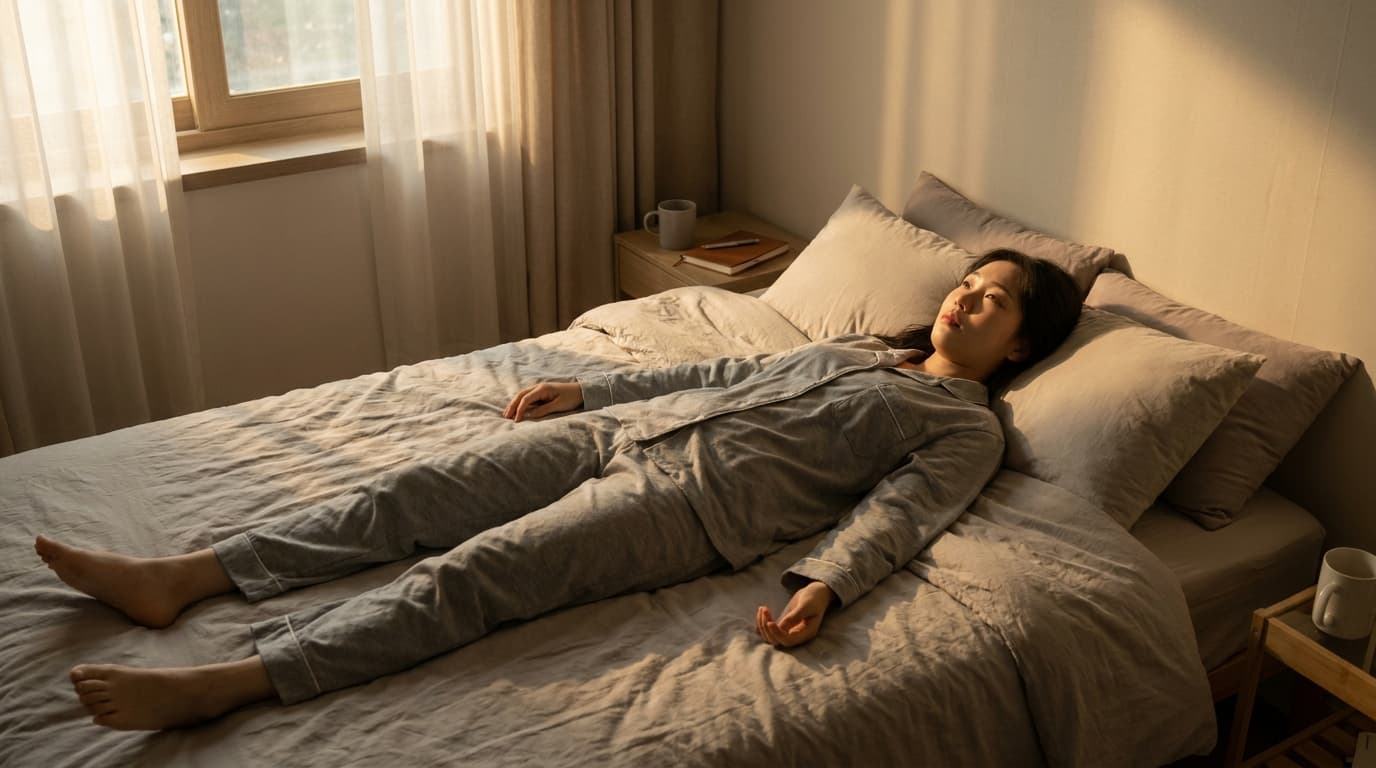
Depressed A Week Before Your Period Dont Ignore Your Bodys Warning Light
Hello. This is Dalimchae Korean Medicine Clinic. # Depressed A Week Before Your Period Dont Ignore Your Bodys Warning Light As the day that comes every month approaches, does your mood sink endlessly, or do you find yourself crying or bursting with anger for no reason? You must have struggled, thinking it's a special symptom experienced only by yourself, feeling sensitive to small things that usually wouldn't bother you and overwhelmed by lethargy making daily life feel burdensome. The concern "I feel depressed a week before my period" is a discomfort sympathized with by more women than you might think, and it can be an important signal sent by your body, not just a simple mood problem. 💡 **Key Answer** Top 3 most common causes of **"Depressed a week before your period?"**: ① **Brain hypersensitivity reaction to hormonal changes** / ② **Neurotransmitter imbalance** / ③ **Autonomic nervous system imbalance** Dalimchae Korean Medicine Clinic helps restore the balance of the brain and body that is not shaken by hormonal changes through **autonomic nervous system stabilization**. ## Why Is Premenstrual Depression Particularly Severe? Symptoms like depression, anxiety, lethargy, and irritation appearing a week before menstruation can often be part of 'Premenstrual Syndrome (PMS)' or its more severe form 'Premenstrual Dysphoric Disorder (PMDD)'. Several complex causes act for these symptoms becoming particularly severe. The primary cause is the **brain's hypersensitivity reaction to hormonal changes** according to the menstrual cycle. After ovulation, estrogen and progesterone levels fluctuate rapidly, affecting neurotransmitters in the brain, particularly the **serotonin** system that regulates feelings of happiness. This can lower mood regulation ability, leading to severe depression, anxiety, and mood swings. In addition, changes in stress hormones like **cortisol** also affect the autonomic nervous system, further exacerbating symptoms. Along with this neurotransmitter imbalance, **autonomic nervous system imbalance** also plays a significant role. The autonomic nervous system regulates all unconscious functions of our body, and when balance is broken due to stress, lack of sleep, or overwork, it can intensify not only physical symptoms (headaches, fatigue, indigestion) but also psychological symptoms (depression, anxiety, poor concentration). Especially before menstruation, the brain is already in a sensitive state due to hormonal changes, so even minute imbalances in the autonomic nervous system easily lead to emotional waves larger than usual. According to a systematic review study published in the BMC Complementary and Alternative Medicine journal in 2014 by the research team of Dongguk University Oriental Medical College Department of Korean Obstetrics and Gynecology, traditional Korean medicine treatments (acupuncture and herbal medicine) for patients with premenstrual syndrome and premenstrual dysphoric disorder (PMS/PMDD) showed significant effects in symptom improvement. Analyzing a total of 19 randomized controlled trials (RCTs) published from 2002 to 2012, the research team revealed that both acupuncture and herbal medicine showed symptom reduction effects of over 50% compared to baseline, with no serious side effects reported. This suggests that the Korean medicine approach can be a safe and effective alternative for alleviating various symptoms of PMS/PMDD, especially emotional symptoms like depression. Based on these data, Dalimchae Korean Medicine Clinic Incheon provides optimized treatment tailored to each individual by focusing on autonomic nervous system imbalance, the root cause of depression worsening before menstruation. ## Autonomic Imbalance Is the Real Reason Making Body and Mind Difficult Before Menstruation. The autonomic nervous system of our body consists of two axes: the sympathetic and parasympathetic nervous systems. The sympathetic nervous system arouses the body in tense and stressful situations, while the parasympathetic nervous system is responsible for relaxation and recovery. These two nerves must maintain homeostasis of our body by balancing like a seesaw. However, when premenstrual hormonal changes and external stress overlap, this balance is easily broken. When the balance of the autonomic nervous system collapses, the brain cannot rest. Excessively activated sympathetic nerves put the brain in an excited state, disrupting sound sleep, making it easily sensitive to small stimuli, and leading to groundless depression or anxiety. It's like body and mind wearing out like an overheated engine. Dalimchae Korean Medicine Clinic stabilizes the autonomic nervous system by making it a core treatment principle to lower the heat of this nervous system and create an environment where the brain can rest—in Korean medicine, this is called **Suseunghwakang (Water ascends, fire descends)**. According to a column published in Jungbu Ilbo in 2025, analyzing the effects of traditional Korean medicine treatments on PMS/PMDD patients in a 2021 paper, herbal medicine treatment showed significant improvement in both emotional and physical symptoms compared to placebo or western medication groups, with low recurrence rates and positive impacts on improving quality of life. In particular, traditional women's disease prescriptions such as **Gamisoyosan** and **Danggui-gyakyasan** were utilized, and acupuncture treatment was also evaluated as effective for emotional stability and pain relief, with some studies showing effects similar to antidepressants. This means Korean medicine provides customized treatment according to individual constitution and symptoms to control autonomic instability caused by hormonal changes, improving systemic Qi-Blood circulation to reduce overall premenstrual discomfort. Dalimchae Korean Medicine Clinic Incheon focuses on helping the body build the strength to recover on its own by correcting the balance of the autonomic nervous system, rather than just suppressing symptoms. This fundamental approach provides an answer of health and quality of life improvement to many people visiting **Incheon Premstrual Syndrome Korean Medicine Clinic**. ## Premenstrual Depression, Could It Be PMS or PMDD for Me Too? If you are enduring recurring discomfort every month thinking it's something "only you experience," it is important to receive systematic help through accurate diagnosis. Check your condition through the following checklist. **Self-Diagnosis Checklist for Premenstrual Depression and PMS/PMDD** If any of the symptoms below appeared about 1 to 2 weeks before the start of menstruation over the past few months and disappeared within a few days after menstruation started, check them. * Mood sinks and feels depressed for no reason. * Easily angry and bursts into irritation over trivial things. * Sudden crying spells or difficulty controlling emotions. * Becomes more sensitive and irritable than usual. * Lethargic, lacking energy, and feels chronic fatigue. * Poor concentration and severe forgetfulness. * Changes in sleep patterns such as insomnia or hypersomnia. * Increased appetite or craving for specific foods (sweet, salty foods). * Headaches, breast pain, abdominal bloating, body swelling symptoms. * Socially withdrawn and wanting to be alone. **Criteria:** * **When 3 or more apply:** Premenstrual Syndrome (PMS) suspected stage. Autonomic balance review and Korean medicine complex treatment can be considered. * **When 5 or more apply:** Premenstrual Dysphoric Disorder (PMDD) possibility is high. Professional diagnosis and immediate visit and treatment at **Dalimchae Korean Medicine Clinic Incheon** are recommended. Premenstrual depression is not a problem to endure alone. Many people also complain of insomnia or dizziness together, which are all deeply related to confusion in the autonomic nervous system. **Incheon Korean Medicine Treatment** can improve these symptoms in various ways. **Q. Can premenstrual depression naturally improve?** A. Mild premenstrual syndrome can improve through lifestyle habit improvement or stress management, but if symptoms are severe or interfere with daily life, it is difficult to improve naturally. In particular, professional treatment is necessary for Premenstrual Dysphoric Disorder (PMDD). **Q. Can premenstrual depression be treated with herbal medicine?** A. Yes, herbal medicine is effective in regulating hormone balance, improving neurotransmitter functions, and stabilizing the autonomic nervous system to alleviate premenstrual depression and accompanying symptoms. Since it is prescribed according to individual constitution and symptoms, you can receive safe treatment. **Q. How is PMS treatment at Dalimchae Korean Medicine Clinic Incheon conducted?** A. At Dalimchae Korean Medicine Clinic Incheon, after precise diagnosis, we help restore the balance of the body reacting sensitively to hormonal changes through complex Korean medicine treatments such as autonomic-regulating herbal medicine, acupuncture, moxibustion, and pharmacopuncture. Stress management and lifestyle habit coaching are also combined to help fundamental recovery. **Q. What is the difference between premenstrual depression and other psychiatric disorders?** A. Premenstrual depression shows a characteristic where symptoms appear and disappear according to the menstrual cycle. Other psychiatric disorders may persist or worsen regardless of the menstrual cycle. Examination is required for accurate differentiation. Premenstrual syndrome is not a problem solved by enduring. You don't have to ignore the signals your body has sent for a long time anymore. If you approach in the right direction, your body reacts faster than you think. Bring the symptoms you are experiencing as they are. Dalimchae Korean Medicine Clinic will find the cause together. Where life blooms. Herbal medicine is Dalimchae Korean Medicine Clinic. Check symptoms similar to yours first through Dalimchae Korean Medicine Clinic website AI consultation! This article is based on questions frequently received in the clinic, health information compiled together by Dalimchae medical staff. Medical Supervision | Women & Pregnancy Treatment Standard Dalimchae Korean Medicine Clinic Incheon Branch Korean Medicine Doctor Yang Yu-chan (Premature Menstrual Syndrome Column)