
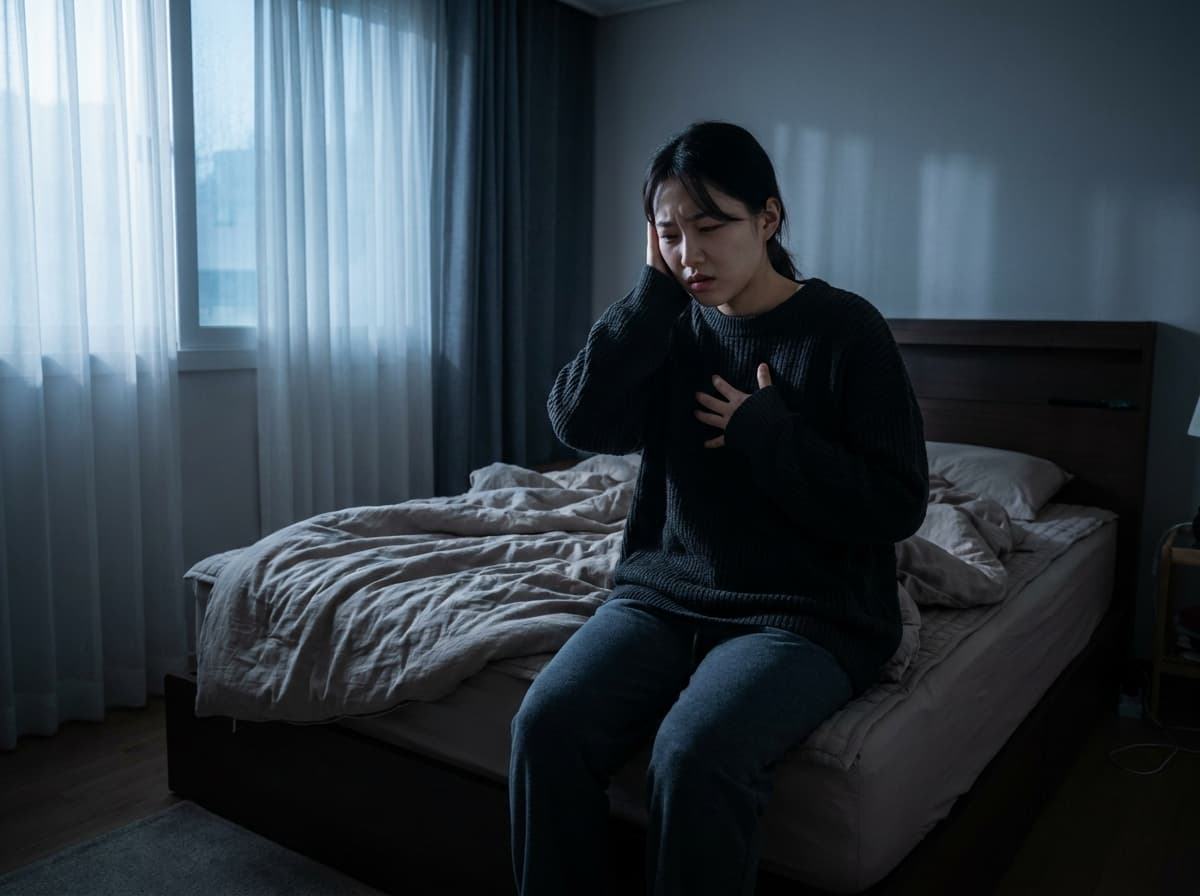
Chest tightness when stressed? It could be a hidden autonomic nervous system warning.
Hello. This is Dalimchae Korean Medicine Clinic. # Chest tightness when stressed? It could be a hidden autonomic nervous system warning signal. Suffocating work, interpersonal conflicts, unexpected worries. Living in modern society, we are exposed to various stresses every day. Many people visit the hospital complaining, "My chest feels tight when I'm stressed," only to be told there is nothing wrong with their heart or lungs. Have you ever had the experience of being told it's just 'nervous' and walking away without any special treatment? However, this could be an important warning signal from the body. Just as a warning light comes on in an overheated car engine, chest tightness can be a strong signal that there is a problem with our body's core control system, the autonomic nervous system. 💡 **Key Answer** Chest tightness when stressed? 3 most common causes: ① Sympathetic nerve activation due to autonomic imbalance / ② Functional decline of the brain-heart axis / ③ Oriental medical 'Gi-che' (energy stagnation) or Hwa-byung Dalimchae Clinic fundamentally resolves chest tightness by regulating excessive stress responses through **autonomic stabilization** and restoring the balance between body and mind. ## What is the scientific principle behind stress leading to chest tightness? We often think of headaches or indigestion when we're stressed, but chest tightness is also a very common stress response. This is closely related to our body's autonomic nervous system. The autonomic nervous system regulates essential life functions such as heartbeat, breathing, and digestion regardless of our will. When stress occurs, the body perceives it as an 'emergency' and activates the sympathetic nervous system, causing the heart rate to speed up, blood pressure to rise, and breathing to become shallow. These changes cause tension in the chest muscles and put pressure on the heart, leading to a feeling of tightness. Chronic stress can keep this sympathetic overactivity going, breaking the balance with the parasympathetic nervous system and eventually leading to autonomic dysfunction. ## "Why does it hurt when the tests are normal?" The core problem of autonomic dysfunction Many people experience chest tightness and undergo heart ultrasounds, EKGs, and lung function tests, only to be confused by a 'normal' diagnosis. However, just because there is no abnormality in the tests doesn't mean the pain or discomfort doesn't actually exist. In fact, a condition that complains of chest tightness similar to angina but with no abnormalities in the coronary arteries is called 'Cardiac Syndrome X (CSX)'. A 2014 study suggested that in CSX patients, 'autonomic imbalance accompanied by increased sympathetic activity and decreased parasympathetic activity' can increase endothelial dysfunction and pain sensitivity. In other words, a subtle functional abnormality of the autonomic nervous system that is difficult to detect with general tests can be the cause of discomfort. A study published in the journal *Psychosomatic Medicine* in 2024 analyzed the mechanism by which severe emotional stress, such as sadness, induces chest pain. The study found that sadness is associated with 'inflammatory activation, autonomic imbalance, and neuroendocrine dysregulation', and that these processes can contribute to chest pain and cardiovascular disease risk. Additionally, the study noted that 'increased sympathetic activation, decreased vagal (parasympathetic) tone, and exaggerated cardiovascular reactivity' are observed in stress-related non-cardiac chest pain, emphasizing the direct impact of psychological stress and autonomic dysfunction on chest pain. These research results clearly show that stress-related chest tightness is not just a 'problem of the mind', but occurs due to actual physical changes in the physiological system. At Dalimchae Clinic Songdo Branch, based on this data, we focus on creating an environment where the body can heal itself by restoring autonomic balance. It is important to find and solve the cause of why the body's warning light came on, rather than simply suppressing the symptoms. ## How does Dalimchae Clinic's autonomic stabilization treatment relieve chest tightness? Dalimchae Clinic's 'Autonomic Stabilization' treatment focuses on calming the body's system overheated by stress and restoring the broken balance. When the autonomic balance is broken, the brain cannot rest and the body remains in a constant state of tension. At this time, our body's energy is all consumed in handling the emergency situation, which can lead to various symptoms such as chronic fatigue, insomnia, headaches, and dizziness, as well as chest tightness. In Korean medicine, this is seen as similar to 'Gi-che (energy stagnation)' or 'Hwa-byung'. It means that the flow of Gi (energy) is blocked due to stress, and the stagnated energy gathers in the chest area, causing tightness. Dalimchae Clinic creates an environment where the brain can rest, lowers the heat of the nervous system, and proceeds with treatment to release the stagnated energy. Through this, we calm the excessive activation of the sympathetic nervous system and induce the activation of the parasympathetic nervous system to help the body and mind feel comfortable. It is a process of stabilizing the overloaded system and restoring normal energy flow, just like turning off and back on a circuit breaker. In particular, stress-related chest tightness often affects gastrointestinal function, accompanied by reflux esophagitis or indigestion. Dalimchae Clinic Songdo Branch focuses on restoring the balance of the whole body by combining herbal treatment to improve digestive function along with autonomic treatment. ## Stress-related chest tightness, is it me? Symptom Checklist Check for yourself if many of the following questions apply. * I am usually sensitive to small things and get tense easily. * My chest is often tight and it's hard to breathe, but there are no abnormalities in the tests. * I often get the feeling that my heart is fluttering or beating fast. * The area around my shoulders and neck is always stiff and painful. * The quality of sleep is poor, such as having difficulty falling asleep or waking up often during sleep. * Digestion is not good, and I often have indigestion or feel bloated. * I often have headaches or feel dizzy. * It is difficult to regulate body temperature, such as hands and feet being cold or sweating easily. * I am always tired and lethargic, and my concentration is low. **Judgment Criteria:** * **3 or more items apply:** Autonomic functional imbalance is suspected, so you can consider combined Korean medicine treatment after consulting with an expert. * **5 or more items apply:** There is a high possibility that it is a symptom caused by autonomic dysfunction, so immediate visit is recommended. ## FAQ: Relieving your curiosity about stress-related chest tightness. **Q. How long does it take for stress-related chest tightness?** A. The recovery period for stress-related chest tightness varies depending on the individual's constitution, and the intensity and duration of the stress. However, it can gradually improve through active treatment and lifestyle improvement to restore autonomic balance, and many patients experience improvement in symptoms during the 2-3 month treatment period. **Q. Can stress-related chest tightness also be treated with Korean medicine?** A. Yes, it can be treated effectively. Korean medicine values the balance of the whole body, and has a strength in solving the root cause of chest tightness by resolving autonomic imbalance caused by stress and improving blood circulation. **Q. Can chest tightness heal naturally?** A. Mild tightness caused by temporary stress can get better with rest alone. However, chronic or repeated chest tightness can be a signal that the autonomic imbalance is deepening, so it is important to build the body's recovery power through active treatment rather than neglecting it. **Q. I have anxiety along with chest tightness, can they be treated together?** A. Yes, they can be treated together. Chest tightness is closely linked to psychological symptoms such as anxiety and nervousness, and this is also deeply related to the autonomic nervous system. At Dalimchae Clinic, a Songdo Korean medicine clinic, we approach and treat not only physical symptoms but also accompanying psychological anxiety in an integrated way. Stress-related chest tightness is not a problem that can be solved by enduring. You no longer have to ignore the body's signals sent for a long time. If you approach in the right direction, the body responds faster than you think. Bring your symptoms exactly as they are. At Dalimchae Clinic, we will find the cause together. Where life blooms. For herbal medicine, it's Dalimchae Korean Medicine Clinic. Check your symptoms similar to mine through the AI consultation on the Dalimchae Clinic website first! This article is health information compiled by Dalimchae medical staff based on questions frequently received in the treatment room. Medical Supervision | Autonomic Nerve & Brain Treatment Standards Dalimchae Clinic Songdo Branch Korean Medicine Doctor Oh Hyunmin (Autonomic Dysfunction Column)