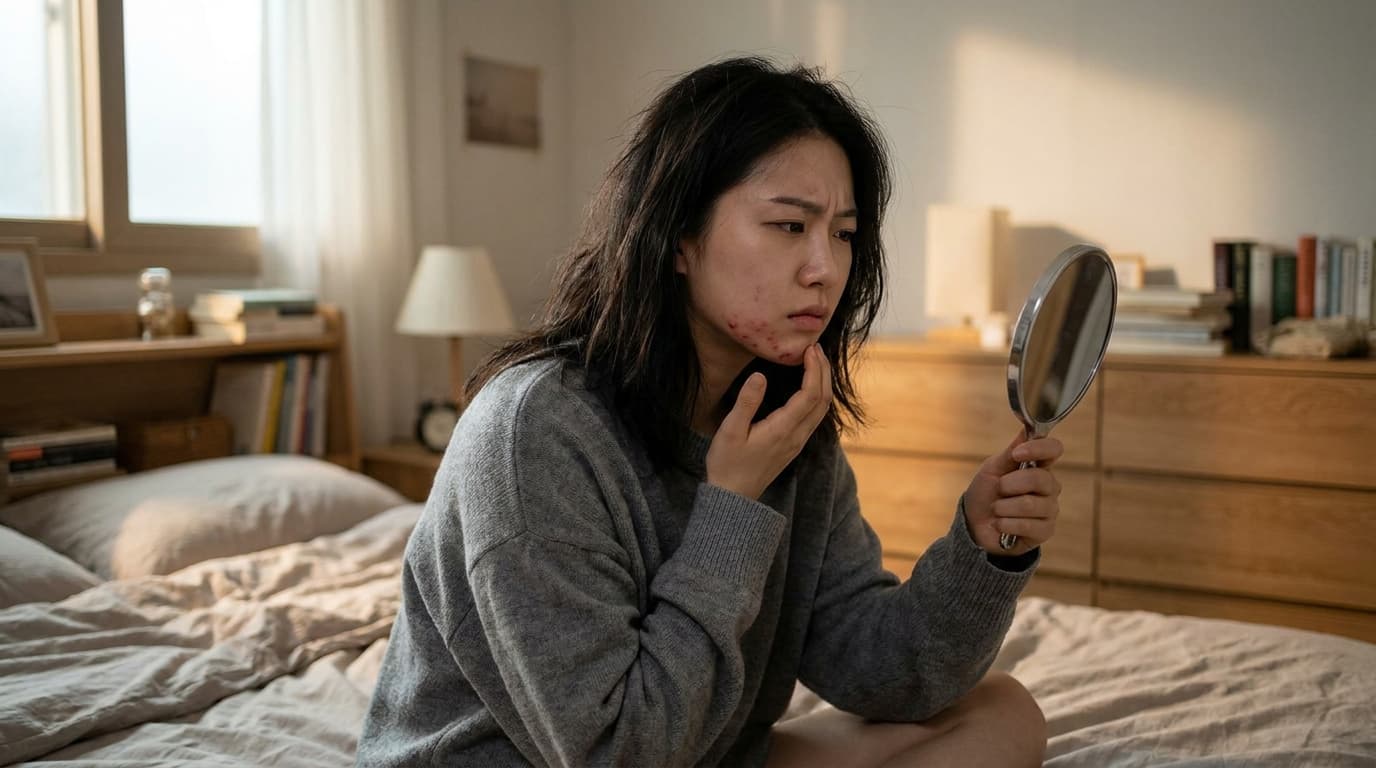
Cant Control Your Emotions Suddenly Feeling Upset and Angry You Can Master It Now
Hello, this is Dalimchae Korean Medicine Clinic. # Can't Control Your Emotions? Suddenly Feeling Upset and Angry—You Can Master It Now. Have you ever experienced a sudden surge of anger, unprovoked tears, or easy irritation over minor things? Surprisingly, many people suffer, saying, "I can't control my emotions," unlike usual. Especially for modern people who have accumulated stress and fatigue, such mood swings can lower the vitality of daily life and negatively affect interpersonal relationships. It may be an important signal sent by the brain and body to be dismissed simply as a 'personality problem' or 'mood'. 💡 **[Key Answer]** 3 most common causes of 'Can't control my emotions': ① Autonomic imbalance / ② Brain neurotransmitter disruption / ③ Chronic stress and fatigue Dalimchae Korean Medicine Clinic helps the brain self-regulate emotions and find stability through **autonomic stabilization**. ## Why do I suddenly feel upset and have difficulty controlling my emotions? Emotion is not just a matter of the mind, but a phenomenon that appears through the complex action of the brain, autonomic nervous system, and various neurotransmitters. Suddenly being unable to control emotions can be a signal that the balance of these systems is broken. In particular, if stress persists, the sympathetic nervous system of our bodies becomes overly activated, and the parasympathetic nervous system responsible for rest and recovery is weakened, causing autonomic imbalance. This affects the function of the amygdala and prefrontal cortex, which are the emotion control centers of the brain, creating a state where emotions explode or do not easily subside even with minor stimulation. In this process, abnormalities may also occur in the secretion of neurotransmitters such as serotonin and dopamine. ## How does Korean medicine approach autonomic imbalance and emotional control disorders? In Korean medicine, emotional control disorders are not viewed simply as psychological problems, but the overall balance of the body, especially the problems of 'fire (火)' and 'stagnation (鬱)', is dealt with importantly. The symptom of suddenly getting upset and angry is often viewed in the category of 'Hwabyung', which is known as a culturally related syndrome unique to Korea where suppressed anger and stress appear as physical symptoms. Accompanied by chest tightness, heat sensation, headache, sleep disturbance, etc., autonomic dysfunction is observed together. The effectiveness of this Korean medicine approach to autonomic imbalance and emotional control disorder has been proven through various studies. According to a systematic review of 27 randomized controlled clinical trials (total 1,782 participants) published by NCCIH (National Center for Complementary and Integrative Health) in 2022, acupuncture treatment was more effective and had fewer side effects than other treatments (mainly drugs) in relieving anxiety symptoms in patients with generalized anxiety disorder. The researchers explained that acupuncture treatment has a biochemical mechanism that regulates the balance of the autonomic nervous system to reduce stress responses and promote nerve relaxation. In addition, in a study by Myeong Soo Lee et al. research team published in the *International Journal of Neuroscience* in 2005, as a result of administering herbal medicine (Ondamtang-gamibang) or placebo to 20 subjects, the herbal medicine administration group confirmed that autonomic functions were stabilized, such as a decrease in the low-frequency/high-frequency ratio of heart rate variability (HRV) and a decrease in heart rate. The researchers concluded that herbal medicine contributes to stabilizing both the autonomic nervous system and emotional state by stabilizing the emotional state and regulating the balance of the sympathetic and parasympathetic nervous systems. Based on these scientific principles of Korean medicine, Dalimchae Korean Medicine Clinic focuses on correcting the balance of the autonomic nervous system, which is the root of emotion. This is not simply suppressing symptoms, but helping the brain self-regulate and recover emotions through **autonomic stabilization**. ## If the brain cannot rest, emotion control becomes difficult: The importance of autonomic stabilization The lives of modern people are exposed to constant stimulation and stress. At this time, the body's autonomic nervous system must maintain balance by reacting like an accelerator (sympathetic) and brake (parasympathetic) of a car. However, chronic stress destroys this balance and prevents the brain from resting. When the brain overheats, it reacts sensitively to small stimuli, increases the range of emotions, and loses control ability. It is like an overheated engine malfunctioning. Dalimchae Korean Medicine Clinic Incheon Branch creates an environment where the brain can rest and recover on its own by resolving this autonomic imbalance. We help the brain reach a comfortable state by lowering excessive heat in the nervous system and improving circulation. In Korean medicine, this is called 'Suseung-hwagang (水昇火降)', which is considered important to make the upper body cool and the lower abdomen warm to smooth the circulation of body energy. Such treatment helps improve not only sudden upsetting emotions, but also various brain and autonomic system symptoms that easily appear together, such as insomnia, headache, and dizziness. Many people visiting the Songdo emotional control Korean medicine clinic are visiting with these complex symptoms. ## Check yourself? Emotional control disorder self-checklist Check the following items and count how many apply. * Even for trivial matters, anger suddenly surges and is hard to endure. * Unprovoked tears or depressed moods occur frequently. * Sleep quality deteriorates, making it hard to fall asleep easily or waking up frequently. * There is tightness in the chest or heart palpitations. * Neck and shoulders are always stiff and headaches are frequent. * Digestion is poor or abdominal discomfort is felt frequently. * In stressful situations, the body reacts excessively, such as becoming stiff or breaking out in a cold sweat. * When annoyed or angry, you end up using aggressive speech and behavior toward people around you. **Criteria:** * **If 3 or more apply:** Suspected autonomic imbalance → Complex Korean medicine treatment is recommended. * **If 5 or more apply:** Immediate professional diagnosis and treatment are needed. Get a detailed consultation at Dalimchae Korean Medicine Clinic Incheon Branch. ## FAQ: Frequently asked questions about emotional control disorders **Q. Why is it difficult to control emotions?** A. Emotional control disorders occur due to complex causes such as functional imbalance of the brain's emotion control center and autonomic nervous system, and neurotransmitter disturbance caused by stress. It may be a signal sent by the body's system rather than a simple matter of willpower. **Q. Is emotional control really possible with Korean medicine treatment?** A. Yes, it is possible. Korean medicine does not view emotional problems as purely mental, but focuses on treatments that balance the autonomic nervous system and improve the circulation of qi and blood in the body to empower the brain to control its own emotions. **Q. What can I do at home when my mood swings are severe?** A. Regular lifestyle habits, sufficient sleep, light aerobic exercise, and relaxation through meditation or deep breathing can help stabilize the autonomic nervous system. However, if symptoms are severe, it is important to get help from an expert. **Q. How long does the treatment period take?** A. The treatment period can vary depending on the cause and severity of the emotional control disorder. Generally, continuous treatment of several weeks to months is required, and Dalimchae Korean Medicine Clinic helps efficient recovery by establishing a personalized treatment plan. Suddenly feeling upset and unable to control emotions is not a problem that can be solved by enduring it. You no longer need to ignore the body's signals you have sent for a long time. If you approach it in the right direction, your body reacts faster than you think. Bring the symptoms you are experiencing as they are. The Songdo branch of Dalimchae Korean Medicine Clinic will find the cause together. Where life blooms. Herbal medicine is Dalimchae Korean Medicine Clinic. Check symptoms similar to yours first through the AI consultation on the Dalimchae Korean Medicine Clinic website! This article is health information organized together by Dalimchae medical staff based on questions actually received often in the consultation room. Medical Supervision | Neurology & Autonomic System Treatment Standard Dalimchae Korean Medicine Clinic Incheon Branch Korean Medicine Doctor Min Jihong (Depression Column) p\<0.05 #EmotionalControlDisorder #Upset #AutonomicNervousSystem #IncheonKoreanMedicineClinic #Hwabyung #KoreanMedicineTreatment