
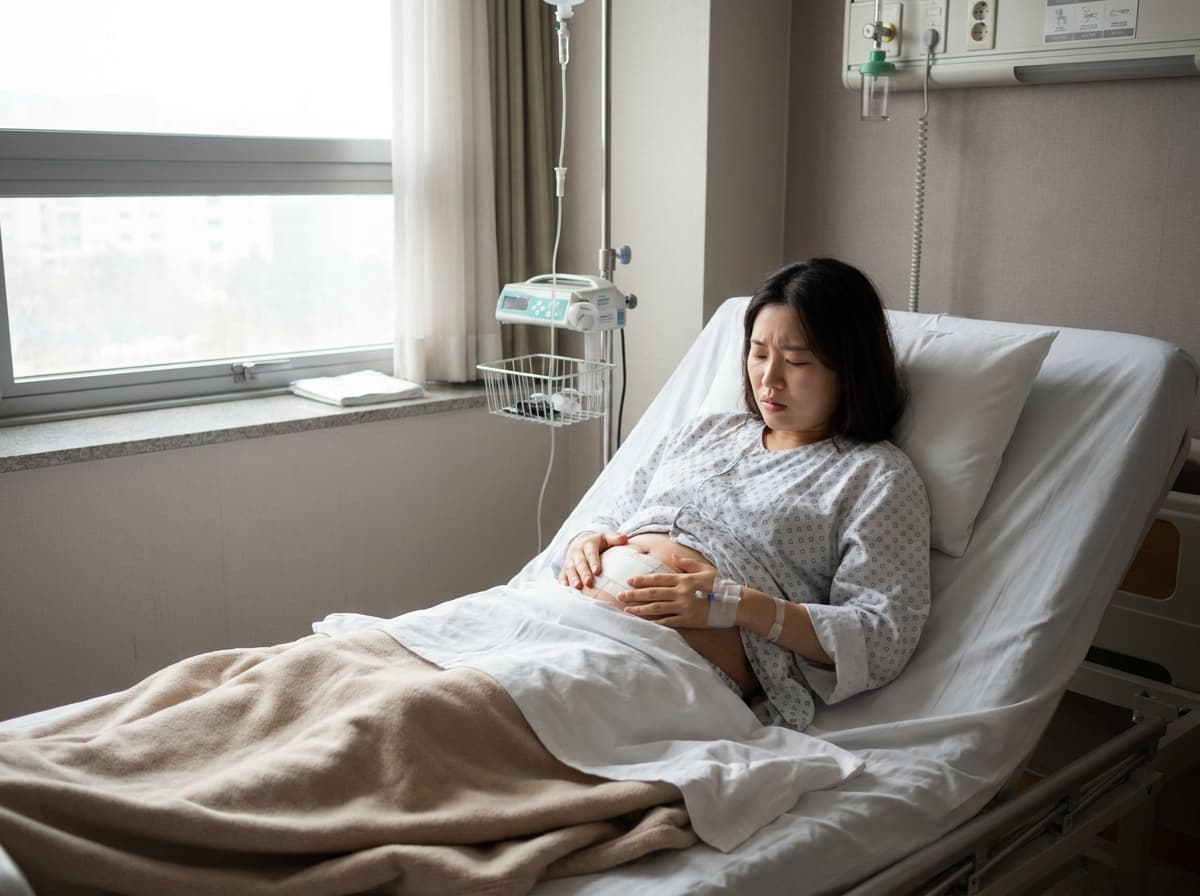
C-Section Recovery Is Too Slow? Personalized Postpartum Solutions for Your Body
Hello. This is Dalimchae Korean Medicine Clinic. # C-Section Recovery Is Too Slow? Personalized Postpartum Solutions for Your Body The sacred process of bringing a new life into the world has a profound impact on a woman's body. In particular, a cesarean section can leave unexpected difficulties in recovery after the joy of childbirth. Many people visit Dalimchae Clinic complaining that "Recovery after my C-section is too slow" or "My body doesn't feel the same." These discomforts can lead to postpartum wind or chronic pain beyond simple fatigue, requiring careful management. 💡 **Key Answer** The 3 most common reasons why **C-section recovery feels too slow**: ① **Deficiency of Qi and Blood and Stagnant Blood**: A C-section is a major surgery that consumes a lot of Qi and Blood, and stagnant blood at the surgical site interferes with normal recovery. ② **Delayed Uterine Contraction and Lochia Discharge**: Uterine recovery and lochia discharge can be slower compared to natural childbirth, causing abdominal discomfort. ③ **Autonomic Nervous System Imbalance**: Stress, hormonal changes, and lack of sleep from childcare can break the autonomic balance, leading to weakness, joint pain, and postpartum depression. Dalimchae Clinic helps you return to healthy daily life by increasing your body's fundamental recovery power through **constitutional improvement**. ## Body Signals After C-Section, Could It Be Postpartum Wind? A C-section is a surgery that puts a great burden on the mother's body. In the process of directly incising the uterus, significant Qi and Blood loss occurs, and inflammation and stagnant blood are likely to form during recovery. These changes interfere with natural postpartum recovery mechanisms and can lead to chronic discomfort, known as 'postpartum wind.' Postpartum wind manifests as joint pain, cold sensations, weakness, swelling, indigestion, and even postpartum depression, with a tendency to be sensitive to cold or vulnerable to stress. ## How Does Korean Medicine Postpartum Care Help C-Section Recovery? In Korean medicine, postpartum care is considered crucial for a woman's lifelong health. After a C-section, the focus is on resolving Qi and Blood damage and stagnant blood. This helps fast uterine recovery and smooth discharge of waste products, which is essential for reducing swelling and pain. Afterward, we aim for overall recovery by replenishing Qi and Blood and restoring autonomic balance according to individual constitution. A 2019 meta-analysis by Nihon University in Japan compared the effects of Kyukichoketsuin (KCI), a Korean medicine used for postpartum recovery, and methylergometrine maleate (MME), a Western medicine. The study found that while there was no significant difference in uterine recovery, **KCI was significantly superior in improving pain for patients with severe postpartum pain (p\<0.05)**. This suggests that Korean medicine can be as effective or superior to Western medicine in postpartum pain management. Furthermore, a 2022 qualitative study in the journal *MDPI* found that 85.24% of Korean mothers were more satisfied with postpartum care including Korean medicine. Other studies reported **about 90% symptom improvement** after Korean medicine intervention for postpartum wind symptoms. These results show that a Korean medical approach positively impacts a mother's overall satisfaction and quality of life. ## Constitutional Improvement: Dalimchae's Principle for a Body That Doesn't Hurt Again Dalimchae Clinic aims to create a body where symptoms do not recur through fundamental **constitutional improvement**. A body weakened after a C-section is like a discharged battery; simply filling it is not enough. The body must develop the power to produce energy, maintain balance, and resist external stimuli on its own. At our clinic, we remove postpartum stagnant blood, replenish Qi and Blood, and regulate autonomic balance through personalized herbal prescriptions. This process improves immunity and temperature regulation, helping you recover more healthily and vibrantly than before childbirth. We strictly select safe and effective medicinal herbs for breastfeeding mothers. ## Postpartum Recovery Checklist: Check Your Progress! Are you experiencing any of the following? If you check 3 or more, we recommend consulting with Dalimchae Clinic. **[C-Section Postpartum Recovery Checklist]** 1. Joint nodes feel tingly and painful (wrists, knees, ankles, etc.). 2. Cold wind hitting the body feels like it's chilling to the bone. 3. The body swells easily, and weight doesn't decrease well. 4. Chronic fatigue and lethargy continue, and you don't feel refreshed after rest. 5. Poking or pulling pain at the surgical site persists. 6. Emotional swings become severe or you feel anxious and depressed. 7. Indigestion, cold belly, or frequent bloating occur. 8. Difficulty falling asleep or frequent waking reduces sleep quality. 9. Lochia discharge lasts a long time or the amount is irregular. 10. Hair falls out a lot, and skin is dry and lacks elasticity. * **3 or more:** Suspected phase of delayed recovery or postpartum wind. * **5 or more:** Active postpartum care is required. * **7 or more:** High possibility of transitioning to chronic postpartum diseases. ## FAQ: Frequently Asked Questions About C-Section Recovery **Q. How long does recovery take after a C-section?** A. It varies, but the first 6 weeks are the postpartum period when the uterus returns to size. Full recovery can take 3 to 6 months or more, and C-sections may require more effort for surgical site recovery and Qi replenishment. **Q. Can postpartum wind be treated with Korean medicine?** A. Yes. Korean medicine views postpartum wind as a complex issue of Qi and Blood deficiency, stagnant blood, and autonomic imbalance. Personalized treatments alleviate symptoms and increase resilience to prevent recurrence. **Q. When should I start taking postpartum herbal medicine?** A. Starting immediately after childbirth is effective. Early medicine focuses on stagnant blood removal and uterine contraction, while later stages focus on Qi replenishment and immunity. **Q. Is it safe to take postpartum herbal medicine while breastfeeding?** A. Yes, we select herbs that are safe for both mother and baby. It can even help produce healthy breast milk by replenishing the mother's Qi and Blood. If you are struggling with slow recovery after a C-section, you no longer have to endure it alone. If you approach it in the right direction, your body responds faster than you think. Bring your symptoms as they are. Dalimchae Clinic will help you find the cause and reclaim your vitality. Where life blooms. For herbal medicine, it's Dalimchae Clinic. Check symptoms similar to mine through the AI consultation on our website! Medical Supervision | Women and Pregnancy Standard Dalimchae Clinic Incheon Branch Korean Medicine Doctor Min Jihong (Postpartum Care Column)